














Catarina Ruivo’s My Grandmother Trelotótó arrives as an expansive non-fiction work, close to three hours, built around the effort to reanimate the presence of her late grandmother, Júlia. The project assembles family archives, intimate home videos, and a large cache of personal correspondence. Ruivo treats these materials as instruments for a dialogue across time.
Letters written by Júlia from Mozambique between 1946 and 1957 form the central spine. Actor Rita Durão reads the texts, which grants the historical voice a present-tense cadence. The aim remains explicit and deeply personal, to restore speech and presence to a beloved figure after death, to stabilize a memory through cinema. The effect suggests a séance conducted through pages and images, ritual and projection, duration and listening.
The Languid Architecture of Contrast
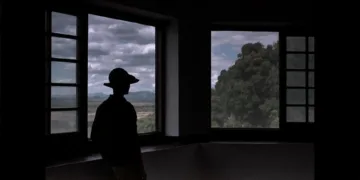
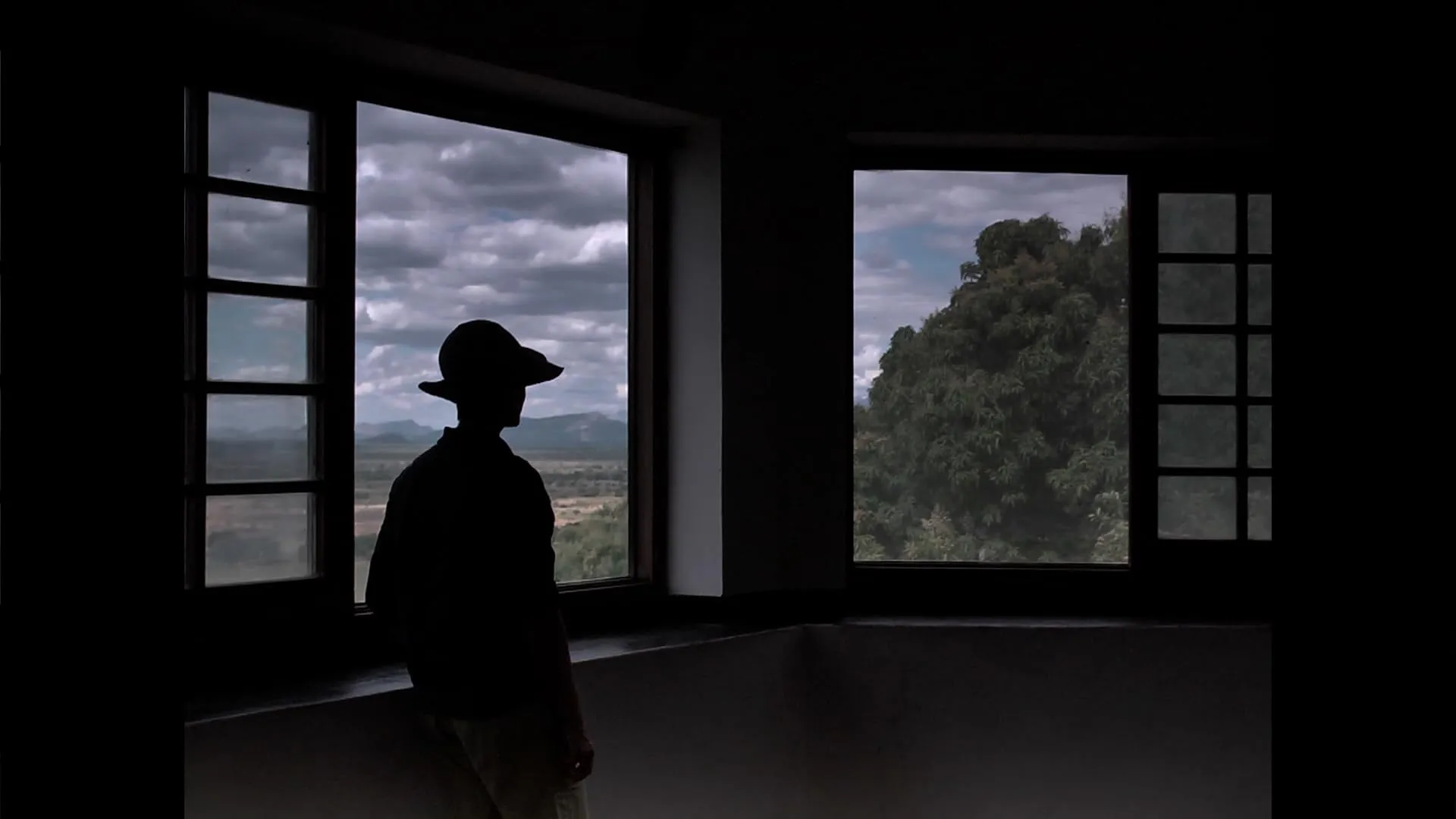
The structure turns on a measured juxtaposition of archive and place. Júlia’s letters, full of daily hopes and private worries, unfurl as a continuous voiceover while the screen shows contemporary Mozambique. Ruivo favors long, unhurried shots of city streets and open landscapes, frames that rest long enough to ask the eye to scan edges and textures.
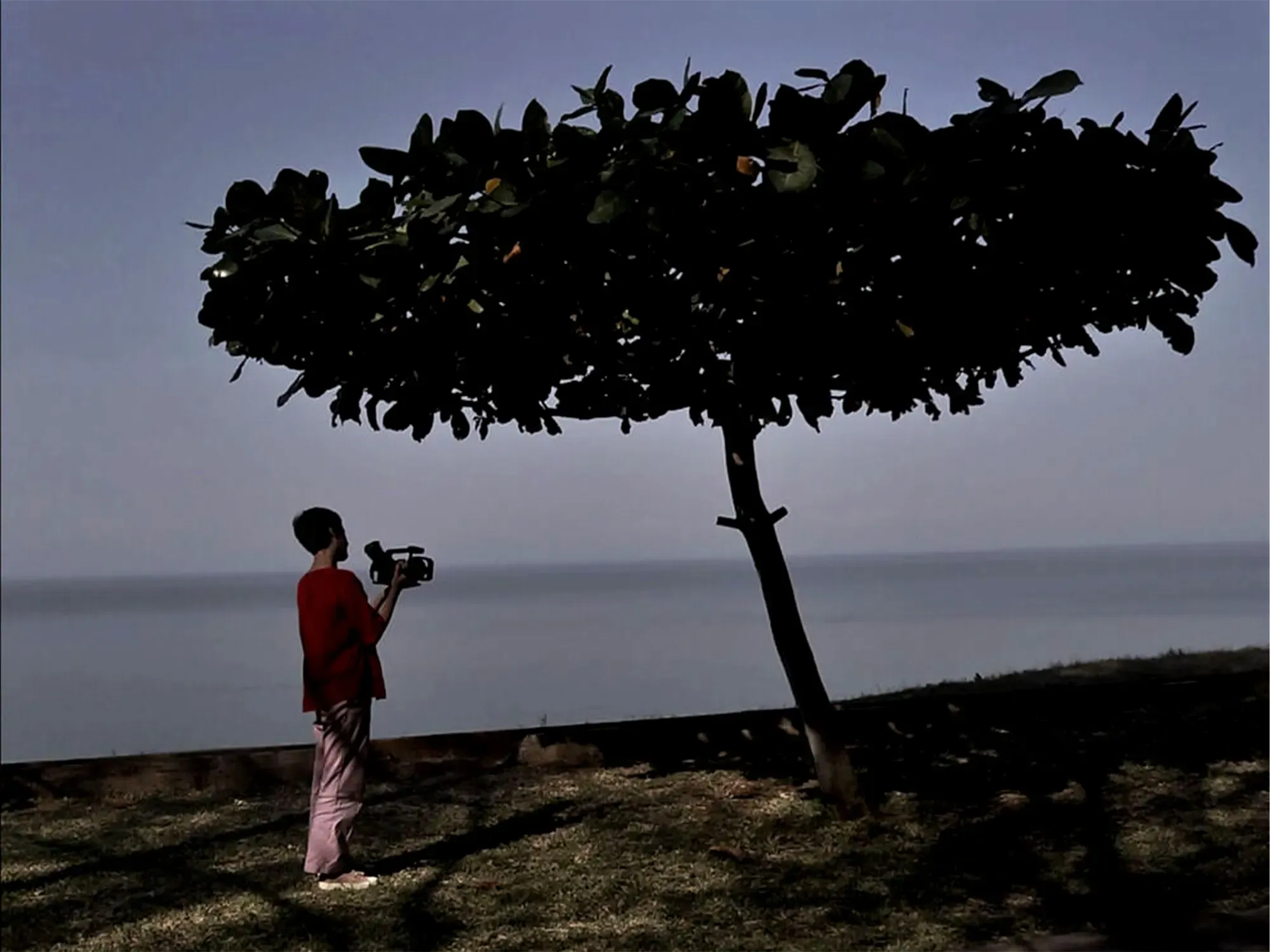
Anonymous figures cross the image and carry out routine tasks, quiet bodies within a present-tense world. The design sets memory beside aftermath, voice beside environment, the preserved page beside a post-colonial reality that continues to move and labor. Ruivo returns to images that attend to emptiness, such as a carefully arranged room or an unoccupied bed. The motif works as a visual sentence about absence, a spatial placeholder that the recorded voice temporarily fills.
Repetition accumulates through the letters and the sustained takes, and the near three-hour duration amplifies that pattern. The tempo can yield a soft, meditative pressure, or it can produce a test of endurance. Viewers will decide which sensation prevails. Either way, the film insists on time as method. And on patience as a viewing tool.
Camera grammar supports this slow conversation between past and present. Shot length extends attention, composition flattens spectacle into a patient catalog of surfaces, and negative space speaks. Light rests on concrete, sky, and faces with minimal flourish, which lets the letters set tone and rhythm. Sound pulls weight as well. The constancy of a voiceover creates a metronome for pacing, and ambient noise from streets and fields nudges perception toward everyday cadence. The film behaves like a ledger of memory, line after line, until the eye starts reading images the way one reads handwriting.
The Unexamined Shadow of Bliss
Inside the letters, Júlia describes a new life in Africa with her husband, Ze, as a season of steady happiness. She records comfort and routine, mentions domestic servants, and takes satisfaction in her work as a chemistry teacher. Her descriptions of the local population often adopt a tone that reads as patronizing, even benevolent in a way shaped by colonial habit.
The risk appears in the film’s aesthetic attitude toward this “paradisiacal experience.” The material seldom subjects the 1940s and 1950s Portuguese presence in Mozambique to extended scrutiny. Only brief remarks suggest outside pressure, perhaps censorship or the echo of Ze’s supposed political activities. The larger political apparatus that allowed ease and privilege receives scant development, which leaves the glow of the letters to stand with limited resistance.
Ruivo’s pairing of the rhapsodic correspondence with images of anonymous, present-day life generates the clearest friction. A voice steeped in personal satisfaction meets a landscape charged with afterhistory. The device approaches critique, then retreats into elegy. Ethical ambiguity collects in that gap, and the film keeps that ambiguity intact. The questions hover. Free will or conditioning. Identity built from comfort or from contact.
A viewer can sense the moral gray, yet the edit postpones a direct reckoning. There is a wry irony in how the most sustained investigation arrives through simple adjacency. Voice here. Street there. A method that teases accountability while preserving tenderness. Noir has long studied the cost of desire and the fog of self-justification, and the letters echo that lineage in miniature. The shadow lingers, and the frame moves on.
The Dynamics of Domestic Choreography
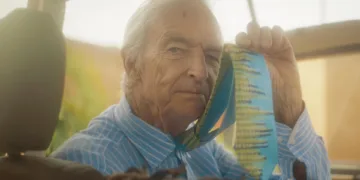
Late in the film, the focus reorients toward footage of the older Júlia back in Portugal. These recordings, often vertical and plainly captured by the director, trade the scripted order of letters for the candid immediacy of home video. The shift brings oxygen.
Energy returns to the screen through movement, touch, and glances that happen in real time. The older woman appears curious and active, present in ways that the youthful voice on paper cannot fully model. Here the film locates a different register of truth, the small accuracy of routine.
Ruivo lingers on rural rituals, meticulous scenes of dough being kneaded, loaves placed for baking, and meals prepared with unshowy care. The mise-en-scène narrows from cities and histories to hands and heat. Chiaroscuro arrives in miniature inside kitchens and doorways, a domestic noir in which light defines edges of labor and patience. Rhythm shifts from the cadence of reading to the cadence of doing. Sound turns tactile, the scrape of a bowl, the soft percussion of folding.
The camera’s stillness lets action write the shot. Tension now springs from anticipation of completion, a bread’s rise or a plate’s arrival, rather than from historical dissonance. A small joke sneaks in through the repetition, the idea that a proofing dough can outpace any grand theory of time. It often does.
These sequences steady the film. They restore body to a narrative that risks thinning into abstraction. They return the subject to weight, temperature, and task, and they keep the elegiac impulse from crowding out vitality. The portrait gains dimension through this choreography of chores, which asks the viewer to read identity through work and gesture. The earlier letters sketch a self through description. The later images build a self through presence.
The two approaches meet without ceremony, which lets the documentary sit between memory and record, desire and observation. The film remains an inquiry into how images can hold the dead near, and how duration bends perception toward care. The séance continues, now with flour on the table and time in the oven.
My Grandmother Trelotótó (Original title: A Minha Avó Trelotótó) is a Portuguese docu-fiction film with a runtime of 173 minutes. It premiered in 2019, notably winning the Allianz Award for Best Portuguese Feature Film at IndieLisboa. The deeply personal work follows filmmaker Catarina Ruivo’s attempt to resurrect the memory of her late grandmother, Júlia, through a poetic blend of family archives, intimate letters from colonial Mozambique, and home videos. It is occasionally available for streaming on platforms such as MUBI, and it has been screened at various international film festivals and art house cinemas.
Credits
Director: Catarina Ruivo
Writers: Catarina Ruivo
Producers and Executive Producers: António Pedro Figueiredo
Cast: Rita Durão, Júlio Ruivo, Ausenda Vital, José Coelho, Graça Bastos
Director of Photography (Cinematographer): João Ribeiro, Catarina Ruivo, Irmã Lúcia
Editors: Catarina Ruivo
The Review
My Grandmother Trelotótó
Catarina Ruivo’s epic non-fiction piece masterfully uses archival contrast to explore identity and mortality. While the intimate footage of Júlia’s final years achieves profound vitality, the protracted runtime and the film’s reluctance to truly interrogate the colonial bliss described in the letters create a significant philosophical and ethical gap. It is a stunning visual exercise in remembrance, yet it remains tethered to an unexamined past. A striking, if flawed, cinematic séance.
PROS
- Masterful archival juxtaposition and visual structuring.
- Profound intimacy captured in the later home video sequences.
- Ambitious thematic scope dealing with memory and immortality.
- Dynamic, powerful scenes detailing domestic, rural rituals.
CONS
- Excessive, challenging runtime of nearly three hours.
- Pacing suffers due to the repetitive nature of the correspondence.
- Fails to critically interrogate the colonial narrative or historical context.
- The Mozambican footage feels merely illustrative, not argumentative.