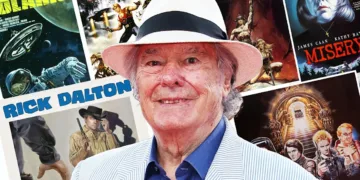



















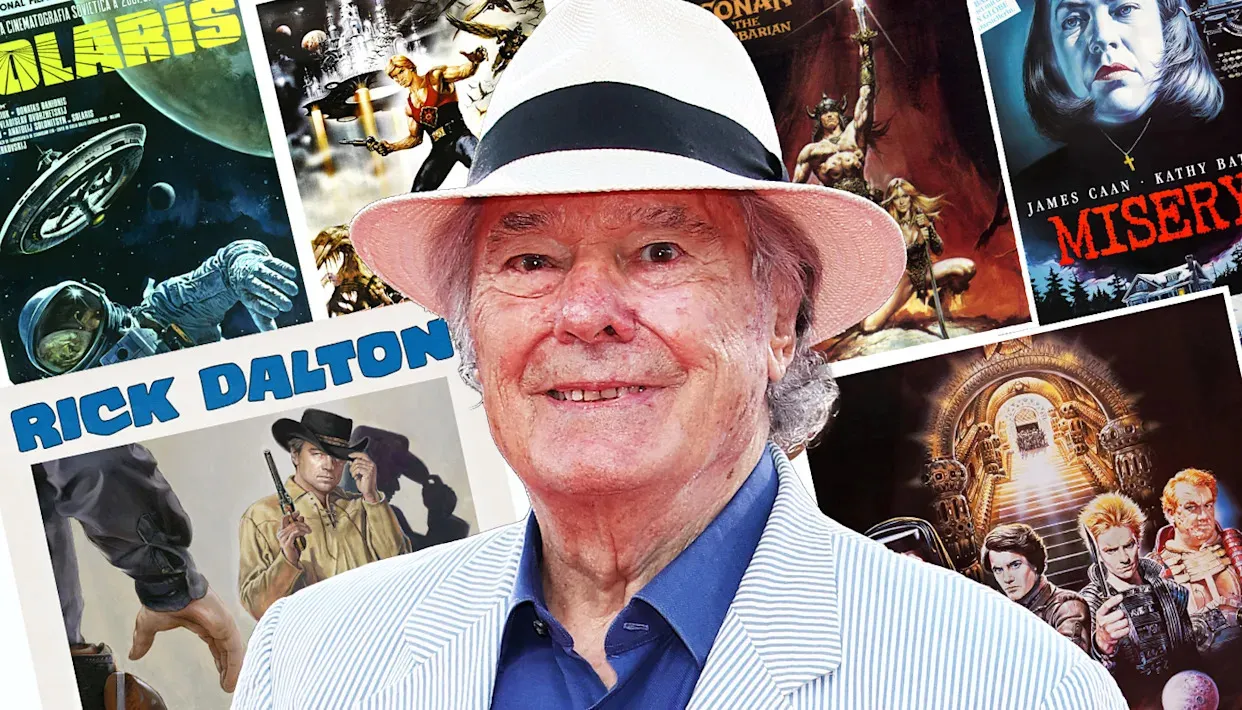

Renato Casaro, the Italian illustrator whose hand-painted movie posters helped define the look of European and Hollywood publicity art from the 1960s through the 1990s, died on September 30 in Treviso at 89. His images for films ranging from spaghetti westerns to fantasy epics became international calling cards, prized for panoramic composition, dramatic lighting, and star-forward iconography that sold stories in a single frame.
Casaro emerged from Treviso’s local cinemas, moved to Rome as a teenager to work in a major studio, and soon opened his own shop, supplying artwork to Italian distributors and U.S. studios alike. Credits include campaigns for A Fistful of Dollars, Conan the Barbarian, Rambo: First Blood Part II, Octopussy, and The Last Emperor, a spread that shows how he adapted brushwork to genres as different as Leone’s dust-blown duels and 1980s action spectacle. He once explained that his heroic framing was a conscious choice—an aesthetic “weakness for heroes”—and that fantasy imagery drew inspiration from illustrators such as Frank Frazetta while remaining tailored to each film.
In recent years, museums in his home region mounted retrospectives, and a permanent “Sala Renato Casaro” opened within the national poster collection in Treviso, underscoring how his commercial assignments have migrated into cultural heritage. Exhibitions this year revisited his western iconography and restored large-format pieces, situating his output alongside Italy’s broader graphic tradition from Cinecittà to the multiplex era.
Collectors and designers often cite Casaro’s process as a bridge between classic atelier craft and modern marketing. He sketched multiple layouts, painted final art at theatrical sizes, and frequently produced variant campaigns for different territories; his German teaser for Conan, for instance, reinterpreted the American one-sheet while preserving the towering, mythic pose at the center. As studios cycle back to illustrated campaigns for special editions and festival premieres, his archive has become a reference point for how expressive drawing can still cut through saturated digital feeds.