















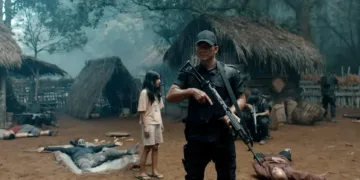











How does a country vanish? It is not a matter of simply being removed from a map, an administrative change of ink and border lines. A nation’s disappearance is a process of violent subtraction, an unwriting of daily life, memory, and future tense. Emily Mkrtichian’s documentary There Was, There Was Not arrives as a stark, accidental ethnography of this very process.
The film did not set out to capture the end of a world; its initial aim was far quieter, focused on the textures of life in the Republic of Artsakh. It sought to document a society striving for normalcy through the experiences of four women. What it becomes, through the terrible intervention of history, is a primary document of a nation’s final days.
The film’s title is drawn from the traditional opening of an Armenian fairytale, a phrase that holds both existence and its absence in a delicate balance. Here, the fairytale is inverted. The film is not a story of what might have been, but a devastatingly clear record of what was, just before it was rendered into myth.
The Architecture of Hope
Before its reality was fractured, Artsakh is presented as a place of intricate, lived-in detail. The film builds its portrait of this precarious peace by introducing four women who personify the nation’s complex identity. We meet Sveta, a single mother whose profession is the de-mining of old battlefields. Her work is a constant, physical negotiation with the past, a dangerous form of gardening where she pulls the metallic roots of a previous war from the soil to allow a future to grow.
She is the nation’s memory and its cautious hope for a clean slate. Then there is Siranush, a politician maneuvering through the entrenched patriarchy of the Stepanakert city council. Her campaign, full of street-level canvassing and earnest debate, represents a formal attempt to shape the state’s civic character, to write new rules of inclusion into its foundation. In a quieter but perhaps more radical corner is Gayane, the founder of a women’s center.
Her work creates a small, vital sanctuary for challenging cultural norms, a space where the very definition of a woman’s role is debated. It is a fragile enterprise, dependent on the tolerance of men in power. Finally, the film offers Sose, a young judoist whose ambitions are aimed at an Olympic medal. Her aspirations are a powerful symbol of Artsakh’s desire for international recognition beyond the grim context of geopolitical conflict.
Also Read






She embodies the dream of a normal life, of a country known for its athletes, not its casualties. Mkrtichian’s camera renders their worlds with a patient, sensory richness, lingering on the mundane poetry of sunlight on a wall or the preparation of a meal. These are not disparate stories; they are the interlocking components of a society building itself, one landmine, one vote, one debate, and one dream at a time.
The Abrupt Caesura
The film’s deliberate, observational rhythm is violently broken. The shift is not just thematic but formal; the composed, steady cinematography gives way to the frantic, raw grammar of war. A handheld camera captures the shock of air raid sirens and the alien sight of smoke plumes rising above the city. The documentary’s structure collapses along with the society it was depicting. In this maelstrom, the women’s lives are fundamentally repurposed, their skills finding new, tragic applications.
Sveta, the expert in old explosives, must now pivot to educating her neighbors about the sophisticated, unexploded ordnance of a new war. Gayane, who built a haven for women, now uses her organizational talents to manage the logistics of a humanitarian crisis, gathering supplies for the displaced. Siranush, who sought to build the future through politics, becomes a chronicler of its destruction, a citizen journalist armed with a camera.
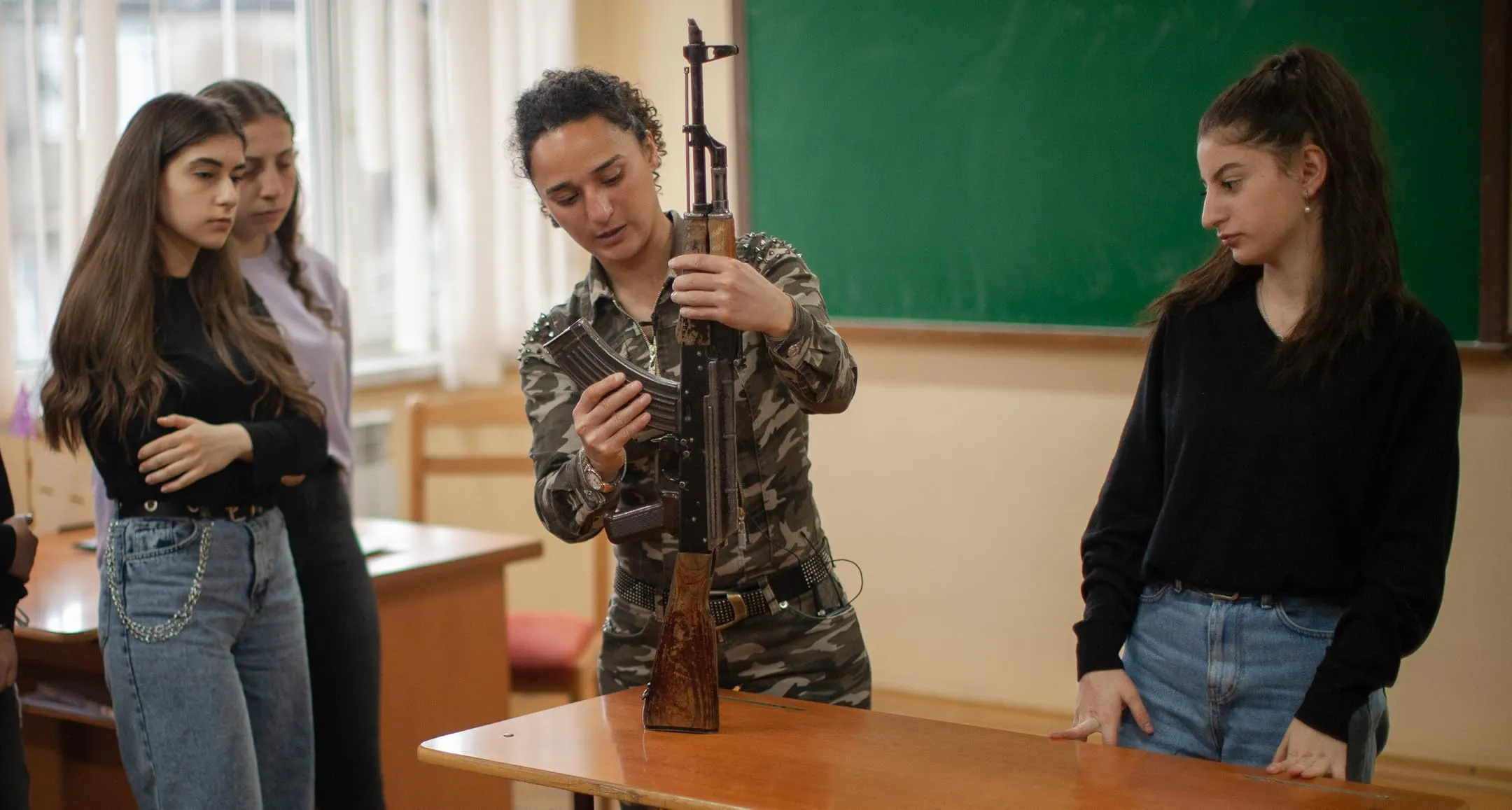
Sose’s transformation is the most visually and spiritually devastating. The athlete, once defined by the controlled combat of her sport, volunteers for the front line. The film presents a brutal juxtaposition: Sose in her white judogi teaching holds to children, and Sose in army fatigues teaching young girls how to handle a rifle. Her Converse sneakers, visible beneath her uniform, are a small, absurd detail that underscores the desperate, improvised nature of the defense. The narrative threads, once parallel, now cross in the fog of war, their individual stories subsumed into a collective fight for survival.
An Archive of Absence
The war lasts 44 days. A peace agreement results in the surrender of most of Artsakh’s territory. The film’s final section is an elegy, documenting the hollowed-out reality that remains. It is a portrait of psychological displacement, of people living as ghosts in their own homes, their futures amputated. Mkrtichian’s project, born of curiosity, solidifies into a crucial historical artifact. It is an archive of what was, a meticulous catalog of a way of life targeted for erasure.
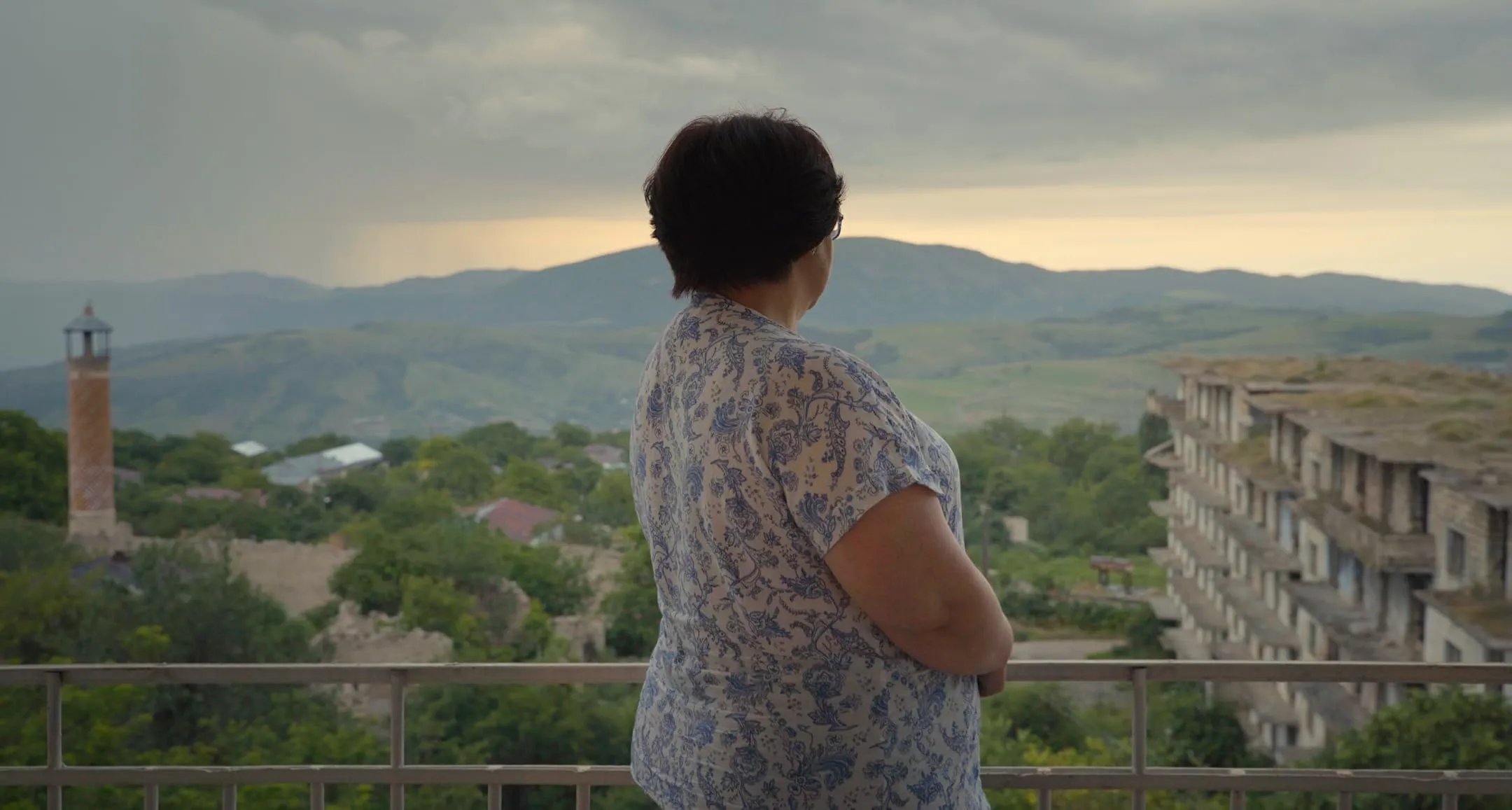
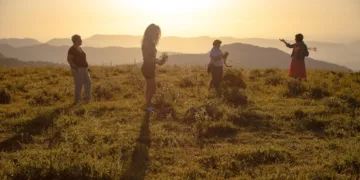
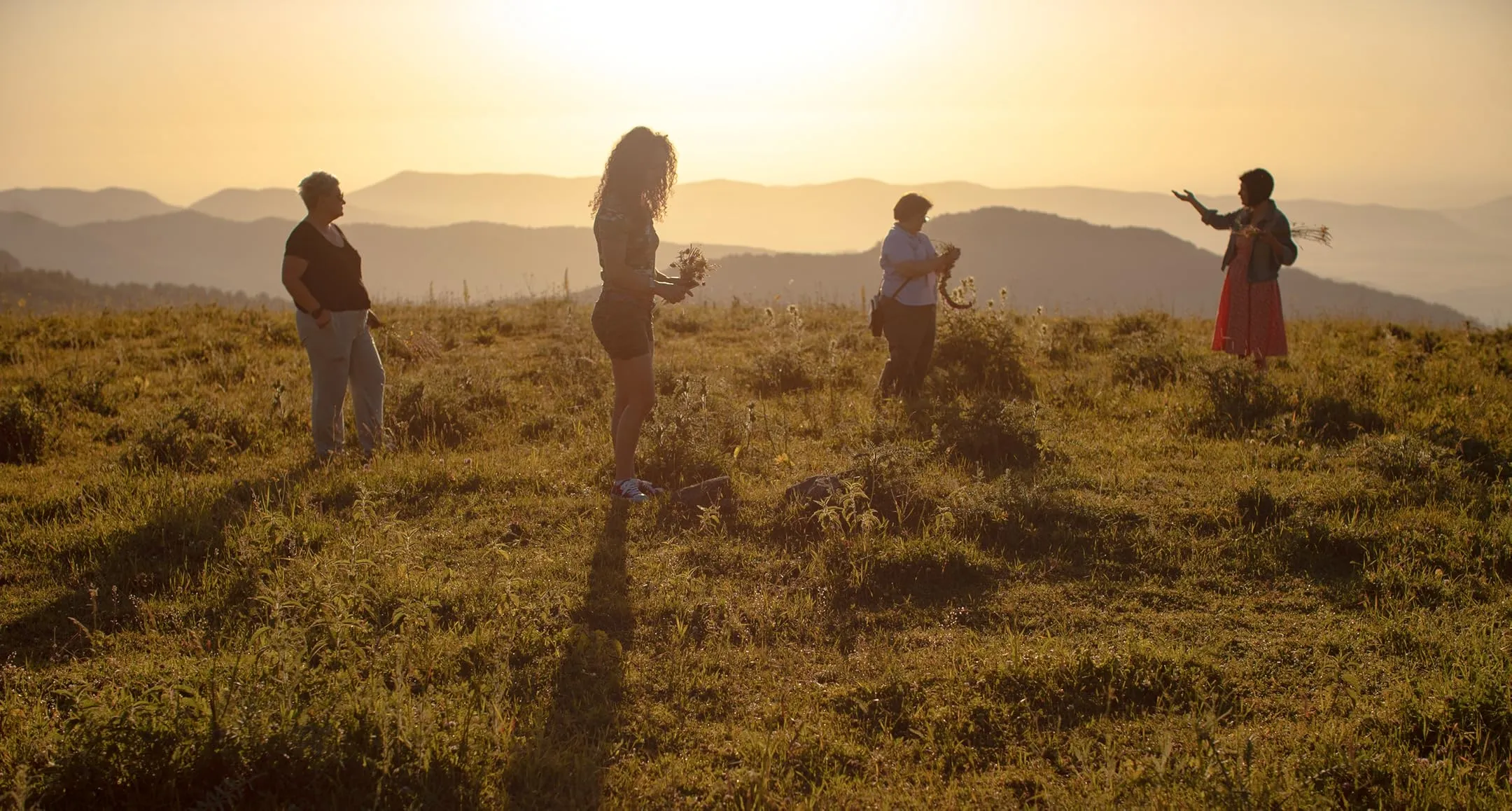
The film stands as a counter-document, a personal testimony against the clean, impersonal lines drawn by distant powers. There is no sense of closure here. The final mood is one of an unending, quiet grief. A concluding scene gathers the four women in a moment of peace against a beautiful landscape, but the tranquility is agonizing. It is the beauty of a graveyard.
The film’s ultimate power lies in its translation of an abstract geopolitical event into an intimate, tangible loss. It does not just report on the disappearance of a country; it forces the viewer to witness the act, to feel the weight of a place as it slips into the past tense, leaving behind only the evidence on film that it was ever there at all.
“There Was, There Was Not” is a feature documentary directed by Emily Mkrtichian, titled after the traditional opening line of Armenian fairy tales. The film tells the story of Artsakh (a disputed territory between Armenia and Azerbaijan) through the intimate lives of four Armenian women—a politician, an Olympic-hopeful athlete, a domestic violence activist, and a woman who disarms land mines—as they face the aftermath of war and find strength to fight for their homeland and future. The film’s earliest reported release date was February 29, 2024, in the US. It has been primarily showcased on the film festival circuit, including screenings at DOC NYC, True/False, and the New Orleans Film Festival. As of now, it is not yet available for wide release or on major streaming platforms.
Full Credits
Director: Emily Mkrtichian
Writers: Emily Mkrtichian
Producers and Executive Producers: Mara Adina, Emily Mkrtichian, Brock Williams, DD Wigley, Alexandria Bombach
Cast: Gayane Hambardzumyan, Svetlana Harutunyan, Siranush Sargsyan, Sosè Balasanyan
Director of Photography (Cinematographer): Emily Mkrtichian
Editors: Alexandria Bombach, Ilinca Calugareanu, Anne Fabini, Emily Mkrtichian
Composer: Ruben De Gheselle
The Review
There Was, There Was Not
There Was, There Was Not is an accidental masterpiece of historical witness. What begins as a gentle portrait of life unexpectedly becomes a devastating, essential archive of a nation’s erasure. By remaining fixed on the intimate experiences of its four subjects, the film translates the abstract violence of geopolitics into a profound, tangible, and unforgettable human story. It is a necessary, heartbreaking piece of cinema that captures the very moment a place and its future are rendered into memory.
PROS
- An intimate, character-driven approach that makes a complex conflict deeply personal.
- Lyrical cinematography that beautifully establishes a sense of place and peace before the conflict.
- Functions as a powerful and vital historical document of a culture under threat of erasure.
- The transformation of the four women provides a compelling and heartbreaking narrative arc.
CONS
- The unstructured, observational style may feel aimless to viewers seeking a more traditional narrative.
- Its deliberate, quiet pacing, especially in the first half, could be challenging for some audiences.
- Leaves certain aspects of the aftermath, such as the women's adjustment to displacement, underexplored.