
























Kaytetye filmmaker Warwick Thornton returns to the red heart of his cinema with Wolfram, a historical drama set in the unforgiving Central Desert of Australia. The feature follows the line of the 2017 neo-western Sweet Country and sits within a contemporary Australian cycle invested in accounting for history. The story takes place in 1932, under the weight of colonial violence and the policies that produced the Stolen Generation.
Wolfram builds a two-part design. One thread tracks the urgent flight of two young Aboriginal mine workers and an older Aboriginal man as they race across harsh country. A second thread follows a mother who searches for her stolen children. Thornton frames the project as a continuation of his inquiry into the bloody costs of the frontier. He sets a regional past that often slips from public view in plain sight and asks audiences in Australia and abroad to face an unfinished reckoning.
Narrative Strands and Structural Dissonance
The film favors dispersion over a single heroic arc, shifting among core plotlines rather than locking onto one figure. The method departs from the tight pursuit model common to classical Westerns and offers a composite portrait of resistance in the 1930s outback.
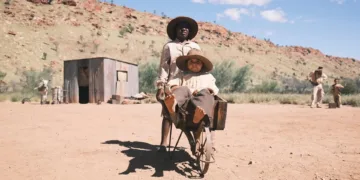
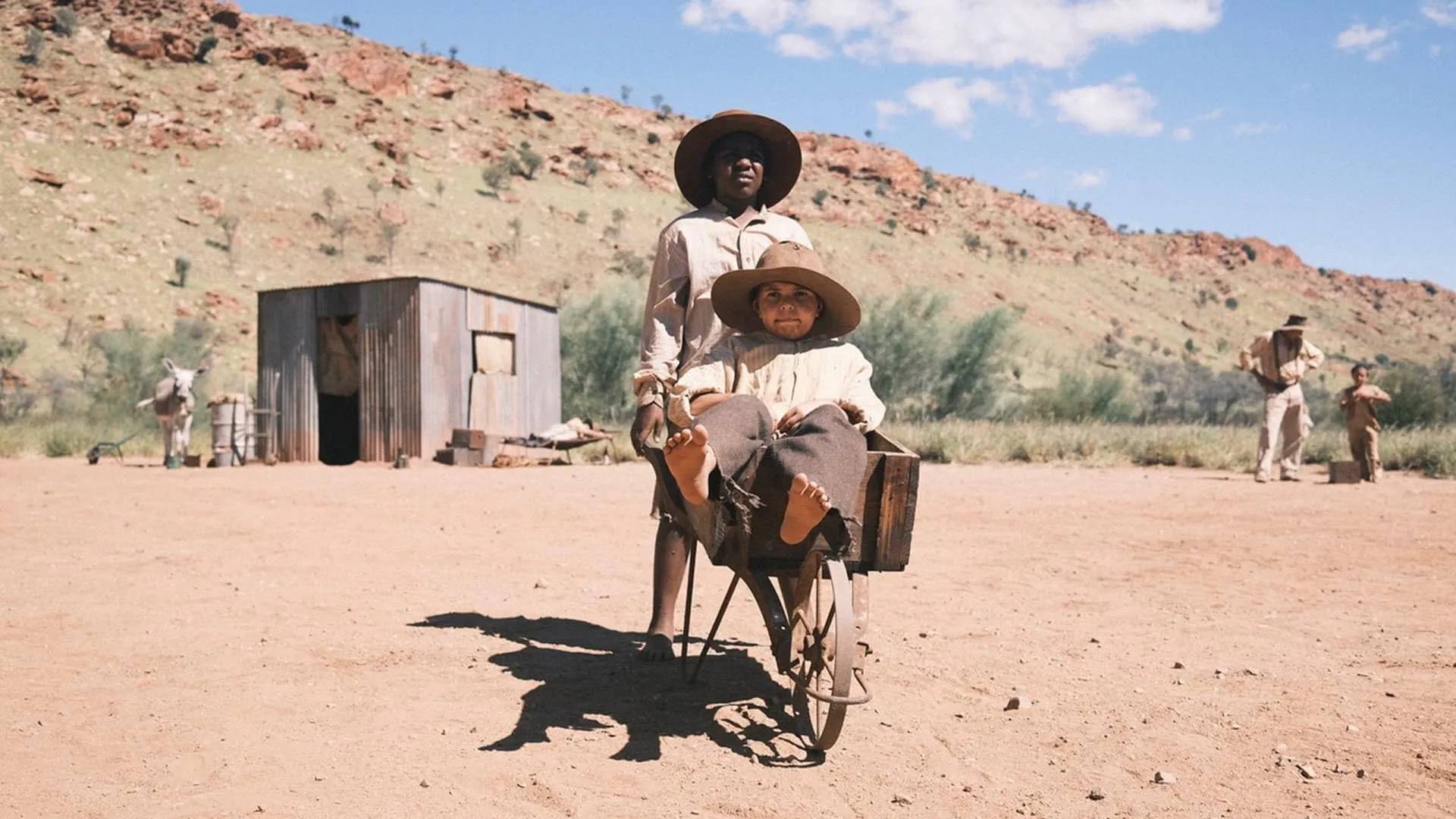
The primary movement tracks the escape of Aboriginal siblings Max and Kid, joined by the 18-year-old Philomac. Their break from the back-breaking tungsten mines sparks a chase led by station owner Mick Kennedy and his racist outlaw associates, Casey and Frank.
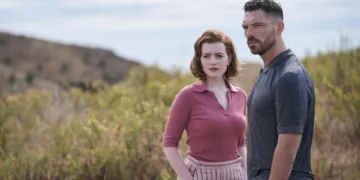
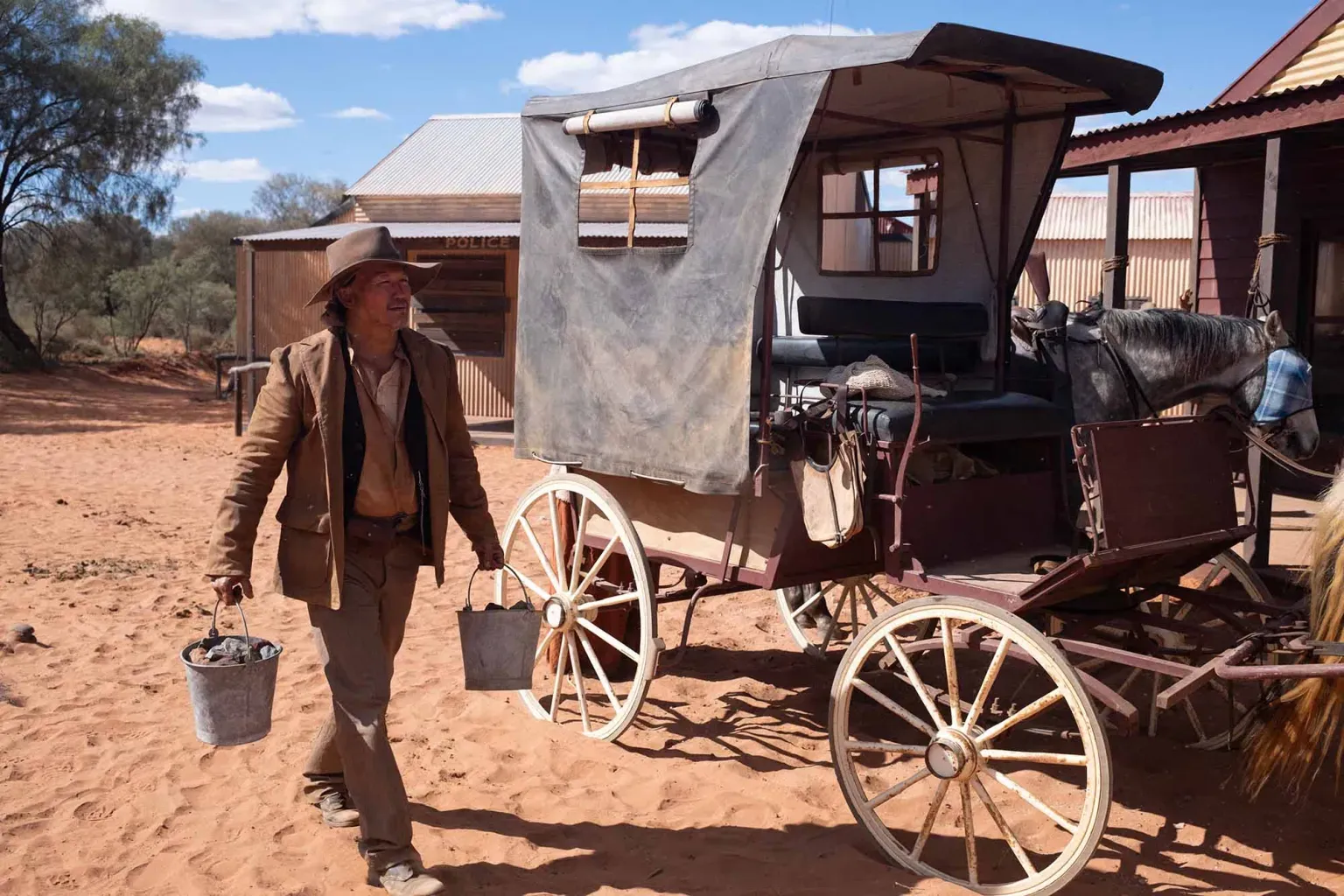
A parallel current follows Pansy and her Chinese mining prospector partner, Zhang. Pansy places beaded hair braids in the desert, a symbolic act that functions as a wayfinder and as an anchor of hope for reunion in an unstable world. The pacing recognizes the scale of the desert and the slow mechanics of survival.
At times the progression feels heavy and uncertain, short on a single dramatic engine to pull every scene. The tempo mirrors the characters’ lived grind, and Thornton threads in quick visual cues, including brief looks backward and forward, that act like small markers of desire and memory and broaden the psychological field beyond the chase.
Visual Storytelling and Cultural Authenticity
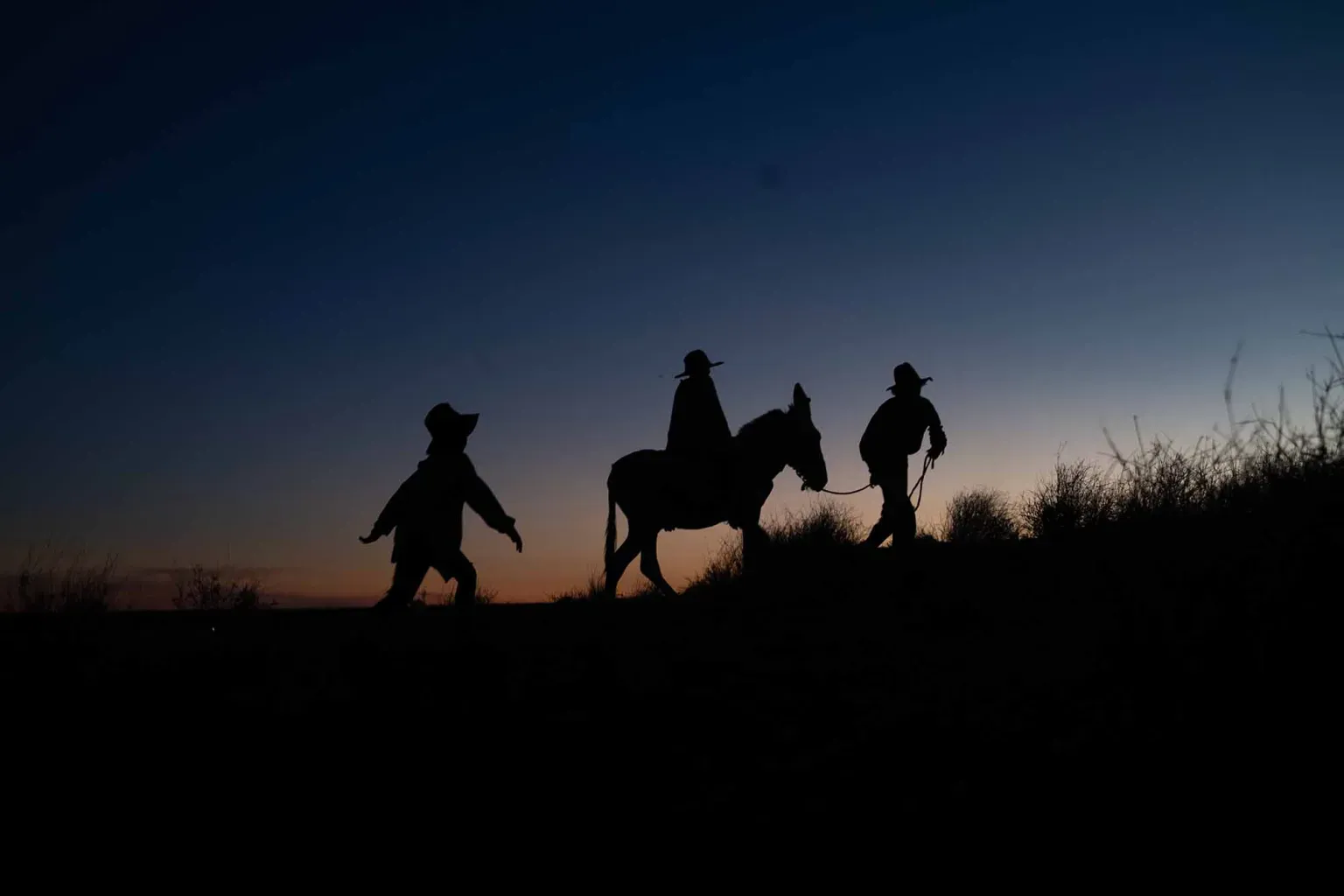
Thornton again shoots his own work, and that union of director and cinematographer yields an image world with strong cohesion. The palette leans into rough-hewn textures and ubiquitous dust. Heat haze and ever-present flies turn country into an active presence. The mood sits in a bruised melancholy that matches the story’s concerns with loss and endurance.
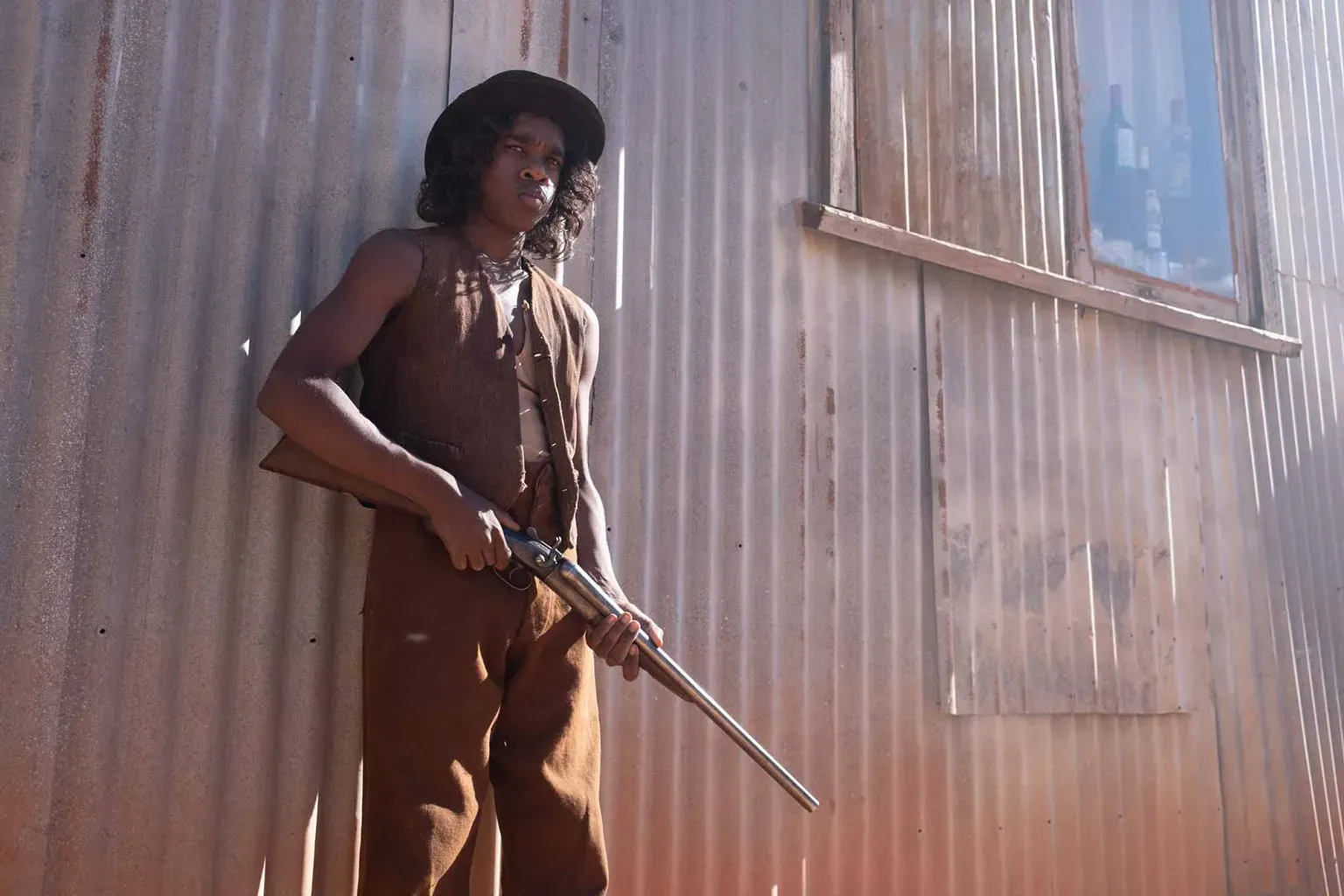
The approach to colonial violence rests on cultural care. Aftermaths arrive with clarity, while explicit acts often sit off-screen. The choice avoids shock tactics and keeps attention on the suffering and resilience of First Nations people.
The film glints with moments of refusal and persistence, a trace of gold against brutality. Wolfram adopts the visual codes of a revisionist Australian western while tying them to historical specificity that questions the mythology long attached to the American variant. The frame insists on cultural truth over spectacle and treats landscape as record, archive, and witness.
An Ensemble of Endurance and Magnetism
The ensemble gives the story a human scale. Emerging performers carry significant weight. Hazel Jackson as Max and Eli Hart as Kid center the film’s feeling through portrayals of children intent on escaping forced labor. Pedrea Jackson returns as Philomac with rare screen pull. The character’s need for connection colors his choice to guide the children and shapes his sense of self.
Deborah Mailman’s Pansy communicates deep ache through stillness and gesture, a study in quiet expression. The limited screen time for Pansy softens the impact of late scenes that hinge on her presence. Thomas M Wright counters with a hot, ugly force as Mick Kennedy, a drunken and exasperated father whose authority rests on colonial entitlement.
The film makes space for Australia’s Chinese heritage through Jason Chong’s Zhang and the miners Shi and Jimmi, a layer that widens the era’s social picture beyond a rigid black-white frame. Casey and Frank operate as blunt instruments of menace and keep pressure on the pursuit.
Wolfram reads as Australian in its textures, languages of place, and reckoning with government policy, and it still speaks to global audiences that recognize western iconography and the grammar of chase stories. Its structure adopts elements familiar to international viewers while insisting on local histories. The cross-current narrative shows how form and culture inform each other.
The dispersed structure unseats hero worship and highlights collective endurance. Visual strategies carry memory and grief across cuts and time flashes, and that dialogue between image and history shapes meaning. The result engages viewers who arrive through Western genre pathways and asks them to see how those pathways shift on Australian ground.
Wolfram is an Australian drama and western film, directed and photographed by Warwick Thornton, who returns to the setting of his acclaimed 2017 film Sweet Country. Set in the 1930s colonial frontier, the film focuses on the story of an Indigenous family, pulling from the Alyawarra family history of co-writer David Tranter, and is specifically told from the perspective of the women and children. The story centers on a matriarch named Pansy, a mother desperately longing for her stolen children, alongside a group of Aboriginal children who escape their cruel white masters in the Central Desert. Wolfram premiered as the Closing Night Gala at the Adelaide Film Festival on October 26, 2025. Wider distribution information for the film’s general release is still to be confirmed.
Credits
Title: Wolfram
Distributor: Adelaide Film Festival (Premiere), Retroflex Lateral Pty Limited, Wolfram Studios Pty Limited (Production Companies)
Release date: October 26, 2025 (Adelaide Film Festival)
Rating: Unclassified 18+
Running time: 100 minutes
Director: Warwick Thornton
Writers: Steven McGregor, David Tranter
Producers and Executive Producers: David Jowsey, Greer Simpkin, David Tranter (Producer), Cecilia Ritchie, Kurt Royan (Executive Producer)
Cast: Deborah Mailman, Pedrea Jackson, Thomas M. Wright, Hazel Jackson, Eli Hart, Erroll Shand, Joe Bird, Matt Nable, Jason Chong, John Howard, Luka May Glynn-Cole, Anni Finsterer, Gibson John, Natassia Gorey Furber, Aidan Du Chiem, Ferdinand Hoang
Director of Photography (Cinematographer): Warwick Thornton
Editors: Nick Meyers
The Review
Wolfram
Wolfram is a visually arresting, historically resonant drama that cements Warwick Thornton’s standing as a vital voice in global cinema. While its multi-protagonist structure occasionally leads to uncertain pacing and an emotional diffusion, particularly in the underutilized character of Pansy, the film remains a powerful meditation on colonial brutality and enduring resilience. The cinematography is masterful, and the ensemble cast, especially the young actors, infuses the harsh survival narrative with essential humanity. It is an important, though structurally imperfect, companion piece to Sweet Country.
PROS
- Masterful, visually stunning cinematography
- Powerful exploration of colonial violence and resistance
- Strong performances from the emerging young cast
- Respectful handling of violence (showing aftermath)
- Welcome inclusion of Chinese heritage in Australian history
CONS
- Diffuse narrative structure lacks a single strong dramatic drive
- Pacing is slow, sometimes feeling lumbering
- The character of Pansy is significantly underused
- Villains are often one-dimensional and straightforward
- Emotional impact is sometimes diffused across multiple storylines