
























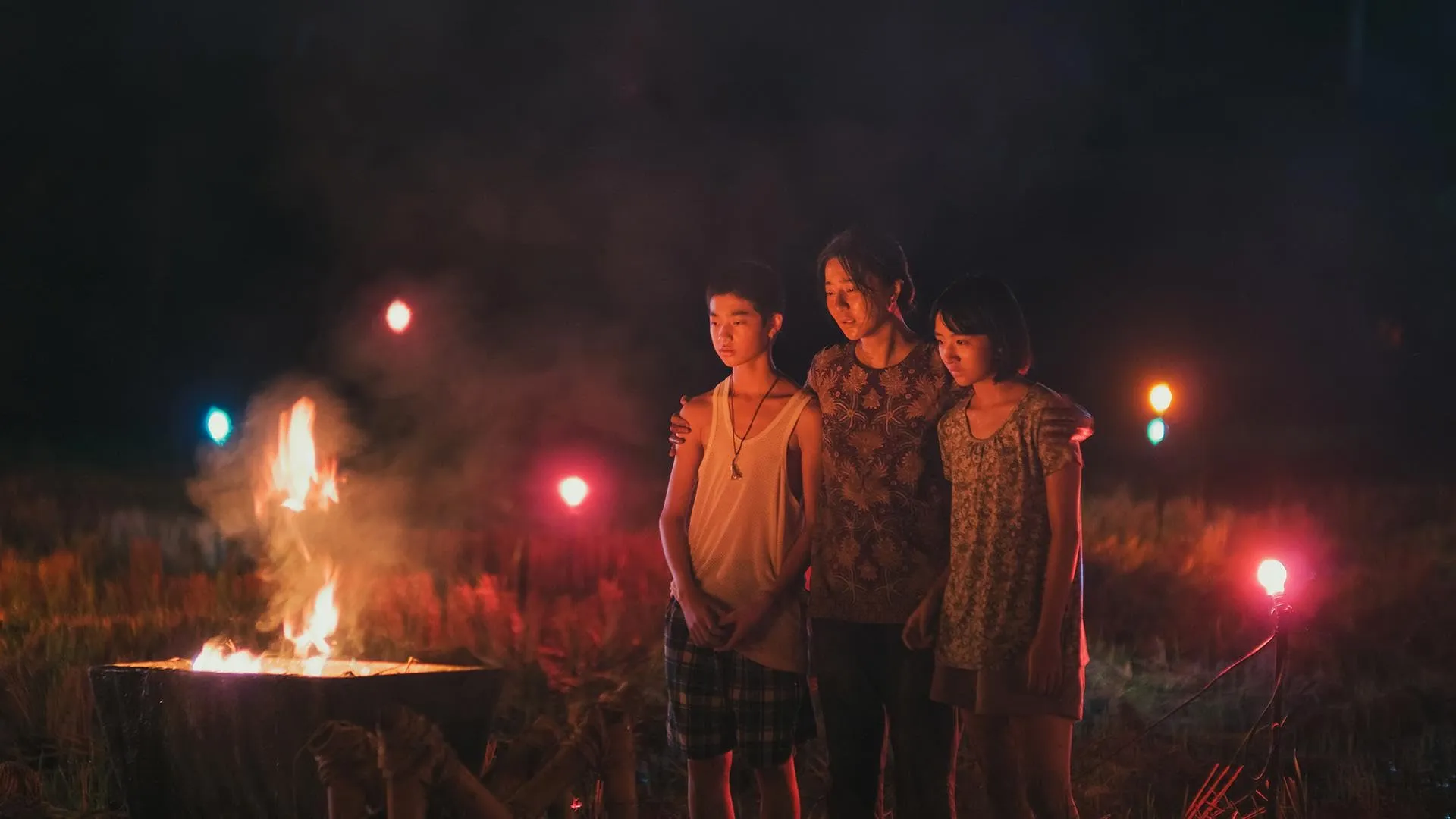

Mother Bhumi, writer-director Chong Keat Aun’s period drama, builds a century of historical trauma and cultural synthesis into one troubled family story. Set in the lush Bujang Valley on the Malaysia–Thailand border, the film uses the 1909 Anglo-Siamese Treaty as a backdrop for present-day disputes over land ownership.
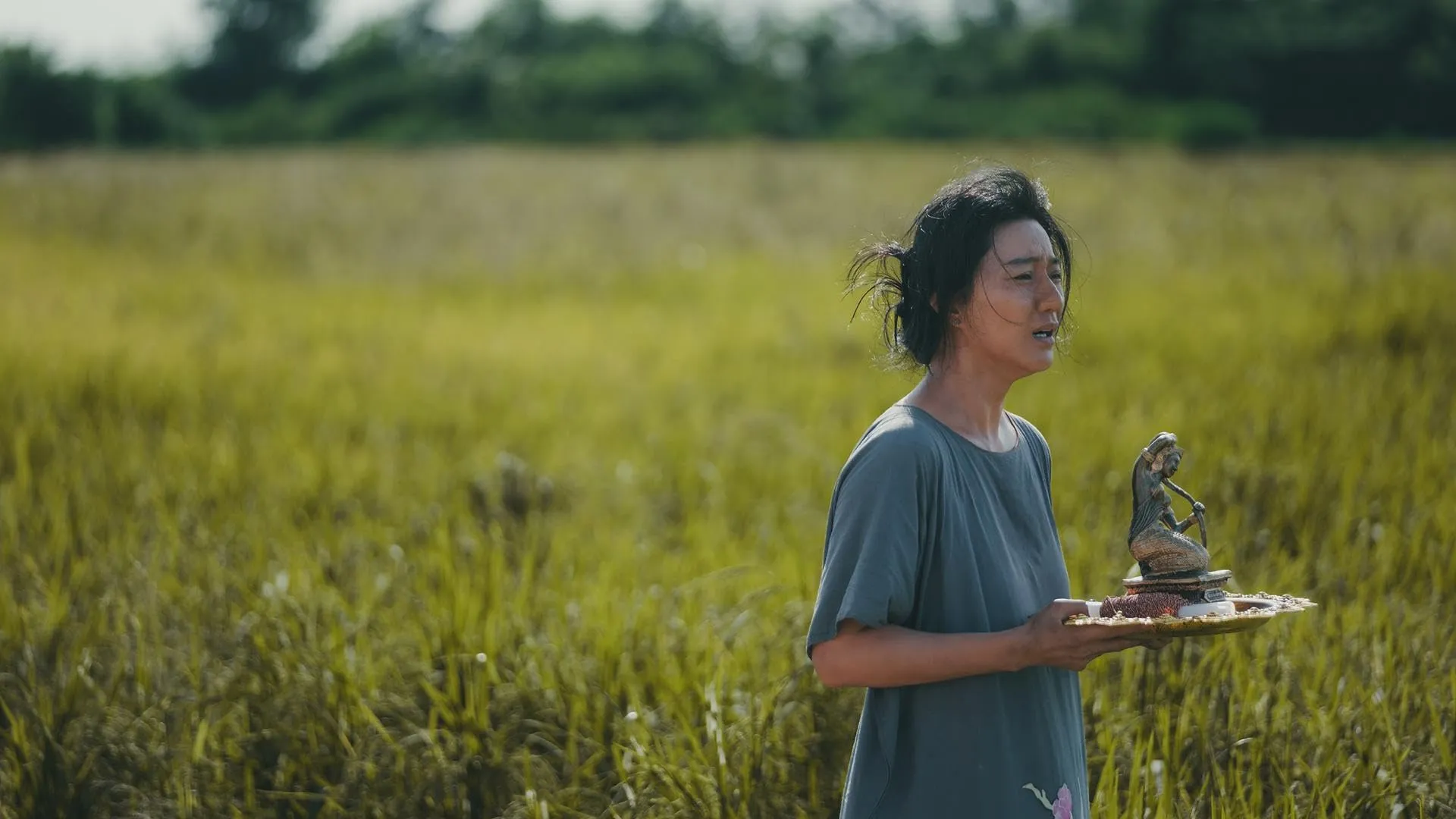
The narrative follows Hong Im (Fan Bingbing), a Chinese widow resisting the Malaysian government’s claims on long-held family farms. Her fight links a real-world battle against political eviction to her work as a local spiritual healer who conducts exorcisms and rituals. This ambitious mix of ethnic history, socio-political strain, and sorcery shapes a demanding cross-cultural text. The film studies how regional histories live inside the modern state, with its star grounding a stark, unglamorous performance.
Visual Language and the Burden of Place
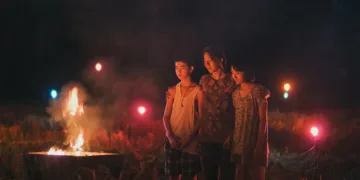
Cinematographer Leung Ming Kai crafts a striking look that treats the Bujang Valley as an active presence. Images lean into the region’s historical depth, marking it as a meeting point for Chinese, Thai, and Malaysian communities, alongside Buddhist, Confucian, and Islamic faiths.
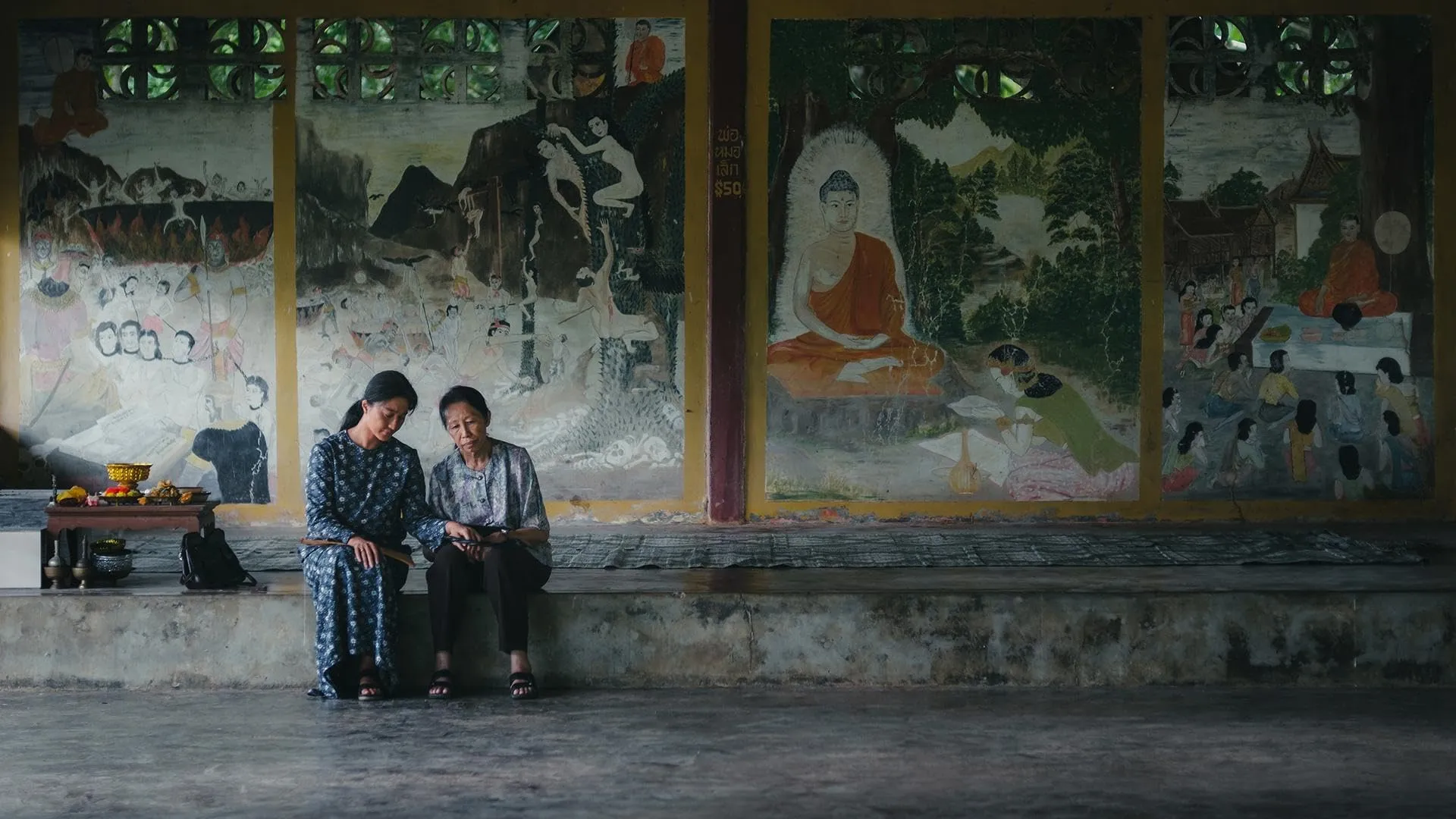
A classroom scene where Hong Im’s children study beneath depictions of Mohammed, Jesus, Lao Tzu, Buddha, and Confucius makes this cultural junction clear through a simple visual cue. Chong favors fixed medium and long shots, which place landscape and architecture ahead of moment-to-moment character psychology. The choice builds a strong sense of place while creating emotional distance.
The 2.35:1 frame widens the canvas to display the valley’s sweep. The scope adds historical weight, yet at times flattens relations between figures and space, turning the frame into a display surface rather than a pressure point for action. The mood that emerges carries the flavor of a cross-border past that still feels present.
When Politics and Possession Clash
The film’s hardest task lies in binding its many threads. Mother Bhumi combines real-world political concerns, including ancestral theft, land seizures, and misogyny, with supernatural elements that feature exorcisms, a malevolent witch doctor, and a water buffalo believed to be a loved one’s reincarnation. The mix creates an unstable experience.
Key details about land claims and historical stakes arrive in brief dialogue or background news, which keeps information distant and muted. The approach points toward meaning without fully articulating it. A sharp late turn shifts the piece from period drama to a full supernatural drive, and the change undercuts the power of the central inquiry into trauma and struggle.
The plot carries many lines that do not lock together. Pacing troubles widen the gap, with scenes that feel telegraphed and a rhythm that loosens the grip on immediacy. As a study of narrative design, the film sets a clear thematic goal, then scatters viewer attention across competing systems of cause, belief, and consequence.
Fan Bingbing’s Gritty Repertoire Shift
Fan Bingbing anchors the film as Hong Im with a performance that breaks from her usual screen image. The work is raw and physically taxing. Sweat and grime sit on the body of a woman shouldering a fight against a government apparatus while tending to spiritual needs in her community.
The role moves between practical action, like waiting in a dingy mall to argue land claims, and ritual intensity, including writhing during exorcisms and singing a ballad before a giant phallus. The portrait of a hardworking mother enduring years of political unrest drives the movie’s emotional line. Some heightened moments push the acting toward excess, yet her presence holds the film from first scene to last, giving the ambitious historical and magical frame a human axis.
Mother Bhumi is a 2025 Malaysian-Italian co-production, a historical drama that blends themes of political unrest, land rights, and supernatural mysticism in the multi-ethnic Bujang Valley on the Malaysia-Thailand border. The film focuses on Hong Im, a widowed farmer played by Chinese star Fan Bingbing, who acts as both a resistance figure against land seizures and a ritual healer for her community. It premiered globally on October 27, 2025, in the main competition section of the 38th Tokyo International Film Festival, and has garnered multiple nominations at the Golden Horse Awards. The film is distributed by Rediance, but its wider theatrical or streaming release availability beyond the festival circuit has not yet been confirmed.
Credits
Title: Mother Bhumi (地母)
Distributor: Rediance
Release date: October 27, 2025 (World Premiere at Tokyo International Film Festival)
Running time: 129 minutes
Director: Chong Keat Aun
Writers: Chong Keat Aun
Producers and Executive Producers: Jment Lim, Victor Ren, Calvin Choi (Executive Producer), Wong Kew Soon, Stefano Centini, Zoey Teng
Cast: Fan Bingbing, Natalie Hsu, Bai Run-yin, Pearlly Chua
Director of Photography (Cinematographer): Leung Ming Kai
Editors: Erik Moh
Composer: Yii Kah Hoe, Chong Keat Aun
The Review
Mother Bhumi
Mother Bhumi is a visually powerful portrait of a complex, layered border region, anchored by Fan Bingbing's committed performance. The film excels in capturing the historical and atmospheric texture of the Bujang Valley. However, its expansive ambition is undone by a lack of narrative discipline. The blend of political strife and explicit magical genre elements becomes convoluted, making it difficult to grasp the stakes or the central message. It is a striking film whose thematic reach exceeds its narrative grasp, leaving the core story feeling distant and unresolved.
PROS
- Features striking cinematography and beautiful use of the natural, historical setting.
- Fan Bingbing gives a compelling, gritty lead performance that breaks her traditional image.
- Effectively depicts the unique cross-cultural and religious melting pot of the borderland.
- The film attempts to address significant themes of colonial history and land rights.
CONS
- The plot is convoluted, with too many disparate storylines (politics, sorcery, buffalo reincarnation) that do not cohere.
- The film is often too slow, and some scenes feel overly prolonged.
- The use of fixed camera shots keeps the audience at an emotional distance from the characters' suffering.
- The move from historical drama to a full-on, less credible supernatural genre film in the final act is disruptive.