


























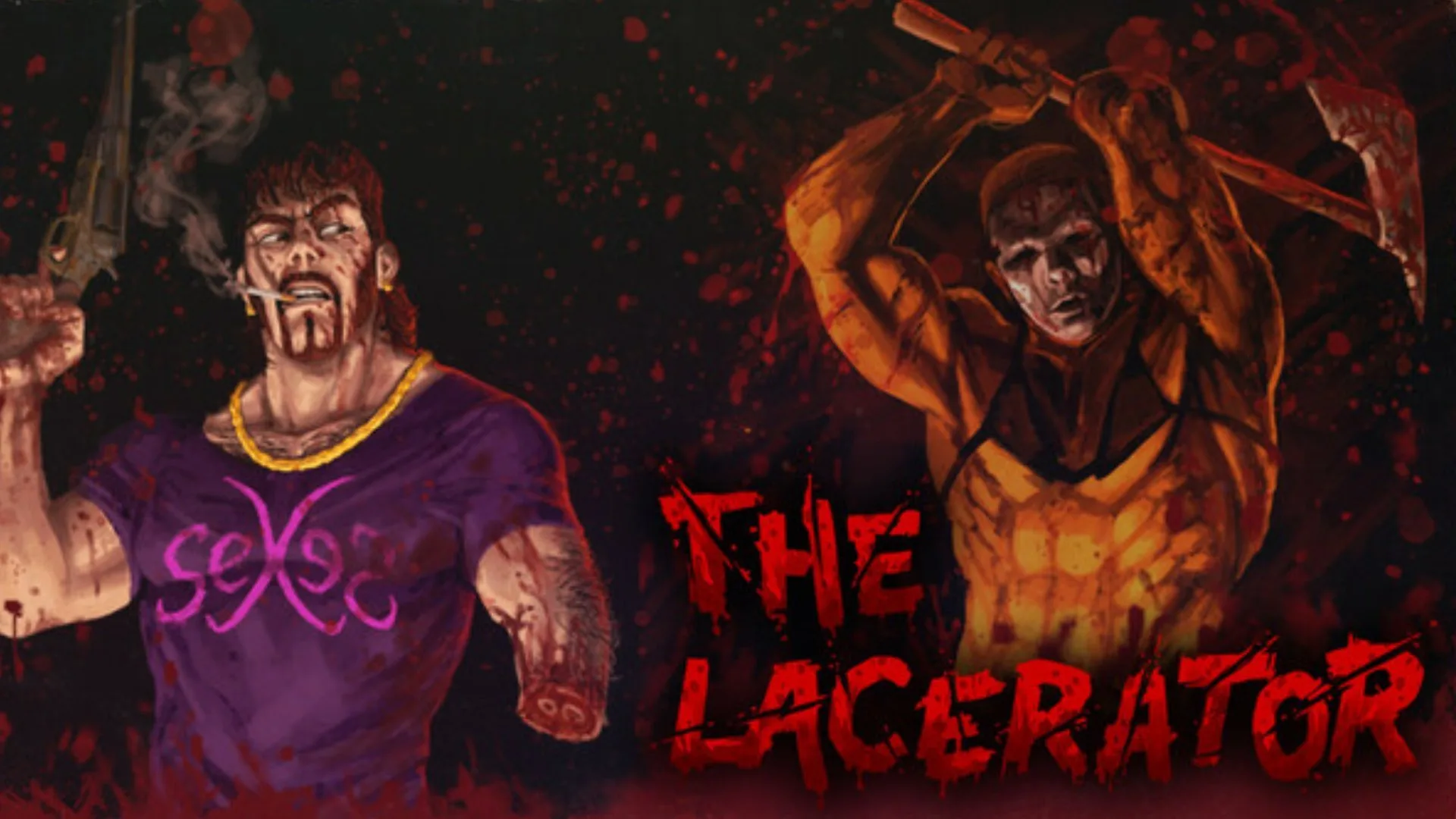

The Lacerator, from developer Games from the Abyss and publisher Dread XP, occupies a strange space in horror gaming. This is a game that openly mocks the survival horror titans that defined the genre while demonstrating a thorough understanding of what made them work in the first place.
You play as Max, a chain-smoking adult film star from the 1980s who wakes up in a basement dungeon after a particularly eventful shoot. The premise is absurd by design, leaning into exploitation cinema aesthetics with its PS1-era blocky polygons and grungy textures.
Each playthrough runs about one to two hours, and the game expects you to return multiple times to explore different routes and endings. What sets it apart is its central mechanic: you can lose limbs to traps and continue playing, with each missing body part fundamentally changing how you interact with the world. The game walks a tightrope between legitimate scares and straight-faced absurdity.
How Dismemberment Shapes Play
The Lacerator gives you two ways to experience its horror: a fixed camera with tank controls that recalls the original Resident Evil, or a more modern over-the-shoulder perspective. Combat follows familiar patterns: hold one button to ready your weapon, press another to attack. Ranged weapons feel manageable once you get your hands on them, though ammunition remains scarce through the early hours.
Melee combat reveals the game’s mechanical roughness. You need to back away from enemies between strikes, but the game refuses to let you hold the run button during this dance. You have to time your input perfectly after each swing to create distance before the next attack. Once you internalize the rhythm, encounters become predictable. The game compensates by making guns more available as you progress.
What distinguishes The Lacerator from its inspirations is how it handles injury. Most survival horror games treat dismemberment as failure. Here, losing an arm or leg simply changes the rules. Lose a leg and you’ll hop slowly through corridors, or crawl when you’ve lost both. This opens up new paths: you can squeeze under certain traps while grounded, accessing areas that were previously blocked.
Lose an arm and combat becomes significantly harder, particularly with firearms. The game even lets you replace lost limbs with weapons, offering a chainsaw arm that nods directly to Evil Dead. This creates genuine tension around every trap. Do you risk keeping all your limbs intact for the best ending, or do you accept strategic losses to explore alternative routes?
The absence of a map heightens the exploratory tension. You’ll traverse corroded environments without the safety net of cartography, forced to memorize layouts through repeated exposure.
Laughter in the Halls of Horror
The Lacerator succeeds as parody because it could function as a legitimate horror game if it wanted to. The environments are appropriately decayed and unsettling. The sound design relies heavily on ambient noise: your footsteps, distant mechanical groans, the occasional crackle from an in-game radio. Music appears only during enemy encounters, creating a stark contrast between exploration’s quiet dread and combat’s sudden intensity.
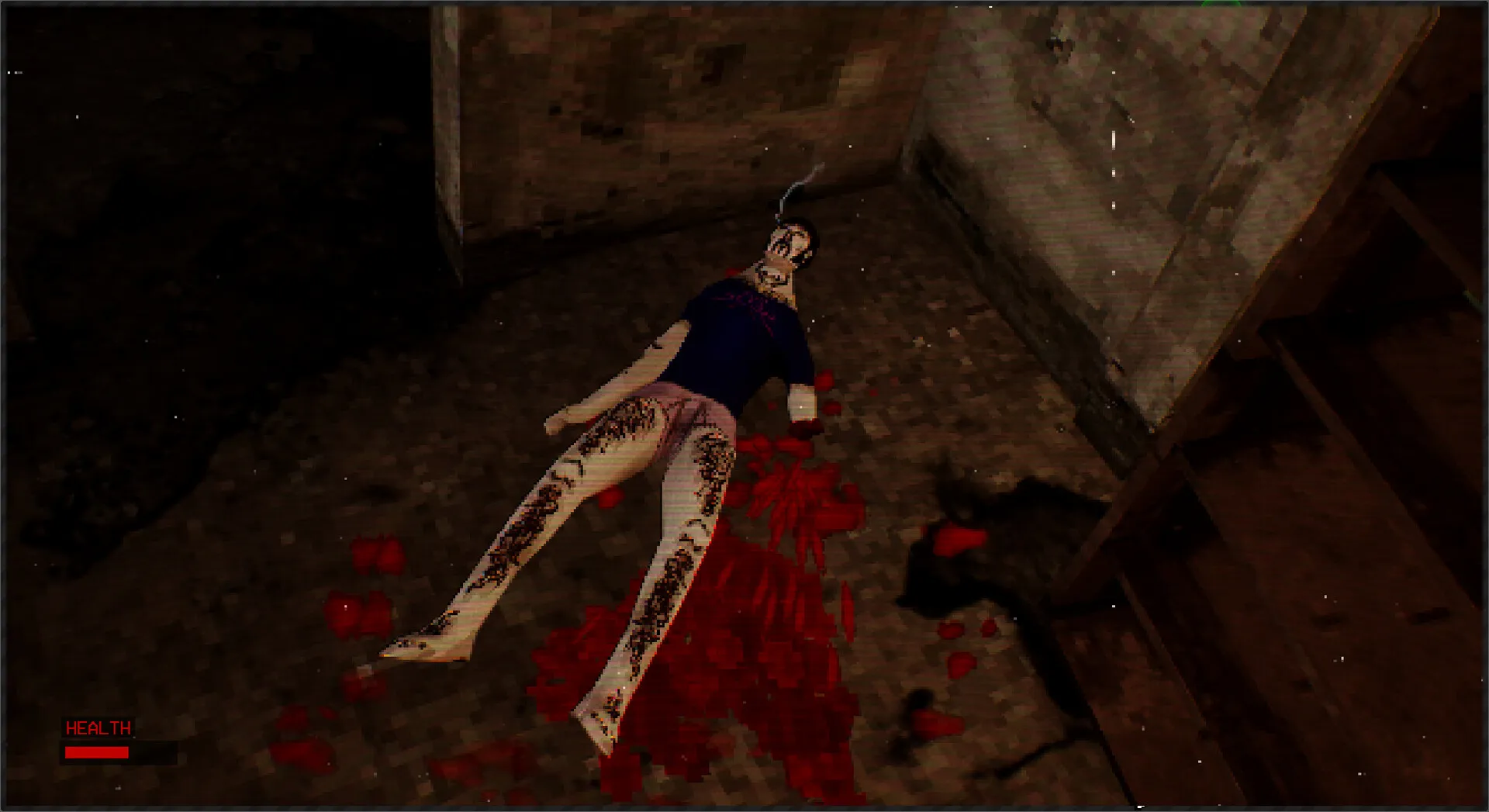
The PS1-era visual aesthetic serves the grindhouse tone perfectly, with its blocky models and low-resolution textures evoking both technical nostalgia and deliberate griminess. Menu screens adopt a high-contrast 1980s microcomputer style.
The humor operates through contrast. You’ll find ominous messages scrawled on walls warning you not to escape, then discover journal entries from your captor that read like a child’s diary: “hahahaha I will lacerate him!” Max himself maintains a cigarette throughout the entire ordeal, perpetually lit regardless of circumstance. He’s introduced as “The Man Who Loves Sex,” a descriptor that appears with such earnestness that it loops back around to being funny. The game plays these elements completely straight, never winking at the camera.
One moment captures this approach perfectly. During a cutscene, Max stands upright and confident despite the fact that I’d been playing with only one leg for the past twenty minutes. The game doesn’t call attention to this discrepancy. This kind of deadpan absurdity runs through the entire experience. The fixed camera angles shift obnoxiously at corners, mimicking the exact frustration of early Resident Evil games. Puzzles are bizarre and contrived, existing solely because your captors apparently wanted to give you a sporting chance.
The titular Lacerator himself embodies this duality. He’s a nine-foot tall, muscular, naked monster who chases you through the complex. The combination of limited mobility, resource scarcity, and the threat of dismemberment creates real anxiety during these encounters. The parody works because the horror works.
Where the Blade Gets Dull
The Lacerator’s biggest failing is its save system. The game auto-saves at predetermined checkpoints with no option for manual saves. Combined with the possibility of cheap deaths, this creates frustration that feels less like design choice and more like oversight. I encountered one particularly egregious moment: I crawled through what appeared to be a secret passage, emerging directly in front of an enemy carrying a mine on its back. Instant death, fifteen minutes of progress erased.
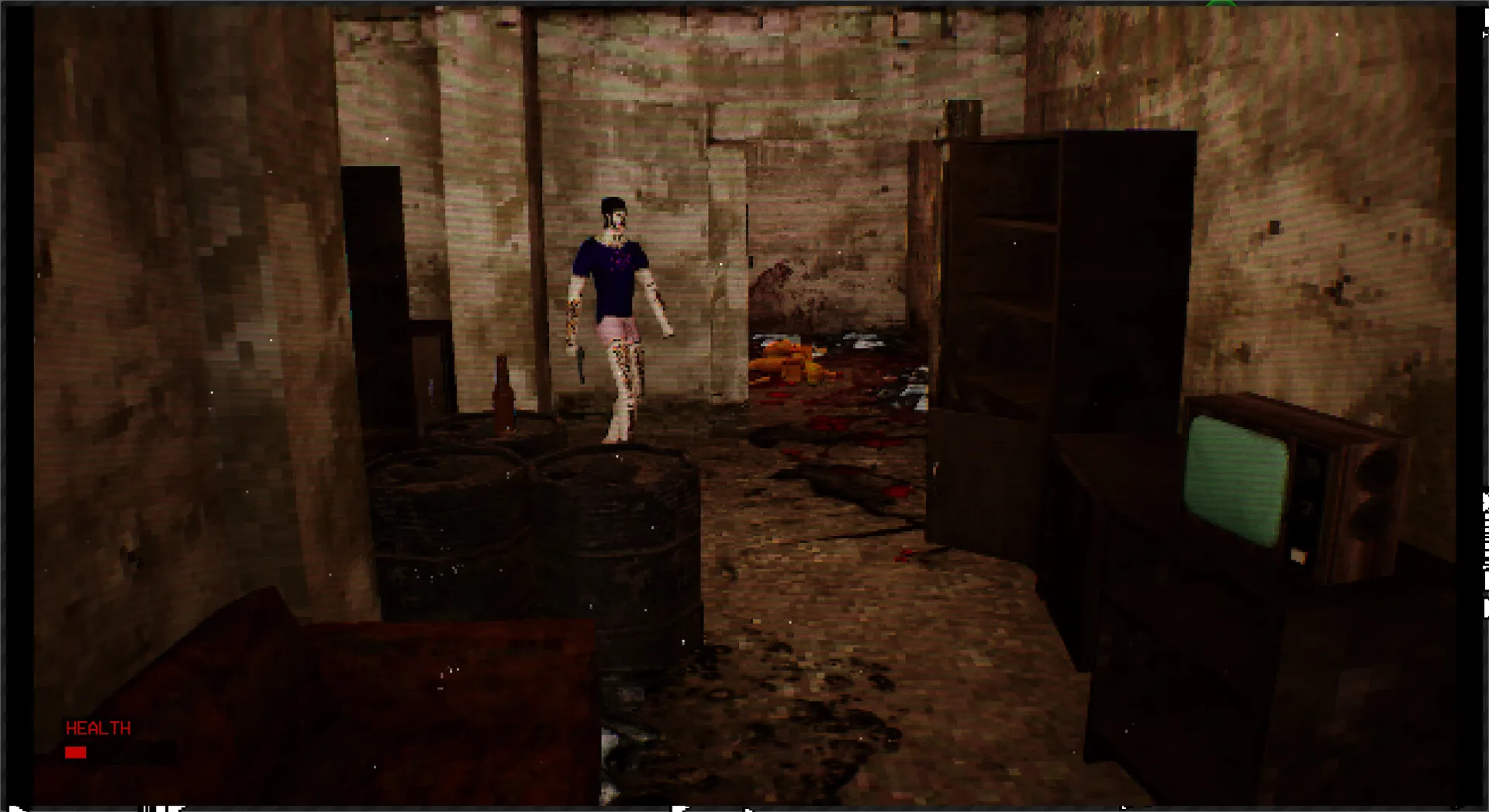
The tank controls, while clearly meant as parody, become actively unpleasant during precision tasks. The game lets you disable the fixed camera, but offers no equivalent option for the control scheme. The fixed camera exacerbates these issues, turning timing-based puzzles into exercises in spatial prediction rather than skill. Combat under these conditions approaches the unplayable.
Technical issues interrupt the experience periodically. Item pickup overlays occasionally freeze on screen while you continue moving through the world. If the item in question is a key object, this effectively softlocks your progress. I watched The Lacerator himself get stuck facing a wall during one encounter. Enemy AI routinely struggles with pathfinding. The early game drags because melee combat feels so imprecise, though once guns become available, this problem diminishes.
Backtracking, a survival horror staple, sometimes tips into tedium here. Without a map and with save points spread thinly, retracing your steps after death becomes a chore.
The design clearly anticipates multiple runs. Different endings and routes become available based on your choices, and discovering which limbs to sacrifice opens up new areas. The creepy atmosphere loses some potency on subsequent playthroughs, though the mechanical experimentation remains interesting. There are hints of something deeper in Max’s backstory for players willing to engage with the scattered notes and environmental details.
The Lacerator understands survival horror at a fundamental level. It replicates the careful pacing, the resource anxiety, the environmental puzzle logic that defined the classics. Then it slathers stupid humor over everything and expects you to take it seriously anyway. Quality-of-life issues and technical problems prevent it from achieving greatness, keeping it firmly in cult favorite territory.
This is horror for people who grew up on video nasties and bargain bin rentals, who find affection in cheap effects and absurd premises. If you appreciate parody that demonstrates mastery of its source material, if you find joy in B-movie aesthetics executed with care, this game offers something rare. For a Halloween playthrough or a weekend exploration of survival horror’s weirder corners, The Lacerator delivers exactly what it promises: dismemberment, absurdity, and a surprising amount of heart beneath the gore.
The Review
The Lacerator
The Lacerator is a clever parody that respects its source material enough to replicate what made it great. The limb loss mechanic offers genuine strategic depth, and the deadpan humor lands consistently. However, frustrating save points, cheap deaths, and technical jank hold it back from greatness. This is a game for horror fans who appreciate campy B-movie aesthetics and don't mind rough edges. If you can look past the quality-of-life issues, there's a smart, entertaining experience waiting underneath the gore and absurdity.
PROS
- Limb loss mechanic creates meaningful strategic choices
- Effective parody that understands its source material
- Genuinely funny deadpan humor
- Atmospheric sound design
- Multiple endings encourage replays
CONS
- Frustrating auto-save system with no manual saves
- Cheap deaths set progress back significantly
- Tank controls feel unnecessarily punishing
- Technical bugs including frozen overlays
- Melee combat is imprecise and janky