

























![Kingdom Hearts Collection [I-III] Review](https://gazettely.com/wp-content/uploads/2026/10/Kingdom-Hearts-Collection-I-III-1-360x180.webp "Kingdom Hearts Collection [I-III] Review: KHII Holds Steady as Newer Entries Fluctuate 37")



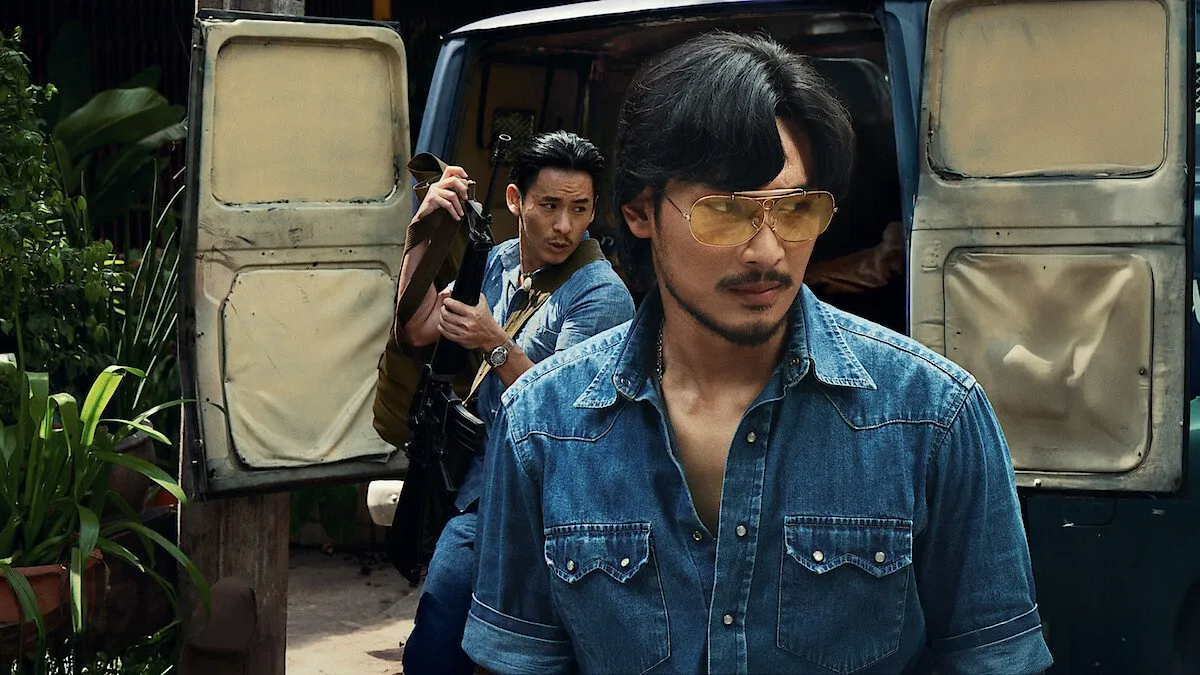

Director Nonzee Nimibutr turns to one of Thailand’s most notorious criminal figures in Tee Yai: Born to Be Bad, released in Thailand as Tee Yai Rerk Dao Jone. Tee Yai appears here as a folk legend whose reputation comes from an uncanny knack for avoiding arrest, often linked to supposed black magic. The film reshapes familiar tales and shifts dramatic focus from the outlaw everyone knows to his lifelong companion, Rerk Srivichien.
Set against a gritty, neon-soaked vision of 1980s Bangkok, the film works as a sweeping period crime piece and a propulsive action thriller. By framing the story through the bond between Tee Yai and Rerk, the script brings forward themes of friendship, survival, and fate pressing down on two men who grow up inside hardship. This choice signals a story that examines the human cost behind a legend.
Structure and the Price of Brotherhood
Tee Yai: Born to Be Bad plays with familiar crime thriller structure by nudging its title character away from the direct spotlight. The plot follows the early groundwork of Tee Yai and Rerk’s partnership, born in poverty and childhood trauma, including the moment when Rerk watches his father taken away in an unjust arrest. Their connection hardens into a life of petty jobs that escalate into high-stakes robbery.
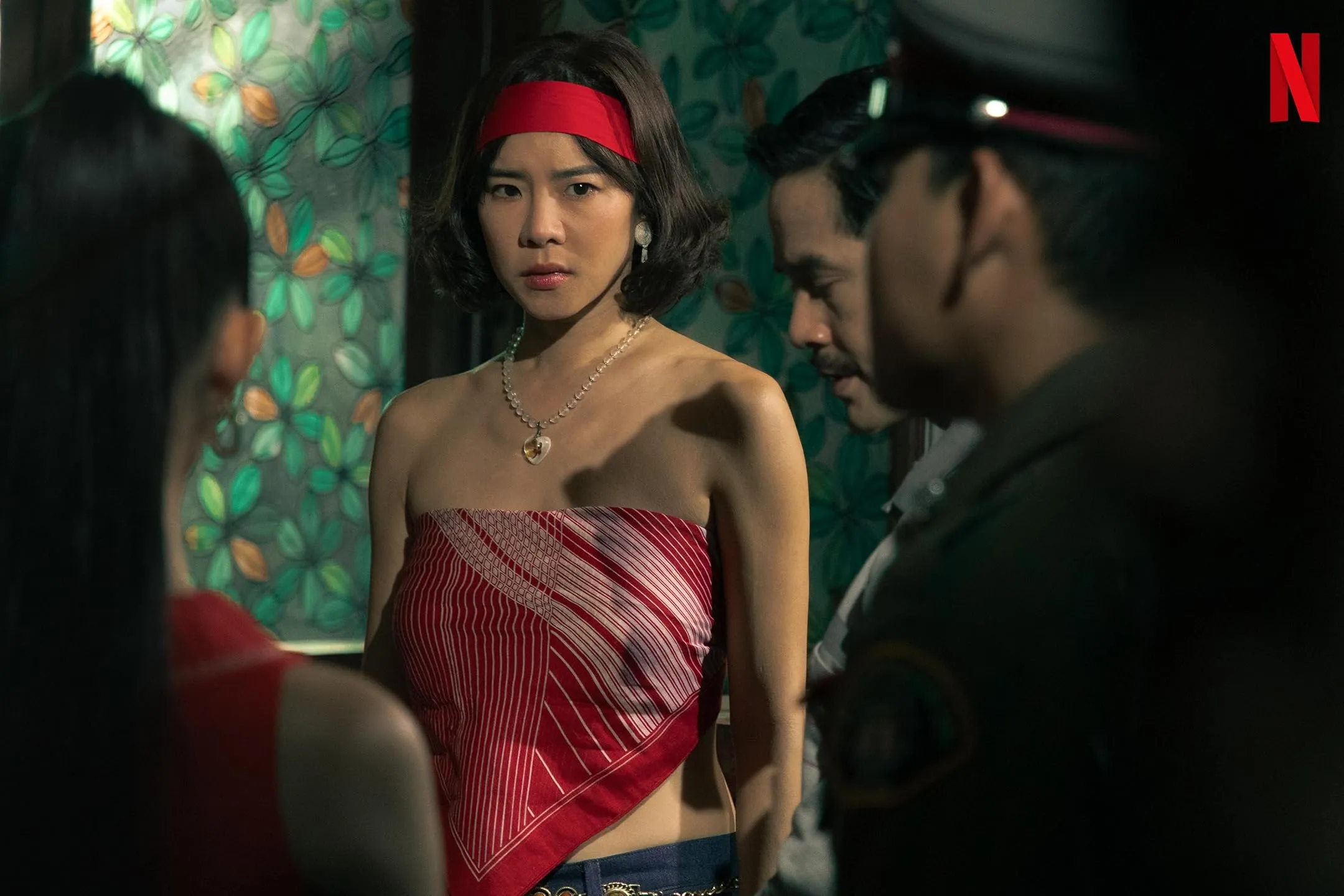
That shared criminal road leads into the film’s central conflict, a relentless pursuit driven by Officer Jakkrarat. Tension tightens when Rerk begins a relationship with Dao, his prostitute girlfriend. Their romance unsettles the careful balance that has kept the pair free, introducing a personal conflict that threatens their fragile sense of control.
Across its nearly two-hour running time, the film’s pacing can feel unpredictable. Major set pieces deliver strong genre thrills, yet stretches devoted to character building sometimes play as slow or drop in with a slightly awkward rhythm, which risks losing audience attention. The emotional line of the story can feel thin in early passages. It appears late in the game, so it does not always fully sink in before the narrative rushes into its intense third act.
The film moves inside a moral grey zone. The script shows bureaucratic, sometimes brutal police work alongside the impulsive recklessness of the thieves. The final act lands with serious force. Rerk betrays Tee Yai in a calculated move that grows out of a warped sense of loyalty, an attempt to secure a future for Tee and Dao.
That decision leads to painful consequences, including Dao’s injury, Tee’s request for a mercy killing, and Officer Jakkrarat’s eventual resignation, weighted with moral doubt. The ending highlights how the price of survival and a sense of karmic payback shape these characters’ fates, rejecting any fantasy of a clean, triumphant criminal victory. The story studies how social structures and state power can push people into outlaw roles.
The Charisma of the Unspoken
Characterization gives the film one of its boldest choices. Apo Nattawin Wattanagitiphat plays Tee Yai, yet the script favors mystery, keeping him in the background or silent for long stretches. For a legendary figure, that choice asks the actor to communicate a great deal without dialogue. Apo meets that demand through presence and physical detail.
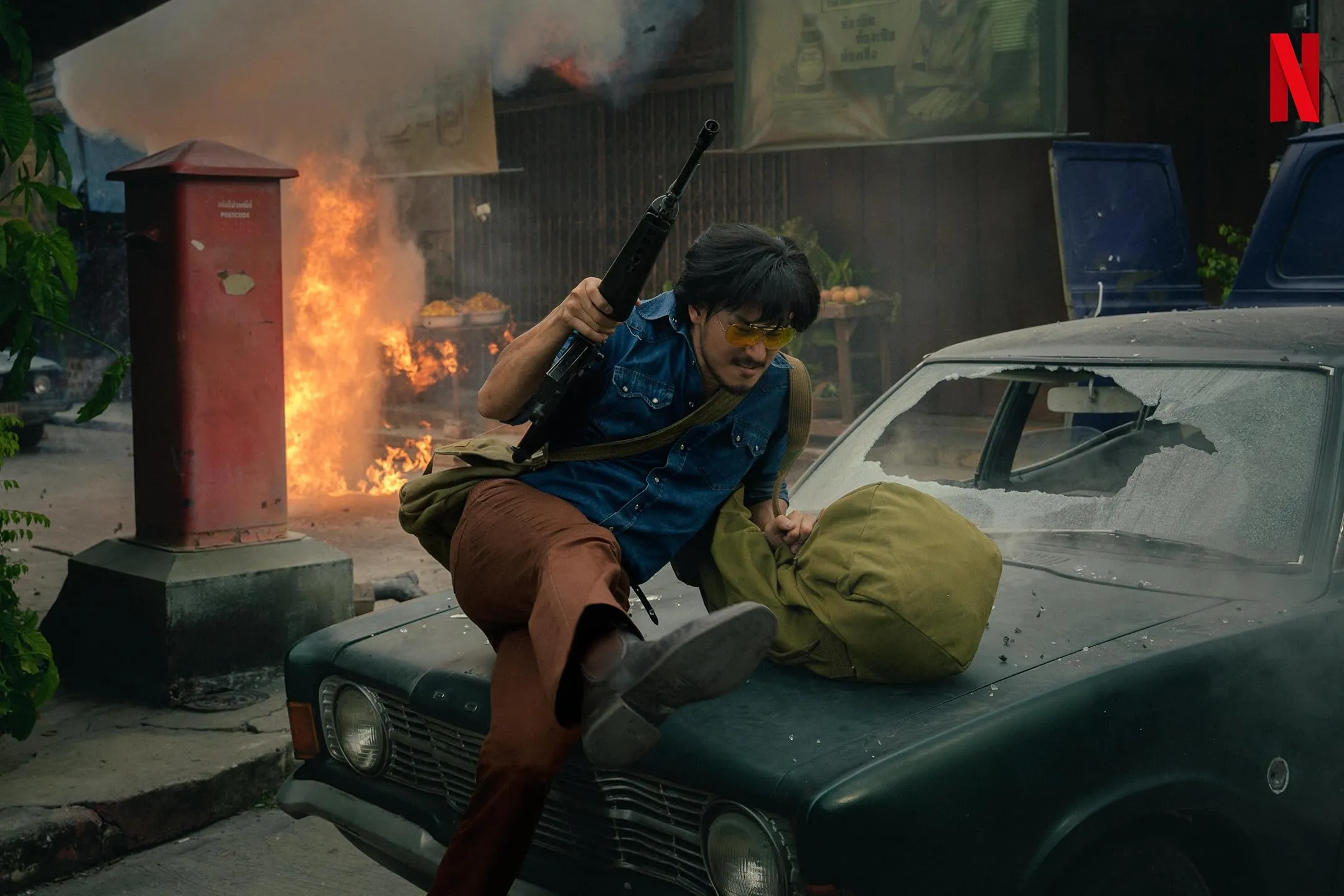
His style, from the period-perfect mustache to the yellow-tinted glasses and sharp gaze, becomes a kind of armor, a way of projecting folk-hero energy without constant speech. His work feels transformative. The limited dialogue and supporting narrative position can make the role feel boxed in and leave parts of his range untapped.
Rerk Srivichien emerges as the emotional anchor. Most Witsarut Himmarat plays him as the rational counterpoint to Tee’s impulsive fire. Rerk receives the most layered development and carries much of the film’s pathos and audience identification. Witsarut plays a partner who steadies the story’s high-stakes plotting and ties it to tangible emotional stakes.
The supporting cast creates the dramatic frame that surrounds the duo. Dao, played by Kao Supassara Thanachart, acts as a catalyst for conflict and change, and her inner life remains thinner on the page than that of Tee and Rerk. Officer Jakkrarat stands in for the dogged face of authority.
The dynamic between Tee and Rerk stays vivid, yet character definition around them sometimes feels faint, since the film often leans toward the rush of crime action and leaves less room for deeper psychological exploration. The film places much of its emotional impact on the magnetic interplay between its two leads.
The Look and Sound of Rebellion
On a technical level, Tee Yai: Born to Be Bad shines in its period recreation. The production design impresses in the way it brings 1980s Bangkok to the screen, with attention paid to costumes, busy streets, and smoky interiors. The film feels big and ambitious and stays tightly tied to its Thai setting. A small friction point appears between the authenticity of the physical design and the hyper-sharp digital image, which sometimes chips away at the period illusion. At the same time, that digital clarity gives the film a consistent visual polish across the two hours.
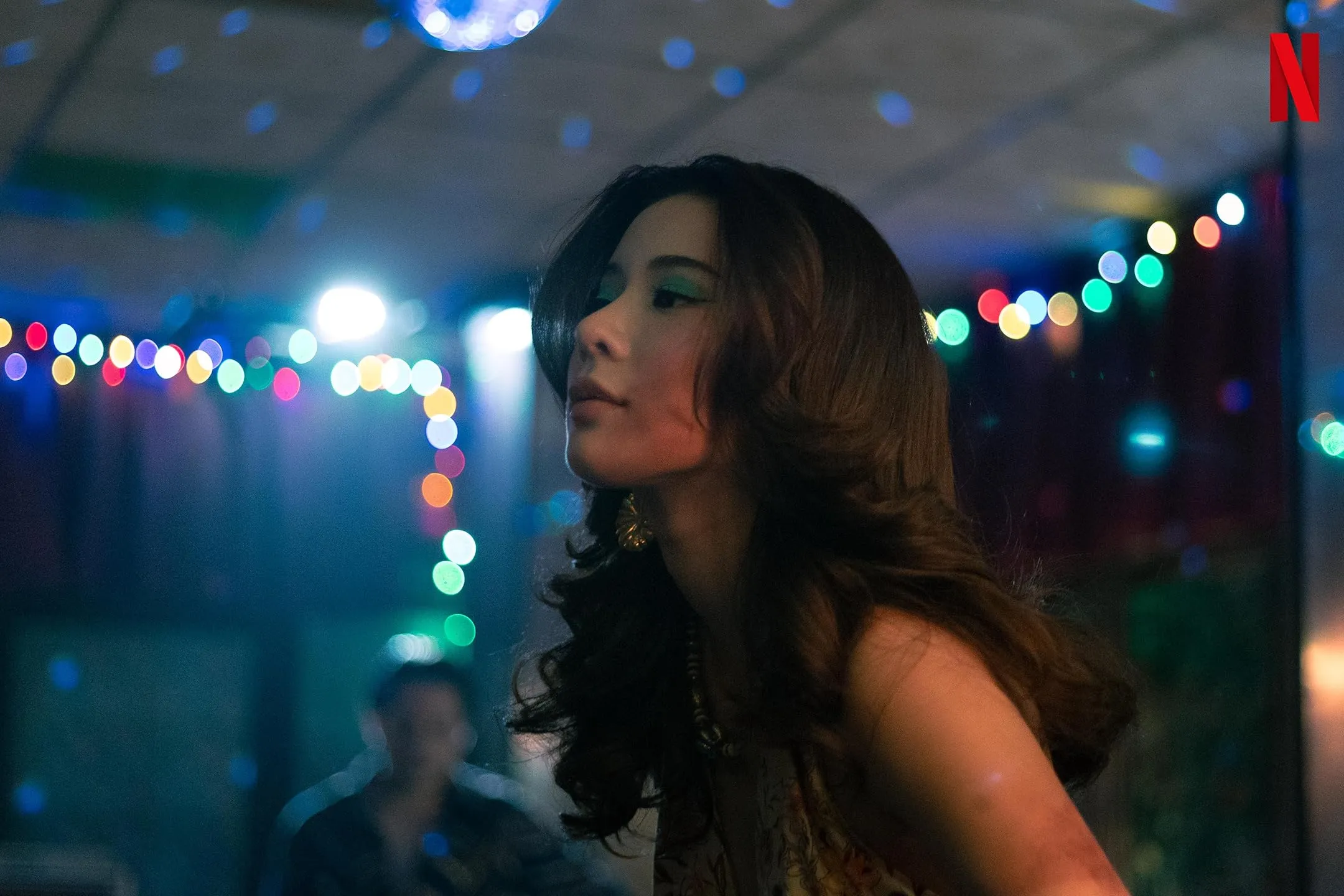
Nonzee Nimibutr’s controlled direction keeps the action watchable and lively. The shootouts and escapes feel energetic and entertaining, landing solidly within genre expectations. From my perspective, the recurring stylistic flourishes, such as slow motion in peak moments or rapid-fire cutting in getaway scenes, occasionally work against the built-in suspense and can undercut it. The editing sometimes favors flashy rhythm over sustained emotional buildup.
The film addresses the legends of Tee Yai’s so-called magical skills, like vanishing or calling down rain, in a direct way. It handles that mystic layer by presenting these events as clever tricks and sources of neighborhood storytelling. For viewers, the supposed magic reads as an expression of public fear and fascination, a symbolic device that steers away from literal supernatural explanation.
I found this approach especially satisfying, since it frames Tee’s status as a folk figure as something shaped by a community eager to explain chaos. His survival rests on comradeship and sharp instincts. That grounded approach to mythmaking is the kind of genre detail that really stays with me.
Fate and the Unmaking of a Myth
Tee Yai: Born to Be Bad digs into weighty themes. The film concentrates on loyalty and brotherhood under pressure, shaped by the tight bond between Tee and Rerk. It places strong emphasis on the cost of crime, making sure that every decision the pair make comes with physical and emotional fallout, which pushes back against any romantic view of criminal life. The film stays especially engaged with the tension between legend and reality, asking what defines a folk hero and how stories grow out of misfortune and cleverness.
The film’s strengths stand out clearly. Apo and Witsarut give performances that reshape how these figures might look on screen, the production reaches for an expansive scale, the atmosphere feels thick with mood, and the characters occupy a morally complex space. The film also carries its share of weaknesses. Uneven pacing, the deliberate choice to keep the title figure at arm’s length, and the sometimes flat handling of supporting characters hold it back.
By the end, the film achieves its unusual goal. The familiar myth of Tee Yai becomes a frame for an intimate story about his closest friend. The film works less as a direct biography and more as a study of the collateral damage that trails behind a rising legend. Tee Yai: Born to Be Bad emerges as a flawed yet gripping period crime drama, a rich slice of Thai cinema that I would recommend to fans of the lead actors and to viewers drawn to crime stories that examine the link between myth, loyalty, and the search for freedom.
Tee Yai: Born to Be Bad is a Thai action crime drama released globally on Netflix on November 13, 2025. Directed by Nonzee Nimibutr, the film offers a fresh perspective on the legendary Thai outlaw, Tee Yai. Set primarily in 1980s Bangkok, the story follows Tee and his loyal companion Rerk as they carry out a series of daring heists, earning mythical status, while a determined detective pursues them. The film uses the legend to explore deeper themes of brotherhood, betrayal, and the cost of survival.
Credits
Title: Tee Yai: Born to Be Bad (Original title: Tee Yai Rerk Dao Jone)
Distributor: Netflix
Release date: November 13, 2025
Rating: TV-MA
Running time: 1 hour 57 minutes (117 minutes) or 1 hour 58 minutes
Director: Nonzee Nimibutr
Writers: Chanchana Homsap, Nonzee Nimibutr
Producers and Executive Producers: Chartchai Ketnust (Executive Producer)
Cast: Nattawin Wattanagitiphat, Witsarut Himmarat, Supassara Thanachart, Akarin Akaranitimaytharatt, Sadanont Durongkhaweroj, Ongart Cheamcharoenpornkul, Cris Horwang, Bront Palarae
Director of Photography (Cinematographer): Teerawat Rujintham
Editors: Nithit Tubtim, Manussa Vorasingha
Composer: Chatchai Pongprapaphan
The Review
Tee Yai: Born to Be Bad
Tee Yai: Born to Be Bad is a visually ambitious and thematically rich period crime drama that wisely focuses on the human element behind the legend. While its unconventional narrative structure and uneven pacing sometimes hinder momentum, the film excels in its moral complexity and strong central performances, particularly from Apo Nattawin and Most Witsarut. It succeeds as a sophisticated exploration of loyalty and the true cost of becoming a myth. It is a worthwhile watch for those who appreciate character-driven action.
PROS
- Magnetic screen chemistry from Apo Nattawin and Most Witsarut.
- Magnificent recreation of 1980s Bangkok setting and atmosphere.
- Excellent exploration of loyalty, brotherhood, and the price of crime.
- Cleverly explains Tee's "magic" as tricks and myth-making, grounding the legend.
CONS
- The mid-section of the film is often uneven or jarringly paced.
- The titular character, Tee Yai, remains intentionally distant and somewhat underdeveloped.
- Characters like Dao sometimes feel functional to the plot rather than fully fleshed out.
- Editorial choices like slow-motion sometimes dampen the emotional suspense.







