


























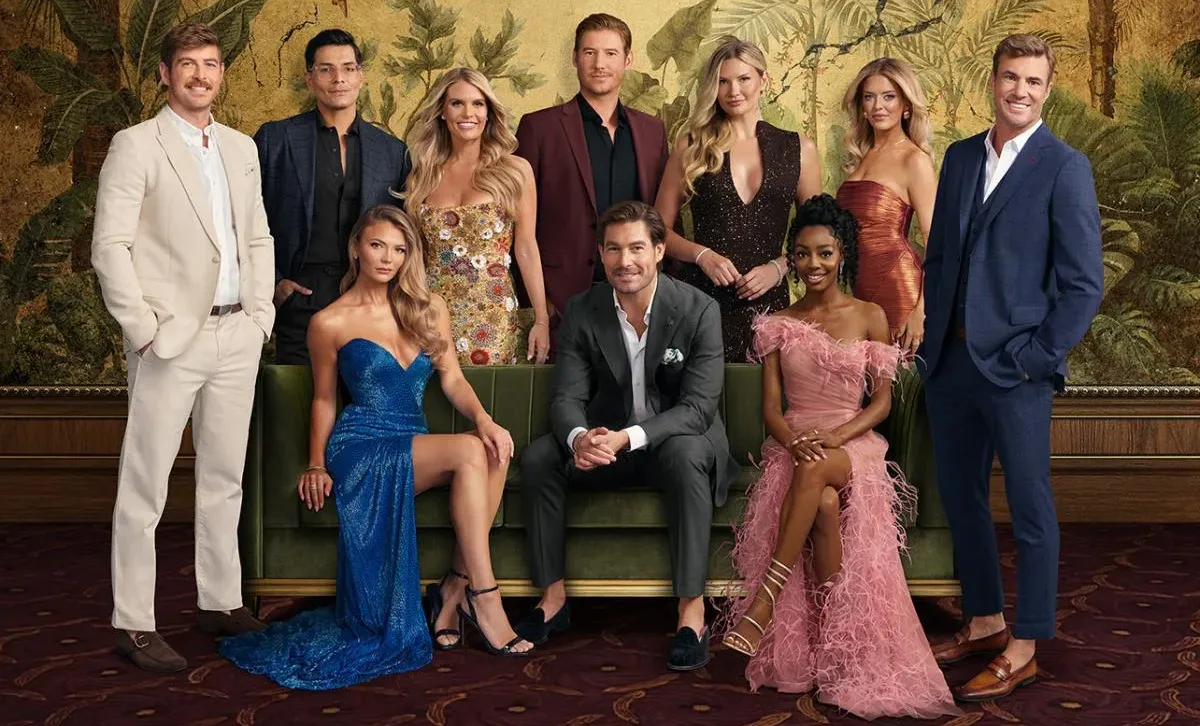

The narrative hook of Southern Charm has always been steady: watch a small, entitled web of Charleston regulars treat “Southern social life” like a job, a sport, and a battleground. Season 11 makes a pointed production move by trimming away side branches such as Leva Bonaparte and JT Thomas. The result tightens the frame around the long-running, messy triangle that has kept the series in motion for years, with Craig Conover, Shep Rose, and Austen Kroll back in the foreground.
The season opens by planting its flag in a headline-ready rupture: the very public fallout from Craig’s breakup with Paige DeSorbo. The show positions it as the emotional spark for his arc, pressing him to deal with the consequences of a relationship lived under constant attention. Craig arrives guarded and raw, and the season uses that exposure to justify his sharp edges in early scenes.
In the same opening stretch, Austen starts grappling with the instability in his relationship with Audrey, while Shep settles into his familiar bachelor posture, with the series making a small note of the age range shifting in his dating pool. Madison LeCroy’s baby shower lands early as a required social checkpoint, pulling the whole ensemble into one room to acknowledge a life milestone.
Then Season 11 tips its hand with a flash-forward that makes its real promise clear: personal growth may show up in confessionals, but the men still sprint toward loud conflict the moment the pressure rises. The season reaffirms that the core tension inside this friendship group remains the show’s main engine.
The Evolving Power Dynamic and Core Friendships
Season 11 is built around a reordering of status inside the cast, and the storytelling treats that shift as the year’s central structural idea. The clearest change is Craig’s ascent into the lead role. The show leans on his real-world business momentum to justify that promotion, and it frames Sewing Down South as a genuine, money-making operation that carries social weight inside the group.
The “pillow guy” label that once played like a running gag loses power here, because the season keeps pointing back to tangible success. In narrative terms, that professional credibility gives Craig a new kind of authority in scenes that used to leave him scrambling for footing.
That elevation lands hardest on Shep. Earlier seasons positioned him as the natural front-runner, the person whose moods and choices set the temperature for the room. In Season 11, the story places him in a quieter lane: a personal life that feels stalled, a presence that registers as diminished, and a pattern of struggles and relationship failures that leave him reacting more than driving.
The show uses that reduced spotlight to build tension in a low, persistent way. Shep’s friction with Craig reads as something the series is eager to feed, and it plays like resentment tied to status slipping out of his hands, even in moments where the surface disagreement feels thin.
Austen remains the season’s dependable accelerant, especially inside his relationship with Craig. The series keeps returning to their exhausting loop of camaraderie, irritation, and open hostility, and it depends on the audience’s familiarity with that rhythm. Austen’s criticism of Craig, including jabs aimed at drinking and behavior, comes across as a recurring posture that the show highlights again and again. One of the most revealing beats arrives in the confrontation where Austen tells Craig he’s “a different dude on camera,” a line that acts like a blunt thesis statement for the show’s interest in performance inside friendship.
Season 11 understands its own mechanics: add alcohol, add social scrutiny, keep the men in tight spaces, and the odds of a blow-up spike fast. Their clashes land with intensity because the series treats them as an expected feature of the format, and the audience is meant to recognize the pattern. The fights register as part of a repeating contract between cast and camera, with emotional volume serving the machine that keeps the season moving.
Secondary Plots and New Cast Energy
Season 11 also needs counterweights to the male core, and the secondary storylines do the work of redirecting attention while keeping the social ecosystem busy. The most surprising friction comes from the feud between Craig and Venita. The season sets the spark in a public comment Venita makes about Craig’s breakup, and the show uses that single act as the inciting incident for their conflict.

Because their argument grows out of commentary, not years of shared baggage, it puts Craig’s post-breakup defensiveness in bright light. The fight plays with mutual immaturity on both sides, and it underlines how quickly this group can inflate a minor slight into a high-stakes rivalry once pride and group judgment get involved.
Salley Carson’s arrival adds another practical source of story fuel by stepping into the space between Craig and Austen. The season presents her as a persistent romantic complication who draws attention from both men, and her presence functions as a catalyst that keeps their antagonism active. Salley’s interest in dating both of them also tangles her connection with Venita, giving the season a side argument that pivots on friendship codes and romantic ambition. The debate about Salley being a “girl’s girl” becomes a familiar flashpoint for this cast, one that translates personal choices into a broader social test inside the group.
Molly O’Connell stands out as the season’s most satisfying addition because the show uses her to change the texture of scenes. In a cast shaped by careful self-presentation, Molly brings a messier, more unpredictable energy. The season tags her as the resident “weird girl,” grounding that label in specific details like owning a snake and missing band practice. Those beats give her a different relationship to the show’s polished world of money, parties, and reputation management.
She reads as emotionally open and less guarded, and the series frames her personal issues, including hoarding and excessive drinking, as raw enough to cut through the usual performative haze. Structurally, she becomes a device that lets the season brush against something like real vulnerability while the larger machine keeps spinning. Around her, figures such as Rodrigo and peripheral friends like Korey and Charlie help keep the social map feeling active, reinforcing the sense that even minor players can trigger major romantic complications or shift the balance of a group event.
The Show’s Enduring Appeal and Tone
Season 11’s storytelling approach leans on a simple principle: return to the patterns that have reliably delivered this series’ brand of drama. After stretches in prior eras that leaned into heavier, consequence-forward material, this season tilts toward chaotic, celebratory recklessness and an aggressive party atmosphere that recalls earlier years. That tone shift offers immediate gratification, with the show banking on speed, loudness, and group volatility to keep scenes popping.
Many of the season’s blow-ups start from small sparks, including misunderstandings about comments and drunken accusations, yet the fights still land because the series has trained its characters to treat reputation and ego as life-or-death stakes. Southern Charm continues to function as a study of a male-dominated clique powered by inherited entitlement and the constant pressure of group dynamics.
The formula depends on viewer investment in friendships that cycle through rupture and repair, and the season leans into that repeatable loop with full confidence. The show keeps placing familiar, deeply flawed people into the same social pressure cooker and letting the temperature rise until confrontation feels inevitable.
Season 11 prioritizes explosive tension and communal spectacle over deep introspection, and that choice makes it a dependable entry for anyone who wants the particular brand of comfortable chaos that an eleventh season is built to deliver.
Southern Charm Season 11 premiered on Wednesday, November 19, 2025, on Bravo. New episodes are broadcast weekly and become available to stream the following day on the Peacock platform. The show continues its focus on the personal and professional lives of a group of socialites residing in Charleston, South Carolina, chronicling their intertwined relationships, business ventures, and dramatic conflicts within the city’s exclusive social scene.
Full Credits
Title: Southern Charm
Distributor: Bravo
Release date: March 3, 2014 (Series Premiere); Season 11 premiered November 19, 2025
Rating: TV-14
Running time: 42 minutes (approximate per episode)
Director: Bryan Kestner, Jason Weinman, Nicole Sorrenti, Peter E. Demas, Andy Cohen (Reunions)
Producers and Executive Producers: Aaron Rothman, Irad Eyal, Whitney Sudler-Smith, Bryan Kestner, Jason Weinberg, Jessica Chesler, Morgan Miller
Cast: Craig Conover, Shep Rose, Austen Kroll, Madison LeCroy, Venita Aspen, Rodrigo Reyes, Salley Carson, Molly O’Connell, Charley Manley, Whitner Slagsvol, Patricia Altschul (Friend)
The Review
Southern Charm Season 11
Southern Charm Season 11 successfully recalibrates its narrative focus. The centering of Craig Conover's post-breakup status effectively creates a central conflict, reigniting old rivalries with Austen and Shep. The season feels like a strategic return to the series' foundational chaotic energy, proving that the established dynamic remains entertaining when provided with fresh catalysts like Salley and the unique authenticity of Molly. It sacrifices character growth for reliable, high-volume social drama, making it a familiar, satisfying watch.
PROS
- Trimming the cast centers the show on the proven, volatile dynamic of the core male friendships.
- His shift into the central figure creates a compelling power struggle with Shep.
- Her messy, authentic persona provides a necessary, grounded contrast to the cast's high-gloss reality.
- The season successfully recaptures the fun, heavy party atmosphere of earlier, less self-serious seasons.
CONS
- The arguments between Craig and Austen adhere strictly to a predictable, cyclical pattern.
- Many conflicts, like the Craig/Venita feud, feel manufactured and over-amplified relative to their cause.
- Shep and Austen show minimal personal growth, sticking to destructive patterns.
- She exists primarily to drive conflict between the men, limiting her own narrative depth.