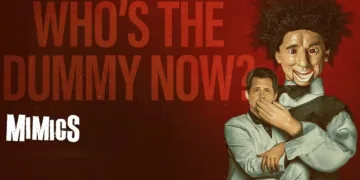
















Mimics introduces Sam Reinhold, a struggling impressionist in Reno whose career has stalled at lackluster open mic nights. He spends his days working at a grocery store, living in the space between practical survival and the dream of comedic stardom. His luck seems to turn after he meets a mysterious talent agent who offers a deal sealed in blood.
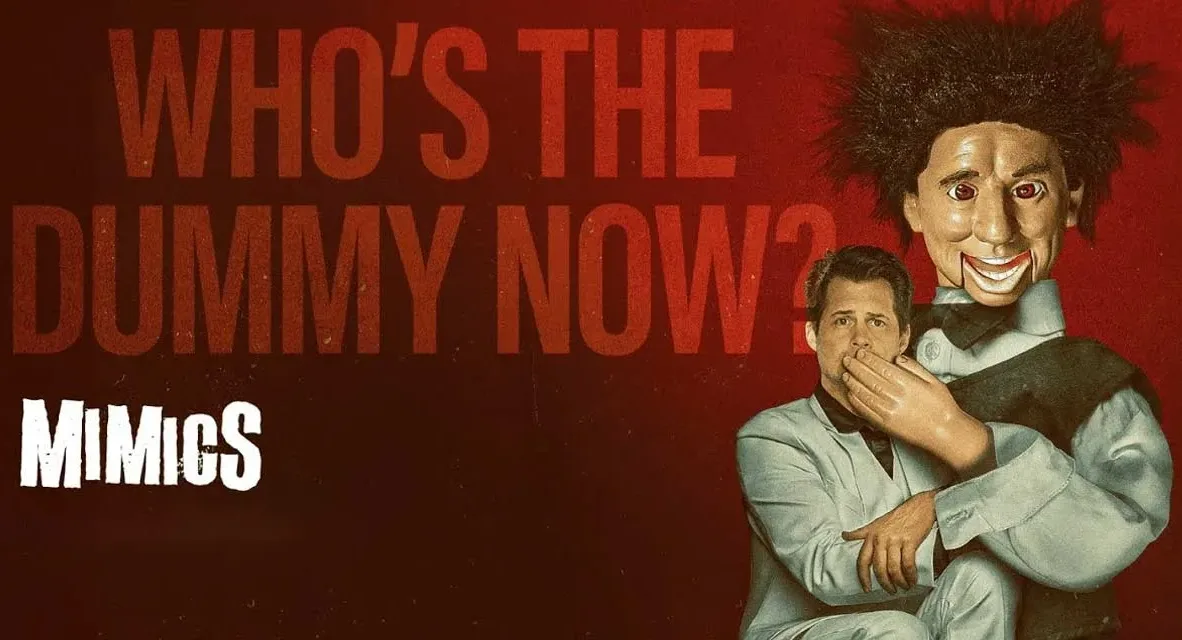
The pact brings Fergus into his life, a ventriloquist puppet with a sinister presence. The instant Sam puts his hand inside the figure, a supernatural tether locks into place. Sam shifts from a failing act into a brilliant performer in a single beat. Audiences that once met his sets with silence now erupt in adoration.
That rush of approval becomes the film’s engine, and it plays like a feedback mechanic with a hidden cost. Each laugh registers as a reward, and each reward pulls Sam deeper into the agreement that made it possible. The success masks a growing horror as Sam realizes Fergus carries intent.
Fergus is far from a harmless prop, and his malevolent willpower begins to sap Sam’s autonomy, then keeps pressing until control feels like something Sam used to have. A mounting dread settles over the narrative as Sam recognizes the shape of a literal Faustian bargain. Every laugh from the crowd nudges him closer to psychological collapse, and the film keeps its focus on what this kind of “gift” demands in return, beat by beat.
Anchoring the Supernatural in Human Connection
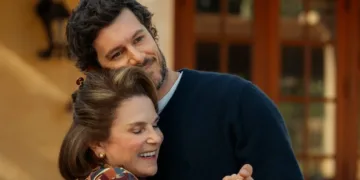
Kristoffer Polaha delivers a grounded performance as Sam, playing him as a relatable everyman driven by the need to provide for his family. That emotional throughline keeps the supernatural elements from feeling distant or hollow. The strongest anchor is Sam’s relationship with his father, Melvin, played by Stephen Tobolowsky. Melvin functions as moral compass and source of motivation, embodying the life Sam wants to improve through success and the values Sam risks trading away.
The film deepens that human focus through Sam’s scenes with Virginia, a coworker played by Mōriah. Virginia watches the subtle, unsettling changes in Sam’s personality with a steady, clear-eyed presence, and her perspective helps the viewer track the slow erosion of Sam’s true self under Fergus’s influence.
The supporting cast brings specific textures to the world around them. Jesse Hutch adds distinct energy as Robert Van Sickle, while Arianne Zucker portrays the Madam with a presence that fits the film’s eclectic tone. These characters keep the stakes personal even as the plot turns darker, and the script lets the natural friction between people carry the tension instead of forcing emphasis.
Balancing Laughter and Psychological Dread
Mimics manages its 90 minute runtime with precise pacing, guiding the story from light comedy into a dark thriller rhythm that feels earned. The film emphasizes psychological tension and keeps graphic violence and gore at a distance. That choice sustains a lingering unease through the full viewing experience, rooted in watching a person lose ground from the inside.
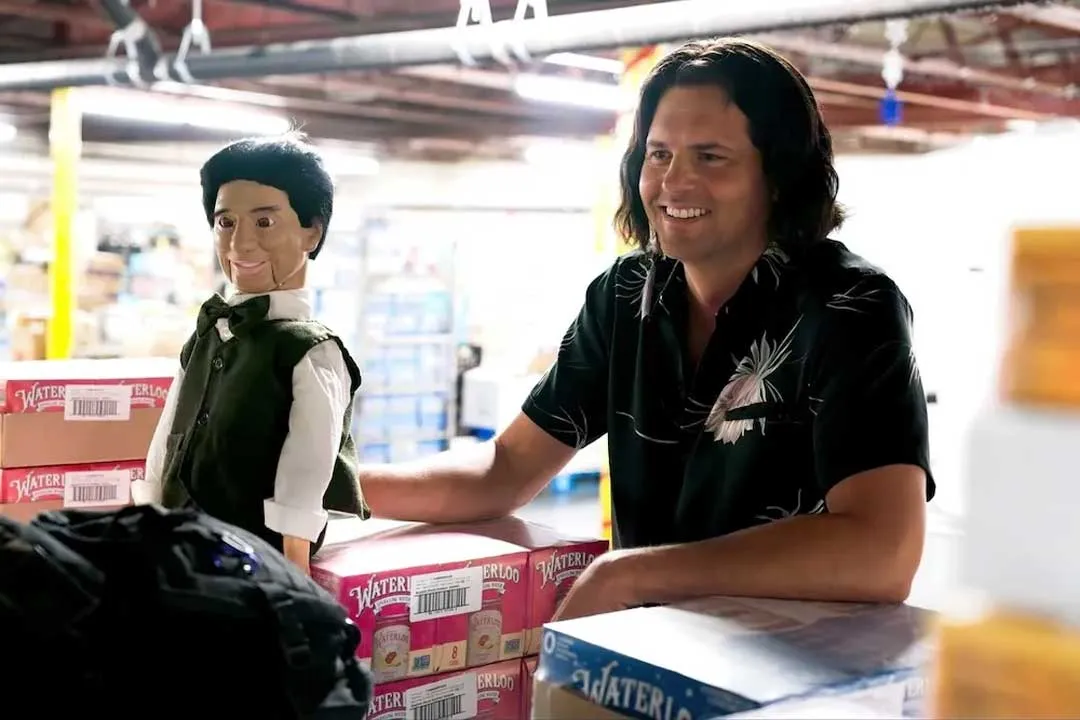
The direction avoids common genre habits like shaky camera work, maintaining a steady and clear focus on the nightmare as it unfolds. Dark humor and suspense share space, creating a shifting emotional register. The ventriloquism can read as absurd in one moment, then the tone tightens and the audience starts fearing for the characters’ safety.
The pacing stays tight, moving Sam through his rise to fame at a speed that mirrors his own loss of control. Romantic elements are woven into the script and hold their place, offering brief pockets of warmth that make the descent into darkness hit harder. The film leans away from traditional shock tactics and gives room for a quieter fear, the kind that grows out of agreements we accept willingly, then realize we cannot undo.
The Physicality of Ambition and Moral Decay
The production design of Mimics offers a polished visual style that reinforces the story’s themes, and Fergus stands as the film’s central aesthetic achievement. As a physical prop, he carries weight and presence that recalls the long history of unsettling cinematic puppets. His design stays purposefully uncomfortable, a constant reminder of the strings attached to Sam’s success.
The stand-up comedy scenes shift from the drab reality of Reno bars to a heightened, almost surreal atmosphere in Sam’s later performances. Those technical choices mirror Sam’s internal state as he chases fame at any cost. The film frames that pursuit as commentary on the danger of seeking shortcuts to achievement.
Sam ignores the fine print of his contract, and the stakes rise until sanity and life sit on the line. His final performances feel fraught with peril as the puppet pushes for total dominance. The visual effects remain subtle, keeping attention on the moral consequences of the central pact. By the final act, Fergus’s physical presence reads as the clearest manifestation of Sam’s compromised integrity.
Mimics is a genre-blending horror-comedy that explores the dark side of ambition and the supernatural consequences of a Faustian bargain. The film premiered at the Cordillera International Film Festival in September 2025 and saw its theatrical release across the United States just a few days ago, on February 13, 2026. As of today, February 15, 2026, the movie is currently playing in select theaters nationwide, making it a fresh option for audiences seeking a mix of psychological suspense and dark humor.
Where to Watch Mimics







Full Credits
Title: Mimics
Distributor: ArtAffects Entertainment, Panoramic Pictures, Bloody Disgusting Selects
Release date: February 13, 2026
Rating: PG-13
Running time: 90 minutes
Director: Kristoffer Polaha
Writers: Marc Oakley
Producers and Executive Producers: Ken Carpenter, Adam Karm, Kristoffer Polaha, Ben Wagner, Marc Oakley
Cast: Kristoffer Polaha, Mōriah, Stephen Tobolowsky, Chris Parnell, Jesse Hutch, Jason Marsden, Arianne Zucker, Austin Basis, Kevin Lawson
Director of Photography (Cinematographer): Alexander Yellen
Editors: Barrie Wise
Composer: Benjamin Backus
The Review
Mimics
Mimics succeeds by grounding its supernatural premise in genuine human emotion. The film manages the shift from light comedy to psychological dread with precision, making the 90 minute runtime feel lean and purposeful. While it avoids graphic shocks, the tension remains constant as the cost of Sam’s ambition becomes clear. The performances and polished production design elevate the material above standard genre fare. It is a thoughtful exploration of fame that remains engaging throughout.
PROS
- Strong lead performance by Kristoffer Polaha.
- Tight pacing within a concise 90 minute duration.
- Effective use of psychological tension instead of gore.
- Memorable and unsettling design for Fergus the puppet.
- Relatable emotional stakes involving family and career.
CONS
- The humor may feel too subtle for those seeking broad comedy.
- Some viewers might prefer more traditional horror scares.
- The romantic subplot occasionally feels secondary to the thriller elements.