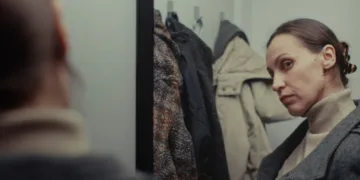






















Kate Rafter returns to the damp, salt-scoured hush of Herne Bay carrying a life shaped by displacement. A seasoned war correspondent, she has exchanged the kinetic terror of Aleppo for the airless stillness of her childhood home after her mother’s death. Jenny Seagrove plays Kate with a brittle authority, an imperious surface that feels welded into place.
Her eyes register a psyche split by recent combat trauma and older domestic damage that never healed. The memory of an abusive, alcoholic father hangs over the rooms with more weight than any distant sniper, turning familiar floorboards into a trapdoor of recall. The film tightens its psychological vise when Kate hears the muffled cries of a child from the house next door.
Family and neighbors read her alarm as collapse. PTSD becomes their explanation, and her insistence gets filed away as hallucination, the work of a mind that has finally snapped. Herne Bay’s suburban calm arrives as a deception dressed in tidy hedges and polite routines, a sterile peace that scrapes against the visceral horrors Kate carries home. Kate ends up inside a domestic noir that treats perception as its leading threat, with reality itself behaving like an unreliable witness.
A Study in Fractured Kinship
The narrative’s emotional pressure rises through the jagged contact between Kate and her sister, Sally. Anna Friel gives Sally an unvarnished desperation, and the character’s coping strategy takes the shape of a slow drift into alcoholism. Their shared history sits in every conversation like a third body crowding the room.
Kate presents a hardened professional shell, the practiced mask of someone trained to keep moving through danger. Sally lives closer to the mess, saturated with resentment and the ache of missed connections. The film watches trauma replicate itself across two lives without offering a neat taxonomy for survival. It simply shows the bruises taking different forms.
Ben Miles brings a steady presence as Paul, the husband trying to tether this family to something resembling normal life. There is calculation in the steadiness, as if Paul has learned which words keep a lid on the pot. That restraint becomes a useful counterweight to the volatility of the Rafter sisters.
David Bradley adds gravitas that grounds the heightened emotional stakes in a recognizable British register, the kind of lived-in realism that keeps the drama from floating away into pure melodrama. Seagrove and Friel meet each other with a raw intensity that often outmuscles the script. Their scenes feel charged by performance choices rather than page-level finesse, and that force makes the film’s heavier thematic gestures land with more bite. The chemistry is earned, tense, and properly uncomfortable. No one here looks relieved to share blood.
The Architecture of Suburban Dread
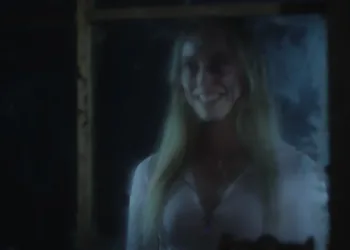
Heidi Greensmith adopts a visual language drawn from the somber tradition of British television realism and steers it toward the expressionistic. The palette sits in bruised greys and sickly greens, a drained world where the sun feels permanently absent.
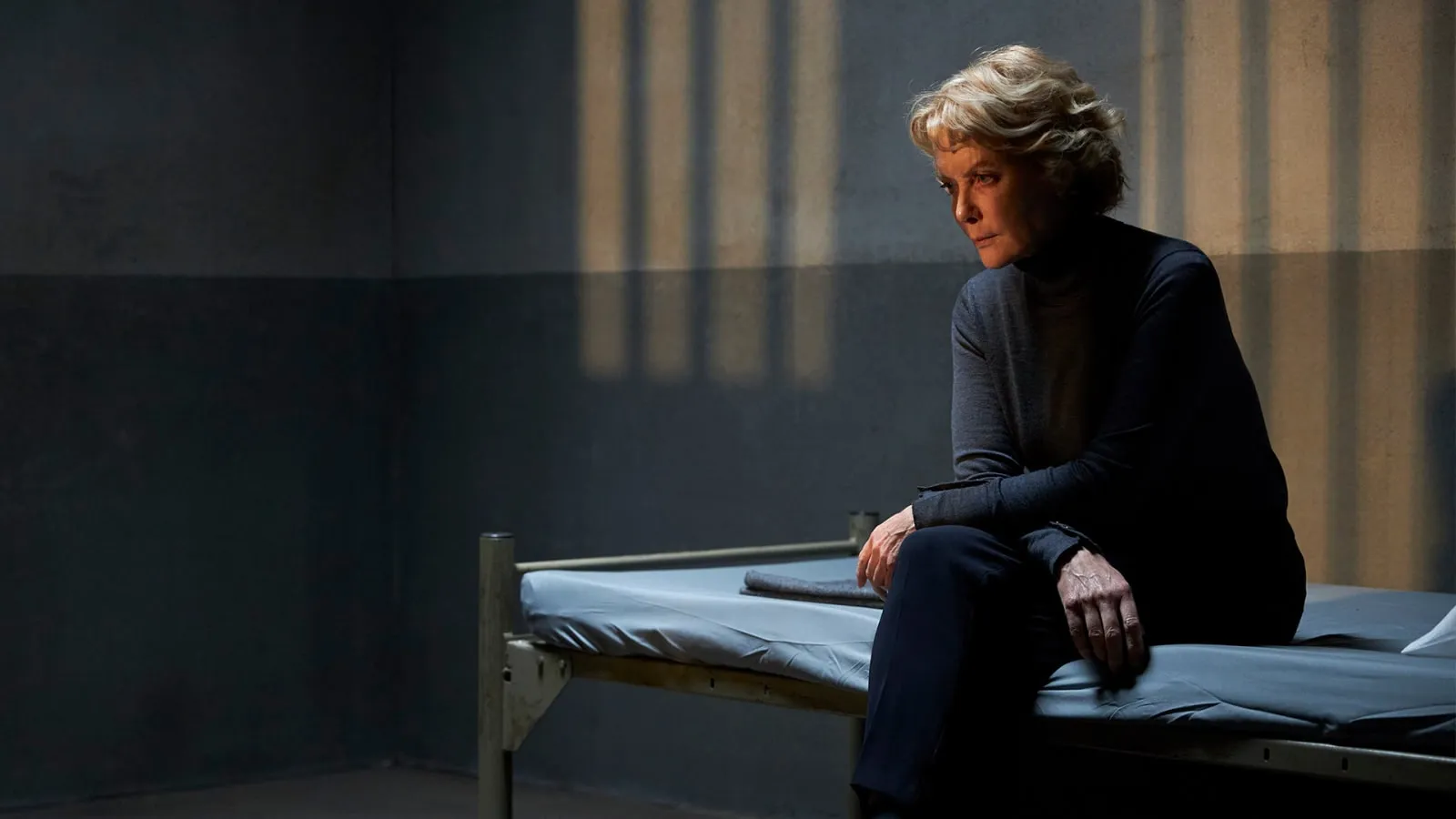
That choice turns the mundane geometry of semi-detached houses into sites of latent gothic menace. The film leans into noir’s old lesson about environments: the street can look safe, and the frame can still feel hostile. Chiaroscuro becomes a domestic condition, shadows collecting in corners that the story refuses to name with certainty.
The cinematography favors lingering, static shots that trap the viewer in the same posture as Kate: waiting, listening, searching. The camera does not rush to clarify what is real. It holds on doorways, walls, and the negative space between neighbors, inviting the audience to interrogate darkness for threats that may exist, or may be projections shaped by trauma.
The effect is quietly manipulative in the best way, teaching the eye to distrust calm compositions. Sound design does much of the heavy lifting, using jangly, dissonant musical cues and sharp acoustic interruptions to keep the nerves firing.
A quiet street in Kent gets treated with the intensity of a front line, which carries a wry irony the film seems aware of. The technique works, and it also risks overstaying its welcome. The pacing moves with deliberate slowness, and that gradual movement tips into stasis at points, thinning the tension it has worked hard to build. The film asks for patience, then tests it, then asks again. The street stays quiet. Your heartbeat does not.
Sudden Pivots and Ethical Residue
Naomi Gibney’s screenplay reaches for a synthesis of geopolitical trauma and the localized rot of domestic abuse. The idea is clear: the war zones carried inside a person can feel more treacherous than the ones a journalist can map. Much of the film plays as a slow-burn character study, circling the debris of a ruined childhood and letting dread accumulate in small domestic gestures.
The moral terrain stays murky. Kate’s certainty reads as courage in one scene and as obsession in the next, and the film allows that slippage without rushing to correct it. Free will and identity sit behind the plot like a pressure system. Is Kate choosing clarity, or is she rehearsing it? The question lingers because the film keeps her perception under scrutiny.
Then the final act executes a sharp pivot, lunging toward the mechanics of a high-octane thriller. The “almighty twist” lands like a sudden gear change in a vehicle that had been content to idle in the driveway. The reveal delivers a quick surge of adrenaline, and it also threatens the emotional groundwork laid in the earlier stretch.
Threads of psychology remain loose, and the film prefers plot-based closure to a cleaner thematic throughline. The shift can feel manipulative, as if faith in the power of the original trauma wavered and a more conventional danger got bolted on. The move has nerve. It also leaves a faint aftertaste: the most interesting questions feel left behind in the next room, still whispering through the wall.
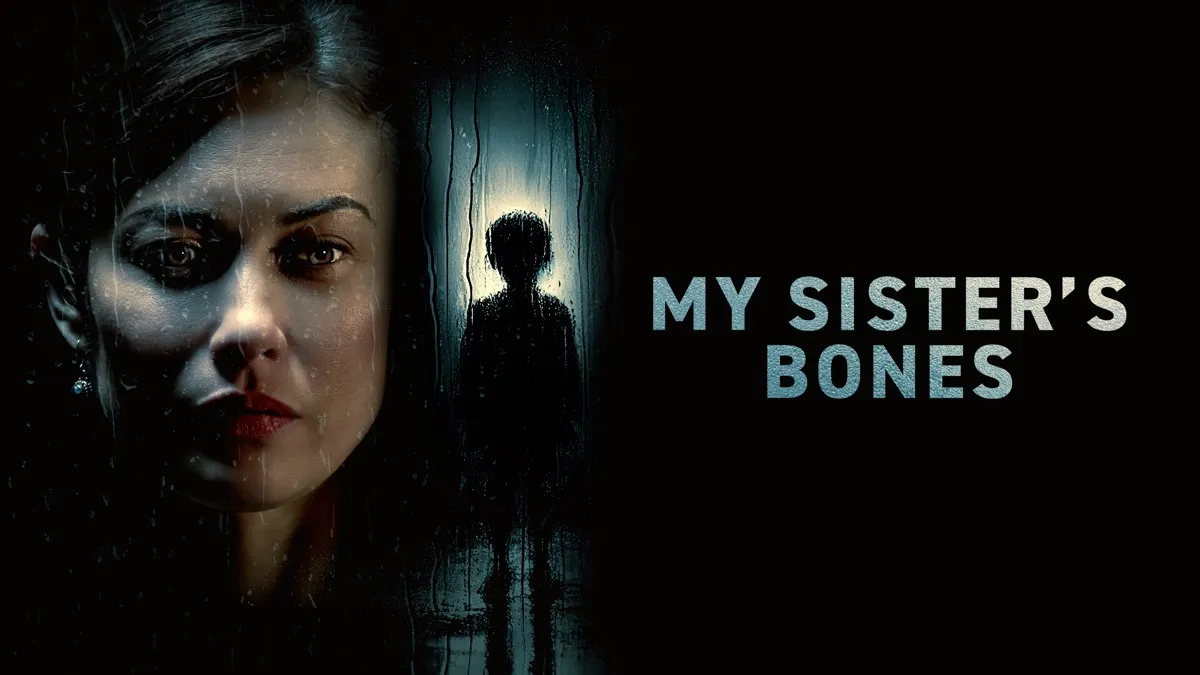
Released on January 30, 2026, My Sister’s Bones is a psychological thriller that follows Kate Rafter, a veteran war correspondent returning to her childhood home in Herne Bay. Based on the bestselling novel by Nuala Ellwood, the film explores the dark intersections of war-zone trauma and domestic secrets as Kate becomes convinced something sinister is occurring next door. You can currently watch or rent the film on major digital platforms including Apple TV, Amazon Prime Video, and Google Play.
Where to Watch My Sister’s Bones (2026) Online










Full Credits
Title: My Sister’s Bones
Distributor: Quiver Distribution
Release date: January 30, 2026
Rating: TV-MA
Running time: 81 minutes
Director: Heidi Greensmith
Writers: Naomi Gibney, Nuala Ellwood
Producers and Executive Producers: Bill Kenwright, Naomi Gibney, Heidi Greensmith, Glen Murphy
Cast: Jenny Seagrove, Anna Friel, Ben Miles, David Bradley, Olga Kurylenko, Maggie Steed, Lovi Poe, Max Brown
Director of Photography (Cinematographer): Matthias Pilz
Editors: Christopher CF Chow
Composer: David Julyan
The Review
My Sister’s Bones
My Sister’s Bones is a somber exploration of trauma that benefits greatly from its lead performances, particularly the raw friction between Jenny Seagrove and Anna Friel. While the atmospheric, neo-noir aesthetic successfully builds a sense of suburban dread, the narrative struggle between a slow-burn character study and a sudden, high-octane thriller finale creates a jarring disconnect. It is a solid, albeit familiar, British drama that eventually prioritizes plot twists over the complex emotional resolution it initially promises.
PROS
- Seagrove and Friel deliver nuanced, visceral portrayals of fractured sisterhood.
- The use of muted greys and greens effectively mirrors the protagonist's psychological state.
- Probes the uncomfortable parallels between foreign war zones and domestic trauma.
CONS
- The deliberate, "gradual" movement can occasionally feel stagnant or dreary.
- The final act's pivot into thriller territory feels disconnected from the earlier character work.
- Prioritizes a shocking conclusion over satisfying emotional closure for the primary arcs.