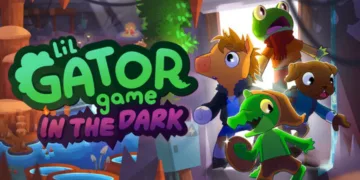























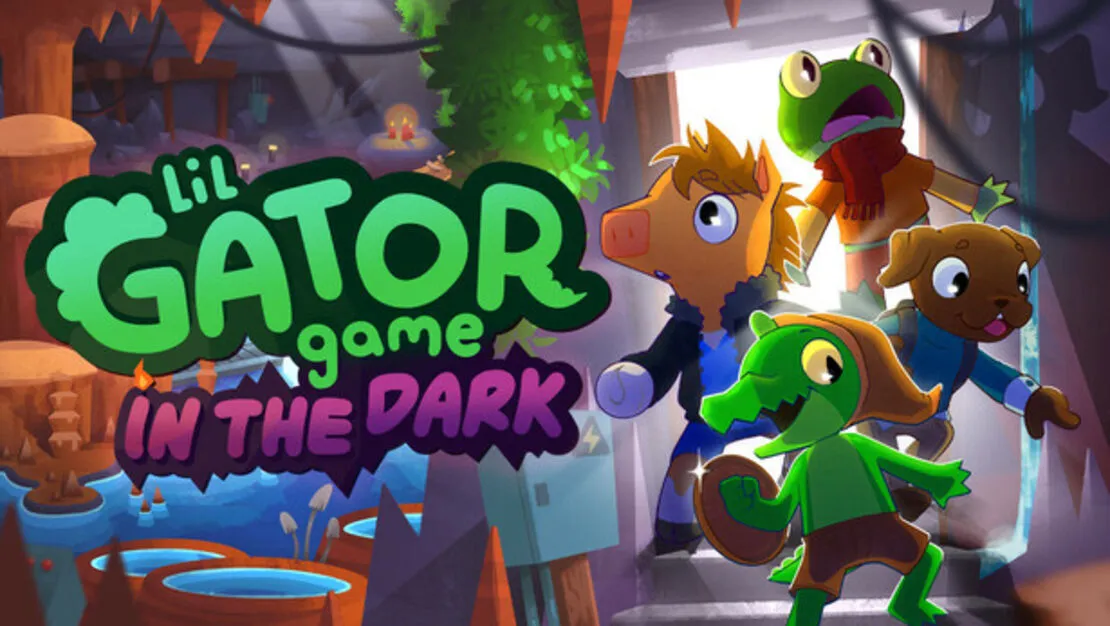

The finished cardboard city sits like proof of a long day of play, yet the little green gator’s story keeps moving after the build is done. This expansion starts right after the original narrative ends. The gator and their friends are still riding the high of what they made when a new kid shows up. He is a pig who calls himself Darklord, and he treats the playground like territory meant to be taken.
He declares the city part of his world domination plan and steps into the friend group’s space with a challenge. The gator takes the bait and follows him into the mouth of a nearby cave, trading the bright, open islands for a tighter underground maze.
The conflict stays playful in tone. It captures the way kids invent a fresh problem to keep a game alive once the first objective is complete. The palette shifts from the overworld’s bright greens to dimmer, warmer underground colors that feel cozy instead of threatening. The expansion plays like the next phase of an afternoon of pretend, with low stakes tied to exploration, small discoveries, and the shifting social rules inside a group of kids.
The Physicality of the Underground and the Logic of Landmarks
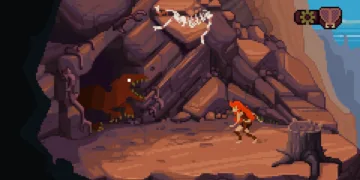
The underground is split into four regions, and each one shapes play through clear visual and structural differences. Great Roots leans on towering wooden forms and candlelight that flickers against the walls. Calcite Caves turn harsher, with metallic walkways and sharp stone geometry. The Mines introduce wooden rails and a toy-sized industrial mood. The Lighthouse works as the shared hub where every new acquaintance gathers and where the expansion’s growing cast keeps circling back.
Each region has a strong visual identity that helps with orientation, and the interface removes traditional navigation tools. The game runs without a map, compass, or mission checklist, so direction comes from the world itself. Routes reveal themselves through details like the curl of roots, the direction of mine tracks, or the way a corridor opens into a new pocket of space. Progress depends on learning landmarks and building a mental layout you can return to later.
Connections back to the surface come through waterfalls that hide passages, and those links make the underground and overworld feel like parts of one large playground. Early on, the absence of explicit guidance can feel demanding, since the game asks for attention and memory. Over time, that friction encourages slower observation.
You start reading the slope of a cave wall, the placement of a specific lantern, and the shape of a climbable route. The vertical design raises the challenge further, since the next step often sits above you and the best clue is found by looking up. Without a menu-based record of objectives, your own recall becomes the main tool for staying oriented, and that supports the feeling of being a kid deep in a sprawling game.
The Star Charm System and the Evolution of Motion
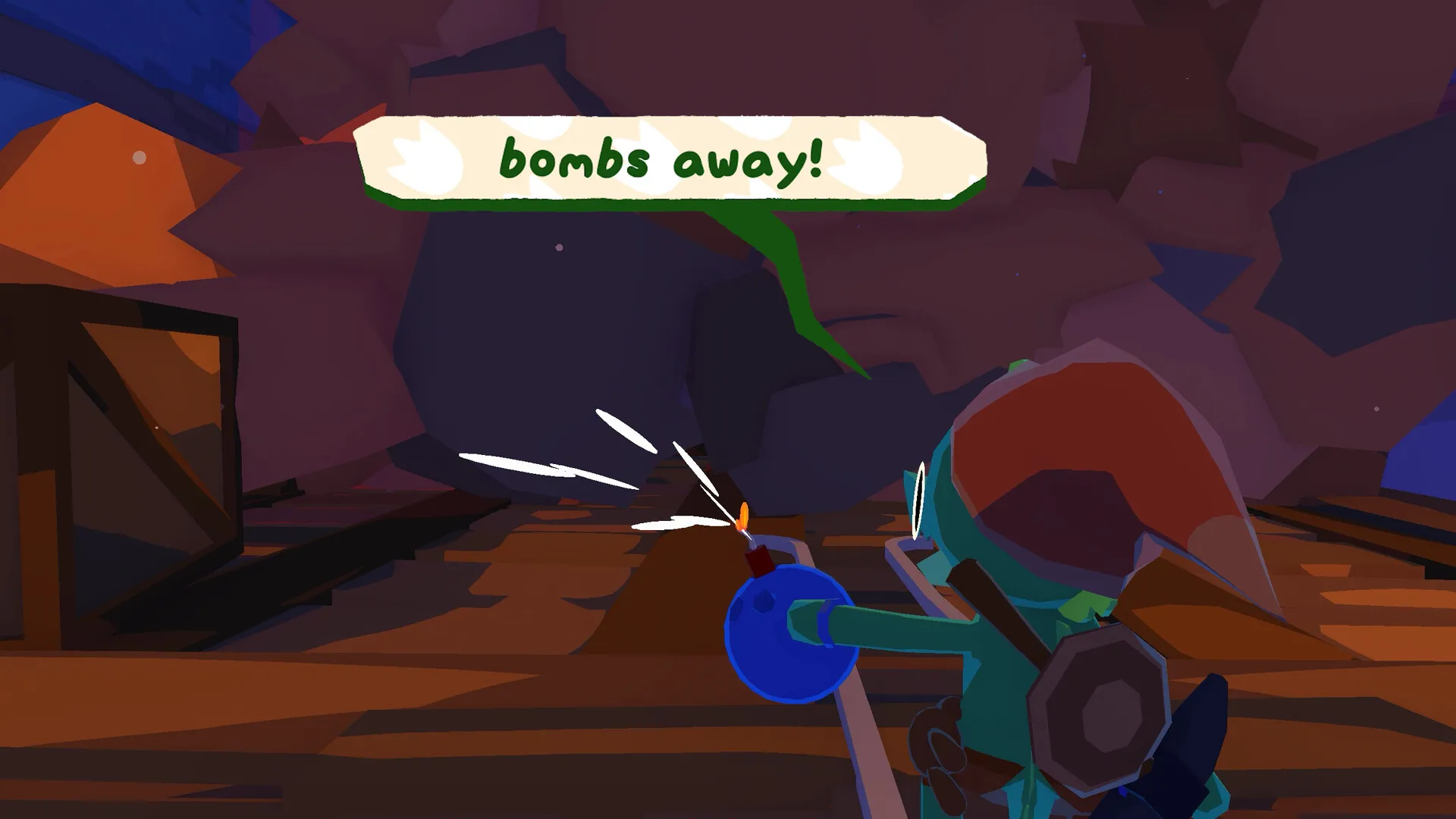
Movement gets a full rework through the star charm system. Charms attach to new weapons and tools, and each one grants a technical ability that the gator did not have before. A pickaxe unlocks a spinning move used to smash cardboard barriers that block paths. A bubble wand gives a hover move that lets the gator float across wide gaps. A battering ram adds a dash for quick bursts of speed.
These actions run on a fatigue bar presented as a row of stars. The moment the gator returns to solid ground, the stars refill. While airborne, the stars regenerate much more slowly. A major constraint comes from the one-weapon rule.
Each power belongs to a specific item, so using its move requires equipping that gear. Traversal becomes a series of choices, since you cannot access dash and hover in the same instant without swapping tools. That limitation builds a rhythm into movement as you read the terrain, pick the right item, and chain actions to match the space ahead.
The cave design benefits from this faster tool-driven motion. Travel feels more fluid than surface exploration, and the systems reward momentum. You can jump, hover, and dash in sequence to reach ledges that sit high above the floor. The mechanical depth stays readable because the goals remain simple and clear, and the star charms create a steady sense of progression.
Each new weapon changes how you interpret a room, because obstacles start to look like invitations once you recognize what your current kit can do. Shield surfing from the base game pairs cleanly with these new moves to push speed even further, turning the scale of the cave network into something brisk and enjoyable to cross.
Social Dynamics and the Typography of Personality
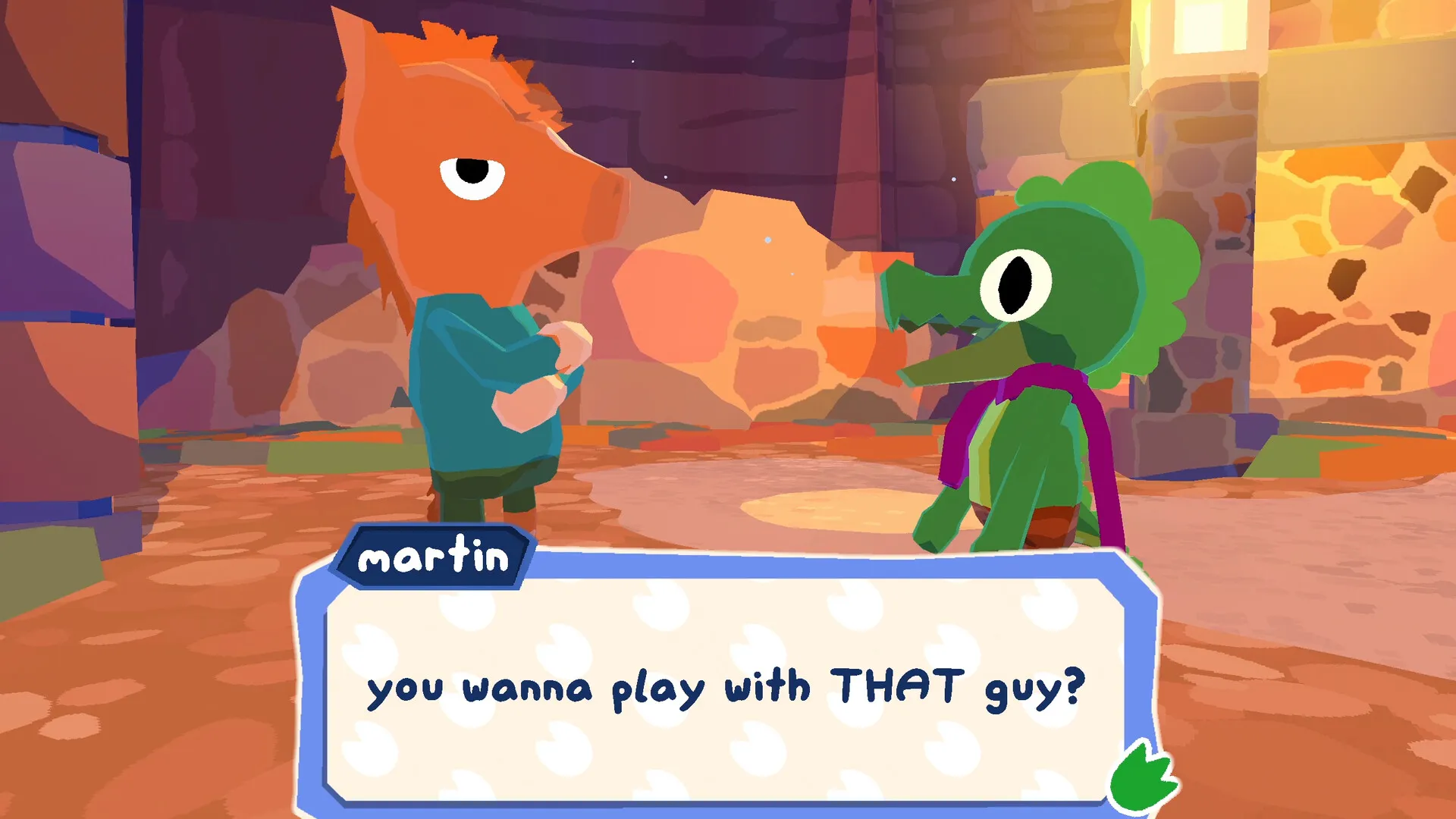
The expansion’s social core comes from 21 new friends, each with a distinct personality carried through dialogue. The writing uses small visual cues to show emotion and attitude. The gator speaks in all lowercase letters, giving their voice a relaxed, open feel. Darklord’s lines use random capitalization, matching the restless energy of a bratty kid who wants attention through chaos. Those typographic touches make the cast feel present, even in brief interactions.
Their tasks are short and imaginative. One kid might send you after hidden creatures. Another asks you to pilot a drone through cardboard hoops placed like a playful obstacle course. Conversations also touch on anxieties tied to growing up. Some kids worry about competence, while others admit to feeling lonely in the dark. The material stays gentle in tone, keeping the focus on how play gives those worries a safe shape.
The “villains” turn out to be a babysitter and her friends, all playing along with a younger kid to keep the fantasy going. That extra layer of pretend makes the conflict feel sweet and grounded in the same child logic that drives the rest of the expansion. Character roles stay sharply defined. A bear wants a nap, while a swimmer carries himself with extreme arrogance. Clear roles help you remember who is who, which matters in a game that does not rely on a menu to track relationships or tasks.
On the technical side, the game performs well on Switch. Frame rates remain steady, including in the denser biomes, and loading between cave and surface stays very short. Underground lighting builds a comfortable, mysterious mood while keeping routes readable. Each region has its own music that matches its visual theme. The expansion reads as a careful portrait of how kids use games of pretend to process the world around them, and it frames friendship and imagination as the tools that keep you moving, even underground.
The Review
Lil Gator Game: In the Dark
This expansion captures the spirit of youth through smart movement mechanics and gentle writing. The addition of star charms provides a technical layer to the simple exploration found in the base game. While the lack of navigation tools can lead to confusion, the vertical level design rewards players who pay attention to their surroundings. It provides a sweet, thoughtful end to the day. The performance is stable and the tone remains consistent. It is a vital play for anyone seeking a relaxing experience.
PROS
- Humorous and sincere character dialogue.
- Seamless performance on Switch.
- Atmospheric lighting and design.
- Innovative movement abilities.
CONS
- Total lack of navigation aids.
- Very brief experience.