









![Kingdom Hearts Collection [I-III] Review](https://gazettely.com/wp-content/uploads/2026/10/Kingdom-Hearts-Collection-I-III-1-360x180.webp "Kingdom Hearts Collection [I-III] Review: KHII Holds Steady as Newer Entries Fluctuate 37")




Rick Power is an American expat living in the Irish suburbs, where he spends his days fronting a wedding band called The Bride and Groove. His life carries the shape of a compromise he has learned to live with. The fantasy of rock stardom gave way to the steadier rhythms of marriage and fatherhood.
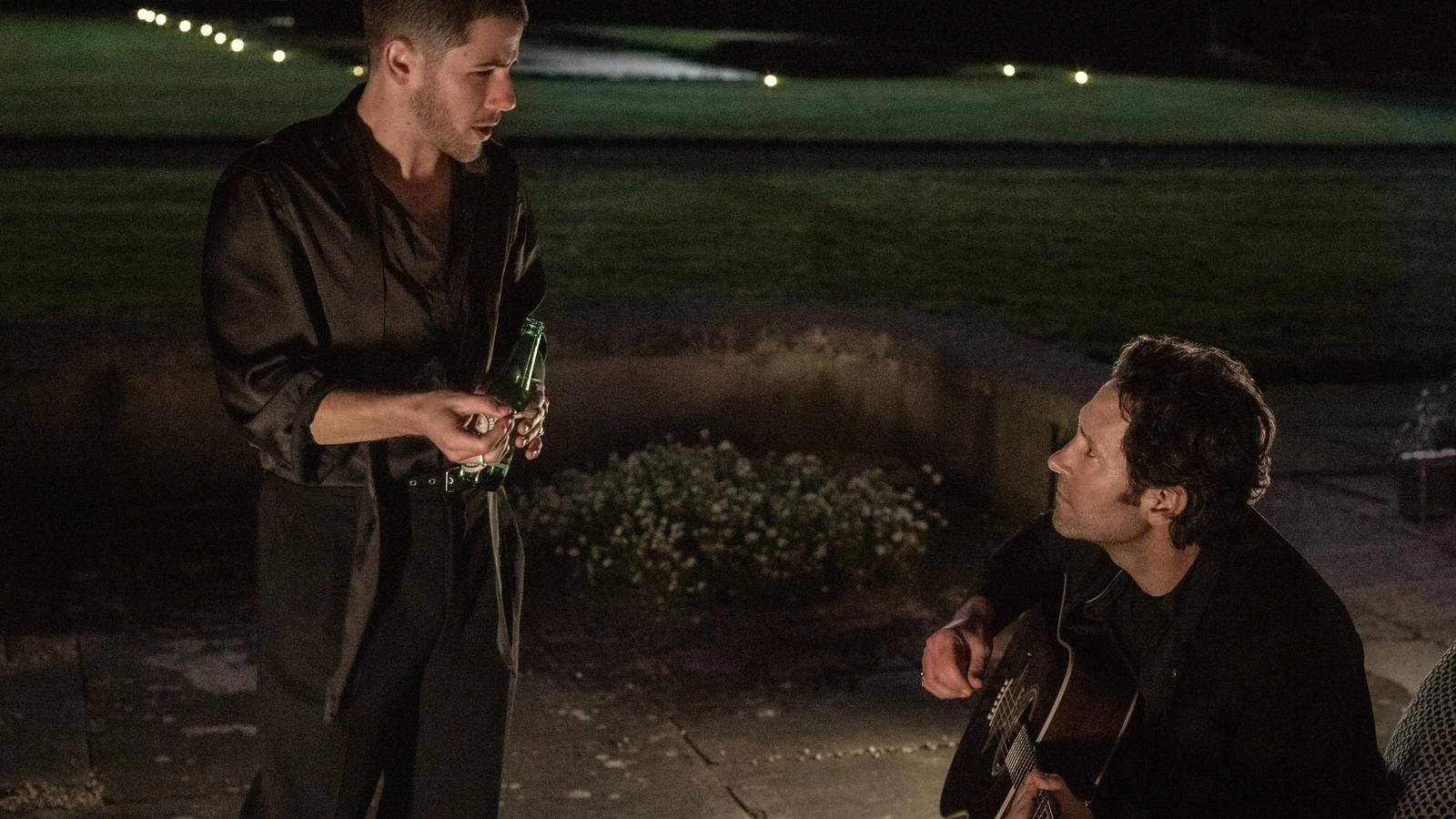
During a performance at an opulent Irish castle, he meets Danny Wilson, a former teen idol whose solo career has lost momentum. The two connect through the frustration that shadows musicians who feel their best chances have slipped away. They drink together in a private suite and trade songs late into the night. During that session, Rick plays a rough version of a track he has been writing for years, a tender piece called “How to Write a Song (Without You).”
Six months later, Rick is standing in a local shopping mall when that melody comes through the speakers. Danny has recorded the song as a polished pop single, and it has become a global hit. Rick has no recording and no written lyrics that can verify the song is his. He is forced to watch the world sing his words while his identity disappears from the story.
The Cold Mechanics of Fame
There is a very specific ache in seeing an intimate act turned into a marketable product. Rick watches a piece of his personal life get absorbed into public culture while he remains unseen. The film treats the music industry as a system built to strip emotion down into something sellable. Jack Reynor plays Mac as a manager who treats art like raw material for profit. His attention stays fixed on image control and chart success, leaving no room for the truth behind the song. That tension gives the film its strongest dramatic thread.
A melody can carry one emotional meaning in private hands and another once it is processed for mass consumption. Rick wrote the song as a heartfelt tribute to his wife and daughter. Danny performs it as a sleek, high-energy pop anthem aimed at the widest crowd possible. Rick’s version feels lived in and personal. Danny’s version carries the sheen of a product shaped for impact.
That shift lands with force because the film understands what songs can hold. A track like this is memory, devotion, and regret compressed into a few minutes. Once Danny takes it, Rick is left confronting the possibility that his deepest emotional expression now belongs to a market machine.
The story also taps into the anxiety of aging artists who feel caught between duty and desire. Rick has a family, a routine, and a life he chose, yet the success attached to his own work now belongs to somebody else. His bitterness grows from that wound. He is not chasing some abstract prize.
He is staring at the dream he once had, now embodied by a man who did not create the thing receiving the applause. The film frames that theft as part of a larger pattern. In a corporate system, the person with access, reach, and money is often the one who gets remembered. The original creator can be pushed out with startling ease. That idea gives the story emotional weight because Rick is fighting for authorship, dignity, and a place in his own narrative.
The Human Cost of Collaboration
Paul Rudd gives Rick a worn, appealing sadness that makes the character easy to follow, even at his least gracious. He plays him as a father who genuinely loves the life he has built, yet still carries grief for the artist he once imagined becoming. That emotional split matters because Rick’s search for recognition can pull him toward selfish choices. Rudd keeps that contradiction alive in a way that preserves the character’s humanity.

Nick Jonas brings a measured quality to Danny that keeps him from flattening into a simple antagonist. He plays him as someone fame has emptied out from the inside. Danny moves through the world like a person trained to mine every waking moment for material. That idea links directly to the film’s view of performance and authorship. Danny is a pop figure who has learned to treat experience as content.
The connection between Rick and Danny works because both men understand professional disappointment from different angles. Rick sees the career he never had. Danny sees the fading version of the career he did have. That shared dissatisfaction gives their early scenes real warmth, which makes the eventual theft hit harder.
The betrayal lands as a violation of creative trust, not just a business dispute. The supporting cast deepens the emotional frame around Rick’s choices. Marcella Plunkett and Beth Fallon, playing his wife and daughter, bring a quiet steadiness that reminds the viewer what his life actually consists of.
They are the people bound up in the song’s meaning, and their presence keeps the story tied to something intimate. Peter McDonald adds warmth and loyalty as Sandy, the bandmate who stays with Rick during the Los Angeles trip. His presence helps keep the film grounded. These relationships stop the story from drifting into an abstract fight about ownership. They place the drama inside a recognizable life shaped by family, friendship, compromise, and old ambitions that never fully disappeared.
A Visual and Sonic Search for Truth
John Carney approaches the material with the emotional openness that has defined much of his work. He keeps the film focused on sincerity and on music’s ability to connect people across disappointment, distance, and betrayal. That choice matters because a harsher or more cynical approach would drain the story of its emotional pull. The cinematography by Yaron Orbach sharpens the divide between the film’s two emotional spaces.
Ireland is presented through warmth and intimacy, with close environments that feel inhabited and personal. Hollywood appears colder and larger, a place that creates distance even when it promises success. That visual contrast tracks Rick’s internal experience with great clarity. One world holds the life he actually lived. The other reflects the success attached to his song, stripped away from the people who gave it meaning.
The title track carries a huge amount of narrative pressure, and the film understands that. The story depends on the song feeling strong enough to justify the international fixation around it. Its movement from an acoustic performance in a hotel room to a fully produced studio single mirrors the film’s central conflict. The arrangement changes, the scale changes, and the meaning changes with it. That progression gives the music a storytelling function beyond simple atmosphere. The song charts the distance between private feeling and public consumption.
The ending lands with a sense of grace that feels richer than a standard courtroom-style victory would have. Rick arrives at a form of peace through the idea that his work has found listeners who can still receive its true meaning. The film places value on personal truth and emotional intention, giving them a force that public acclaim cannot replace.
That choice fits the story’s design. Rick has spent the film confronting an industry built to separate art from the life that produced it. His final sense of peace grows from reclaiming that connection in emotional terms. The last notes leave behind a quiet hope, earned through the damage these characters have had to face.
Power Ballad premiered as the Closing Night Gala at the Dublin International Film Festival on March 1, 2026, followed by a high-profile screening at the South by Southwest (SXSW) Film & TV Festival on March 14, 2026. The film is set for a wide theatrical release in Ireland and the United Kingdom on May 29, 2026, and will open in theaters across the United States on June 5, 2026. Audiences can expect the film to arrive on digital and streaming platforms later in the summer of 2026, typically following the standard theatrical window for Lionsgate titles.
Where to Watch Power Ballad (2026) Online










Full Credits
Title: Power Ballad
Distributor: Lionsgate
Release date: June 5, 2026 (USA), May 29, 2026 (Ireland and UK)
Rating: R
Running time: 98 minutes
Director: John Carney
Writers: John Carney, Peter McDonald
Producers and Executive Producers: Anthony Bregman, John Carney, Peter Cron, Rebecca O’Flanagan, Robert Walpole, Micah Green, Daniel Steinman, Dan Friedkin, Cathleen Dore, Keith Potter
Cast: Paul Rudd, Nick Jonas, Peter McDonald, Marcella Plunkett, Havana Rose Liu, Jack Reynor, Beth Fallon, Rory Keenan, Keith McErlean, Paul Reid
Director of Photography (Cinematographer): Yaron Orbach
Editors: Stephen O’Connell
Composer: Gary Clark, John Carney
The Review
Power Ballad
The film succeeds as a thoughtful study of creative identity and the messy reality of professional envy. The pacing occasionally stumbles during the final sequences. The emotional sincerity of the performances carries the narrative. It avoids easy resolutions. It finds value in the quiet dignity of personal integrity. This piece of storytelling honors the people who create art for their own reasons.
PROS
- Paul Rudd provides a vulnerable and grounded performance.
- The film examines the music industry without becoming a caricature.
- The central song feels authentic to the story.
- The visual contrast between Ireland and Los Angeles supports the emotional themes.
CONS
- Secondary characters lack sufficient development.
- Pacing in the Los Angeles sequences feels rushed.
- The central song is repeated enough to lose its impact.