


























Aball knew only snow and shadow before everything fell apart. Velvet Crowe’s life revolved around her family, and much of it centered on caring for her younger brother as his illness worsened season after season. The red light of the Advent shattered that life. Artorius Collbrande, someone she trusted and regarded as family, killed her brother in a ritual offering to a distant, merciless deity.
He framed the act as necessary to stop the daemonblight, the plague that turns humans into mindless monsters. That moment remade Velvet. Her left hand became a ravenous claw, an instrument of destruction built to devour the daemons she had been taught to fear. She then spent three years in a prison pit without light, surviving by feeding on the monsters thrown down to her.
By the time she emerged, her purpose had narrowed into one fixed point: kill Artorius. She has no interest in sainthood. She moves through the story like a disaster given human form. The world around her runs on moral fracture, with the Abbey claiming righteousness while its actions tell a different story, and with creatures cast as monsters often speaking with a clearer sense of truth.
That frame gives the game its weight. It steps away from bright fantasy and studies what grief, betrayal, and rage do to a person. Velvet stands as a break in the order the Abbey tries to impose. She carries the force that could burn through its cold version of peace.
A Resonance of Lost Souls
Velvet’s companions come from the people this world has cast aside, and that gives the story a constant feeling of desperation. Laphicet, a Malak treated as a tool, becomes the clearest emotional reflection of Velvet herself. His movement from silence and obedience toward a real sense of self produces some of the game’s strongest scenes. He learns to speak for himself, and in time he pushes back against Velvet’s narrow reading of the world. Eleanor Hume joins the group from the opposite side of that divide.
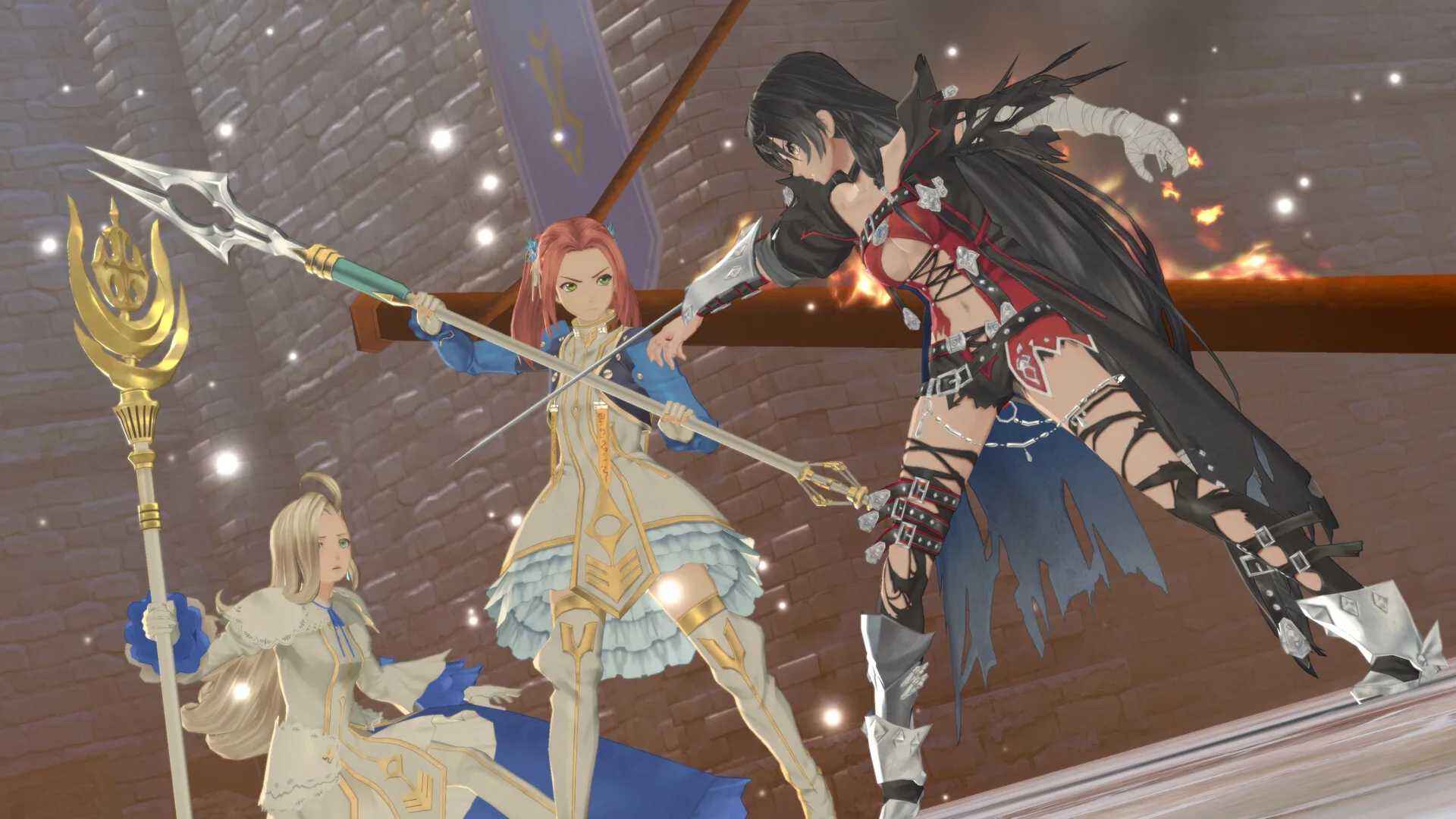
As an Abbey praetor, she brings tension into nearly every exchange. She has to face the collapse of the beliefs that shaped her life as she witnesses the suffering caused by the institution she once admired. The writing gives that conflict room to breathe. Her shift in perspective takes time. She wrestles with loyalty until the Abbey’s cruelty can no longer be dismissed. Rokurou, Magilou, and the rest of the crew each bring their own shade of cynicism or disorder to the party. What keeps them together is not shared purity of purpose.
They stay because each of them has been left with few places left to stand. Much of that relationship work happens through the skit system. These brief conversations fill out the cast with humor, background, and sharper insight into why each person keeps moving forward.
They also help the game tie its character writing to player rhythm, since these moments arrive between battles and travel, giving emotional texture to the systems that surround them. The voice acting grounds all of it. The cast sells the hurt, the bitterness, and the brief flashes of relief that cut through the darkness. This party feels like a group of conflicting motives moving along the same road. They function as a pack held together by need.
The Rhythm of the Soul Gauge
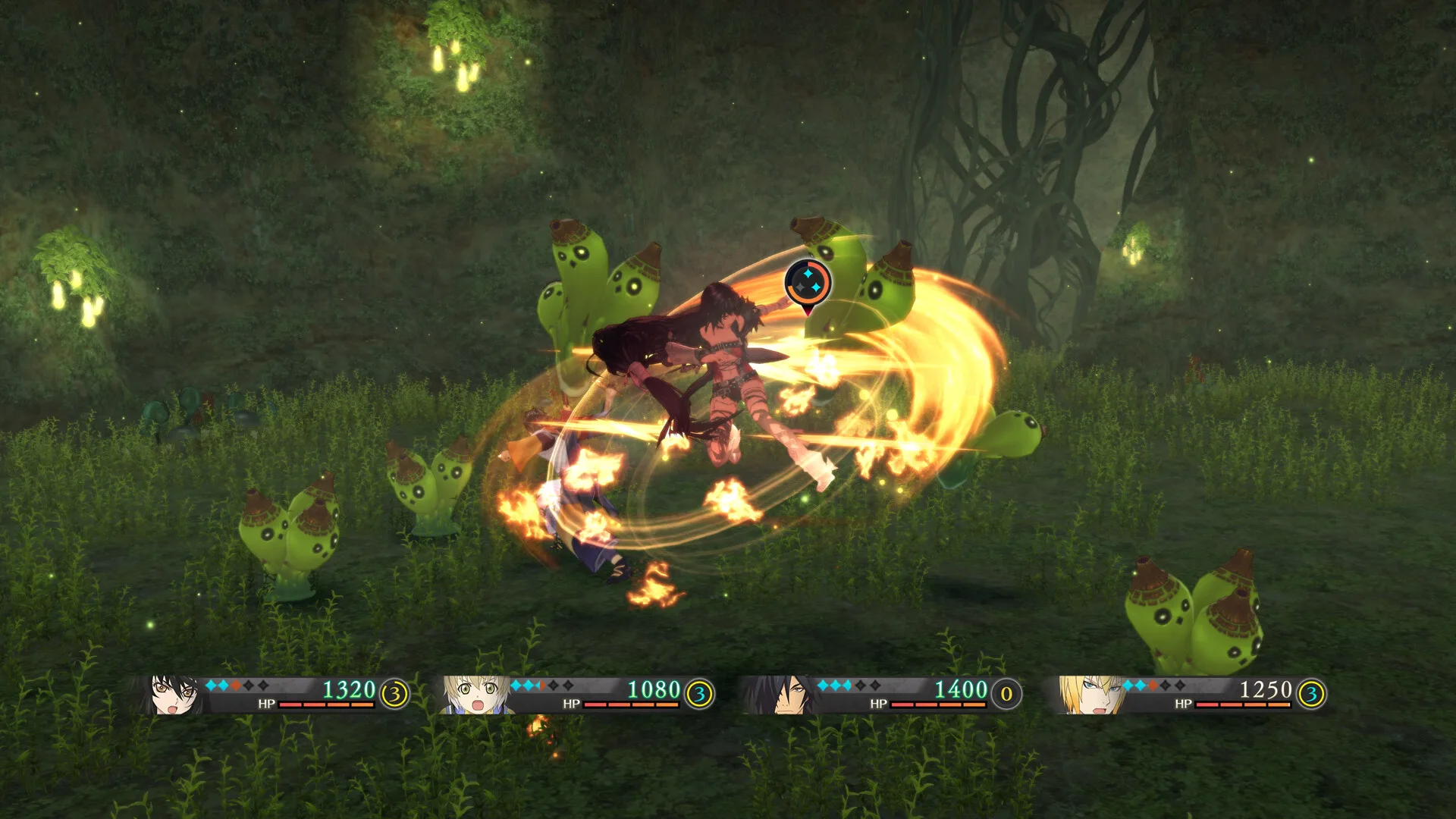
Combat operates at a pace that asks for full attention, and the Soul Gauge sits at the center of that design. Every encounter begins with three souls, and every action draws from that pool. Mash attacks without thinking, and the gauge empties. Once that happens, your offense becomes much easier for enemies to shut down. The game pushes the player to regain souls by inflicting status effects or landing critical hits, which gives each fight a steady cycle of pressure and recovery. That loop ties mechanics to mood in a very clean way.
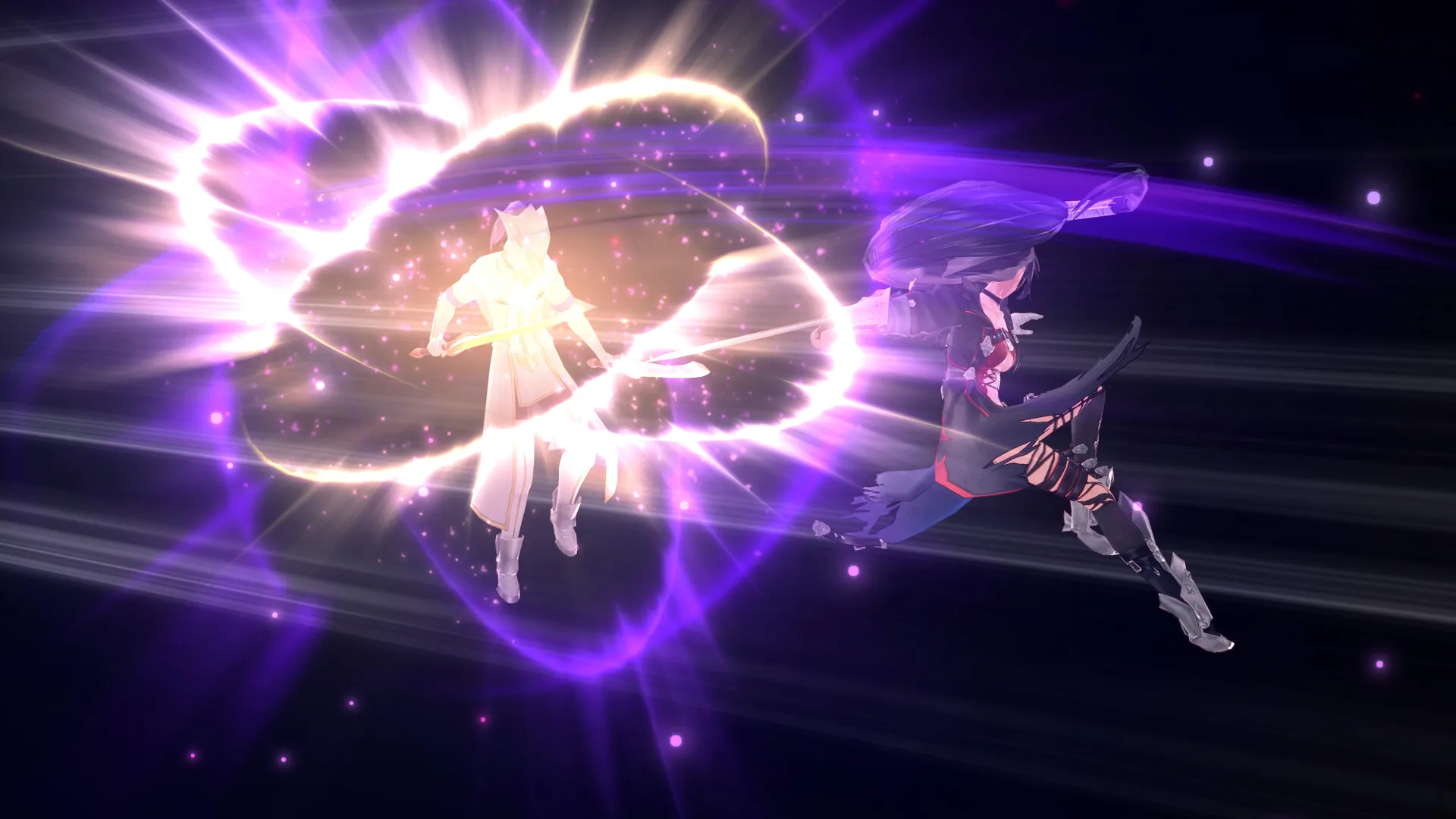
Battles feel unstable because your momentum always hangs on your ability to take risks at the right time. Break Souls deepen that structure by letting you spend captured souls for powerful abilities. Velvet can trigger her claw and slip into a frenzied state, while Eizen calls up shadows to crush enemies. These abilities restore health and extend combos, so they function as tools for survival and expression at once.
The Arte Tree gives players room to shape their own combat language by assigning skills to buttons and building attack strings around personal preference. You can lean into elemental exploitation, brute force, or a mix that supports a favorite character’s style. That flexibility matters because it lets the player form a stronger connection to the party through action, not only through story scenes.
Character switching during battle also carries real tactical value. A sub member can be brought in to replace someone near defeat, or swapped in to take advantage of a particular opening. The local multiplayer option adds another dimension by allowing friends to control separate party members, which changes the texture of combat from individual execution to shared coordination.
On screen, fights stay busy with constant visual feedback, enemies launched into the air, and effects filling the battlefield. It is a system built on aggressive timing, measured defense, and a steady awareness of consequence. For a story centered on people living with the fallout of decisive acts, that design fit feels strong.
Modernizing the Age of Desolation
The move to current hardware brings a set of upgrades that smooth out much of the older friction. On PlayStation 5, the game runs at 4K and holds a steady 60 frames per second. That added clarity gives the combat animations sharper response and makes fast exchanges easier to read. The Nintendo Switch version aims for 30 frames per second and shows some texture pop-in, yet it still works well as a portable way to play.
Exploration across the field benefits from one of the smartest adjustments in the package. A 20 percent boost to movement speed strips away much of the drag from crossing large zones. The Denore and Inoph bottles arrive within the opening hours, giving players unlimited fast travel and dungeon exits much earlier. That choice improves pacing by reducing dead time between major story and combat beats.
The Grade Shop also changes the flow of progression in a meaningful way. Since it is available from the start, players can spend points on bonuses such as extra gold or increased experience right away. For anyone who wants to keep the story moving, that feature cuts down the grind that once slowed the experience. The updated interface adds destination markers and icons for new items, giving players cleaner direction without turning the game into an automated path.
The game still expects attention. It simply communicates its goals better. Even failed normal battles can now be retried, which makes experimentation less punishing. Every original DLC costume and item is included as well, giving this release the feel of a full package. Visually, the game remains faithful to its original art style while gaining from the higher resolution. The result is a cleaner, smoother version of a very dark story, one that preserves the weight of Velvet’s path while making the systems around her easier to appreciate.
The Review
Tales of Berseria Remastered
Tales of Berseria Remastered offers a sharp, biting narrative focused on the price of vengeance. The cast of outcasts provides a refreshing look at morality. Combat stays fast and rewarding. The Soul Gauge system forces tactical precision in every encounter. While the visual presentation shows its age, the quality of life additions streamline the experience. This package is the best way to experience a high point for the series. It succeeds through emotional weight and mechanical depth.
PROS
- Gripping antihero narrative
- Complex character relationships
- Fast tactical combat
- Excellent accessibility tweaks
CONS
- Dated world textures
- Some visual pop-in
- Repetitive dungeon design