




















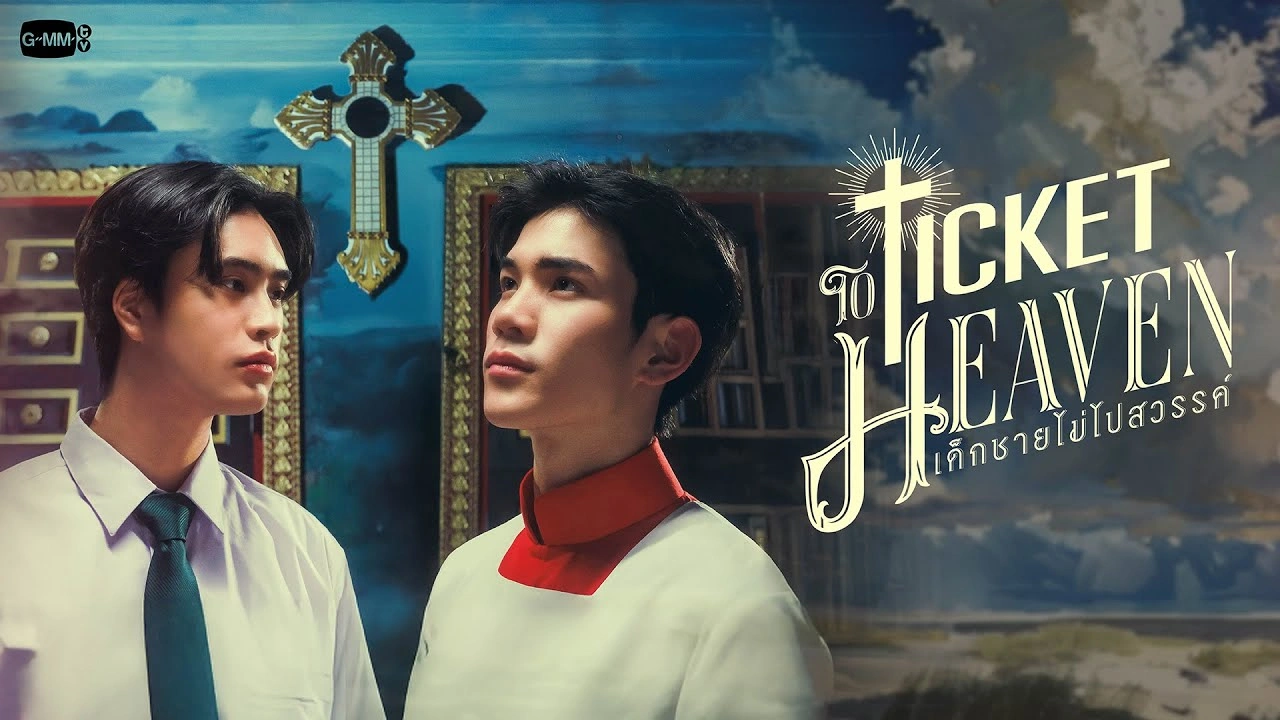

Ticket to Heaven opens with the kind of premise Thai BL has been moving toward for years: romance shaped by institutions, social pressure, family wounds, and the long shadow of shame. The six-episode drama begins with a flashforward to January 2025, on the first day Thailand enforces its LGBT+ marriage law, then returns to 1996, where a Catholic seminary becomes the pressure cooker for Barth and Tanrak’s first collision.
Barth arrives as the new student with a scowl sharp enough to cut through incense. He has no patience for religious ceremony, no interest in fitting in, and no desire to play the grateful scholarship kid. Tanrak, by contrast, follows the seminary’s rhythm with quiet discipline. His faith is tied to loss, since he believes a good life can reunite him with his parents in heaven. One boy sees God as absence. The other sees faith as survival. The episode places them in the same room and lets the air thicken.
Rules, Guilt, and the Cost of Being Seen
The seminary setting gives Ticket to Heaven its strongest dramatic engine. Everyone lives under watchful routines: shared dorms, unlocked lockers, church duties, curfews, ceremonies, and moral lessons that sound gentle until they press against real pain.

Barth’s refusal to conform becomes a visible crack in this controlled world. He arrives late to an ordination in casual clothes, sits apart from the students, then leaves before the ceremony ends. Subtle? Absolutely not. Effective? Very.
The episode builds conflict through incidents that seem small until they gather weight. Kongkit’s bullying brings homophobic cruelty into a place that claims to teach goodness. Barth, already carrying trauma from his old school, reacts with the hard edge of someone who has learned that silence rarely protects him. When Kongkit’s headphones go missing, Barth becomes the easy target. The accusation lands because the institution is already prepared to doubt the angry outsider.
The abandoned swimming pool sequence is the episode’s key dramatic turn. Locked away from the safety of rules, Barth and Tanrak finally speak without the seminary listening. Their conversation about God cuts through the show’s setup with welcome bluntness. Barth once believed, then pain taught him that belief did not guarantee rescue. That line gives the character his wound in plain form. It is angry, yes, yet the anger feels earned.
Gemini and Fourth Make Silence Do the Heavy Lifting
Barth and Tanrak work because the episode resists making them instantly soft around each other. Barth is defensive, suspicious, and allergic to pity. Tanrak is kind, yet his kindness comes from a system he has accepted since childhood. That tension matters. If the show rushed them into easy warmth, the premise would lose its charge. Their early dynamic is all sideways glances, clipped replies, and reluctant attention. Romance has to fight its way through belief first.
Gemini Norawit Titicharoenrak gives Barth a restless physicality. He plays him like a boy trying to look unreachable, then lets the mask slip when God comes up. His anger is never only teenage moodiness. It feels like a bruise pressed too often. The performance works best when Barth speaks less, because his posture already tells us he expects rejection before anyone opens their mouth.
Fourth Nattawat Jirochtikul brings Tanrak a softer, more contained energy. He does not play goodness as innocence. Tanrak has fear, pride, and a deep need to be worthy in Father Arnon’s eyes. That makes his compassion complicated. He wants to help Barth, yet he is terrified of stepping outside the lines. Fourth catches that small internal tug without overplaying it.
Father Arnon adds another strain to the story. He can be caring, yet his authority carries institutional force. Kongkit, meanwhile, is not a subtle bully, though he serves a clear purpose. His cruelty exposes the rot that can live inside a moral environment. Kongdech brings class pressure into view, reminding us that scholarship students often do not choose their path. They take the door that opens.
Sacred Symbols, Bright Edges, and a Six-Episode Squeeze
Director Aof Noppharnach Chaiwimol knows how to stage intimacy through restraint, and Ticket to Heaven benefits from that patience in its best moments. The religious imagery is direct, sometimes almost too neat, yet the episode finds power in it. The storm, the church halls, the “Ticket to Heaven” painting, the abandoned pool, and the crucifix scene all speak the same visual language: faith is shelter, faith is pressure, faith is something heavy enough to fall.
The moment when Barth and Tanrak stop the crucifix from falling and their hands touch is the kind of image BL fans will pause, screenshot, brighten, analyze, and probably turn into twelve edits before breakfast. It is symbolic with a capital S, but it works because the actors sell the hesitation. The touch lands less like flirtation and closer to danger. For this story, that is the right temperature.
The craft is not always as controlled. Some upbeat sound cues and brighter visual choices soften material that wants a heavier atmosphere. A story about homophobia, religious shame, and identity under pressure needs careful tonal calibration. A peppy cue in the wrong place can make a seminary hallway feel like the setup for a school festival, and this is very much not the “let’s sell cupcakes after mass” episode.
Pacing is the larger concern. Six episodes leave little room for drift, and the premiere carries a crowded load: a 2025 flashforward, the 1996 setting, Barth’s arrival, Tanrak’s childhood grief, class issues, bullying, seminary rituals, religious symbolism, and the first emotional breach between the leads. The urgency keeps the episode moving, yet some shifts arrive quickly, especially Tanrak’s growing concern for Barth.
Still, the foundation is strong. Ticket to Heaven is aiming for a sharper, sadder corner of BL storytelling, one where love has to pass through doctrine, memory, and fear before it can even name itself. The question now is simple: can six episodes hold that much hurt without turning revelation into a race?
Ticket to Heaven is a 2026 Thai BL drama from GMMTV. The series premiered on May 30, 2026, airing every Saturday at 8:30 p.m. on GMM25 in Thailand, with reruns available on Viu at 9:30 p.m. It is also available internationally on Rakuten Viki. The story follows Tanrak, a devout young seminarian planning to become a priest, whose faith is tested after he meets Barth, a troubled transfer student carrying deep emotional wounds. Set inside a strict religious school, the drama explores faith, forbidden love, shame, family pain, and queer identity through the bond between its two leads.
Where to Watch Ticket to Heaven Online

Full Credits
- Title: Ticket to Heaven
- Distributor: GMMTV, GMM25, Viu, Rakuten Viki
- Release date: May 30, 2026
- Rating: 15
- Running time: Approximately 54 minutes per episode
- Director: Noppharnach Chaiwimol
- Writers: Noppharnach Chaiwimol, Kittisak Kongka
- Producers and Executive Producers: Darapa Chaysanguan, Sataporn Panichraksapong
- Cast: Gemini Norawit Titicharoenrak, Fourth Nattawat Jirochtikul, Oliver Poupart, Peerakan Teawsuwan, Rapheephong Thapsuwan, Sinjai Plengpanich, Polawat Manuprasert, Phakawat Tangchatkeaw, Supakorn Kantanit, Chayada Akiyama, Thamonchita Namkool, Poon Sutarom
The Review
Ticket to Heaven
Ticket to Heaven starts with emotional force, strong lead chemistry, and a premise that gives Thai BL a sharp spiritual and cultural ache. Its seminary setting creates real tension, while Gemini and Fourth bring restraint, hurt, and warmth to a story built on faith, shame, and longing. Some tonal choices feel too bright for the material, and the six-episode format may squeeze the drama too tightly, yet the premiere leaves a clear mark.
PROS
- Strong chemistry between Gemini and Fourth
- Emotionally rich faith-versus-identity conflict
- Memorable religious symbolism
- Sharp seminary setting
- Promising lead performances
- Timely LGBTQ+ themes
CONS
- Some music cues feel too upbeat
- Bright visuals can soften the darker material
- Six episodes may limit character depth
- Certain story beats move too quickly