























![Kingdom Hearts Collection [I-III] Review](https://gazettely.com/wp-content/uploads/2026/10/Kingdom-Hearts-Collection-I-III-1-360x180.webp "Kingdom Hearts Collection [I-III] Review: KHII Holds Steady as Newer Entries Fluctuate 37")



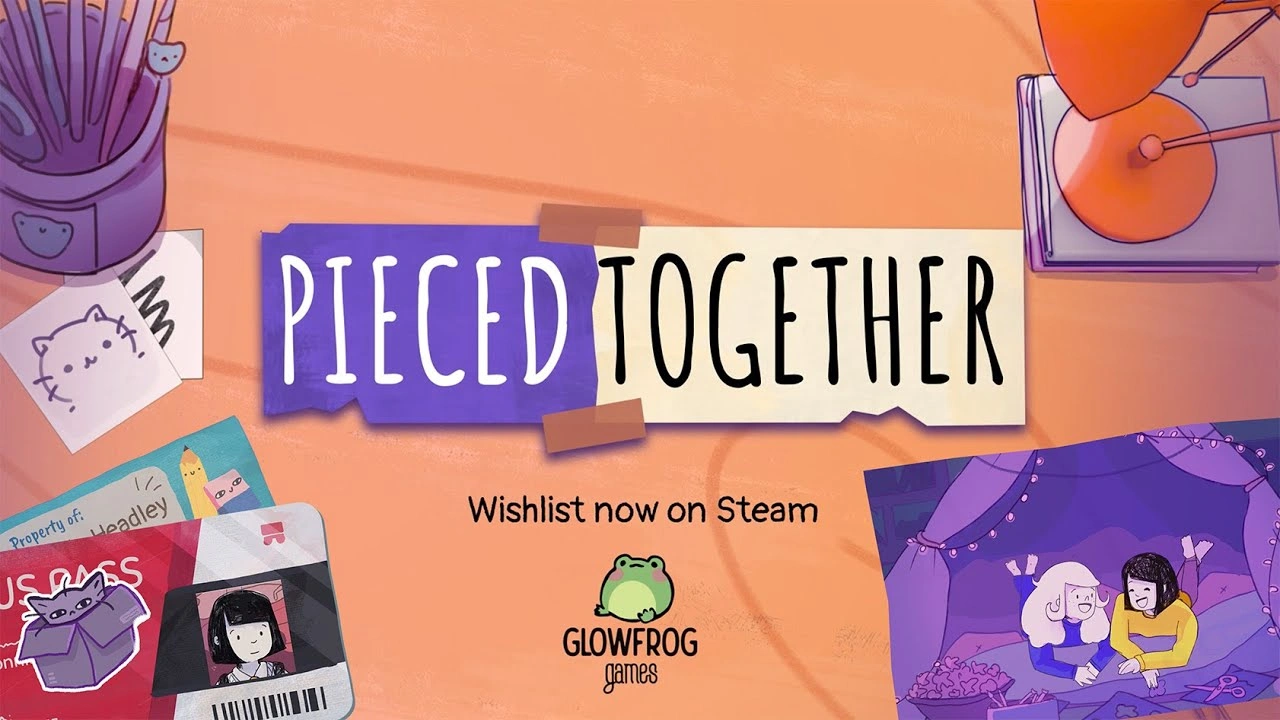

The digital desktop becomes a flat archive of touchable memory in Pieced Together, a PC release conceptualized by BAFTA-winning artist and designer Kate Killick with the development team at Glowfrog Games. The experience places the player at a point where recollection meets emotional distance. Its narrative frame belongs entirely to Connie, a woman in her thirties who discovers a storage box filled with childhood objects.
That box leads her to build a chronological scrapbook for Beth, a self-assured peer who entered her life during a fragile transitional period. The game’s structure takes shape as a quiet, interactive coming-of-age chronicle set during the late 1990s.
Adult Connie works through the scrapbook while trying to write an emotional letter to this former companion, making clear from the opening that years of silence separate them. The emotional focus rests on youth, domestic sisterhood, and the steady drift that follows as adult responsibilities reshape personal priorities.
The Chronology of Sisterhood
The story begins with displacement, following the friendship from the moment ten-year-old Connie moves to an unfamiliar city with her mother. An early scene gives the relationship its emotional foundation: Connie hosts a birthday party, her new classmates reject the invitation, and Beth becomes the single guest who shows up.
Shared vulnerability quickly turns into a protective bond, which the narrative follows through secondary school, college, and university. Connie and Beth receive careful definition across these stages. Each has clear ambitions, domestic skills, and private worries, which makes their attachment feel specific rather than schematic. They become emotional anchors for each other during formative upheavals.
The storytelling earns much of its effect through accumulated late-twentieth-century detail, inviting comparison with Knights and Bikes and the early Life Is Strange entries. The script asks players to handle magazine quizzes, anonymous adolescent love notes, and mementos tied to the frightening freedom of first holidays abroad.
A grounded subplot gives the period setting added emotional weight, following Connie’s awkward attempts to build a relationship with her absent father and his new partner. That family strain becomes a key test for Connie, who depends heavily on Beth while trying to make sense of a difficult domestic arrangement.
The pacing changes during the final stretch. The movement toward Connie and Beth’s separation feels measured for most of the game, then the final chapter compresses time into a brisk montage. That choice captures how adulthood can suddenly speed up, yet the compression produces a slight abruptness and leaves some emotional closure feeling out of reach. The ending hands structural agency to the player through a final decision: Connie can post the completed letter and reopen contact, or she can leave the relationship in the past.
The Tactile Logic of Memory
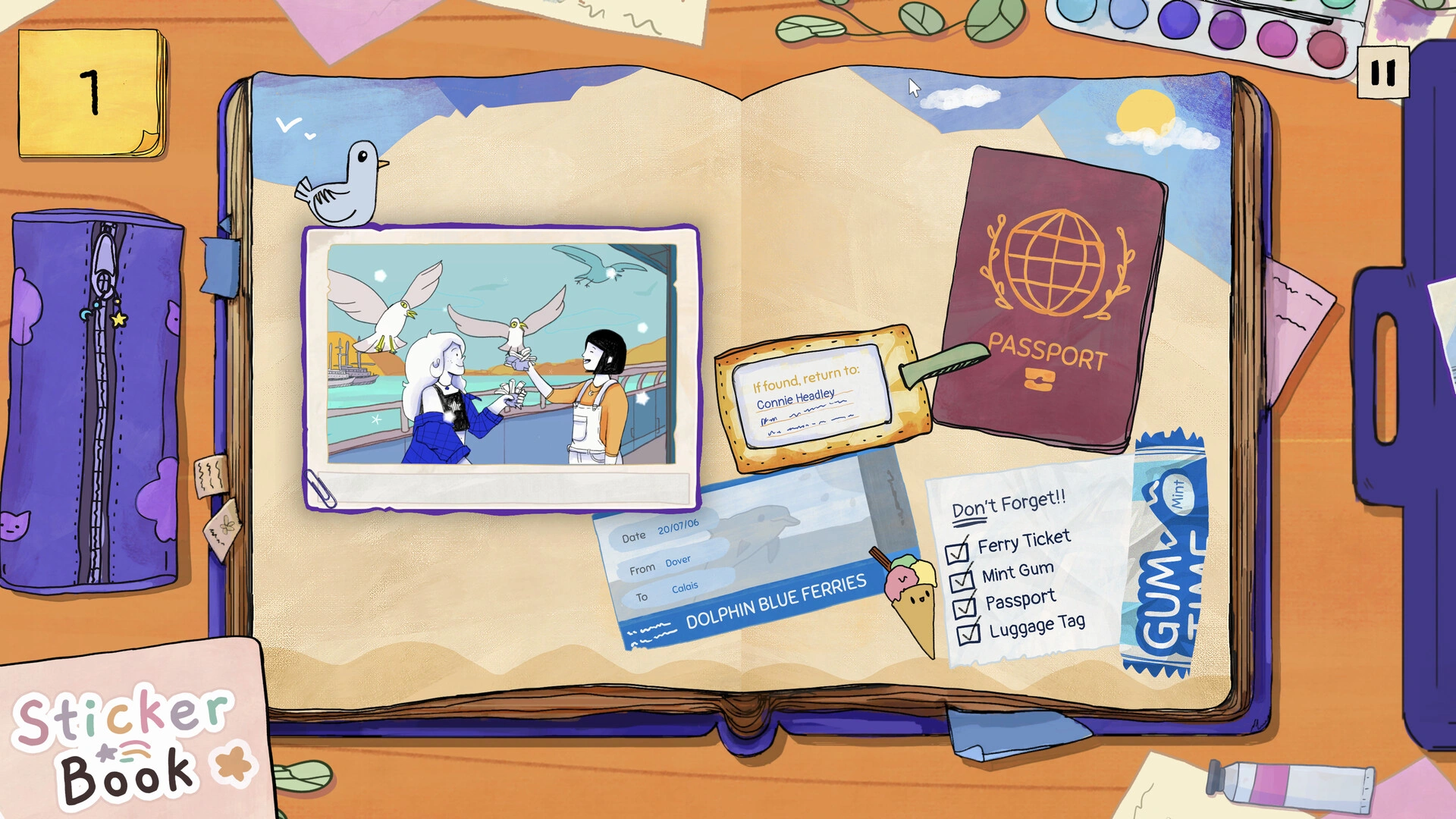
The mechanical loop asks players to retrieve artifacts from a storage tray and arrange them inside the scrapbook. Photos, handwritten notes, travel tickets, sketches, and transit maps must be clicked, dragged, rotated, and glued onto blank album pages.
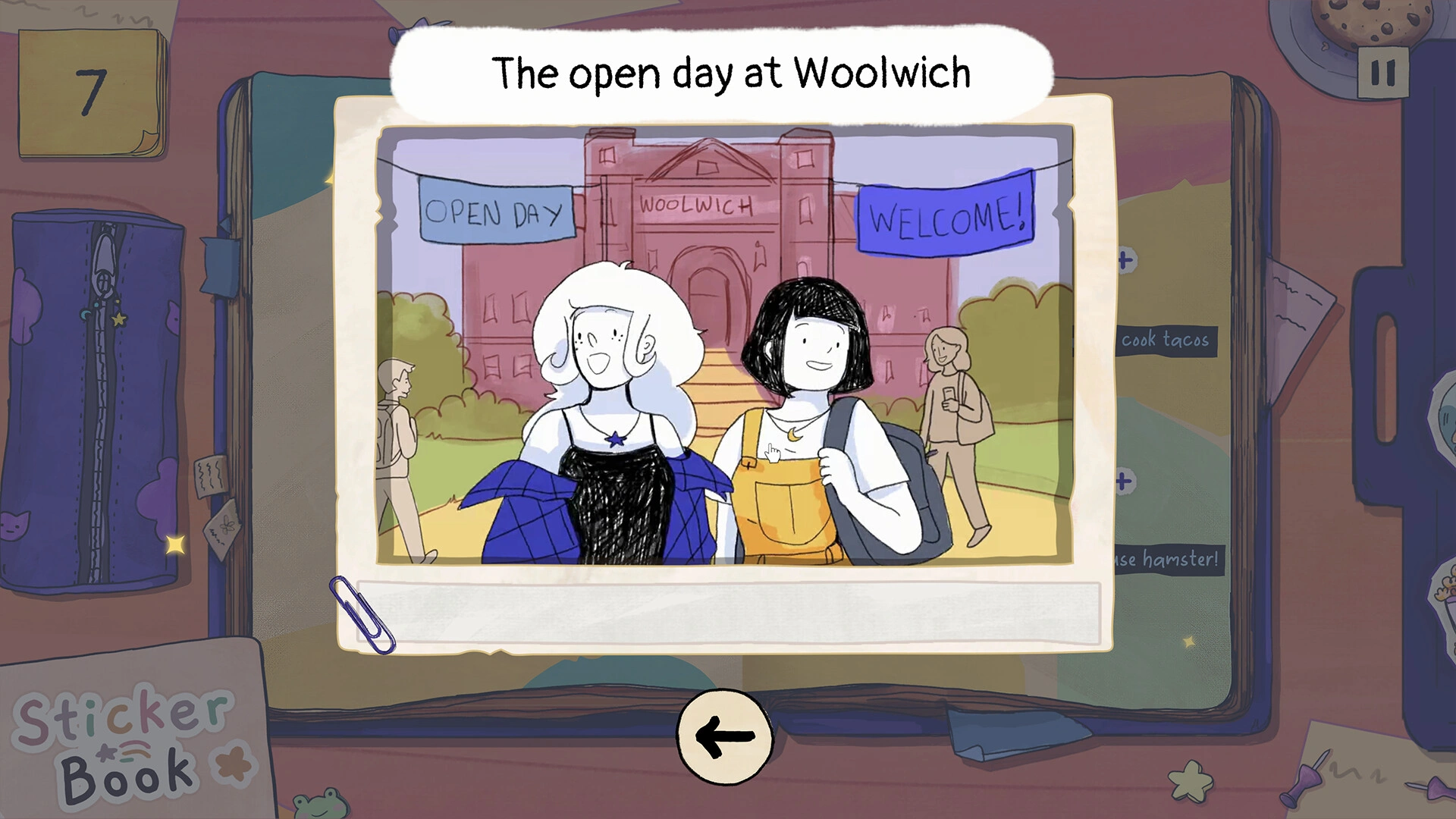
The system gives players room to arrange objects, then uses firm page rules that recall the environmental storytelling design of Unpacking. Each spread corresponds to a specific chronological event, and a small sticky note states the exact number of suitable mementos needed to finish the layout.
Placement errors create light correction. An unrelated item or mistaken spatial order triggers a prompt to lift the object and reorganize the page. The process carries no penalty, mess, or frustration, which keeps the rhythm relaxed. The developers keep the scrapbooking loop from becoming mechanical through specialized page tasks. Players reconstruct torn photographs, arrange ingredient icons to complete a recipe, circle answers on school quizzes with an ink pen, and clean grime from old portraits with a brush.
The game broadens its structure through themed spreads, including a historical timeline of domestic felines and a puzzle grid that guides Connie through the Paris catacombs. Optional stickers provide a small layer of aesthetic customization. Players unlock these single-use illustrations at the start of later chapters by interacting with the book’s margins, giving them stylistic expression inside the fixed narrative structure.
One minor limitation appears after the credits of this two-hour experience: the interface lacks a separate viewing mode for turning through the finished scrapbook as one complete art object. Players can still reload individual chapters to find missing decorations.
Sensory Comfort and Reflection
The visual design uses hand-drawn illustration that mixes caricature with close attention to material texture. The screen convincingly suggests heavy paper stock, liquid adhesive, graphite lines, and vinyl stickers. Every surface reinforces the feeling of physical craft. That visual identity works closely with the audio presentation, especially Connie’s earnest voice performance, which grounds her internal monologues and formal letters in a clear emotional reality.
The soundtrack offers gentle arrangements that stay in the background and leave room for the puzzle focus. The audio design places equal attention on material friction. Scissors slice through cardboard, glue bottles release adhesive, and paper settles against flat surfaces with crisp, tactile sounds. These small sensory cues call to mind the careful sound detail found in Undertale.
The design removes traditional game anxieties through the absence of countdown timers, fail states, and obscure logic blocks. An inspection button lets players study individual items at their own pace, reading text clues and examining background illustrations. With mechanical pressure stripped away, Pieced Together becomes a meditative exercise, turning the digital workspace into a quiet place for reflecting on personal history and the people who once shaped it.
The Review
Pieced Together
Pieced Together delivers a bittersweet, beautifully animated exploration of friendship that balances linear storytelling with tactile, low-pressure puzzles. While its abbreviated length and rapid final pacing leave a desire for deeper closure, the emotional resonance of Connie and Beth's journey makes it a standout narrative experience. The physical warmth of the scrapbooking mechanics creates a deeply comforting, reflective atmosphere.
PROS
- Deeply relatable coming-of-age story
- Creative, varied scrapbooking mechanics
- Beautiful hand-drawn art style
- Excellent sound effects and voice work
CONS
- Short duration under two hours
- Abrupt pacing in the final acts
- No option to view the completed album