


























Ivette Löcker’s documentary Our Time Will Come presents a scenario stripped of noir’s expressionistic shadows, yet filled with its pervasive sense of systemic dread. The film introduces its subjects, Siaka Touray and Victoria Preuer, living within the cold, bureaucratic apparatus of Vienna. For over a year, Löcker’s camera watches, a silent observer tracking their attempt to construct a life.
Their antagonists are not shadowy figures in trench coats but something far more mundane and menacing: residency papers, societal prejudice, and the grinding friction of building a normal existence. The film fixes its gaze on their personal relationship, a small flame of intimacy cupped against the indifferent winds of a hostile state. It is a story of quiet endurance.
The Geometry of Two Souls
The film’s central tension resides in the interplay between Siaka and Victoria, a study in psychological juxtaposition. Siaka operates with a calm faith, an optimistic certainty that feels almost like a radical act in their circumstances. This is not a naive hope, but a willed philosophical stance against despair.
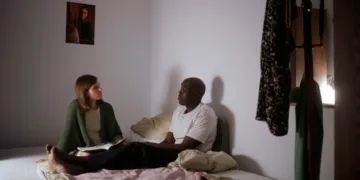
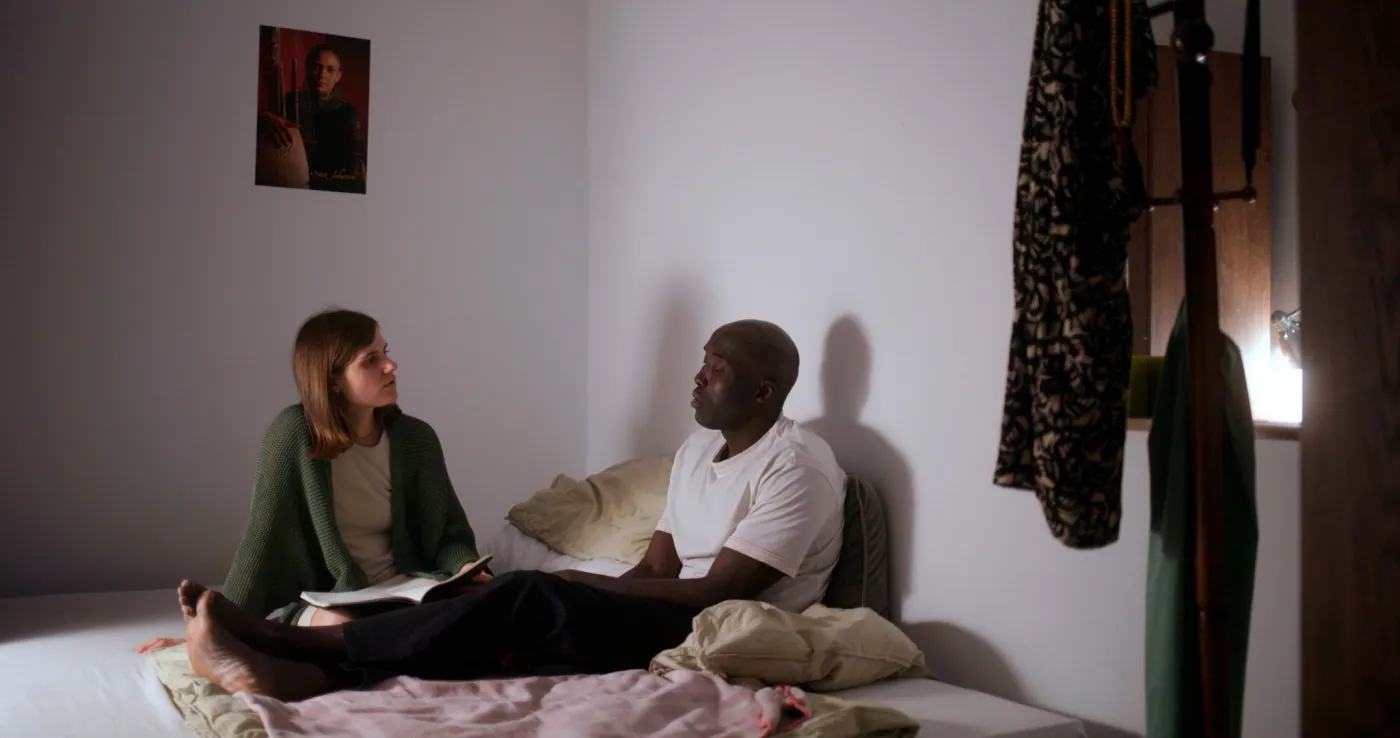
Victoria presents a counterpoint, her pragmatism worn down into a raw, palpable anxiety over the daily logistics of survival. She is the barometer of their precarity. Their small apartment is shot with flat, natural light, a visual antithesis to chiaroscuro that serves to create a pocket of unadorned reality, a fragile safe house. Inside, they communicate in English, a constructed linguistic space that is neither his nor hers. This neutral territory is a necessary code, a private language for a new, shared life forged under immense pressure.
In one sequence, Victoria reads from an old diary, her voice unearthing the remembered terror of Siaka’s unstable legal status. Löcker’s camera holds steady, a fixed and punishing gaze that transforms the simple act into a deposition of emotional trauma.
Also Read






It functions as a noir flashback, revealing the lasting psychological scars of their struggle. Their domestic moments, hanging a picture or tending a small garden, are not simple vignettes. They are carefully staged acts of creating order in a world that offers none, a quiet insistence on free will in the face of bureaucratic fatalism.
An Invisible Antagonist
The primary conflict is with an enemy that has no face, a perfect noir villain. The Austrian state manifests as a series of sterile offices and impenetrable rules, a bureaucratic maze designed to exhaust and expel. Löcker’s cinematography in these spaces is telling; wide shots emphasize the impersonal architecture, while the sound design captures the flat hum of fluorescent lights.

Siaka is fighting for his identity to be recognized, an existential battle against being reduced to a case number or a racial stereotype. This systemic pressure is sharpened into acute threat through his personal testimony. He recounts a racist assault on a Vienna street, an event made crueler by the arrival of police who immediately identified him as the aggressor. It is a pure distillation of the protagonist’s plight: an innocent man caught in a corrupt world where the law itself is inverted. The system is not broken; it is working as intended.
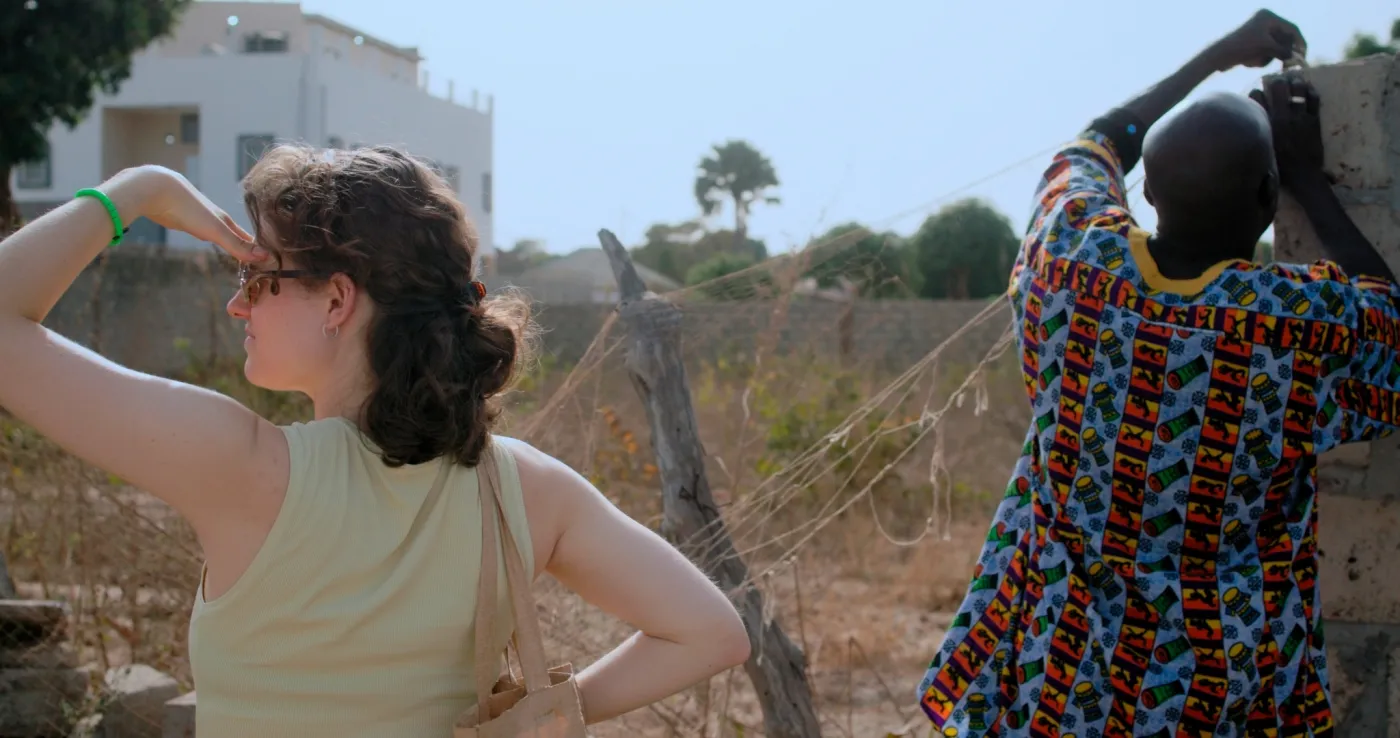
This oppressive monochrome is briefly broken by a trip to Gambia for their wedding. The sequence is a necessary visual and thematic rupture. The color palette explodes, the camera’s movements become more fluid, and the soundscape fills with music and celebration.
The open welcome Victoria receives offers a stark, painful contrast to the ambient hostility that greets Siaka in her home. The interlude functions as a glimpse of an alternate reality, a life they could have, which makes their return to Vienna’s muted tones more psychologically jarring for the viewer.
The Unblinking Eye
Ivette Löcker’s direction is an exercise in radical patience, a form of anti-noir. Where classic thrillers use canted angles and dramatic shadows to externalize inner turmoil, Löcker employs a steady camera and flat, natural lighting. This choice forces the audience to locate the tension entirely within her subjects’ expressions, their hesitations, and their words.

The camera’s stillness becomes an ethical stance, a refusal to sensationalize their struggle. The film’s pacing denies the viewer the catharsis of conventional plot points. We are made to wait with the couple, to feel the slow passage of bureaucratic time and the weight of constant uncertainty, creating a shared, low-grade anxiety. This effect is amplified by the absence of a non-diegetic score.
The method finds its most potent expression in a scene where the subjects debate the film’s purpose. Victoria worries the story lacks joy; Siaka insists their pain must be documented. The moment breaks the documentary’s artifice to reveal the philosophical stakes of representation. Whose story is it? The one of injustice, or the one of resilience?
The film, by including the debate, refuses to answer, suggesting their reality contains both truths. Löcker’s brief vocal intervention here is a rare crack in the observational facade, highlighting the inherent power dynamics of the filmmaker-subject relationship and the impossibility of pure objectivity.
Our Time Will Come (Original title: Unsere Zeit wird kommen) is a documentary film directed by Ivette Löcker and produced by KGP Filmproduktion and Sixpackfilm. It premiered in 2025 at the Berlinale and has since been shown at the Sarajevo Film Festival, where it won the best documentary feature prize.
Full Credits
Director: Ivette Löcker
Writers: Ivette Löcker
Producers and Executive Producers: Barbara Pichler, Gabriele Kranzelbinder
Cast: Siaka Touray, Victoria Preuer
Director of Photography (Cinematographer): Frank Amann
Editors: Esther Fischer
The Review
Our Time Will Come
Our Time Will Come is a work of profound patience and quiet integrity. It forgoes cinematic drama to present a more honest, unsettling truth about the slow violence of bureaucracy and the resilience required to build a life within a hostile system. Löcker’s unobtrusive camera captures the intimate mechanics of a partnership under immense strain, creating a portrait that is both a specific story of two people and a larger document of systemic friction. It is a demanding film that rewards the viewer’s attention with a deep, authentic study of endurance.
PROS
- An intimate and authentic portrayal of a relationship under external pressure.
- A patient, observational filmmaking style that respects its subjects.
- An honest and direct examination of systemic racism and bureaucracy.
- The film’s meta-commentary on the nature of documentary truth is insightful.
CONS
- The deliberately slow, non-dramatic pacing may feel uneventful to some viewers.
- Its observational distance can create a sense of emotional restraint.
- The lack of a conventional narrative resolution might feel unsatisfying.