


















Stage acting is a phantom art, its brilliance vanishing the moment the curtain falls. For historical giants of the theater, what remains is not performance but reputation, a mythology constructed from brittle newspaper clippings and the breathless accounts of witnesses long dead.
Eleonora Duse, “La Divina,” is perhaps the most glorious of these ghosts. The film Duse does not attempt an exorcism. It instead inhabits the haunting. We meet the actress in the twilight of her life, returning to the stage after a decade away, not for glory but for money (a refreshingly mundane motivation for a goddess).
The setting is Italy in the early 1920s, a nation licking its wounds from one war while sleepwalking into a new political nightmare. The film frames her comeback as a collision between a monumental artist and a world that has outgrown her monumental style. She is a relic, magnificent yet cracking, confronting her own mortality as her country confronts its soul.
A Tyranny of Temperament
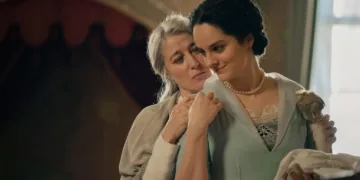
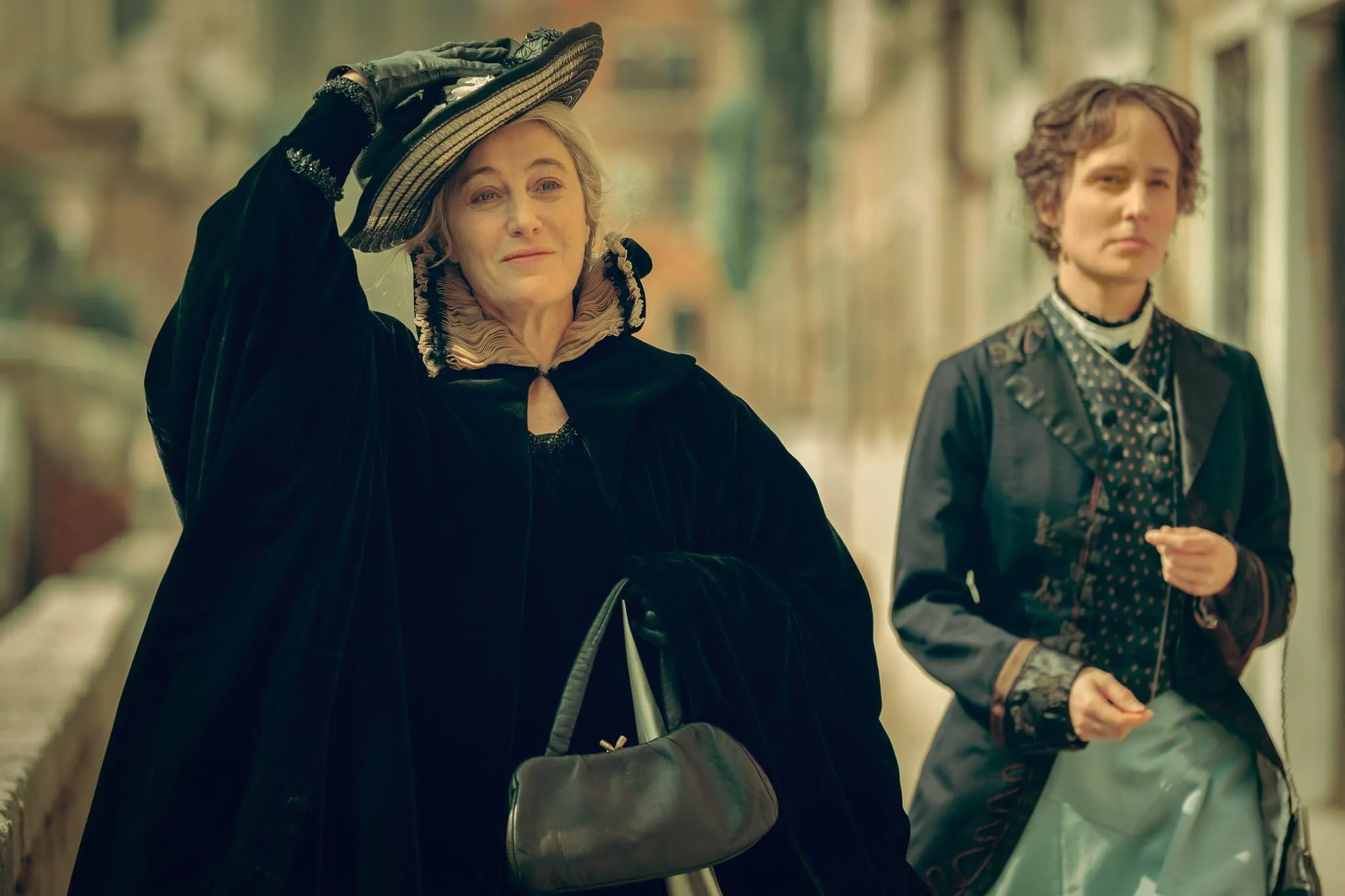
At the center of this portrait is Valeria Bruni Tedeschi’s spectacular, nerve-shredding performance. It is a work of immense, calibrated excess. Her Duse is a creature of pure, unfiltered temperament, a woman for whom the smallest inconvenience is an existential affront.
She seems to live entirely through her art, which means she lives entirely in a state of high-strung crisis, a walking embodiment of theatricality who cannot turn it off. This is a performance of a performance; Tedeschi plays Duse, who is always playing herself.
The grand gestures, the tremulous voice, the eyes wide with either artistic fervor or sheer panic, all point to a woman who has so thoroughly merged with her craft that no authentic self remains. The film rejects hagiography, offering instead a study of genius as a kind of manageable, and sometimes unmanageable, insanity.
Also Read





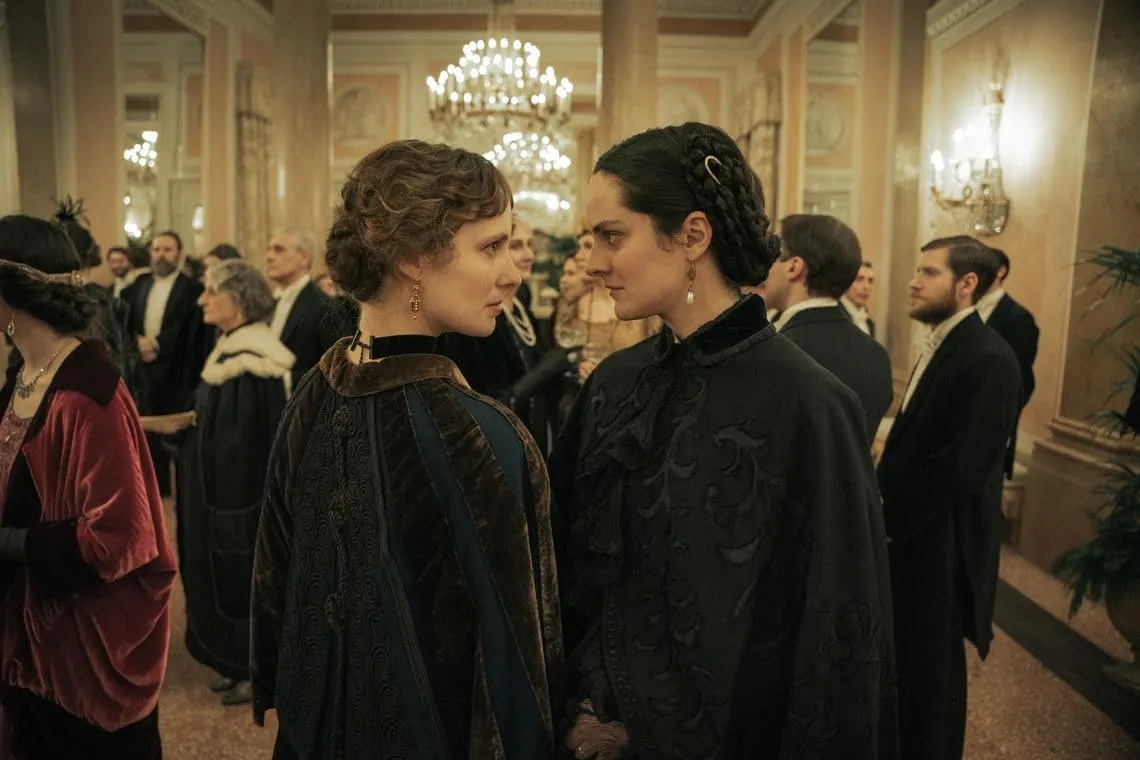
Duse is a hurricane of contradictions, a figure of immense power who is simultaneously fragile. She commands a room with her legend yet is crippled by the fear of her own irrelevance. The film finds its quiet, human anchor in her fraught relationship with her daughter, Enrichetta (a wonderfully understated Noémie Merlant), who functions as the story’s emotional ballast.
In a moment of supreme artistic self-absorption, Duse has Enrichetta and her own grandchildren ejected from her comeback performance, unable to bear the weight of their gaze. This act is a perfect distillation of the artist who sacrifices the personal for the perceived purity of the craft.
Her reunion with the poet Gabriele D’Annunzio is a meeting of two magnificent ruins, cynically observing the new political order he seems to understand far better than she does. Even a brief, stinging encounter with her rival Sarah Bernhardt becomes a pivotal moment, with a few sharp words about being “out of touch” sending Duse into a desperate, ill-fated spiral to find a “modern” voice.
The National Fever Dream
Director Pietro Marcello refuses to frame his subject in a hermetically sealed past. He practices a kind of cinematic archaeology, embedding his narrative within splinters of actual history. Grainy archival footage is stitched directly into the film’s fabric, challenging the polished veneer of a typical period piece.
Most poignantly, the reels depicting the funereal journey of Italy’s Unknown Soldier appear again and again. This recurring image of a train carrying a nation’s collective, anonymous grief acts as a somber counterpoint to Duse’s very personal, very loud agonies.
Her individual crisis of meaning is set against a national one, her fading star juxtaposed with a country’s dark rebirth. This technique creates a disorienting temporal bleed, where the past feels both immediate and spectral, preventing the audience from feeling any comfortable distance.
This approach transforms the film into a national fever dream. The rise of Fascism is not a historical footnote; it is the grotesque political theater upstaging Duse’s own. Mussolini himself appears, a brutish figure whose crass spectacle represents the new force in Italian life. His offer to settle the diva’s debts is a transaction she is too politically naive to understand, a moment that symbolizes the old cultural elite’s failure to recognize the danger before them.
The film’s aesthetics reinforce this instability. The cinematography is raw and uncomfortably intimate, lingering on flawed skin and tired eyes, stripping away the glamour. The score provides the greatest shock, cutting classical arrangements with a pulsating, anachronistic electronic beat. This is a deliberate act of historical disruption, ensuring that the past never feels safe, settled, or remotely nostalgic.
Echoes in an Empty Theater
The most audacious choice in a film full of them is its steadfast refusal to show us Duse’s genius at work. We see fraught rehearsals and backstage hysterics. We see the crushing aftermath of a failed performance. We barely see her act. This is not an oversight or a failure of nerve; it is the philosophical core of the movie. It is a profound statement on the impossibility of capturing an ephemeral art.
Cinema can record a person, but it cannot resurrect a live performance. Marcello’s refusal is an admission of this limitation and a sign of deep respect for the sanctity of the stage. Rather than offer a clumsy recreation, the film honors the legend by leaving it intact, forcing us to infer her greatness from the wreckage she leaves in her personal life.
This absence makes the film a meditation on legacy itself. What does it mean to be remembered for an art form that disappears the moment it is created? The film suggests that such a legacy is a story we tell, a myth built from remnants. By focusing so intensely on the flawed, difficult, terrified woman behind the myth, the movie interrogates the entire process of cultural myth-making.
It is a challenging, melancholic study of an artist adrift in time, capturing the specific terror of realizing the world’s song has changed, and you no longer know the tune. What is an artist without a stage that will have them? The film leaves the question hanging in the air, like the final, fading echo of applause in an empty theater.
Duse is an Italian and French co-production that held its world premiere at the Venice Film Festival in early September 2025. The film’s first theatrical release is scheduled for September 18, 2025, in Italy.
Full Credits
Director: Pietro Marcello
Writers: Letizia Russo, Guido Silei, Pietro Marcello
Producers: Samantha Antonnicola, Benedetta Cappon, Margherita Chiti, Sara Conforti, Carlo Degli Esposti, Marco Grifoni, Raika Khosravi, Stefano Mutolo, Carolina Pezzini, Luigi Pinto, Marta Salandi, Nicola Serra
Executive Producer: Francesco Beltrame
Director of Photography: Marco Graziaplena
Film Editors: Fabrizio Federico, Cristiano Travaglioli
Composers: Fabrizio Elvetico, Marco Messina, Sacha Ricci
The Review
Duse
Duse is a challenging, intellectually dense anti-biopic that rejects reverence for a raw, feverish exploration of artistic obsolescence. Powered by a spectacular and consuming central performance from Valeria Bruni Tedeschi, the film functions as a haunting meditation on the ephemeral nature of performance and the collision between individual genius and the brutal machinery of history. It is a difficult, demanding, yet unforgettable work that will reward adventurous viewers while likely frustrating those seeking a conventional story.
PROS
- A monumental and fiercely committed lead performance by Valeria Bruni Tedeschi.
- An intelligent, unconventional approach that avoids standard biopic clichés.
- Pietro Marcello’s signature direction, masterfully blending archival footage with a raw, modern aesthetic.
- Deep thematic exploration of art, legacy, and history.
CONS
- The demanding, often jarring style may prove alienating for some audiences.
- A deliberately fragmented narrative that prioritizes mood over plot clarity.
- The central performance, in all its intensity, can feel overwhelming.
- The refusal to show Duse’s stagecraft may leave viewers feeling emotionally distanced.