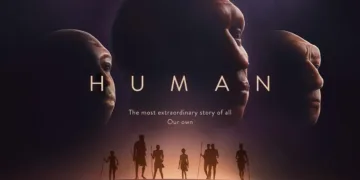





















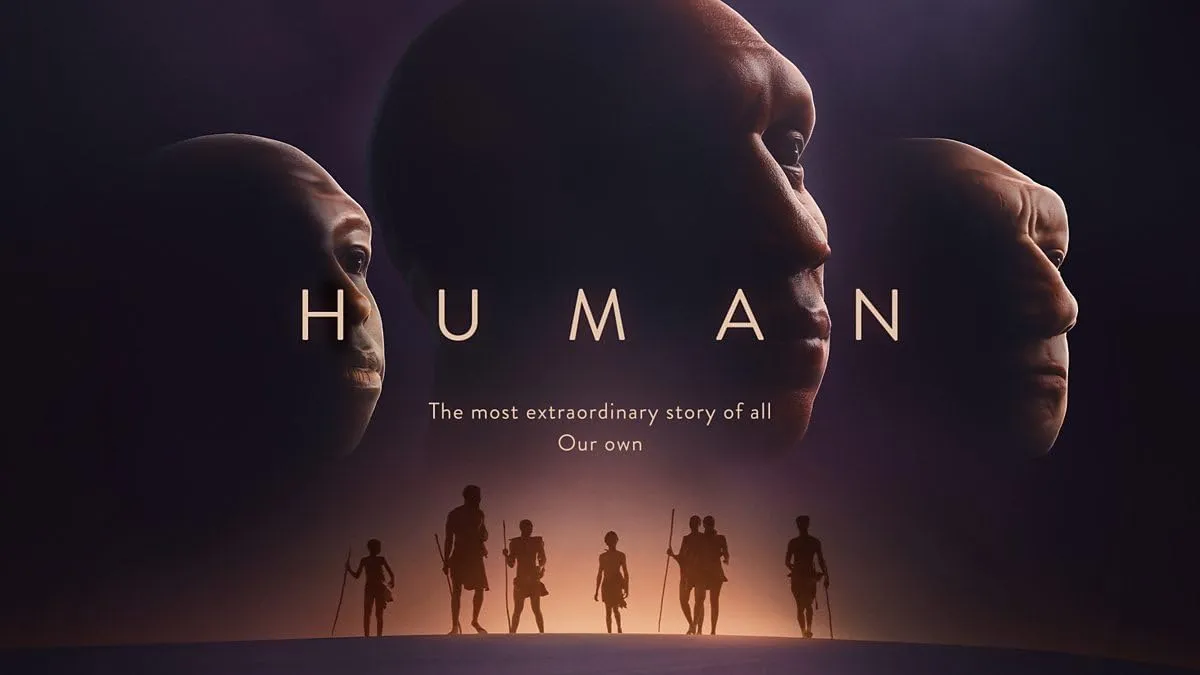

Documentaries about deep history often feel remote, like dusty pages from a textbook. The five-part series Human sidesteps this entirely, framing our origin story as an exhilarating mystery. It poses a profound question: in a world once populated by many different kinds of humans, why are we, Homo sapiens, the only ones left?
The series sends us on a global expedition to find the answer, guided by the exceptional paleoanthropologist Ella Al-Shamahi. She leads us through hundreds of thousands of years of prehistory, a time before written records, when our story was etched in bone, stone, and DNA.
We are immediately immersed in an ancient world that feels surprisingly alive, a place where our ancestors shared the landscape with other, now-extinct human relatives. The scale is immense, yet the approach is deeply personal, inviting us to connect with the very foundations of who we are. It’s a detective story about our own survival.
The Paleo-Adventurer
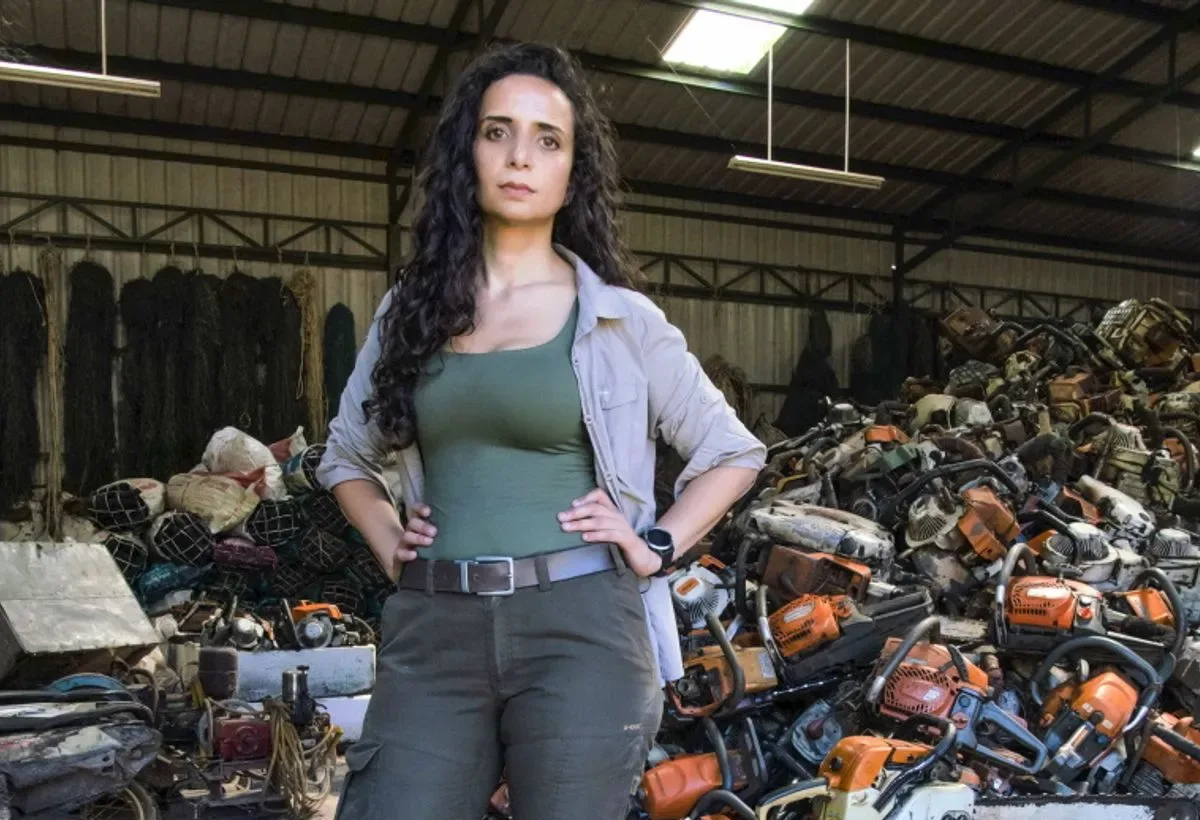
A science series lives or dies by its host, and Ella Al-Shamahi is a phenomenal guide. Her style marks a refreshing departure from the traditional, authoritative voice-of-God narration that once defined the genre. She is not a distant observer but an active participant in the story. This is where the series finds its narrative engine.
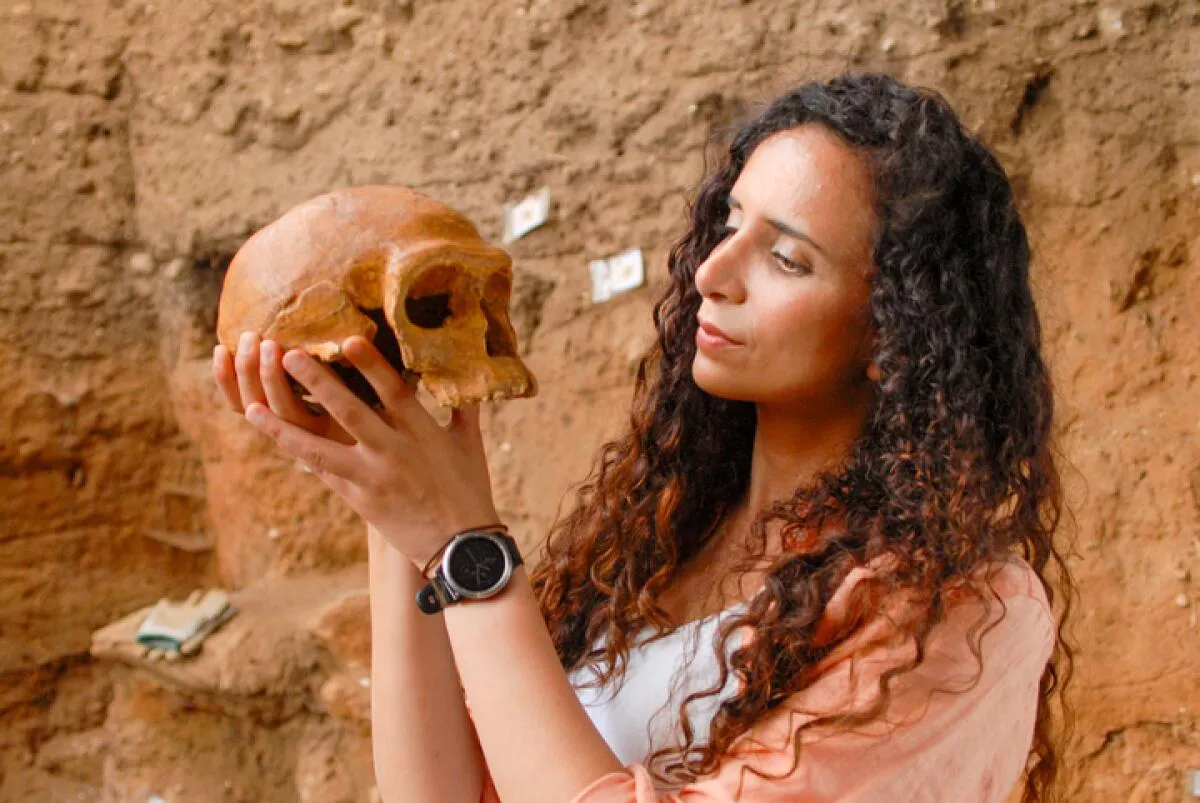
We are not just being told facts; we are experiencing the process of discovery alongside a genuine expert. Her background is a fascinating mix of disciplines that inform her unique on-screen presence. As a paleoanthropologist and explorer, her credibility is unquestionable, but it’s her experience as a stand-up comedian that gives her communication its edge.
Also Read






She possesses an innate sense of timing, knowing precisely when to pause to let a monumental idea sink in, or when to flash a smile of pure wonder that makes the science feel less like a lecture and more like a shared adventure.
This hands-on approach is critical. When Al-Shamahi crouches in a Moroccan cave or cradles an ancient skull, the camera stays with her, creating a sense of intimacy and presence. There’s a particular moment where she compares the elongated shape of an ancient cranium to her own, and in that simple, human gesture, 300,000 years of history collapse.
It’s a brilliant piece of non-verbal storytelling. Furthermore, her identity as a British scientist of Yemeni and Syrian heritage brings a subtle yet powerful dimension to the narrative. By guiding us through sites in Africa and the Middle East, she inherently broadens the perspective on a history that has often been told through a predominantly Western lens. She makes the story of human origins feel like it truly belongs to everyone, a vital shift in a world grappling with questions of identity and ancestry.
A Crowded Family Tree
The series truly excels in its portrayal of a prehistoric world that was far more diverse than most of us imagine. It completely upends the classic, linear illustration of human evolution by presenting a crowded family tree, full of cousins and relatives who forged their own paths. The Neanderthals, for instance, are rescued from their brutish pop-culture caricature.
Human presents compelling evidence of their sophistication, showing a species that was powerfully adapted to the harsh climates of Ice Age Europe. We learn about their use of iridescent bird feathers and pigments, suggesting a capacity for symbolic thought and aesthetics. The series explores the genetic evidence of interbreeding, leading to the profound realization that many of us carry Neanderthal DNA. They did not simply vanish; they became a part of our story.
Then there are the more enigmatic relatives. The discovery of Homo floresiensis on the Indonesian island of Flores is treated with the sense of wonder it deserves. These “Hobbits,” as they were nicknamed, were tiny, standing barely a meter tall. Their existence, and their use of stone tools despite having brains a fraction of our size, acts as a powerful counter-narrative to the idea that bigger brains equal greater success. They represent a completely different experiment in being human.
The Denisovans are even more mysterious, a ghost species known almost entirely from DNA extracted from a few small bone fragments found in a Siberian cave. Their story highlights a key technical aspect of modern anthropology: the power of genetics to reveal entire populations from the slimmest of evidence. The show makes it clear that we are the sole survivors of a multi-faceted human experiment.
This exploration is structured around the central idea that our dominance was never a sure thing. The series frames Homo sapiens as a “species of reaction,” constantly shaped by catastrophic climate change and competition. This perspective is brought to life through visits to key archaeological sites that have rewritten our history. At Jebel Irhoud in Morocco, the discovery of the oldest Homo sapiens fossils pushed our origin story back by over 100,000 years.
This find fundamentally altered the scientific consensus, suggesting our species evolved not in a single “cradle” but across the entire African continent. Meanwhile, the visit to Göbeklitepe in Turkey is simply mind-bending. Seeing its massive, carved stone pillars, built by nomadic hunter-gatherers 11,000 years ago, is astonishing. This complex, widely considered the world’s first temple, suggests that organized religion and grand communal projects may have spurred the invention of agriculture, completely reversing the causal arrow we had long assumed.
History in the Here and Now
From a filmmaking perspective, Human is a masterclass in narrative construction. It avoids a strict chronological progression, instead opting for a thematic structure that feels more like an investigation. Each episode follows a thread of inquiry, jumping across continents and millennia to piece together the puzzle of our past. This choice makes the series feel dynamic and intellectually engaging, mirroring the non-linear way scientific understanding is actually built.
The show’s primary artistic choice is its commitment to authenticity over spectacle. It consciously pulls back from the CGI-heavy reenactments that have become a staple of the genre. While other productions might have given us digitally rendered mammoths and elaborate camp scenes, Human trusts in the power of the real.
This decision puts the focus squarely on the tangible evidence and the breathtaking landscapes where our history unfolded. The cinematography is magnificent, employing sweeping drone shots that convey the immense scale of the environments our ancestors navigated. These epic visuals are contrasted with intimate, often handheld, camerawork that follows Al-Shamahi as she examines a tiny flint arrowhead or traces a fossilized footprint.
This visual dialectic, shifting between the grand and the specific, is incredibly effective. The sound design complements this, prioritizing the natural sounds of the locations—the wind sweeping across a desert, the echo inside a cave—to create a deeply immersive experience. It’s a grounded, almost indie-documentary sensibility applied to one of the biggest stories imaginable.
This approach gives the series a profound cultural relevance. By showing that our survival was contingent on adaptation, luck, and our interactions with a changing planet, Human holds up a mirror to our current moment. The story of our origins is not presented as a triumphal march of progress, but as a cautionary tale about the fragility of existence.
It is a quiet but powerful statement on our responsibility in the Anthropocene. The series leaves you with a sense of awe for the resilience of our ancestors and a pressing set of questions about our own future. It’s a story about where we came from, but its real power lies in what it asks us to consider about where we are going.
The Review
Human
Human is a landmark documentary, transforming the story of our origins from a dusty historical account into a thrilling, deeply relevant investigation. Propelled by the brilliant Ella Al-Shamahi, its authentic, on-the-ground approach and stunning visuals make for an unforgettable viewing experience. It's intelligent, beautiful, and essential television that connects our precarious past to our uncertain present.
PROS
- Ella Al-Shamahi is charismatic, knowledgeable, and makes complex science feel accessible and exciting.
- The series is beautifully shot on location across the globe, grounding the epic story in real, breathtaking landscapes.
- It avoids excessive CGI, focusing instead on the tangible process of archaeological discovery.
- The series presents a compelling and relevant message about humanity's fragile history and non-inevitable survival.
CONS
- The travelogue-style pace might feel slow for viewers accustomed to more action-oriented historical documentaries.
- While comprehensive, five episodes can only scratch the surface of such a vast topic, potentially leaving specialists wanting more depth.