






























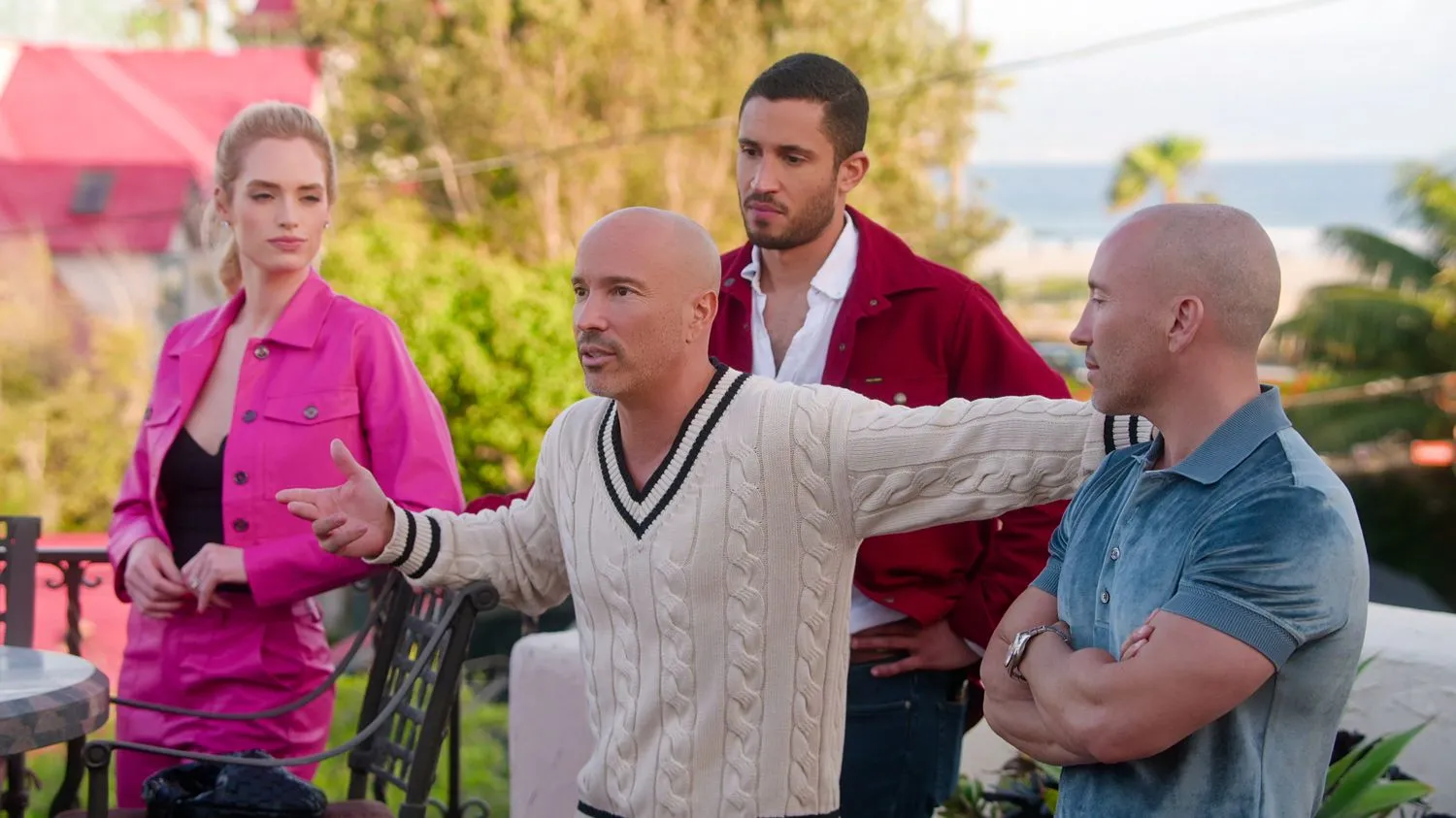
Agent Gio Helou, impeccably groomed and pleased with himself, unveils his latest $17.5 million waterfront listing to Jason Oppenheim. The camera sweeps across the Newport Beach horizon, establishing the glittering coastal promise that defines this franchise. The Orange County branch of The Oppenheim Group returns to screens after an eighteen-month silence, a gap that threatened to drain the previous season’s melodrama of urgency.
This fourth season serves as a reset, introducing new faces and fresh conflicts into the high-stakes world of coastal luxury sales. The series again tracks the fragile balance between closing deals on colossal homes and managing the agents’ volatile personal dramas. From its opening movement, this installment leans into a lighter, more buoyant mood, while the emotional hustle stays as intense as the real estate market it reflects.
The New Order and Evolving Roles
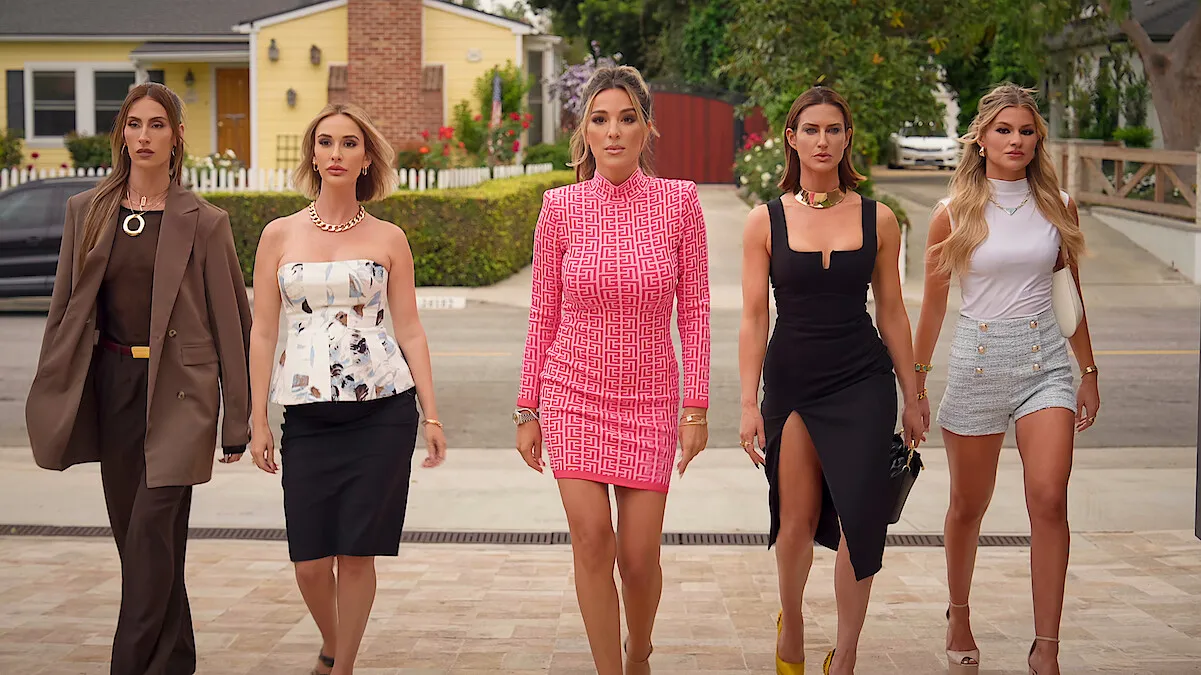
Three new agents reshape the season, each arriving with a specific dramatic and relational function. Kaylee Ricciardi makes an immediate entrance as a figure of polished assurance who refuses to conform to the group’s entrenched, conservative social code. Her client list, which includes adult film star Riley Reid, instantly creates pointed professional friction with the established agents. Kaylee emerges as a deliberate counterpoint, someone who keeps her distance from office gossip yet carries a sharp, confrontational edge in exchanges with figures like Gio.
Ashtyn Zerboni enters the office as a devoted messenger of chaos. She circulates destabilizing information with speed and precision, serving as the primary engine for interpersonal conflict. Her rapid release of a rumor about Tyler Stanaland and his history with Alex Hall shows that she grasps the show’s core assignment with clarity. Fiona Belle, the third addition, brings quieter, more grounded energy. Her sincere and growing friendship with Alex Hall introduces a gentler relational thread that pulls Alex away from her earlier emotional isolation.
Among the returning agents, Alex Hall appears slightly recalibrated. She reads as more approachable and more steady this time, and she remains firmly tangled in the fallout from her past relationship. Her sense of betrayal intensifies when colleagues such as Polly reconnect with Tyler, a reminder that the emotional cost of their brief romance refuses to fade.
Gio Helou continues to function as the office’s antagonistic anchor. His condescending tone and habit of challenging the experience of newcomers, especially Kaylee and Fiona, secure his position as a reliable source of friction. Brandi Marshall, watching the constant influx of glamorous, ambitious arrivals, offers the seasoned line that matters most: faces change. The demanding work required to “ring that bell” remains the true test.
Also Read





Lingering Shadows and New Tensions
The season’s dramatic center of gravity comes from the remains of a relationship that has run its course. Tyler Stanaland, no longer an active member of The O Group, still casts a long shadow over the group. His casual reunions with former colleagues, such as drinks with Polly, reopen wounds for Alex. That casual ease feels like betrayal from her perspective and fuels her sharpened emotional candor. Ashtyn’s introduction of a particularly volatile rumor intensifies the entire arc.
The suggestion that Tyler was seeing someone else while pursuing Alex turns into narrative kindling, sparking life into a storyline that might have felt drained after the eighteen-month pause. The series follows Alex closely as she seeks a clear end point, or at least public recognition, for the emotional turmoil of that affair.
Away from the central romance, the office transforms into a pressure cooker of conflicting values. The immediate tension between Gio’s conservative, old-money presentation and Kaylee’s modern, unfiltered openness becomes a professional counterpoint to the personal grudges.
This clash carries an intellectual charge and raises questions about what defines the Orange County client base. That professional conflict, joined with the steady stream of disruption carried by Ashtyn, builds a layered working environment. The personal storylines extend to Alex Hall’s new relationship, which introduces a partner who initially seems steady and then shifts sharply under the weight of social scrutiny.
The Aesthetics of Aspiration
The scale of the listings continues to anchor the series visually. Orange County properties rise above typical franchise offerings, with sweeping coastal views and architecture that feels significantly grander than the homes featured in other locations. Showcases like Gio’s multi-million dollar waterfront mansion underline the real financial stakes at play. This season reaches a surer calibration between personal arguments and professional grind, keeping scenes focused on sales strategy, client rosters, and market talk in close conversation with the theatrics.
The long time jump creates familiar continuity problems, and the show openly wrestles with the challenge of reorienting viewers after eighteen months away. The early episodes land with a slightly “clunky” rhythm as they lean on forced callbacks to earlier disputes to rebuild context.
Once the new agents find their footing, the pacing steadies. The tone grows distinctly lighter, shedding some of the heavier, more manufactured melodrama of earlier seasons, and the result is an airy, entertaining watch. A sharpened emphasis on fashion raises the production sheen.
The agents now step into scenes with a more evolved wardrobe, favoring looks that feel classy and polished. Their clothes read as sophisticated, professional, and precisely aligned with the expectations of their high-end clientele, supplying glamour without tipping into excess. The visual design of the season speaks to an aspirational lifestyle, one where even conflict arrives wrapped in immaculate, high-gloss presentation.
The fourth season of Selling the OC premiered on November 12, 2025, and can be watched exclusively on the streaming platform Netflix. The series features eight episodes for this season.
Credits
Title: Selling the OC
Distributor: Netflix
Release date: November 12, 2025
Rating: TV-MA
Running time: Approximately 35–45 minutes per episode
Director: Adam DiVello
Producers and Executive Producers: Adam DiVello, Skyler Wakil, Kris Lindquist, Alex Baskin, David Osper
Cast: Alex Hall, Jason Oppenheim, Polly Brindle, Gio Helou, Austin Victoria, Brandi Marshall, Tyler Stanaland, Fiona Belle, Ashtyn Zerboni, Kaylee Ricciardi
The Review
Selling the OC Season 4
This season successfully injects new life into the Orange County franchise, refreshing the office dynamic and providing a necessary focus on real estate alongside the requisite high-stakes emotional fallout. The new cast members disrupt established cliques and generate organic conflict, preventing the narrative from simply rehashing old feuds. While some past storylines feel stretched to accommodate the time jump, the overall result is a polished, highly watchable piece of television. The series achieves an entertaining equilibrium between aspirational glamour and messy interpersonal drama.
PROS
- New Agent Energy The arrival of Kaylee, Ashtyn, and Fiona provides immediate, distinct personality clashes and fresh perspectives.
- Aesthetic Appeal Stunning luxury homes and high-end, classy fashion maintain strong production value.
- Balanced Tone The show finds a better equilibrium between professional real estate work and personal drama.
- Improved Pacing The narrative avoids the extreme "scream-fest" quality of other similar shows.
CONS
- Lingering Storylines The rehashed Alex-Tyler arc sometimes feels forced due to the eighteen-month gap.
- Uneven Screen Time Certain returning cast members feel sidelined or their storylines are underdeveloped.
- Casting Focus The reliance on one or two agents to drive all major conflicts persists.
- Initial Clunkiness Episodes must use forced exposition to fill the long time gap.