
















The air over Miami, Arizona in 1987 feels heavy with teenage tension and a hint of something ancient. Kingdom of Night opens with a small, quietly humiliating problem: John sits in detention at Vandal High after falling asleep in class. The game starts in a recognisable high school routine, then quickly fractures that sense of normality.
A sudden announcement enforces a strict 7:00 p.m. curfew, delivered by the apparently benevolent Friends of Safety organization, and that simple rule lands as the first sign that something is wrong. Any hopes of parties or budding romance collapse in an instant.
The tone slides from hallway gossip to real fear once John wakes from a chilling dream and realizes that his neighbor, Ophelia (Alana), has been taken by a creature called the Abductor. When the player steps outside, the quiet desert town has turned into a war zone filled with demons and inexplicable horrors.
The isometric action RPG frames its central problem with clarity: John must rescue the missing girls, defend Miami from supernatural chaos, and uncover the scheme driven by the Friends of Safety. Cosmic horror and the specific look of 1980s media sit alongside a high school coming-of-age story, tying everyday adolescent concerns to a struggle against forces beyond comprehension.
Pixel Aesthetics, Synth Waves, and Eerie Ambiance
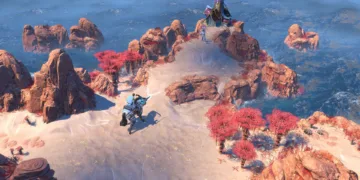
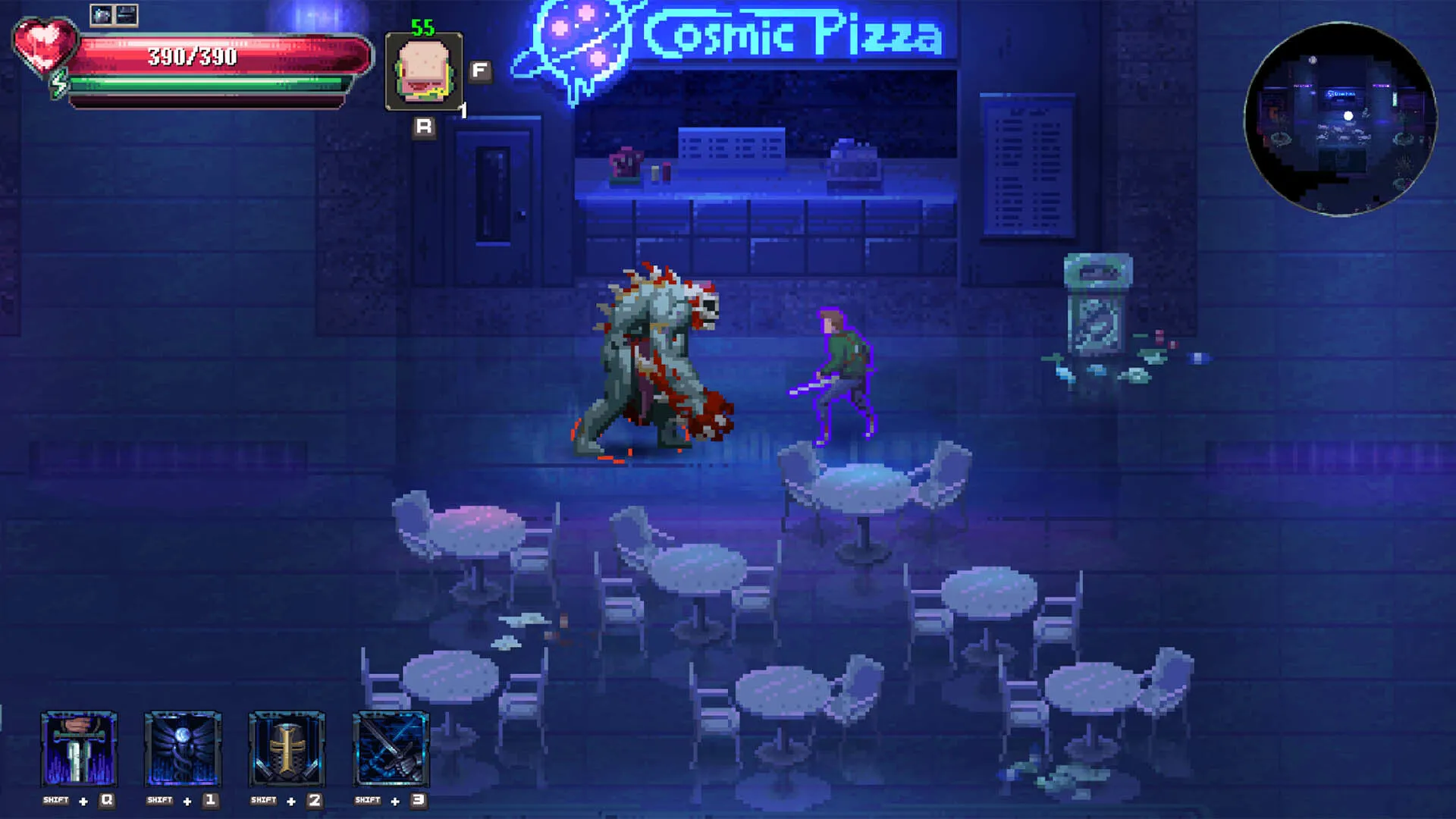
The artistic decisions behind Kingdom of Night define its personality. The isometric pixel art format captures the era and genre with precision. Nostalgia functions as a tool for tone setting, giving the visuals a clear purpose beyond simple reference. Bright, saturated colors sit against grim subject matter, giving the game a distinct look that avoids the washed-out style associated with many horror titles.
Character sprites pack in a surprising amount of detail, from the varied student body to the striking forms of the demonic creatures that stalk the streets. This specific pixel treatment lets the game stage grisly scenes, such as a zombie tearing off a character’s head, in a way that feels exciting and visually intense while softening the impact through stylization and abstraction.
Environmental design reinforces that feeling. Moving through Vandal High or Echo Park while rain falls and storms roll overhead creates a persistent, uneasy mood. This visual setting pairs cleanly with the audio work. The soundtrack shifts to control tension, sliding between eerie, horror-inspired tracks and calmer sections that pull from lo-fi hip hop.
Sound effects sharpen moment-to-moment feedback, from the unpleasant textures of demonic attacks to the simple crunch of a health item being eaten. Voice acting adds an extra layer of personality to specific scenes. The score also understands restraint, dropping into silence during key encounters so that the absence of music amplifies drama and suspense. Visuals, sound, and silence work together to keep the atmosphere dense and engaging from scene to scene.
Mechanized Choices and Archetype Design
Kingdom of Night builds its mechanical depth from player choice and from the split between its main combat styles. The game signals that player agency matters early. You name John and several important companions, including Ophelia or Alana, Jimmy, and Veronica. The most consequential early decision comes with the selection of an Archetype. Picking an item from John’s wardrobe commits the player to either Melee or Magic combat, and that selection stays in place until level 10.
Five possible classes sit inside those two categories: Knight, Barbarian, and Rogue on the Melee side, and two distinct caster types on the Magic side. This structure supports multiple playthroughs with different builds. Tutorials fold naturally into the story. Tucker, a self-described nerd, introduces the Magic system through a tabletop game called Labyrinths and Landlords, while Hank, a jock bully, teaches the basics of Melee defense in a more physical encounter.
Combat itself splits into two very different flows. The Melee route feels serviceable and straightforward, with a hack-and-slash rhythm built on targeting enemies, dodging attacks, and triggering special moves. That simplicity reduces variety. Knight, Barbarian, and Rogue share a core loop, and the smaller differences between them, like the Rogue’s sneak skill or the Knight’s parry, do not always sell each Archetype as a fully distinct experience.
The Magic route feels livelier and more flexible. Mages gain immediate access to their spell lists, which you trigger through button combinations. The Necromancer class shows how far that design can go by letting players summon a skeleton ally, Henry, who soaks up damage and contributes to offense.
That extra body on the field introduces fresh tactical options beyond the basic cycle of hitting and dodging. As John explores the world, difficulty scales up. Enemy types vary widely and can appear either alone or in large groups. Bosses present a real challenge but remain beatable with preparation. Exploration earns concrete rewards, since discovering stronger gear and consumables can turn hard fights in your favor. Enemies drop both XP and gold, so grinding and levelling become practical tools for dealing with tougher regional monsters.
Interconnected World, Systems, and Cultural Context
Miami, Arizona appears as a large, open space that invites curiosity and wandering. The supporting systems reinforce that sense of freedom. The mapping tools come in two forms. A small local map sits in a corner of the screen, tracing the ground you have covered and marking important spots. A larger town map gives a wide view of the area, clearly naming major locations and quest markers. Swapping between these two perspectives is quick, which keeps movement and objective tracking clear and readable.

Quest design sits neatly beside that structure. Many tasks arise through natural contact with residents or through interactions with objects in the world, which helps tie the town’s safety directly to the player’s decisions. Optional quests feel worthwhile, since they grant useful EXP gains and snippets of lore. All of these tasks sit in the Backpack or Notebook menu in a tidy list. Strawberry, a guide character with a distinct sprite, hands out some of the earliest quests and points the player toward important activities.
Frustration surfaces when certain quest descriptions lapse into vagueness, which can make specific objectives harder to track down. Item management leans into the same visual language as the rest of the interface. The inventory appears as a literal backpack, with separate sections for equipment, maps, and John’s notebook. That clear layout strengthens immersion and keeps browsing through items or menus simple.
The story leans on familiar high school archetypes to frame its supernatural plot. Miami fills with nerds, cheerleaders, and jocks, so the cast looks and feels like a recognizable teen ensemble. John’s key attributes, Muscle, Guts, and Wits, play a direct role in conversation, since low stats can block certain dialogue choices. The narrative occasionally leaves John’s point of view to show the town’s growing danger from other angles, which gives the conflict a wider scale than a single student’s fight.
Technical flaws cut into that experience. Typos and minor grammatical problems pop up in the text. A more serious issue lies in the script’s use of dated and offensive language, including homophobic and ableist insults. The intent is to evoke the 1980s setting, yet this choice feels unnecessary next to the game’s strong visual and thematic work and can understandably diminish the experience for many players.
The Review
Kingdom of Night
Kingdom of Night is a compelling action-RPG that successfully captures the aesthetic of 1980s teen horror. It excels through its detailed pixel art, immersive sound design, and high degree of player agency in class selection. The Magic combat path is highly entertaining, offering strategic depth missing from the Melee option. While the large world is fun to explore and the narrative uses classic tropes effectively, the experience is hampered by non-skippable cutscenes and the inclusion of unnecessary, outdated language in the dialogue. It stands as a strong genre entry, well worth the time for fans of isometric action and retro horror.
PROS
- Distinctive 1980s pixel aesthetic
- Highly versatile class selection
- Excellent, informative map system
- Dynamic, atmosphere-setting audio design
- Engaging blend of teen drama and horror
CONS
- Melee combat lacks variety and depth
- Non-skippable story scenes after death
- Use of outdated, offensive terminology
- Quest descriptions can be vague
- Minor grammatical errors in text