
























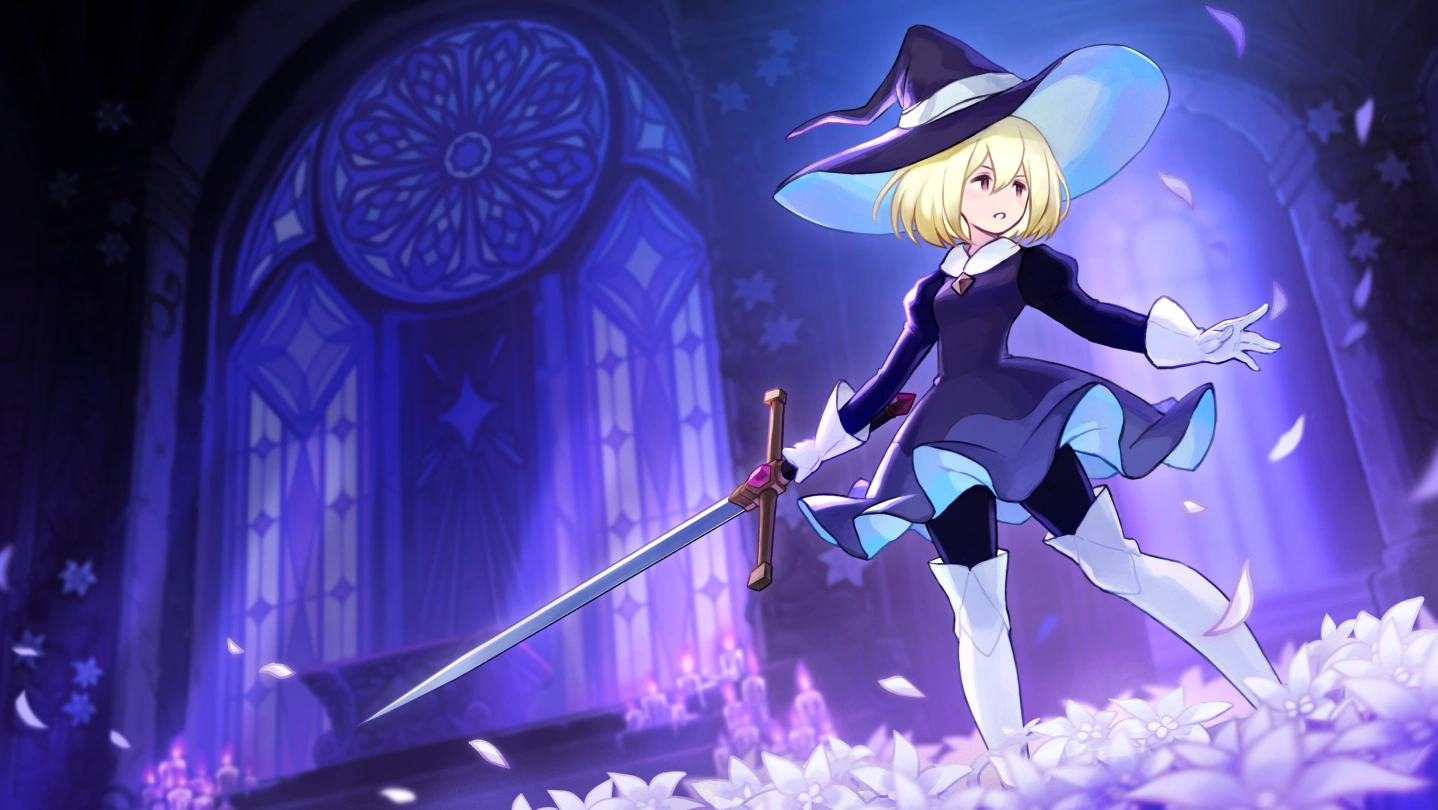

The silent awakening in a world of gray dust begins with a strip of magical felt. Never Grave: The Witch and the Curse, from developer Frontside 180 and publisher Pocketpair, places a sentient hat in the role of true protagonist. This piece of headwear gives life to a young blonde girl and guides her through a landscape damaged by an ancient curse.
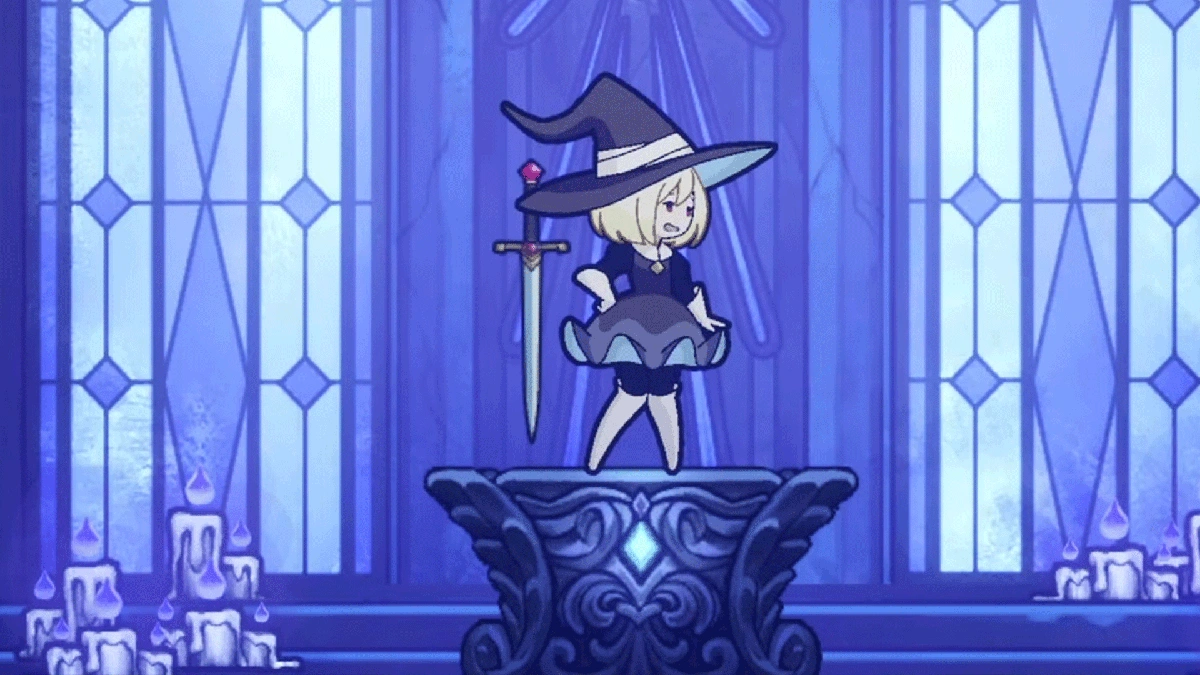
The hand-drawn 2D art style gives the game a soft gothic identity. Characters look like detailed paper cut-outs, marked by thick, clean outlines. That visual approach supports dark monster designs and a cast that appears fierce and adorable in the same frame. A melodic piano score runs through the experience, shaping a melancholy, dreamlike mood that fits the empty ruins and quiet botanical gardens. The main goal sends players into dangerous dungeons to rebuild a village.
The aesthetic direction recalls Puella Magi Madoka Magica through its delicate yet eerie visual language. The game keeps its world from feeling purely bleak by placing colorful magic effects against shadowy backgrounds. Every animation cycle moves with smoothness and precision. These visual choices give Never Grave a polished identity that stands out within the 2D action genre.
Arcane Combat and the Weight of Possession
Fighting in Never Grave feels snappy and rhythmic. A simple dagger handles melee attacks, and a responsive dodge anchors movement. Players carry two spells and one tool at a time. Hitting enemies refills a mana meter, which powers abilities such as Floating Blade and Mana Bullet. Floating Blade circles the character and attacks nearby foes automatically, pushing players toward close-range aggression.
The pace of battle recalls Dead Cells. Precision and timing shape every encounter, especially once enemies begin filling the screen. The possession system gives each fight a tactical wrinkle. The hat can leave the host and function as a double jump during platforming. Throwing the hat onto a defeated monster lets the player control that creature, granting a fresh health bar and a different set of moves.
Each possessed enemy changes the player’s options. A large brute can break through heavy shields. A flying creature improves vertical mobility. Movement feels stiffer inside a monster, which makes the witch’s agility feel sharper by comparison. Using monster bodies as protective shells can help during difficult fights, especially when the player’s health is running low.
Also Read






The system gains depth from deciding which fallen enemy deserves the hat. Every defeated foe becomes a possible asset. Players weigh the witch’s speed against a beast’s strength, then choose the form that gives the best advantage. This mechanic keeps the combat loop flexible and makes each encounter feel like a small strategic puzzle.
The Three Seals of the Abyss
The structure of Never Grave uses procedural maps built from horizontal and vertical paths. Each run changes the layout of the ruins. Some areas lean into platforming, and others focus on combat. Progression relies on a specific gating system tied to boss doors. Each biome boss door has three seals. The player must reach the end of the dungeon three times to remove those locks. After that, the boss fight opens.
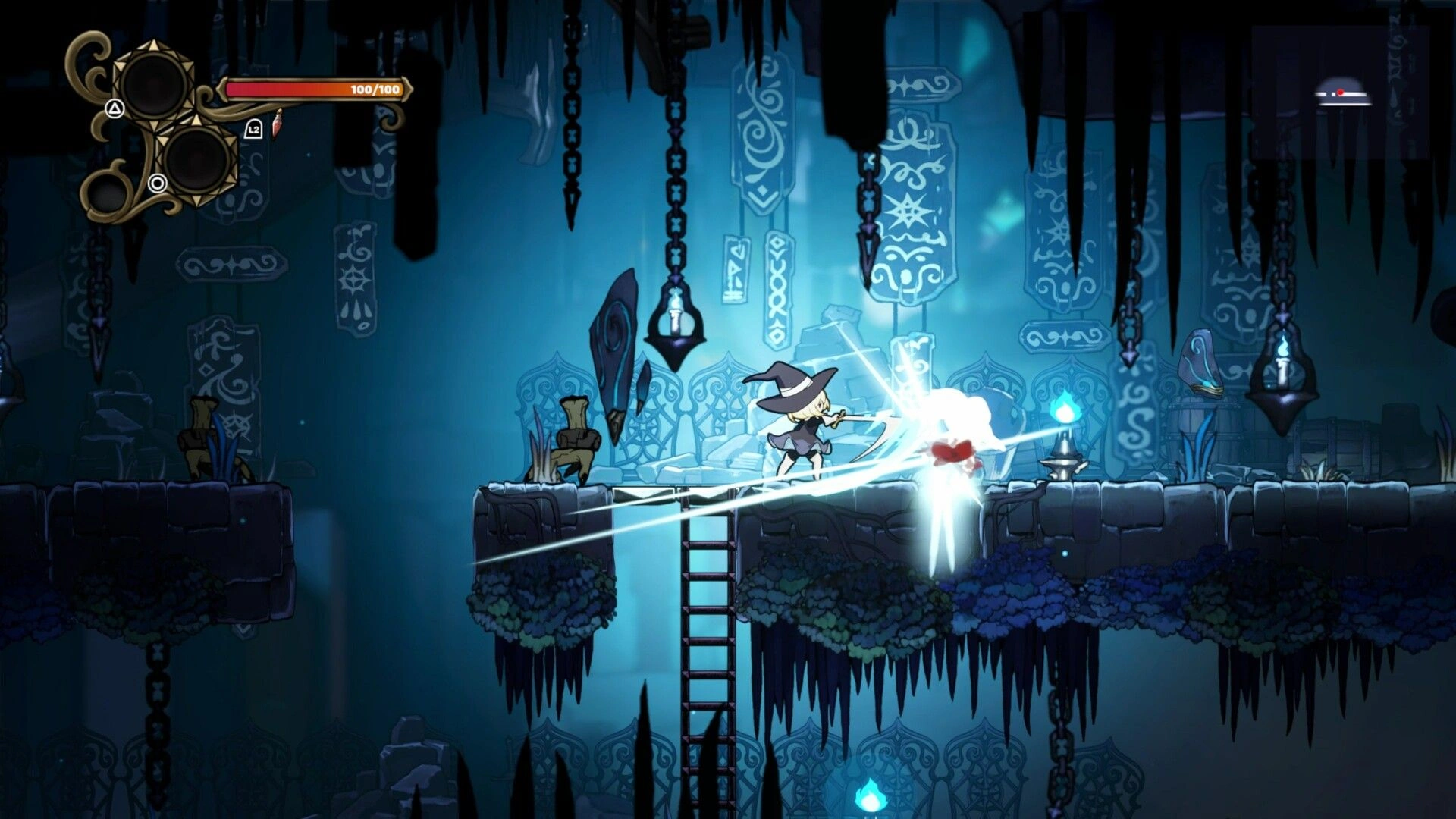
That design slows the pace. The game also uses a forced return system. Clearing a certain number of rooms sends the player back to the hub, even during a strong run. Temporary boons and stat buffs vanish at that point. This interrupts the momentum that traditional rogue-lites usually build.
Gaining power takes sustained grinding. Resources such as wood, stone, and monster parts remain with the player after a run ends. These materials fuel permanent upgrades. Souls function as currency for immediate purchases. Backtracking becomes part of the routine, since new abilities such as a dash or double jump reveal hidden paths. Those areas often contain chests with rare loot.
The repeated biomes can grow tiring. Familiar room layouts appear often, and the boss lock system keeps players in the early levels for long stretches. The structure rewards patience. Success depends on permanent upgrades earned between runs, with steady growth carrying greater weight than a single lucky attempt. That loop gives the game a steady sense of progress, even when an individual run loses steam.
Rebuilding the Village through Cooperative Labor
The village works as the main hub for growth. Players use a 2D grid to clear rubble and place new buildings. This base-building system connects directly to the witch’s strength. Gardening has a major role here. Players plant seeds such as tomatoes, water them, harvest crops, and bring them to the cauldron. Cooking meals grants permanent increases to health and magic capacity. These boosts carry across future runs.
Blueprints found in dungeons unlock new facilities. Some buildings function as upgrade hubs, and others produce resources. Coins collected during runs pay for research. The village creates a clear loop in which exploration turns into visible power. Each improvement gives the player a stronger foundation for the next dungeon attempt.
Cooperative play expands the rhythm of the experience. Up to four people can play together online. This mode changes the tactical approach by letting friends split up and clear different paths across a map. That speeds up resource collection. Onscreen prompts show ally locations, and icons mark moments when someone finds an exit door or a valuable chest.
Resource sharing makes expensive upgrades easier to reach. Players can coordinate spells to handle large groups of enemies, and the chaos of multiplayer adds a social charge to the grind. Repeated sections feel livelier with other players involved. Each person brings a different loadout, opening room for creative strategies against tough bosses. The village’s growth also serves as a visual record of the group’s progress, giving players a satisfying pause between punishing dungeon runs.
The Review
Never Grave: The Witch and the Curse
This title pairs aesthetic charm with a rigorous progression loop. The possession mechanic offers a creative tactical layer that separates it from standard 2D action titles. While repetitive boss locks and forced returns slow the momentum, the village growth provides a satisfying sense of development. It serves as a polished entry for those who enjoy steady, resource-driven growth within a soft gothic world.
PROS
- Creative possession mechanics.
- Beautiful hand-drawn aesthetics.
- Rewarding village meta-progression.
- Smooth online cooperative features.
CONS
- Repetitive boss gating requirements.
- Forced hub returns disrupt flow.
- Heavy resource grinding needed.