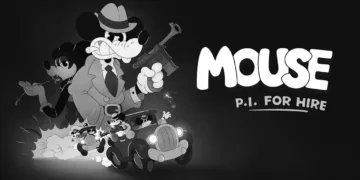




















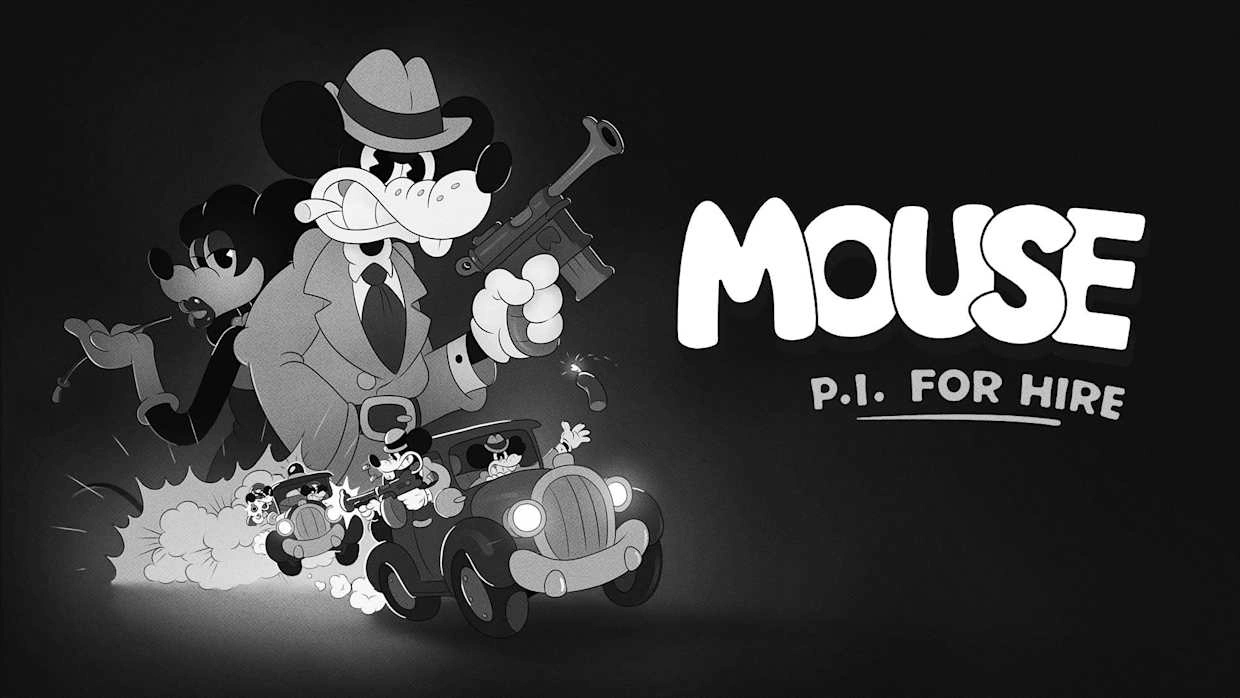

Mouseburg comes across as a severe vision of 1934 noir, a city trapped under post-war fatigue, wet pavement, and civic rot. Rodents dart through rain-slick alleys, and corruption functions as the local economy. Jack Pepper, given a gravelly edge by Troy Baker, gives the world its anchor.
His past as a former war hero carries real weight, and his move into private investigation feels cleanly built into the story’s logic. The central case begins with the disappearance of Steve Bandel, then expands into cheeselegging, political scandals, and a conspiracy with enough force to fracture the city.
The game presents its bleak material through the face of a vintage cartoon, sharpening the clash between cheerful animation and lethal stakes. It asks for quick reactions, precise movement, and steady control from the player. Its storytelling stays locked to the period, and its pacing remains tight. The result plays like a hardboiled detective saga filtered through classic animation, with action systems that keep the player physically involved in Jack’s investigation.
The Visual Language of Rubber Hose Violence
The game’s visual identity draws directly from traditional rubber hose animation. Characters bounce, stretch, and recoil with the elastic quality associated with early 1930s shorts. The hand-drawn frames give that motion an authentic snap, which matters during play because the animation style has to remain readable under pressure.
A monochromatic palette shapes the screen, and that choice affects how players track enemies, hazards, and Jack’s position during chaotic fights. Adjustable filters add flickering film effects and heavy grain, letting the player lean into the aged-cartoon presentation.
The technical base uses a 2D and 3D hybrid system. Flat animated sprites occupy three-dimensional spaces, and the Universal Render Pipeline supplies custom lighting that helps those styles lock together. The integration gives the game a consistent look. The characters keep their flat, animated charm, and the environments still carry weight, depth, and decay.
Also Read






Violence creates the game’s sharpest tonal jolt. Combat can end with visceral death animations. Heads burst like ink bubbles. Bodies collapse into ash. The brutality hits harder because the character designs remain whimsical and rounded. The game understands the power of mechanical feedback here. A cartoon body folding into destruction turns each encounter into a piece of readable combat information and a nasty visual punchline.
Environmental design gives that violence a proper stage. The Little & Big bar feels smoky and cramped, built for suspicion and close-range danger. The opera house brings a grander scale, worn down by rot. The industrial sewers shift the mood toward claustrophobia.
Each location has a clear identity, grounding the animated figures in a city that feels physical and deteriorated. Lighting interacts with the 2D sprites in ways that add depth, with shadows stretching across floors like a noir frame pulled into interactive space. The grain filters age the sharp digital assets, making each scene resemble a restored fragment of lost media.
Kinetic Rhythm and the Turpentine Arsenal
Combat runs on movement. Jack’s toolset gives the player a strong set of mobility options, and the game expects those options to be used constantly. Speed-dashing and double-jumping let him cut across arenas quickly. Wall-running adds vertical routes to encounters, giving fights a layered structure. Standing still invites a fast death, so the player has to treat each room as a moving puzzle.
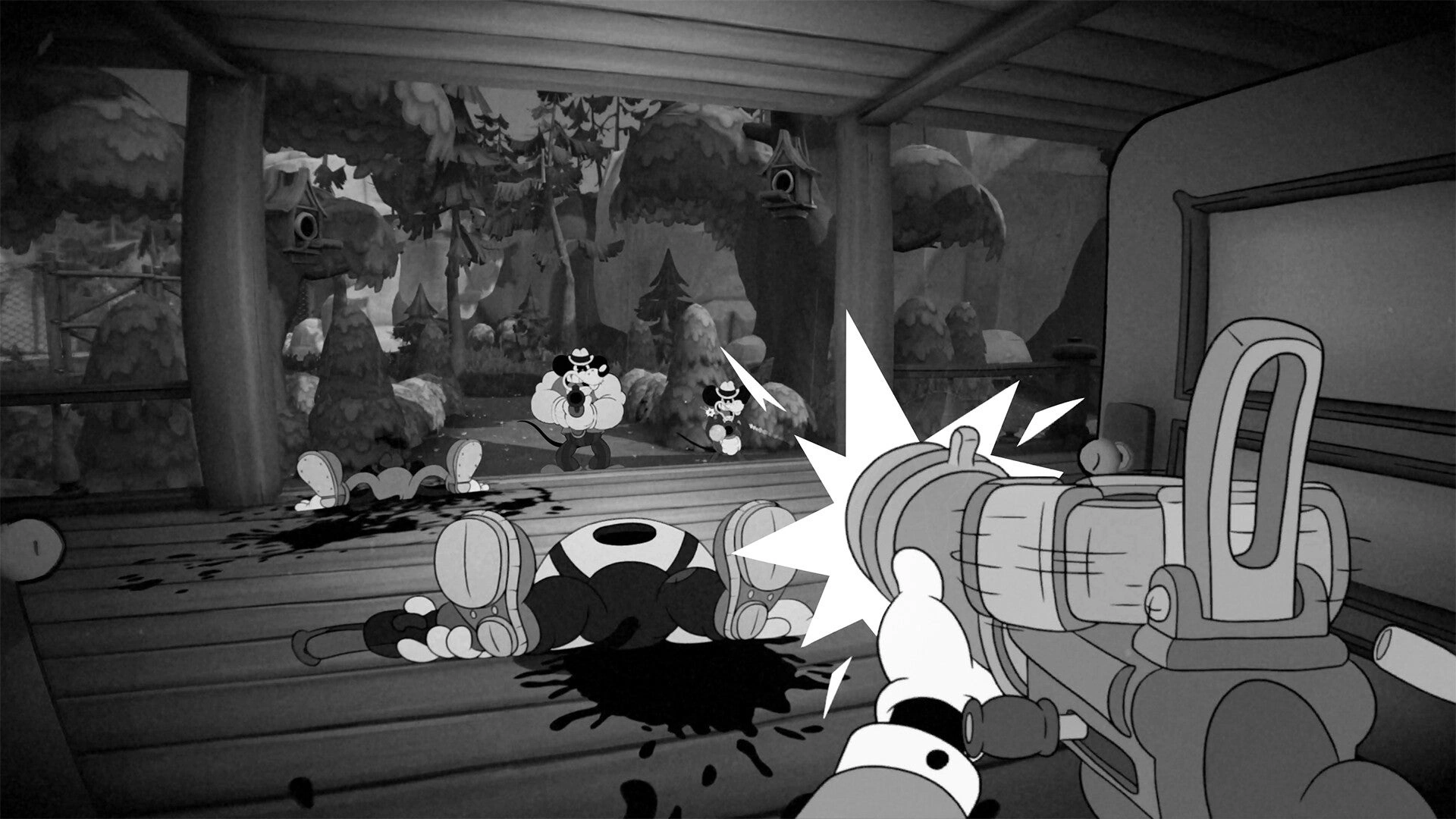
The arsenal supports that rhythm with absurd, readable tools. The Micer machine gun provides steady suppressive fire. The James Gin handles close encounters with heavy impact. The Devarnisher turpentine gun fills a specialized role by melting ink-based foes. Each weapon has a clear purpose, which keeps combat accessible without flattening its tactical demands. The player reads the room, identifies enemy behavior, swaps tools, and keeps Jack in motion.
Fantastic-O-Matic vending machines supply power-ups that can change the shape of a fight. Spinach-loaded punches briefly turn Jack into a physical powerhouse, adding a burst of melee dominance to a system built around constant repositioning. These consumables fit the game’s cartoon logic and give the player a way to push through dangerous spikes in pressure.
Enemy logic gives the combat its structure. Players fight gangs and crooked officers with varied behaviors. Some rats rush headfirst into danger. Others use cover and flanking maneuvers, forcing the player to prioritize targets and rethink positioning. That variety gives meaning to weapon swapping. The game pushes players to learn each enemy type’s rhythm, then combine dashes, jumps, wall-runs, and accurate fire into a flowing response.
Scripted boss encounters raise the stakes. Robo-Betty stands out as a massive mechanical threat, and fights like this test the full range of Jack’s mobility. These encounters measure how well the player understands the system rather than relying on spectacle alone.
Difficulty stays fair and rewarding. Every battle feels like a puzzle solved through speed, timing, and controlled violence. Weapon feedback helps sell that loop. The punch of gunfire, the tension of a machine gun clicking empty, and the fluid response of movement make success feel earned.
Evidence Boards and Vertical Investigations
The detective side uses a crime map as the hub for narrative progress. Jack pins clues to the board and connects leads, turning scattered information into a visual structure the player can understand. Wanda Fuller supplies the intelligence needed to push the plot forward. This system gives the action a sense of purpose. The violence feeds back into the investigation, and the investigation gives each new mission a clear reason to exist.
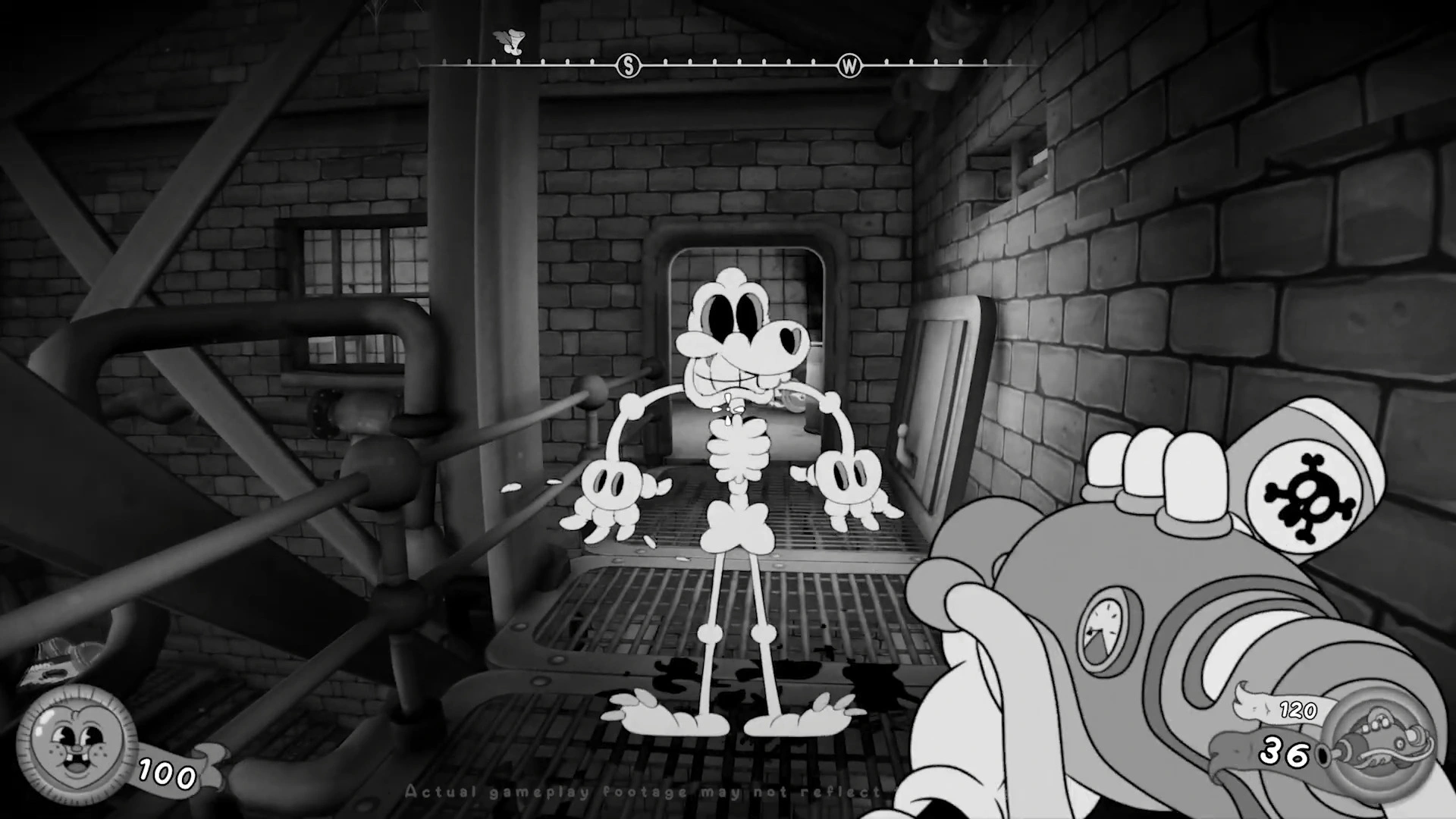
Gadgets expand Jack’s interaction with Mouseburg. Lockpicking turns simple doors into brief skill checks, adding a small mechanical beat to exploration. Jack’s tail functions as a grappling hook, which gives vertical movement a natural link to his character design. This matters because traversal feels connected to who Jack is, not like a detached upgrade pasted onto him.
Metroidvania design guides discovery. New movement abilities open previously blocked sectors of the city. Secret rooms reward backtracking with improved gear or lore. The structure gives exploration a steady sense of consequence because each upgrade changes what the player can reach and what the city can reveal. Scavenging plays a major role in the economy. Cash from safes funds essential upgrades, and hidden objects add context to the larger conspiracy.
The hub world ties these missions together. Jack drives his car across an overhead map of Mouseburg, giving the player a cleaner sense of the city’s geography. That perspective shift creates breathing room between intense action sections. The move from driving to on-foot play feels seamless, so the rhythm never loses momentum. Finding a hidden safe provides a strong reward beat.
The clue board clarifies complex plot points without breaking the flow of play. Each discovery makes the city feel larger and better connected. Rooftop exploration exposes secrets that players can miss from street level, giving vertical design a narrative purpose.
Orchestral Chaos and Technical Polish
The soundscape stands among the game’s strongest elements. Patryk Scelina’s big band jazz soundtrack gives Mouseburg a strong musical identity. The score shifts dynamically, swelling during firefights to match the chaos onscreen. Orchestral arrangements capture the frantic energy of the era and keep combat tied to the game’s period flavor.
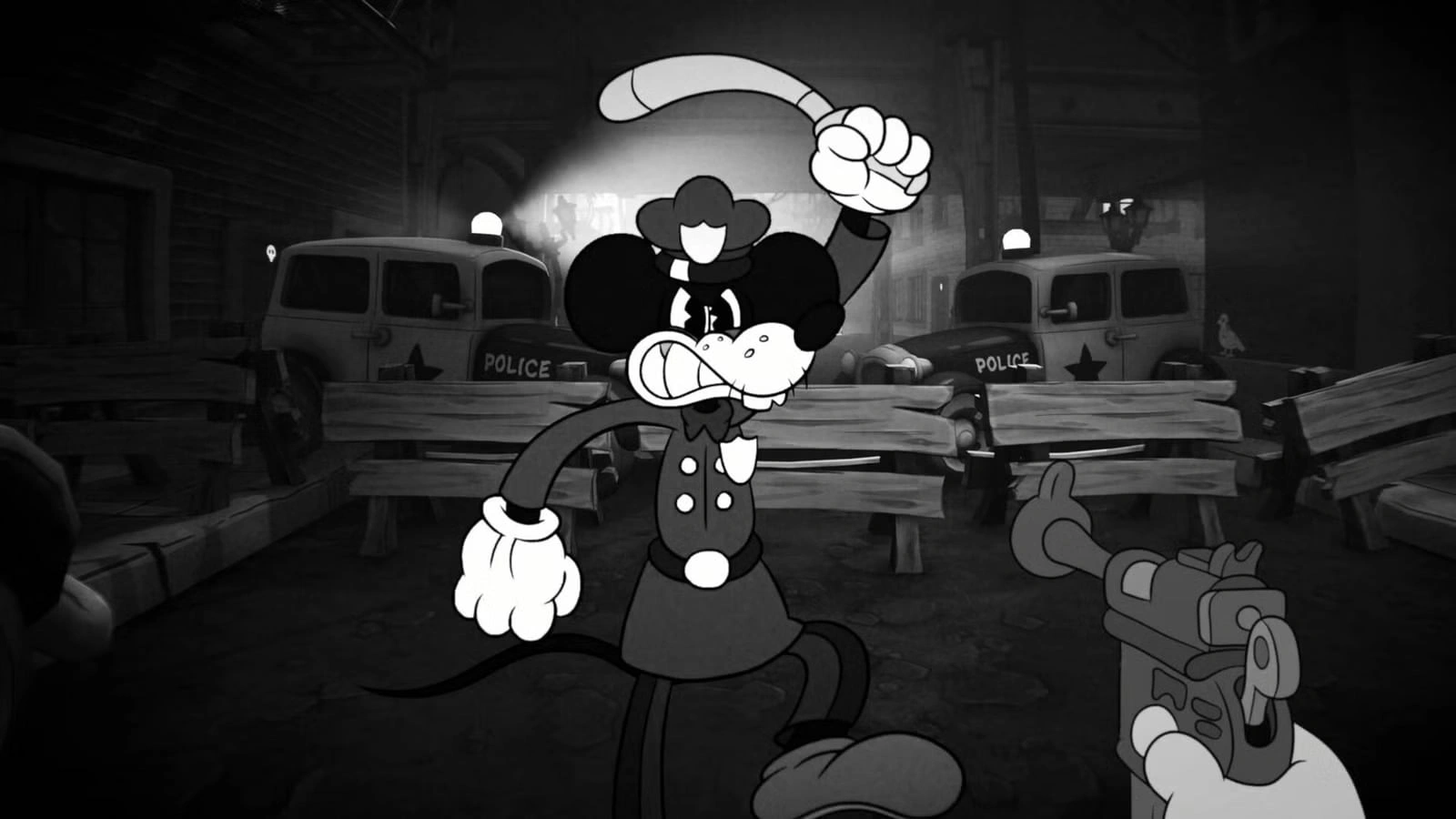
Voice acting gives the script weight. Troy Baker’s hardboiled performance reinforces Jack’s worn-down presence, and the dialogue fits the noir tone with sharp phrasing. The performances help the world feel lived-in, especially against the constant movement and visual exaggeration of the animation.
Technical performance appears stable across platforms. The developers use clever solutions for asset compression and weapon clipping, and the frame rate holds steady during heavy action. That stability matters for a game built around precision. Dashes, jumps, wall-runs, and weapon swaps need a smooth response, and the game delivers that consistency.
Difficulty options let players tune the challenge to their comfort level, which keeps the experience approachable across different skill levels. The game contains 20 chapters, with each segment lasting about 45 minutes. That structure keeps pacing brisk and manageable. Replay value comes from the density of secrets, since finding every collectible requires multiple runs.
The technical polish keeps the experience smooth enough for the art style and combat design to stay in focus. Brief loading times keep players in the action. Sounds of distant sirens and barking dogs fill the city. The mechanical click of locks gives small interactions a tactile feel. Each chapter ends with a satisfying narrative beat, tying the action back to the case and preserving the sense that every fight, clue, and hidden room belongs to the same crumbling city.
The Review
MOUSE: P.I. For Hire
Jack Pepper delivers a sharp, violent spectacle that stays true to its pulp inspirations. The mechanical precision of the combat pairs well with the hand-drawn chaos of Mouseburg. Some areas feel repetitive during the final acts. The commitment to the 1930s style makes this a standout action title.
PROS
- Striking hand-drawn animation.
- Responsive movement systems.
- Strong lead vocal performance.
CONS
- Occasional repetitive level layouts.
- Slight pacing issues toward the end.