




























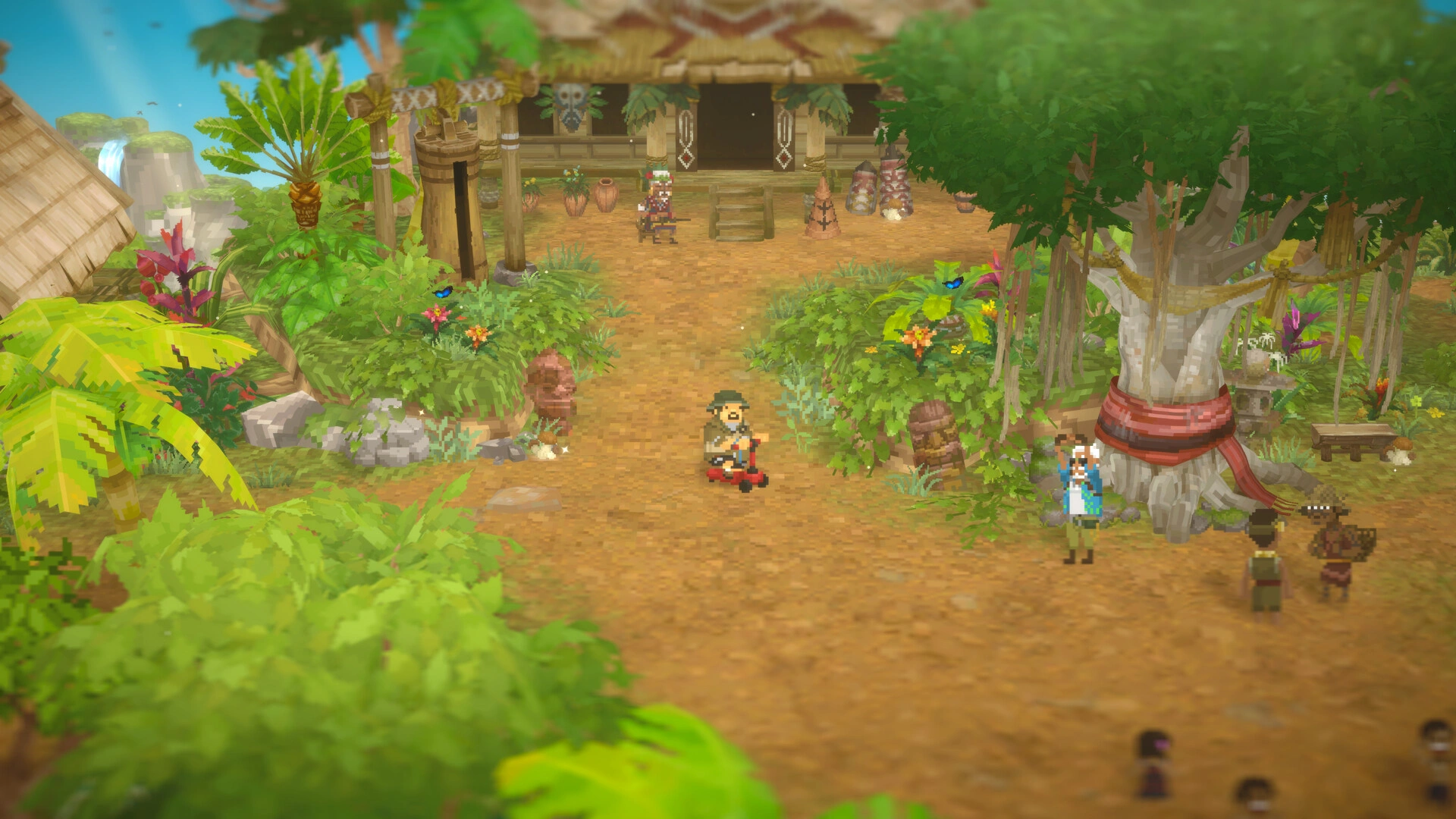

The smartest change here is that Dave can wake up, walk out of his cabin, pick herbs, talk to a villager, then dive into the lake without the old surface menu cutting his day into pieces. Dave the Diver: In the Jungle still runs on the same basic idea that made the base game so hard to put down: catch ingredients by day, serve them at night, let each cycle pay for the next upgrade. The difference is that Utara gives that loop a place to breathe.
Mintrocket sends Dave, Bancho, Dr. Bacon, and Cobra to a jungle village after a dead marine dinosaur washes up beside a freshwater lake. That is a ridiculous inciting incident, which means it fits Dave perfectly. The lake is polluted, the animals are aggressive, the villagers distrust outsiders, and Bancho, naturally, decides the correct response is to open a grill restaurant.
That setup matters because the DLC’s best systems all feed into Utara’s social structure. Villagers have likes, dislikes, quests, gift preferences, and relationship meters. Win them over and they start visiting Bancho Grill. Serve them well and the restaurant grows. Help the prickliest resident enough and the reward is not a giant upgrade screen, but a small gift offered to Dave with quiet warmth. The mechanic works because Dave remains Dave: helpful, tireless, and almost embarrassed by gratitude.
Freshwater Changes the Loop
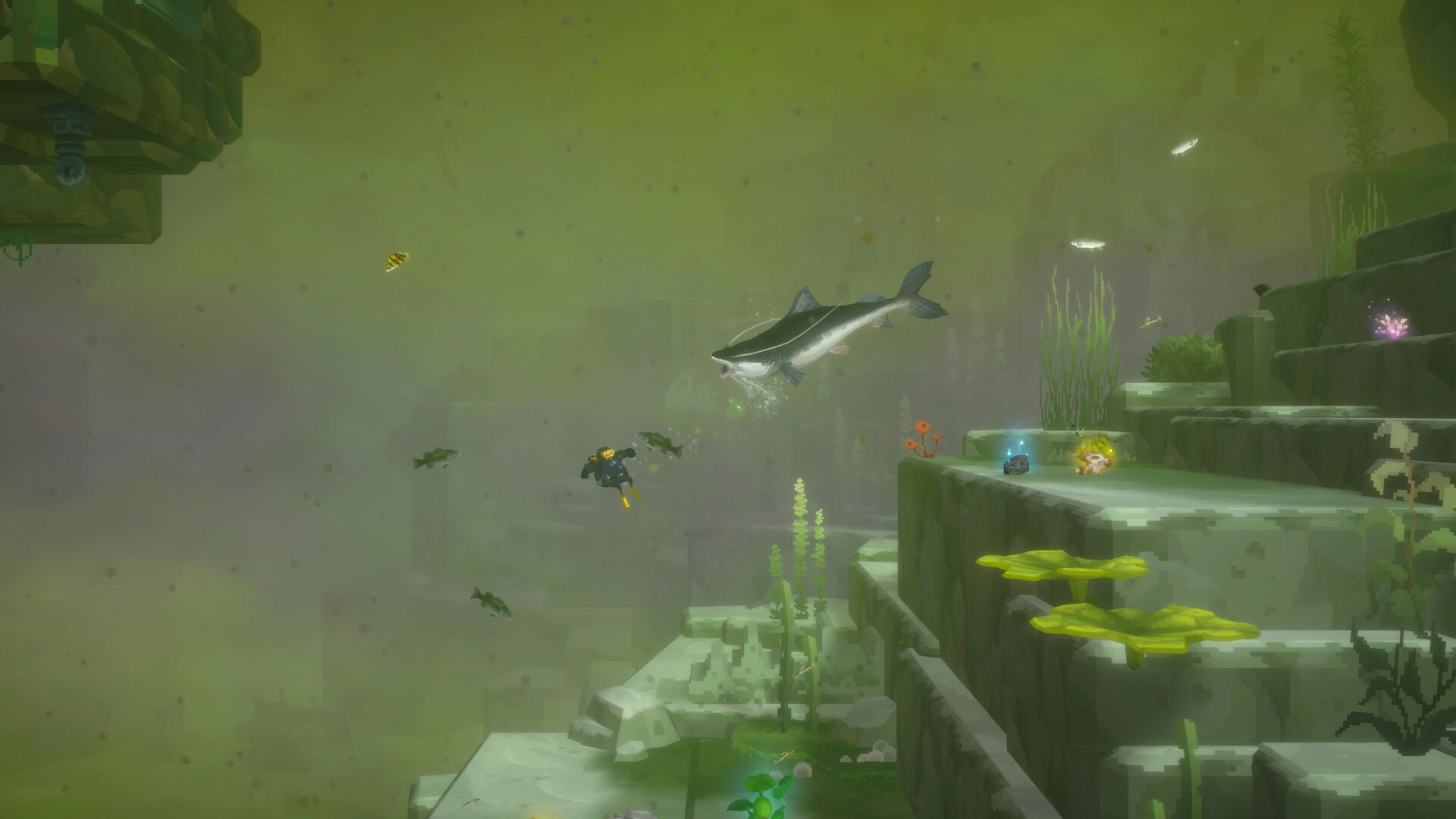
The diving still feels immediately familiar. Dave slips into the lake, moves through side-scrolling spaces, collects materials, catches fish, opens crates, and tries not to get mauled by things much larger than him. The lake’s freshwater setting gives the loop new pressure. The fish are nastier, the deeper areas need special equipment, and some quests ask for live captures instead of another cooler full of meat.
The Jungle Gun is the cleanest mechanical answer to that change. It switches between rifle, shotgun, sniper, and net modes, giving Dave one tool that handles most situations. A net shot solves live-animal requests. A sniper round helps with crocodiles and caiman. A shotgun covers panic moments when the lake decides personal space is optional. It trims the old weapon friction without making the dives feel automatic.
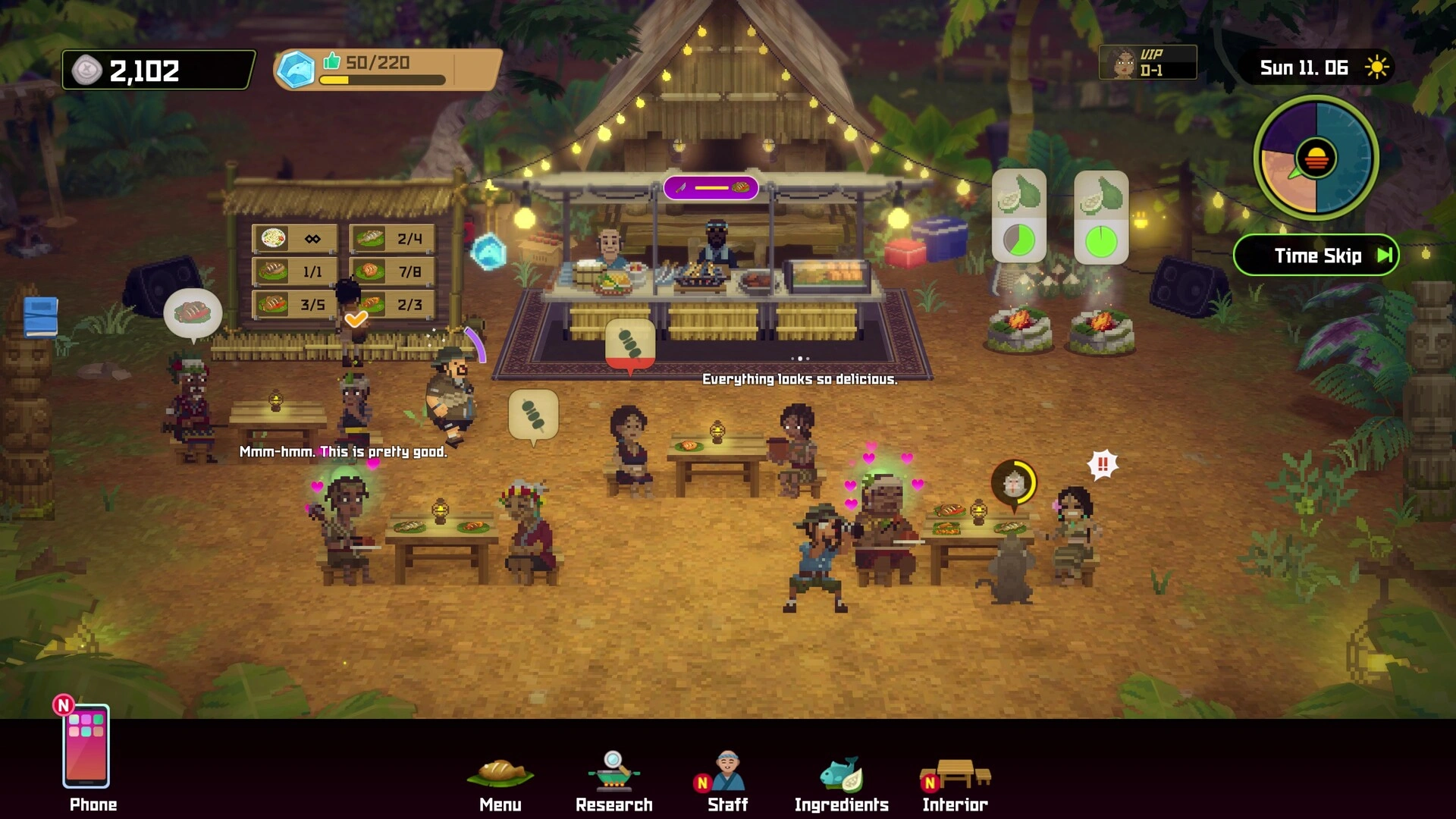
Bancho Grill reworks the management half with equal care. Since freshwater fish are not served raw, Bancho pivots to grilled dishes built around ingredients like coconut milk, lemongrass, calamansi, sambal, and skewers. Service now uses a top-down layout, so Dave runs around tables, prepares drinks, grills sides, and delivers dishes instead of sliding left and right behind a sushi counter.
That camera change sounds cosmetic. It is mechanical. The restaurant now asks players to read space, not lanes. A customer waiting for coconut milk on one side of the grill and a skewer order on the other can create a small routing problem, especially early on when Dave is still handling most of the work himself. It makes Bancho’s new restaurant feel like an actual place rather than a familiar counter with a jungle skin.
Systems Keep Breeding Systems
Coby’s rule for judging a game stuffed with side activities is simple: do the extras change how the main loop feels, or do they sit beside it like toys in a drawer? In the Jungle passes that test often enough to justify its appetite.
The forest expeditions are the biggest swing. Dave, Cobra, and Muna move through branching jungle paths filled with spiders, frogs, baboons, snakes, and other hostile creatures. Combat shifts into a turn-based system with timed button presses for extra damage and blocks.
It is not deep enough to compete with a dedicated RPG, but it does not need that scale. It gives land exploration a different rhythm from diving, and Cobra’s dynamite throws and incendiary rifle shots make his personality legible through his skill set. Subtlety never had a chance with that man.
The temple sections push the game toward light adventure design, using block-pushing puzzles and environmental gates to break up combat. Then come the smaller systems: beetle management with rock-paper-scissors battles, bird hunting modeled after old shooting-gallery games, rhythm performances with the village musician, Animal Block Stacking, rod fishing in ponds, butterfly catching, furniture crafting, and a phone app that turns Dave’s movement into flower growth.
Some of this is wonderful because Dave has always been a game about surprise. Some of it pushes the DLC close to overload. Completionists will feel the pressure most, since every villager with a request becomes another tab in the mental checklist. The game could use a sharper refresher for returning players too, especially for anyone who finished the base campaign years ago and returns to a screen full of icons, currencies, dishes, gear, gifts, and side quests.
Craft That Keeps the Chaos Friendly
The reason all this sprawl holds together is presentation. The pixel cutscenes still understand that upgrades should feel like tiny celebrations. Bancho’s recipe animations turn cooking into heroic nonsense. Muna’s upgrade scenes lean into mad-scientist energy. Cobra remains a walking bad idea with good timing.
The music keeps Utara cozy when the systems threaten to crowd the screen. Calm lo-fi tracks make village chores feel relaxed, while battle themes give forest fights enough snap to separate them from lake diving. The new songs from the village musician are a nice joke that also make the settlement feel lived in, especially once outsiders and guest characters start filtering toward Bancho Grill.
There are small readability issues. In the forest, green herbs and antidote plants can melt into the background, and the interactable sparkle is not always enough to pull the eye. That matters in a game where resource gathering is part of the daily route. A missed herb is not a tragedy, but repeated visual scanning can turn a cozy walk into mild pixel-hunting.
Still, the DLC’s design philosophy is generous in the best sense. It keeps asking what else Dave could plausibly do, then answers with something playable: fight a frog, grill a skewer, catch a bird, stack animal blocks, befriend a suspicious villager, shoot a caiman in the weak spot, serve dinner before the clock punishes your optimism. Most expansions extend a familiar loop. This one teaches that loop to walk on land, pick fruit, make friends, and start a second restaurant because Bancho tasted bad soup once and took it personally.
The Review
Dave the Diver: In the Jungle
In the Jungle is the rare expansion that earns its size through connected systems. Utara gives Dave’s daily loop a social engine, the Jungle Gun reduces weapon friction, and Bancho Grill turns service into spatial management. Its main weakness is density: completionists may feel buried under gifts, currencies, quests, and minigames. Still, the DLC expands Dave’s design language without sanding off its oddball charm.
PROS
- Strong village progression loop
- Smart Jungle Gun design
- Livelier Bancho Grill service
- Fun turn-based forest combat
- Excellent pixel cutscenes
CONS
- Can feel crowded
- Weak refresher for returners
- Some forest readability issues
- Completionist checklist pressure