






















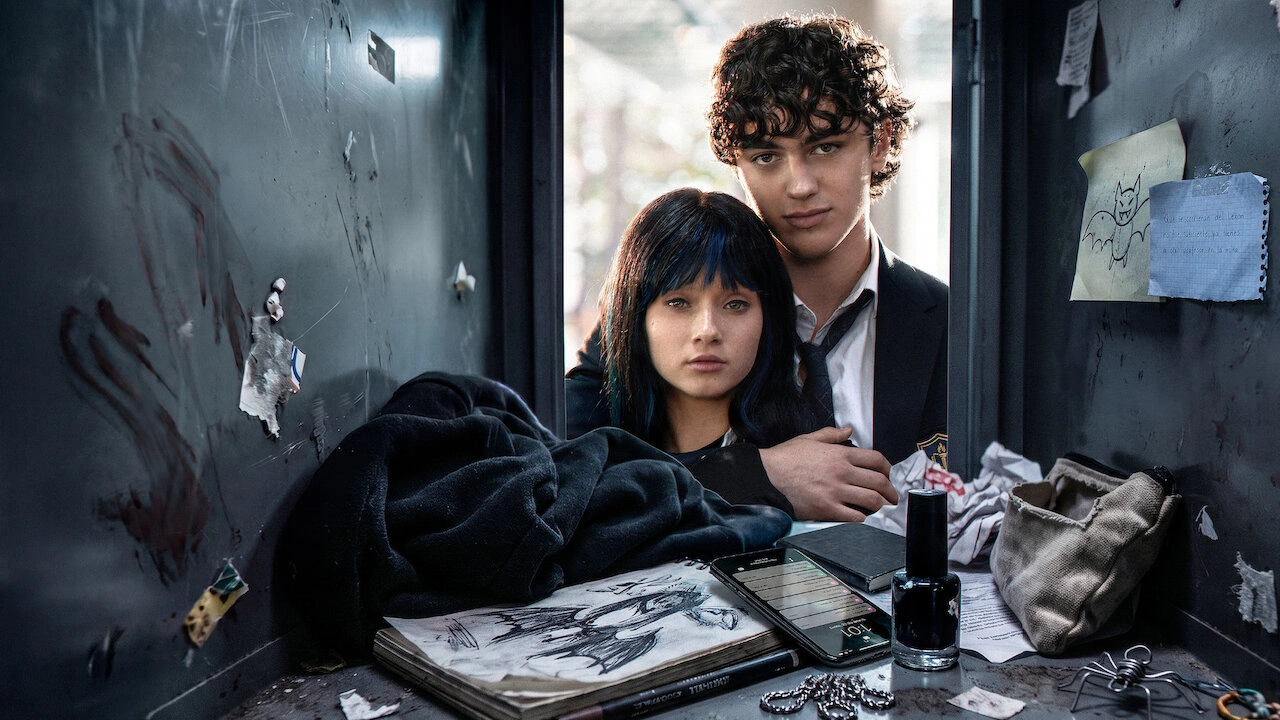

Twenty episodes lasting roughly nine minutes each should give Final Project close to three hours of storytelling. Instead, the Mexican teen thriller often feels trapped inside a much smaller container, one built around cliffhangers, abrupt disclosures, and the assumption that viewers might leave unless something alarming happens immediately.
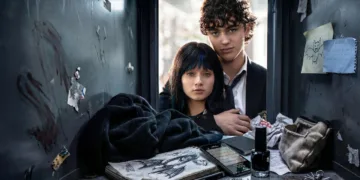
Directed by Felipe Aguilar D., the series begins with three teenagers dragging a covered body from a car in the woods. One month earlier, the students of Campos Academy are preparing assignments that will determine a large share of their final grade. Tamara, played by Daniela Martínez Caballero, is making a documentary about cyberbullying with her friend Dani. Popular student Xavi has selected a different subject. He intends to seduce Tamara and treat the conquest as his project.
The competing assignments give the opening episodes a sharp premise. Tamara wants to interview Xavi about the way a bully can become a victim, since his classmates ridicule him over his girlfriend Samantha’s affairs. Xavi approaches her under false pretences. Both think they are controlling the encounter. Their phones, naturally, have other plans. This is television shaped by the feed: brief, insistent, and terrified of silence.
Public Humiliation as Entertainment
The series is most perceptive when it shows how teenage cruelty moves between private messages and public performance. Xavi livestreams himself doing reckless stunts with Pato. Samantha displays their relationship while repeatedly betraying him. Tamara is reduced to labels such as “goth girl” and “she-vampire” by classmates who treat her appearance as communal property.
Dani’s camera complicates that culture of exposure. He claims to be documenting cyberbullying, yet he records people constantly, often without their full awareness. The device gives him access to Tamara’s distress while making his friendship feel faintly invasive. His insistence that he sees her as a sister sits uneasily beside his apparent romantic feelings and his knowledge of her hidden past.
Tamara’s anonymous stalker knows why she transferred schools and appears aware of her movements. These messages carry a different threat from the insults circulated by classmates. The harassment becomes personal, organised, and connected to an identity she believed she had escaped.
Also Read





Streaming dramas regularly present social media as a supernatural evil, as though an app developed consciousness and decided to ruin adolescence. Final Project occasionally avoids that excuse. The cruelty comes from people who understand that anonymity, recording, and repetition can distribute responsibility until nobody feels guilty. That is the series’ strongest social observation. Its mistake is treating the resulting pain with the same impatience as the perpetrators.
Characters Rearranged by Cliffhangers
Xavi’s relationship with Tamara develops before the series has done enough work to make either attraction or trust convincing. His initial wager is cruel, his friends reinforce that cruelty, and Tamara approaches him partly to serve her documentary. A therapy scene in the fourth episode, where he discusses his hostility toward women, hints at a fuller portrait. The moment passes quickly, and later episodes keep altering his role from aggressor to possible ally to suspicious romantic lead.
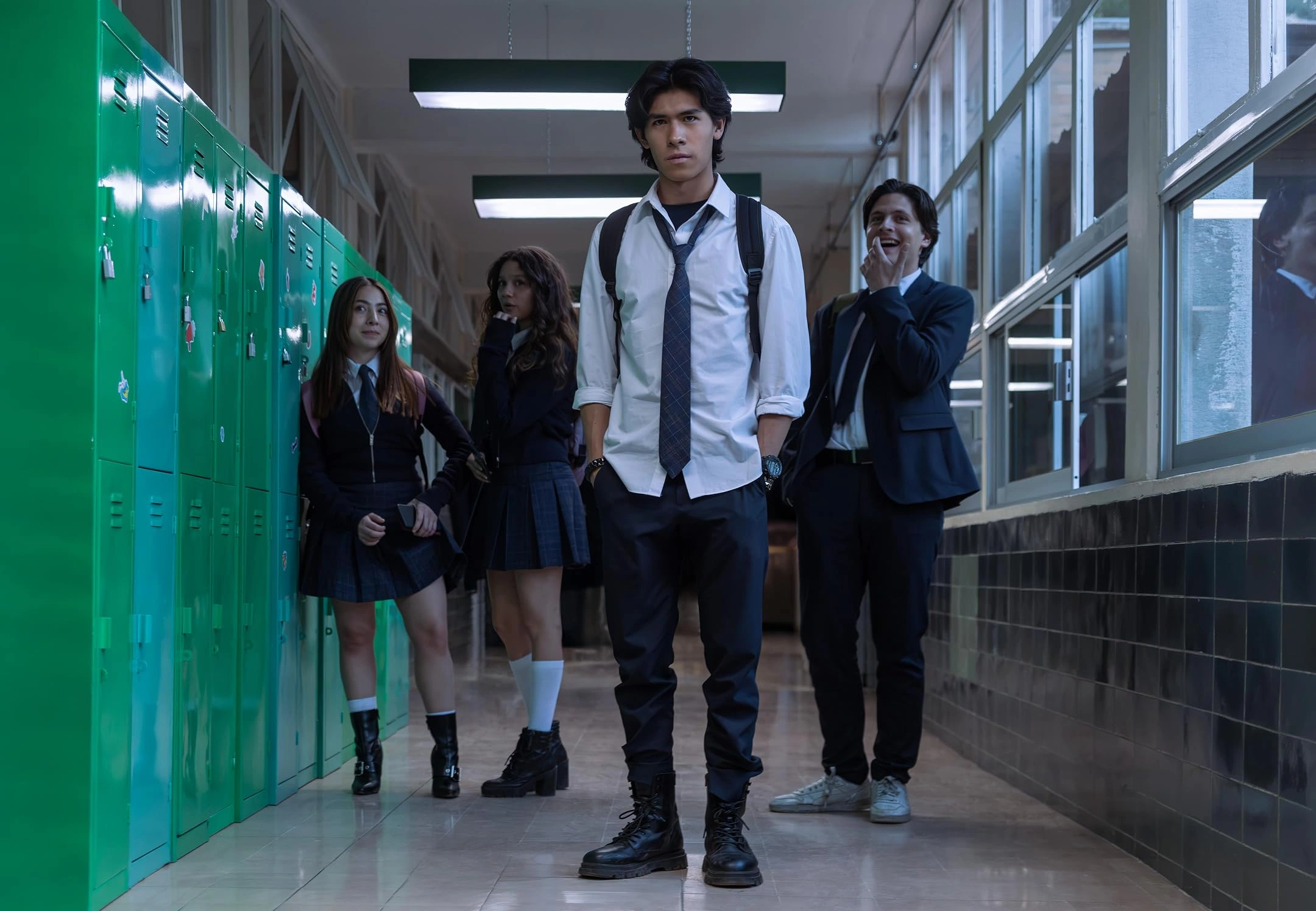
Samantha and Pato receive even less room. Their behaviour is clear from their first appearances, yet clarity is not the same as characterization. They exist largely to humiliate, provoke, or redirect suspicion. When the story needs another betrayal, one of them is usually nearby.
Dani presents the greatest missed opportunity. His habit of filming, his protectiveness, and his intimate knowledge of Tamara could have supported a slow study of possession disguised as friendship. Instead, the series uses his camera as a warehouse for clues. His actions become stranger as the mystery develops, yet the connective scenes required to make those changes believable appear to have been cut for time.
The performances struggle against these leaps. Martínez Caballero gives Tamara a guarded stillness during the early school scenes, especially when insults are delivered casually around her. Tristán Maze finds occasional insecurity beneath Xavi’s swagger. Once the plot moves toward murder, concealment, and extreme reversals, the actors are asked to sell emotional transitions that the writing has skipped. A short episode can compress time. It cannot manufacture motive.
The Violetta Problem
Tamara’s transformation into Violetta should mark the emotional turning point of the season. After sustained bullying, betrayal, and renewed contact with her past, she creates a stronger identity through which she can retaliate. The idea speaks directly to online culture, where a new profile can offer both protection and permission.
The execution is almost entirely cosmetic. Tamara changes her hair, makeup, and clothes, then moves through the same social environment without being recognised by people who know her. The disguise is accepted because the plot requires it, not because the direction makes it plausible.
A stronger version of this story would have treated Violetta as a psychological construction. Tamara might change her voice, posture, online behaviour, or relationship to Dani’s camera. She might discover that the confidence offered by the persona comes with its own form of captivity. Instead, physical alteration substitutes for interior development.
The choice also weakens the series’ ideas about identity. Tamara begins as a girl whose classmates reduce her to a style. Her supposed reinvention then confirms their shallow logic by suggesting that style alone can create an entirely new person. The narrative criticises a school governed by appearances while relying on the same belief for its largest twist. The irony feels accidental.
Trauma in Nine-Minute Portions
Cyberbullying, sexual assault, jealousy, revenge, murder, hidden identities, corruption, and criminal concealment all pass through the season. Each subject could sustain a drama of its own. Here, they compete for minutes.
Scenes end before conversations reach a consequence. Characters arrive at new suspicions without visible reasoning. Relationships shift between episodes as though missing chapters exist somewhere between the credits and the next automatic play. The dark palette maintains a low level of unease, and the body-disposal framing device supplies an efficient question, yet atmosphere cannot create the causality the editing removes.
Netflix’s interest in micro-dramas makes commercial sense. Short episodes fit phones, commutes, divided attention, and a viewing culture trained by vertical video. Final Project shows the creative cost when a production adopts that rhythm without redesigning its story around it. The format needs precision, fewer characters, and one central pressure that can deepen through repetition. This series responds by packing a conventional season into smaller boxes. The boxes open quickly. Most are empty.
Final Project is a Mexican suspenseful teen drama series that premiered on Netflix on July 29, 2026. The plot follows Tamara as she transfers to a new school hoping for a fresh start, only to become the target of cyberbullying and an anonymous online challenge that spirals into danger. Viewers can stream all episodes exclusively on Netflix.
Where to Watch Final Project Online


Full Credits
Title: Final Project
Distributor: Netflix
Release date: July 29, 2026
Rating: TV-MA
Running time: 45 minutes
Cast: Isabella Tena, Tristán Maze, Daniela Martínez Caballero
The Review
Final Project
Final Project treats the micro-drama as television shaped by the logic of the feed: rapid, addictive, and forever chasing the next reaction. Its attention to cyberbullying gives the series social relevance, while Daniela Martínez Caballero lends Tamara a guarded vulnerability. Yet twenty compressed episodes turn trauma, assault, murder, and identity into disposable cliffhangers. Tamara’s transformation into Violetta receives a cosmetic shortcut where psychological development was needed, and characters repeatedly change course because the next twist demands it. Netflix may have found a new format. It still needs stories built to survive it.
PROS
- Relevant cyberbullying theme
- Effective short-form hooks
- Tamara’s guarded presence
- Consistent dark atmosphere
CONS
- Disconnected narrative progression
- Thin supporting characters
- Unconvincing identity disguise
- Rushed emotional development
- Twists replace consequences