












![Kingdom Hearts Collection [I-III] Review](https://gazettely.com/wp-content/uploads/2026/10/Kingdom-Hearts-Collection-I-III-1-360x180.webp "Kingdom Hearts Collection [I-III] Review: KHII Holds Steady as Newer Entries Fluctuate 33")








The documentary GEN_ begins not in a sterile clinic but in the damp earth of the Lombardy countryside. A man forages for mushrooms, his hands sifting through soil where life proliferates. This act of seeking genesis in its most elemental form becomes the film’s quiet thesis, framing Dr. Maurizio Bini as a figure connected to nature before we see him in his professional element.
Back at Milan’s Niguarda hospital, Dr. Bini is an endocrinologist with two seemingly opposed specialties: he runs a busy fertility clinic and a department for gender-affirming care. In a nation where conservative politics often champion a narrow definition of family, his work stands as a pocket of radical humanism.
Director Gianluca Matarrese’s approach is one of quiet observation, presenting an intimate portrait without political grandstanding. The film simply invites the viewer into Dr. Bini’s world, allowing his daily practice to speak for itself.
The Humanist in the White Coat
Dr. Bini is a figure of jocular warmth and fast-talking empathy, a doctor who fluidly becomes a psychologist or philosopher within the tight confines of his office. He does not merely diagnose; he helps patients navigate profoundly complicated personal terrain. His dedication is plain, switching between Italian, Chinese, and Arabic to meet his patients where they are. His work is animated by a simple creed: “We are doctors to help people.”
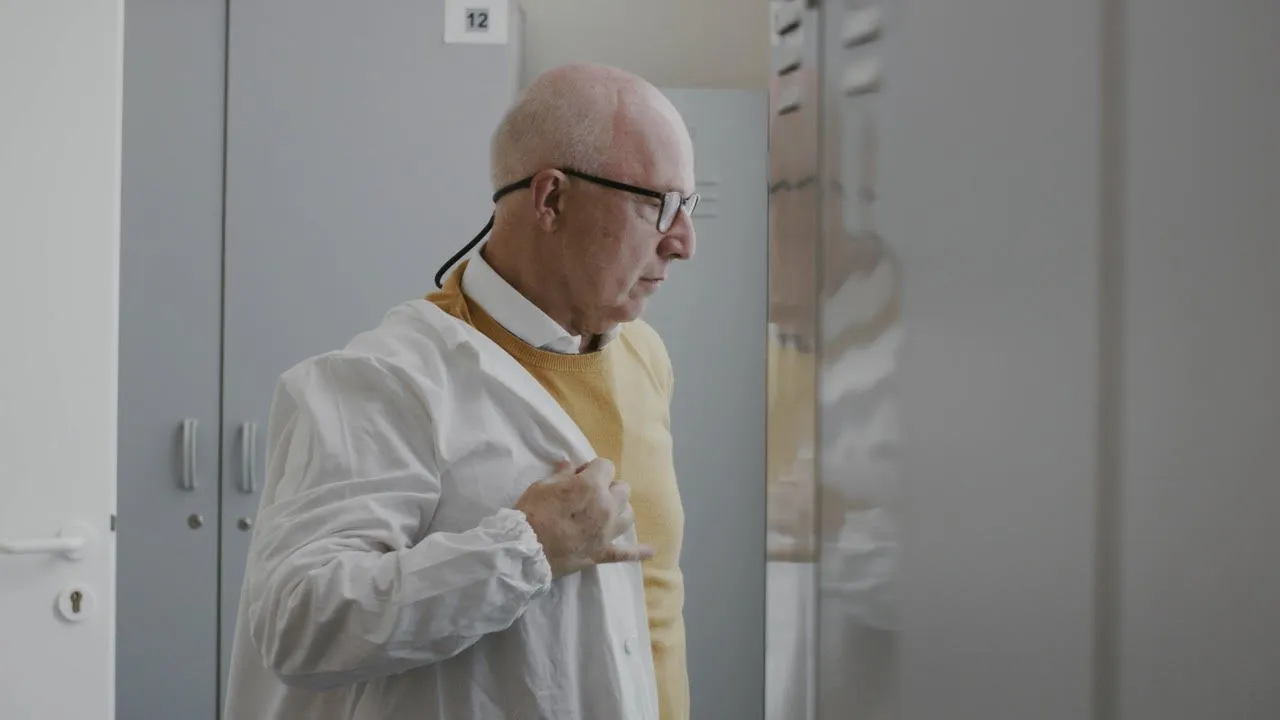
This principle dissolves any perceived contradiction in his practice; helping a couple with IVF or assisting a person’s transition are, for him, equal expressions of care. His jocular banter, especially with young trans men, creates a casual atmosphere where difficult subjects can be approached with honesty.
This ethos is on display in his interactions: he dismisses a young man’s worries about facial hair with a paternal quip, “Everyone gets the beard they deserve,” and greets a trans woman’s concern about “semi-boners” with open, unembarrassed curiosity.
His moral clarity flares when he questions the hospital’s directive to house Ukrainian embryos but not those from Gaza, showing a conscience that extends beyond his immediate patients. The film respects his privacy, revealing little of his life outside the hospital. He remains a professional embodiment of compassion, a man from another, better time, defined entirely by his work in the final months before his retirement.
A Camera in the Consultation Room
Gianluca Matarrese adopts a strict cinéma vérité discipline, recalling the institutional studies of Frederick Wiseman but with a more participatory spirit. There are no talking-head interviews or voiceover narrations to guide the viewer’s thoughts.
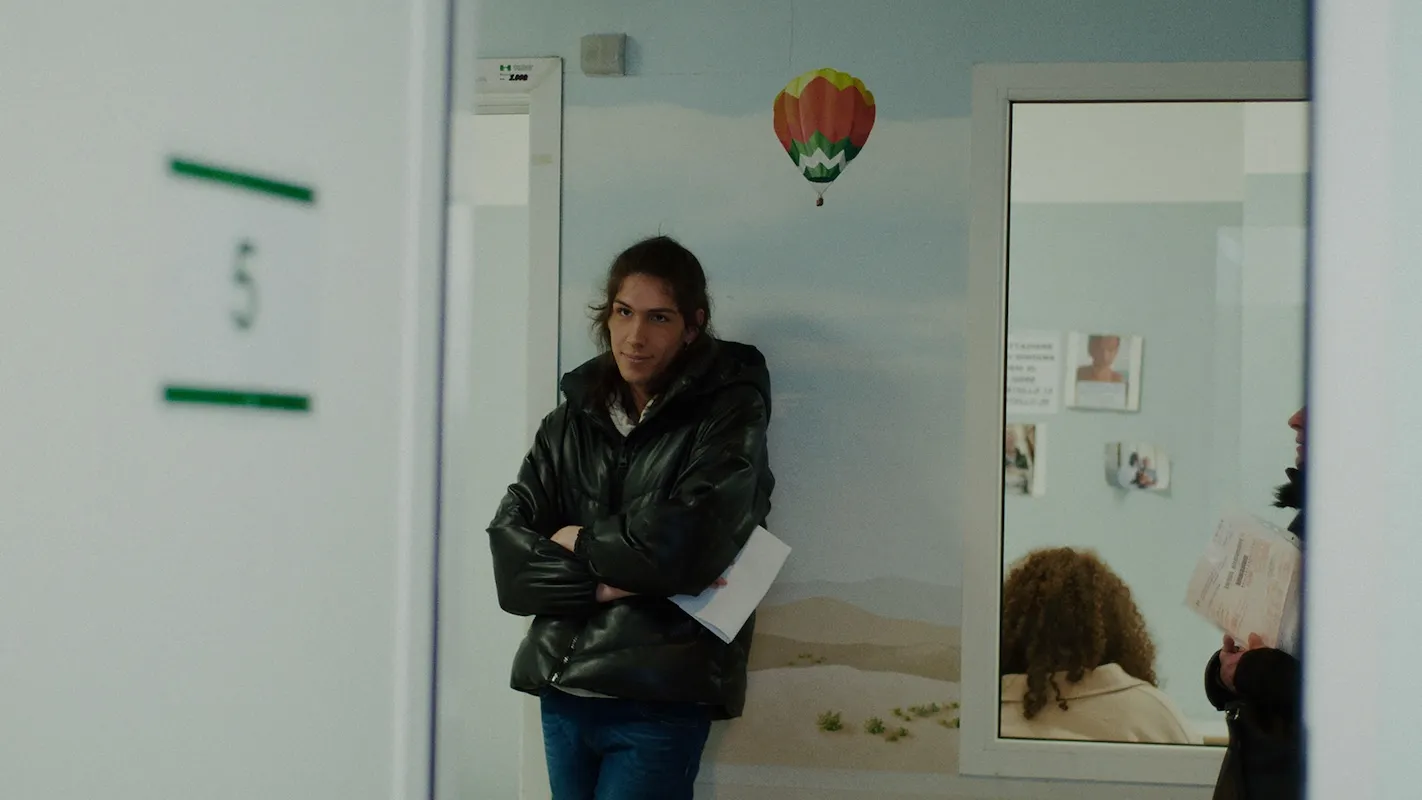
The camera simply places us in the room, a silent witness to deeply personal exchanges. The cinematography often frames patients in profile, a choice that could feel clinical but instead fosters a sense of respectful distance while inviting the viewer to imagine their full countenance. This is enhanced by hazy, intimate close-ups that feel borrowed from a dream.
The visual softness is paired with a quirky, upbeat score from Cantautoma, a sound as if orchestrated by the insects buzzing in the fungal pastures Bini wanders. The film’s structure is a pointillist assembly of consultations, building a picture from small vignettes of human experience.
We meet an incarcerated Egyptian person determined to transition, a woman navigating questions of race through sperm donation, a non-binary individual still seeking parental validation, and another patient finding comfort after being traumatized by a previous doctor. The camera leaves the office only when Bini does, whether to scold construction workers whose jackhammering ruins delicate procedures or to greet the viola player he has brought in to soothe a patient.
An Argument Made by Being
The quiet force of GEN_ lies in its steadfast act of normalization. It sidesteps sensationalism by presenting the mundane, sometimes tedious, reality of these medical journeys. The film’s most potent argument is made through its very architecture.
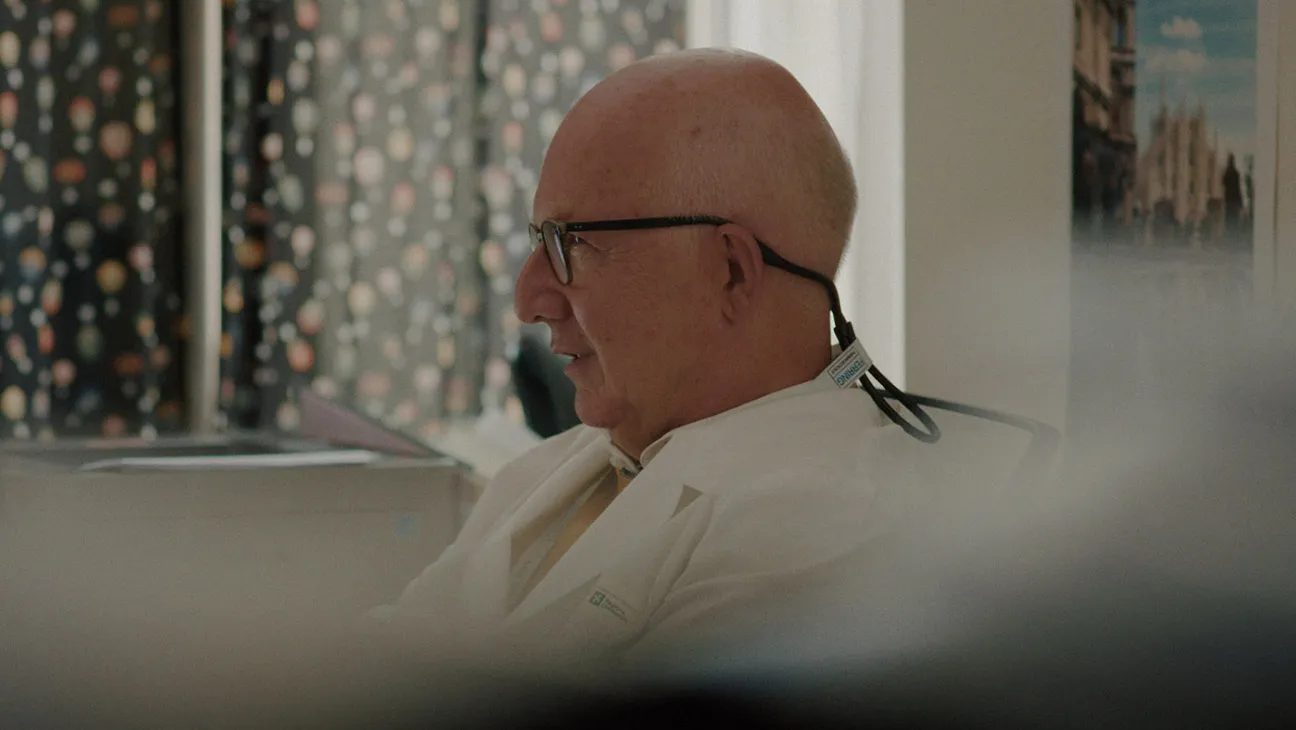
By placing a consultation for in-vitro fertilization next to one for gender dysphoria and treating each with the same deft hand, the film structurally asserts that trans healthcare is simply healthcare. Its politics are understated but clear. Set against a national backdrop that promotes “natural families” over “LGBT lobbies,” Bini’s clinic is a site of quiet defiance.
His work becomes a direct answer to his exasperated statement that “Legislation shouldn’t stand in the way of human variety.” The film uses this idea of human variety as its foundation, a biological and cultural underpinning of existence. It does not offer a tidy resolution. Bini’s retirement leaves the future feeling abstract; the utopia he built feels fragile without its architect.
This open-endedness suggests that the work of (re)generation is not the responsibility of one man but a continuous, collective effort. The film closes not with an answer, but with a lingering sense of hope inspired by one person’s profound empathy.
GEN_ (2025), a documentary film from France, Italy, and Switzerland, premiered at the 2025 Sundance Film Festival on January 24th. It had its Italian premiere on March 13, 2025, at the Anteo Palazzo del Cinema in Milan, followed by a theatrical release in Italy on March 27, 2025.
Full Credits
Director: Gianluca Matarrese
Writers: Gianluca Matarrese, Donatella Della Ratta
Producers and Executive Producers: Dominique Barneaud, Donatella Palermo, Alexandre Iordachescu
Cast: Maurizio Bini
Director of Photography (Cinematographer): Gianluca Matarrese
Editors: Giorgia Villa
Composer: Cantautoma
The Review
GEN_
GEN_ is a profoundly moving and intelligent documentary that forgoes political debate for radical empathy. Director Gianluca Matarrese’s quiet, observant lens captures the beautiful mundanity of healthcare, painting a remarkable portrait of Dr. Maurizio Bini, a humanist in a complex world. By simply presenting the diverse needs of his patients—from fertility to transition—with equal respect, the film makes a powerful case for a more compassionate approach to human variety. It is an essential and deeply humane piece of filmmaking.
PROS
- A deeply compassionate and memorable portrait of its central subject, Dr. Bini.
- Effectively normalizes sensitive medical topics through its gentle, observational style.
- Humanistic focus makes a powerful statement without resorting to overt politics.
- Intimate, cinéma vérité cinematography creates a respectful and immersive experience.
CONS
- The vignette-based structure may feel meandering to viewers seeking a strong narrative arc.
- The tight focus on one doctor offers limited context on the broader medical system.
- Its abstract, unresolved ending might feel slightly underwhelming for some.