
























![Kingdom Hearts Collection [I-III] Review](https://gazettely.com/wp-content/uploads/2026/10/Kingdom-Hearts-Collection-I-III-1-360x180.webp "Kingdom Hearts Collection [I-III] Review: KHII Holds Steady as Newer Entries Fluctuate 37")



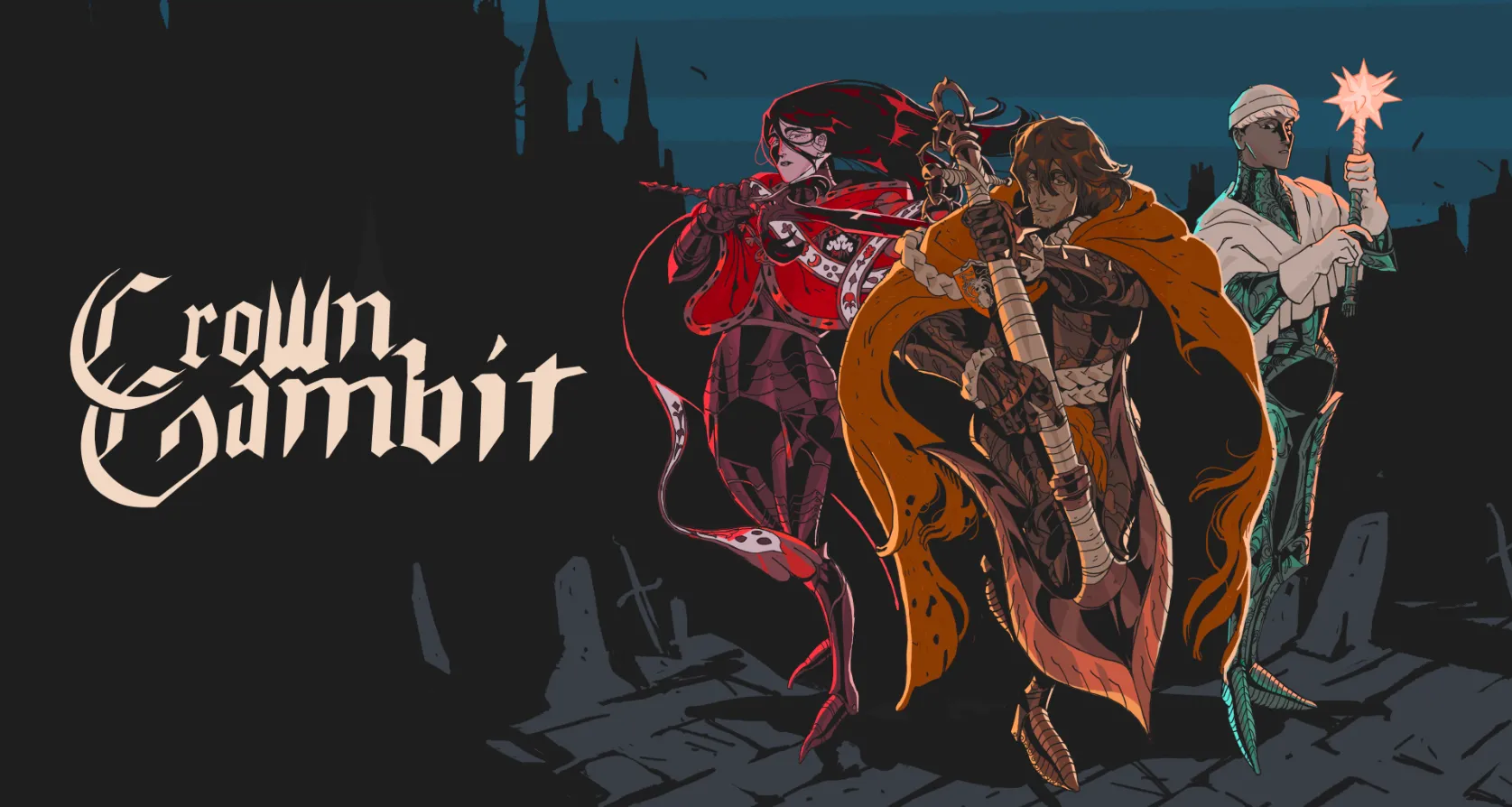

Every so often, a game comes along that reminds you why small, independent studios are so vital. It’s not about the spectacle, but the sharpness of an idea. Crown Gambit is one such game, a tactical RPG that wraps a dark, political fantasy in the mechanics of a card game.
You are put in charge of three paladins: the fiery Aliza, the devout Hael, and the steadfast Rollo. Their seemingly simple mission to escort the king of Meodred shatters when he is murdered, casting them into the heart of a kingdom-spanning conspiracy.
This is a grim world of betrayal and ambition, where every choice you make feels like a stone dropped into a still lake, its ripples spreading far beyond what you can see. The game asks you not just to win battles, but to decide what kind of leader you will be when the foundations of the world crack.
A Throne of Knives
Crown Gambit’s story is a dense political thriller, a tale of rival houses and broken allegiances that feels spiritually akin to the early seasons of Game of Thrones. The kingdom of Meodred is a viper’s nest, and you are tasked with navigating it.
The game trusts its players to follow this complex web of intrigue, aided by an excellent in-game encyclopedia that lets you quickly reference characters and factions during dialogue. This is a thoughtful touch that respects your intelligence.
The choices presented are not simple good-or-evil binaries. Deciding to spare a knight who overheard a secret might see him reappear later as an ally, while executing him might prevent a leak but stain your hands. This branching structure gives the game immense replay value; you get the sense that entire plotlines are waiting to be discovered on a second or third playthrough.
The narrative does sometimes move at a breakneck speed, occasionally not leaving enough room for key events or character relationships to fully breathe. This can soften the emotional blow of a sudden betrayal or death, making you wish for just a few more quiet moments.
Every Card a Gambit
The combat in Crown Gambit translates the game’s strategic depth onto a tactical grid. The system will be familiar to anyone who has played turn-based tactics games. Each turn, your three paladins have a pool of Action Points to spend on moving, attacking, or playing skill cards from their hand. The magic is in the design of the paladins themselves.
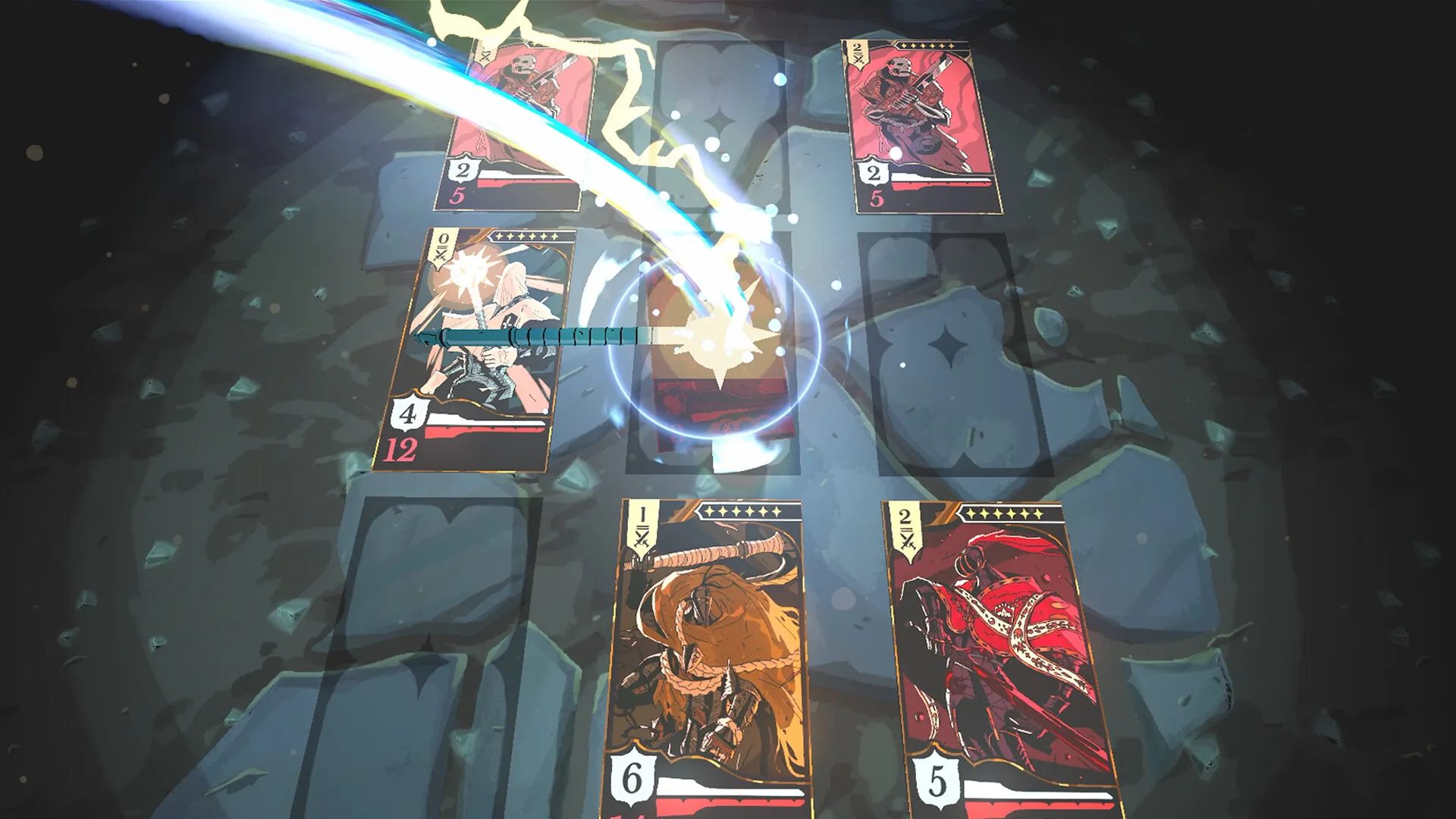
Aliza is a pure damage dealer, Hael a dedicated healer and buffer, and Rollo a defensive bulwark. Their decks are distinct, forcing you to think like a unit. You can further customize your approach by unlocking new cards through simple skill trees and by equipping powerful weapon cards that can be swapped between characters after any fight.
The game is demanding; health and armor are not replenished automatically after battles, creating a war of attrition that recalls the tense resource management of Darkest Dungeon. You must pick your post-battle rewards carefully. The combat arenas themselves are straightforward, lacking the environmental interactions of a game like Fire Emblem, but this keeps the focus squarely on your card synergy and tactical positioning.
A Devil’s Bargain
The game’s most brilliant idea is the Ancestral Grace system, a mechanic that perfectly fuses gameplay with narrative consequence. In combat, any card can be played in a “heightened” state, transforming a modest attack into a devastating blow that can salvage a losing fight.
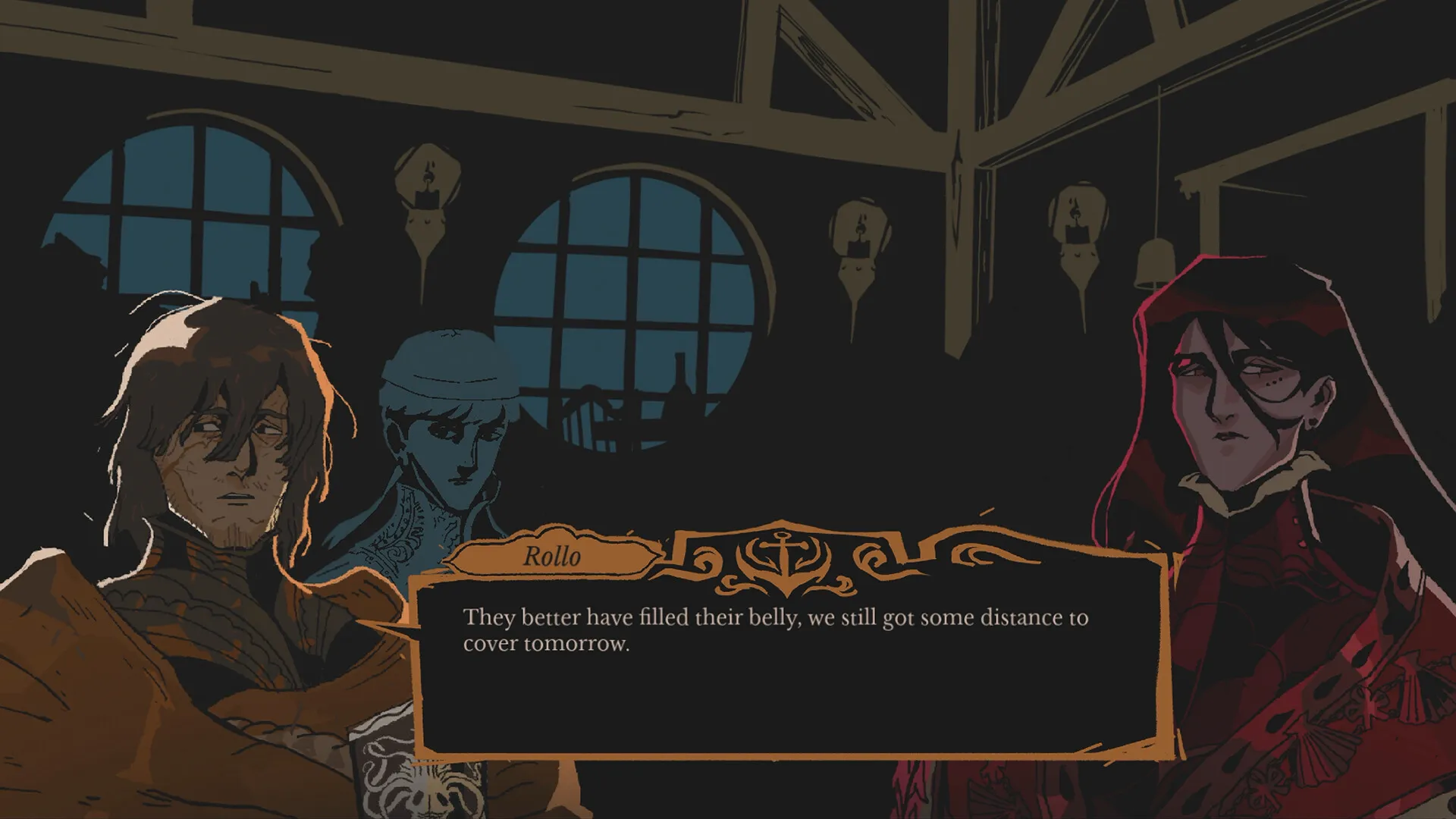
The cost is that the base card is banished for the rest of the battle. This creates an immediate tactical choice, but the real price is paid outside of combat. Using this power fills a character’s influence gauge, corrupting them. An Aliza who leans too heavily on her ancestral power will become short-tempered and violent, her dialogue choices being replaced by aggressive outbursts you cannot control.
A moment of desperation in a fight could lead to her killing a key NPC in a later conversation. This system is a fantastic representation of temptation. It constantly forces you to question if survival now is worth the person you might become later.
Beauty in the Bleakness
The world of Meodred is brought to life with a gorgeous, hand-drawn art style. The character portraits are incredibly expressive, carrying the emotional weight of the story in a way that feels torn from the pages of a high-quality graphic novel.
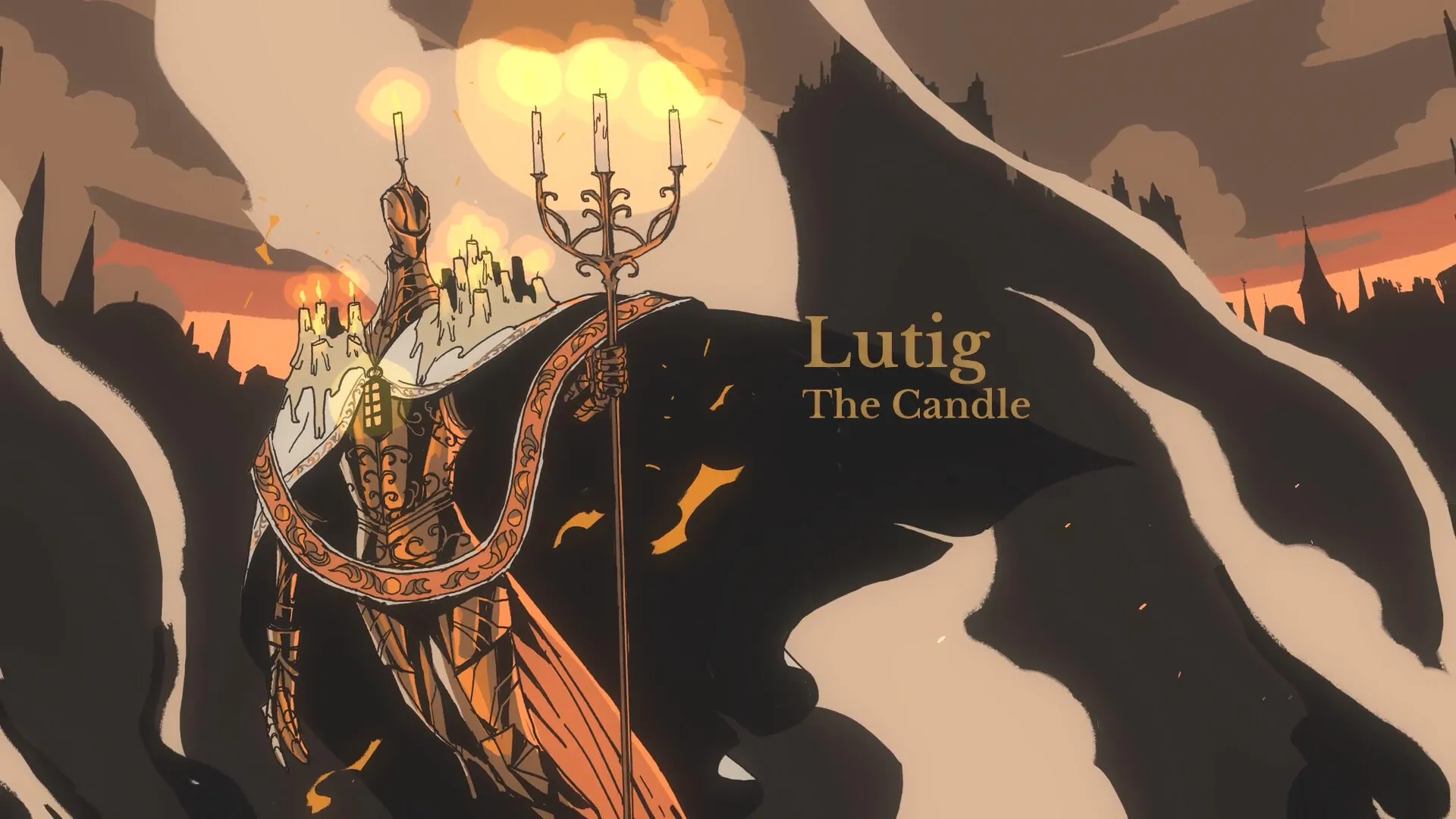
The user interface itself is a work of art, with ornate details that deepen the immersion. This visual storytelling is supported by a haunting soundtrack of chants and melodies that perfectly captures the somber, tense atmosphere of the kingdom. The presentation is not without its trade-offs. The color palette is consistently muted, which fits the grim tone but may not appeal to all.
With no voice acting, the writing and art must do all the heavy lifting—a challenge they mostly meet with confidence. This is a game that feels perfectly suited for a handheld device, a self-contained, beautifully crafted story you can get lost in.
The Review
Crown Gambit
Crown Gambit is a remarkable achievement, skillfully weaving a dark political narrative into a demanding tactical card game. Its masterstroke is the Ancestral Grace system, where battlefield decisions create lasting and often tragic story consequences, forcing players to weigh power against morality. While occasional pacing issues and a lack of voice acting are noticeable, they do little to diminish the game's gripping atmosphere and gorgeous hand-drawn world. This is a smart, ambitious, and emotionally resonant experience that fans of narrative-rich RPGs and strategy games should not overlook.
PROS
- Brilliant integration of gameplay mechanics and narrative choices.
- Deep, consequential story with high replayability.
- Stunning hand-drawn art style and atmospheric presentation.
- Challenging and strategic turn-based combat.
CONS
- Narrative pacing can feel rushed at times.
- Absence of voice acting puts heavy reliance on text.
- Combat maps are mechanically simple.







