
























![Kingdom Hearts Collection [I-III] Review](https://gazettely.com/wp-content/uploads/2026/10/Kingdom-Hearts-Collection-I-III-1-360x180.webp "Kingdom Hearts Collection [I-III] Review: KHII Holds Steady as Newer Entries Fluctuate 37")



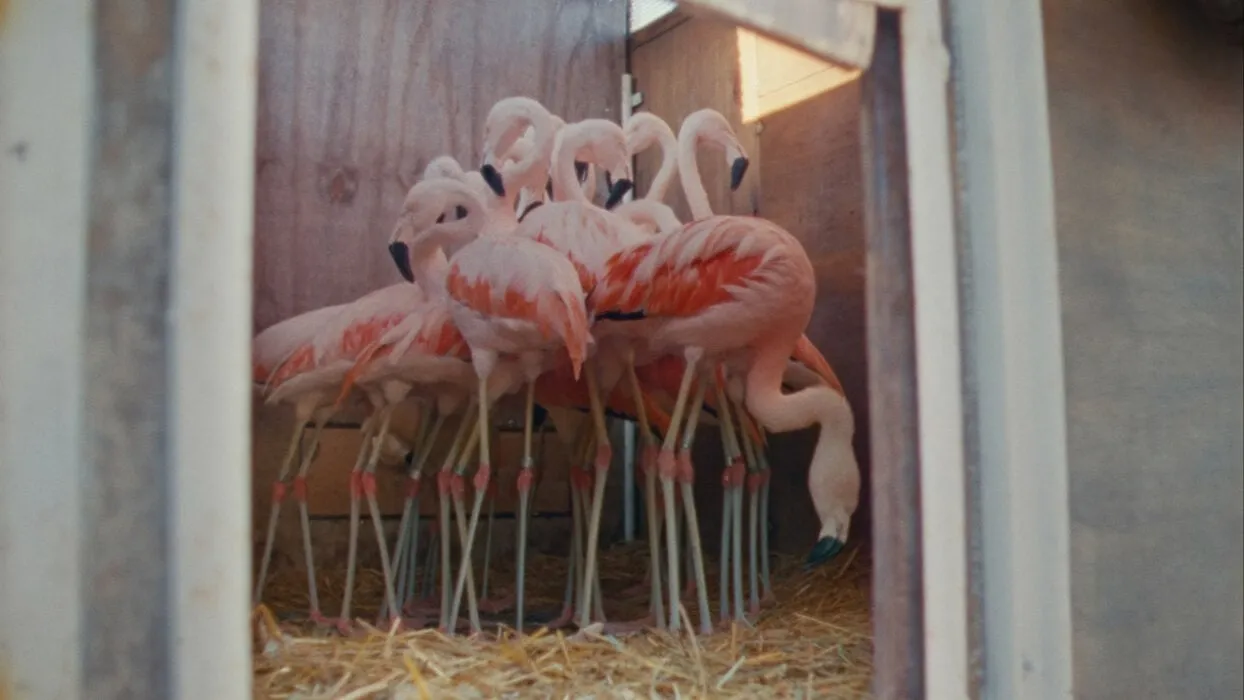

Within the walls of Argentina’s zoological parks, a strange and quiet liturgy unfolds. It is a ritual of hands and fur, of soft words spoken through steel mesh. Here, the relationship between human and animal sheds the pretense of spectacle.
This is not a theater for public amusement but a space of labor, of fraught coexistence, where rehabilitation is a hope whispered against the reality of confinement. The interactions are a form of silent, unsettled communication, a language built from the patience of a groom’s brush and the weight of a primate’s hand.
In its patient observation of this world, the film Monólogo Colectivo suggests we are watching more than the care of animals. We are watching the long, one-sided conversation humanity has with a nature it has caged. It is an invitation to press our face to the glass, not to see the exotic other, but to question the reflection staring back.
The Grammar of Cages
Jessica Sarah Rinland’s camera refuses to stand at a polite distance. It is a nervous system, not a static eye, trembling with the proximity of breath and body. The choice of 16mm film is not for nostalgia; it is a medium of memory, lending a porous, archival skin to every image. We are not watching a contemporary document so much as unearthing a lost history of contact, a record of a strange and troubled intimacy.
Rinland’s handheld frame denies the viewer the comfort of a stable, omniscient perspective, forcing an entanglement with the scene. This approach is a radical rejection of the traditional “zoo gaze”—that wide, detached view of consumption and classification. Here, there is no object to be cataloged, only a shared, claustrophobic space.
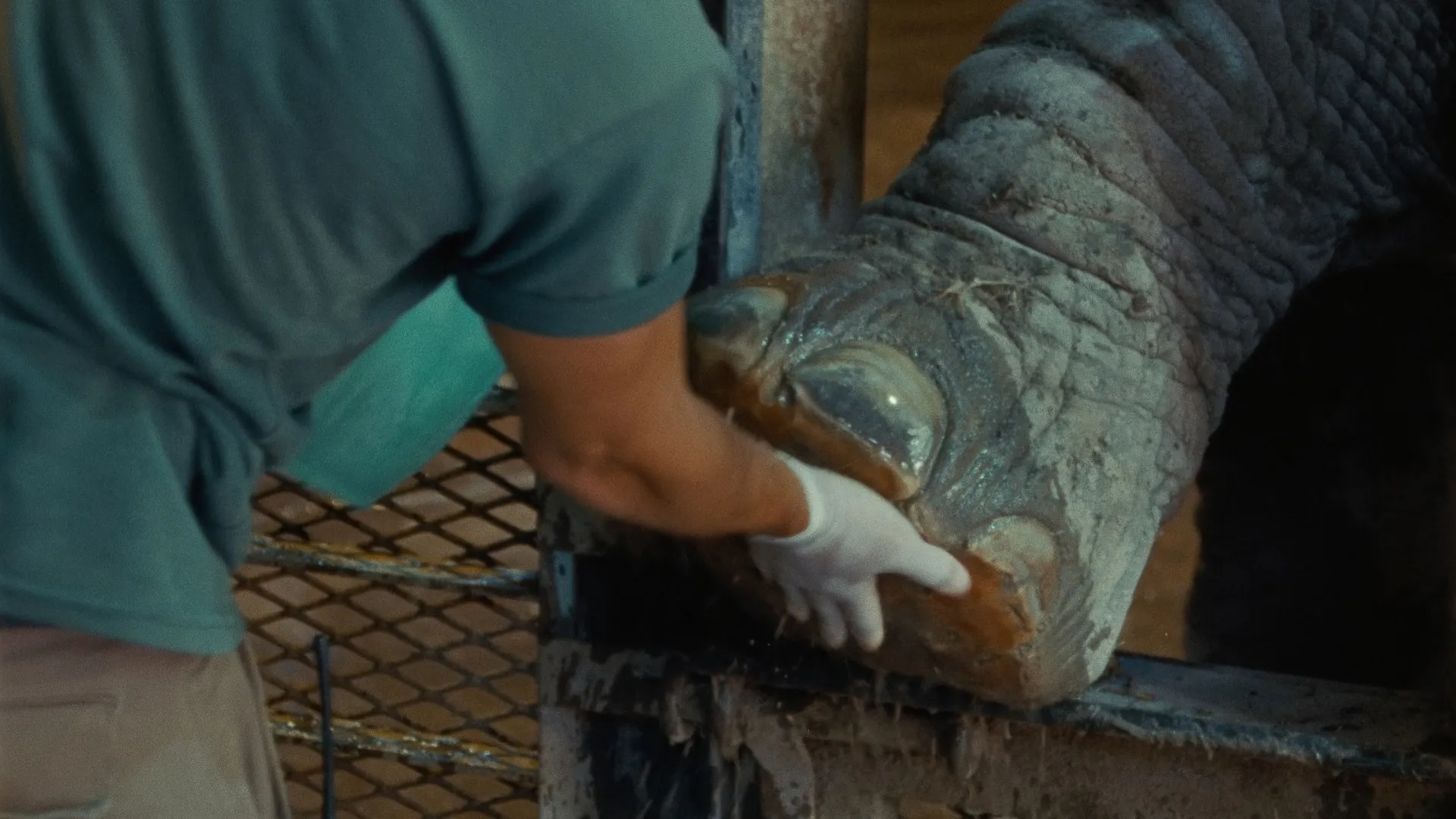
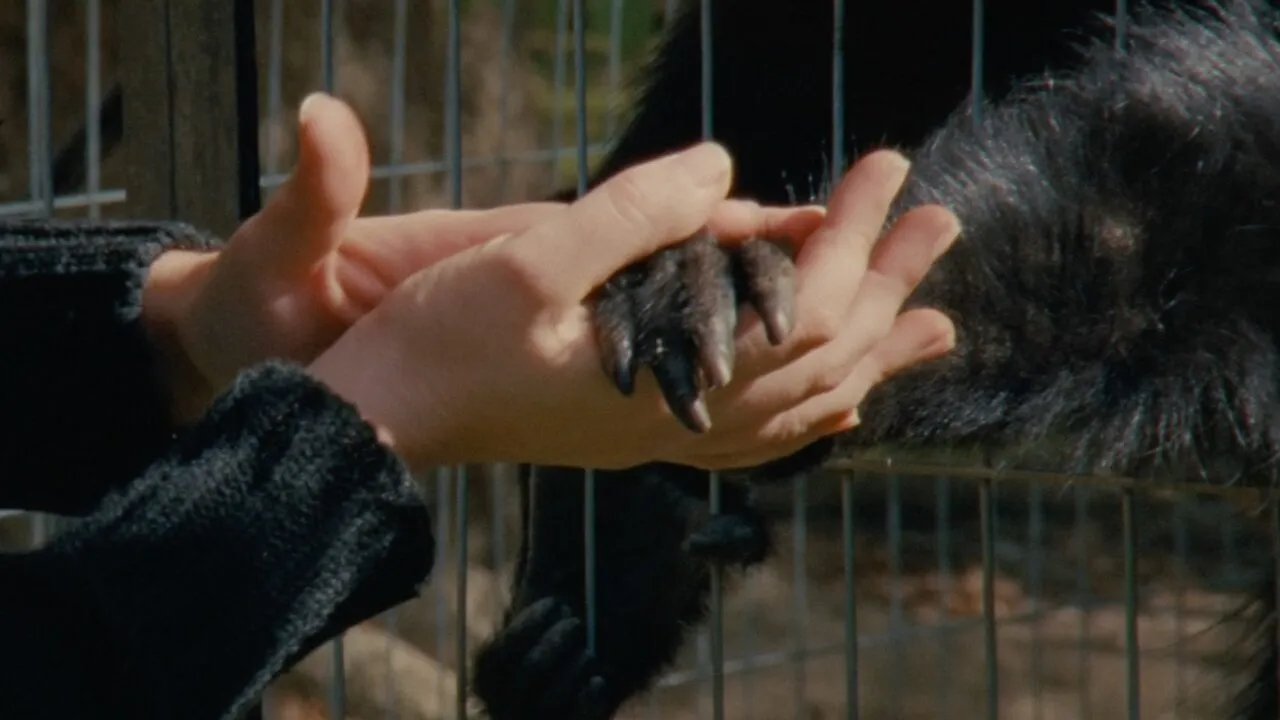
The effect is one of mutual imprisonment; the screen becomes another enclosure, and we are placed inside with the subjects. This visual language is built from paradox. A litany of hands appears, human hands scrubbing the tough hide of an elephant’s foot, which a keeper affectionately calls a mano, and the delicate, ancient hands of an ape reaching through bars.
The gesture of connection, however, only amplifies the tragedy of the barrier itself. It is a tenderness enacted across a divide that is never forgotten. Cages and fences are not mere backdrops; they are the very grammar of this world, dictating the syntax of every interaction.
The air hangs heavy with the fragmented soundscape, a keeper’s loving murmur of reina mía dissolving into the cold, metallic clang of a gate, a testament to the battle between personal devotion and the indifferent machinery of the institution.
The Solipsist’s Ark
The film’s title is a key, unlocking its bleak philosophical core. It is drawn from Jean Piaget’s term for a child’s egocentric phase, a state of being where the world is perceived not just as being for you, but as an extension of you. Monólogo Colectivo posits that this is not a passing stage for our species, but our fundamental condition—a cognitive solitude.
The acts of empathy we witness are therefore not a true dialogue but rather the first, sputtering attempts of a solipsist to imagine an outside world. The film excavates the history of this mindset, digging through the dusty archives of the Buenos Aires Zoo to reveal a colonial past built on paternalism and the collection of living artifacts.
We are forced to ask if the modern eco-park is a genuine evolution or simply a more sophisticated cage, rebranded to assuage a collective guilt. The architecture may change, the mission statements may be rewritten, but the foundational power dynamic—captor and captive—remains untouched.
The history revealed in the archives is not overcome; it is layered, echoing in the gentle but controlling actions of the present-day keepers. Their love for the animals is the film’s emotional center, a powerful and moving force. Yet it is a love enacted in a profoundly unnatural context, a tenderness that does not, and cannot, set its subject free.
This makes their devotion a tragic paradox: does it redeem the institution, or is the institution a cage for their love as well? This entire fragile ecosystem of care is itself shackled to the whims of a volatile human economy, a final, grim reminder that this noble project is built on a foundation of sand.
An Unfinished Sentence
There is no clean narrative here, only an assembly of shards from a broken mirror. Monólogo Colectivo’s episodic structure is an act of anti-storytelling, denying us the catharsis of a plot that resolves. This story is ongoing, its wounds perpetually open.
Each vignette is a question mark, a page torn from a diary whose ending remains unwritten. The film demands a new quality of attention, a form of existential endurance. It asks us to witness without the promise of a solution, to feel without the relief of fixing.
It is a deeply uncomfortable spectatorship that mirrors our own impotence in the face of immense, systemic tragedies. The entire film seems to coalesce in its final moments, with a woman weeping quietly while holding the frail body of the small monkey Juanita. Her sorrow is real, visceral, yet it is a private grief for a public condition, a tear shed within the very enclosure that necessitates it.
What can this grief accomplish? The film leaves the question hanging in the dim, quiet air. It is not a manifesto for empathy, but a somber meditation on its limits. Can empathy dismantle a structure, or does it merely make living within it more bearable for the powerful? The film offers no solace. It positions us before a difficult truth and then falls silent, leaving us not with a call to action, but with the weight of a necessary, contemplative, and deeply unsettled silence.
Full Credits
Director: Jessica Sarah Rinland
Writers: Jessica Sarah Rinland
Producers: Melanie Schapiro, Jessica Sarah Rinland
Cast: Alicia Delgado, Franco Elio Itri, Juanita, María José Micale, Macarena Santa María Loydi
Director of Photography: Jessica Sarah Rinland
Editors: Jessica Sarah Rinland
The Review
Monólogo Colectivo
Monólogo Colectivo is not a film to be simply watched; it is an unsettling philosophical state to be entered. It is a haunting and visually poetic meditation on the paradox of care and the solitude of human consciousness. While its deliberate ambiguity and structural fragmentation will challenge many, it stands as an essential, unforgettable piece of cinema for anyone willing to confront the difficult questions it poses about our place in the natural world.
PROS
- Stunningly intimate and tactile 16mm cinematography.
- A profound and challenging philosophical examination of human-animal relationships.
- The unconventional, fragmented structure powerfully reflects its central themes.
- Successfully creates a deeply moving and disquieting atmosphere.
- Bravely explores the contradictions of empathy within a system of confinement.
CONS
- Its non-linear, vignette-based structure may feel inaccessible to some viewers.
- The observational pace is demanding and requires significant patience.
- The emotional and psychological weight can be an uncomfortable viewing experience.
- Offers unsettling questions rather than comforting answers, which could be frustrating.