





















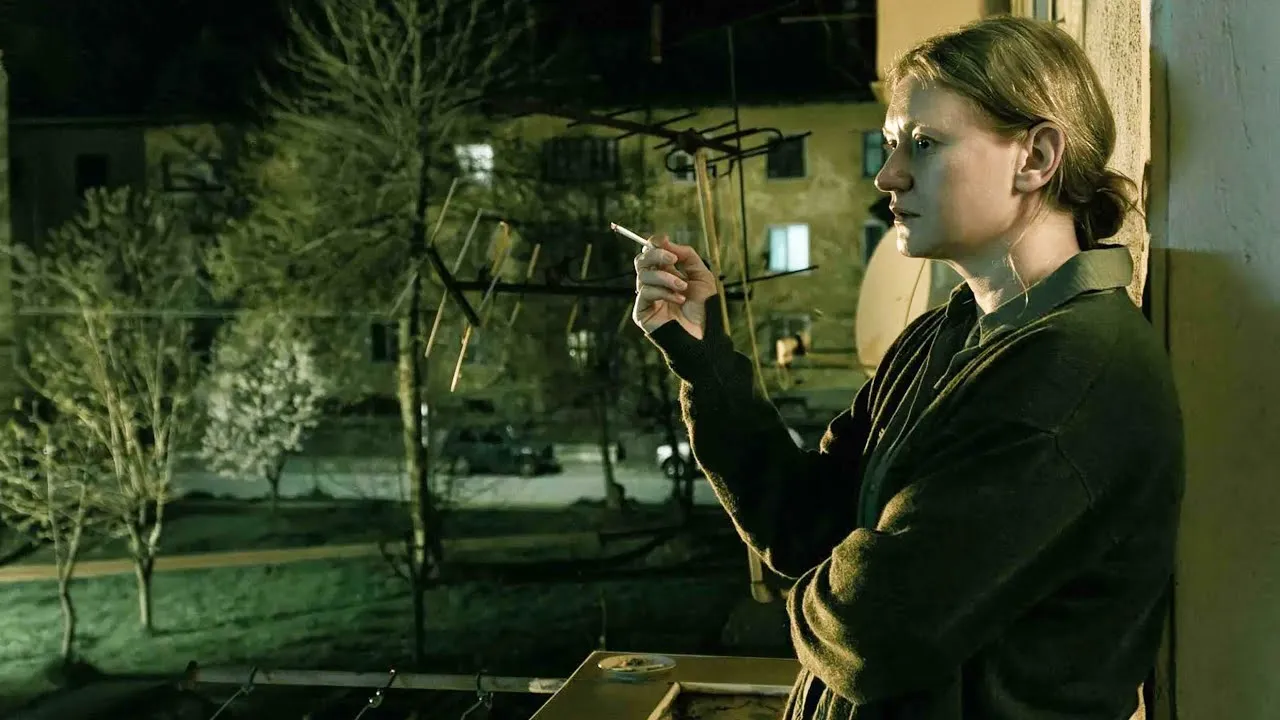

Few periods in recent memory feel as simultaneously close and distant as the spring of 2020. Director Stephan Komandarev’s Made in EU takes us back to that precipice of global panic, using the dawn of the COVID-19 pandemic not for cheap thrills but as a lens for a sober re-examination of its deep social fallout.
The film eschews a global canvas for an intensely focused one: a small, economically struggling Bulgarian town where life revolves around a single garment factory. Owned by an Italian businessman, this factory is the community’s lifeline and, soon, the epicenter of its fears. The story centers on Iva, a middle-aged widow working on the factory floor.
Her life is upended when she is identified as the town’s first case of the new virus. What follows is a stark, gripping social drama that investigates how an external crisis can violently expose the fractures already present within a society, turning neighbors into judges and a sickness into a moral failing.
Patient Zero, Community Nil
The film quickly establishes the environment of systemic exploitation where the virus takes root. For the people in this town, the factory is the only meaningful employer besides the mine where Iva’s husband died, a grim choice that gives the Italian owner immense power.
He wields it without conscience, pressuring the local doctor to deny sick notes and forcing ill employees to remain at their sewing machines for pittance wages. This grim reality of labor in post-socialist Europe sets the stage for Iva’s personal catastrophe. After she collapses and is diagnosed, her identity shifts overnight from worker to pariah.
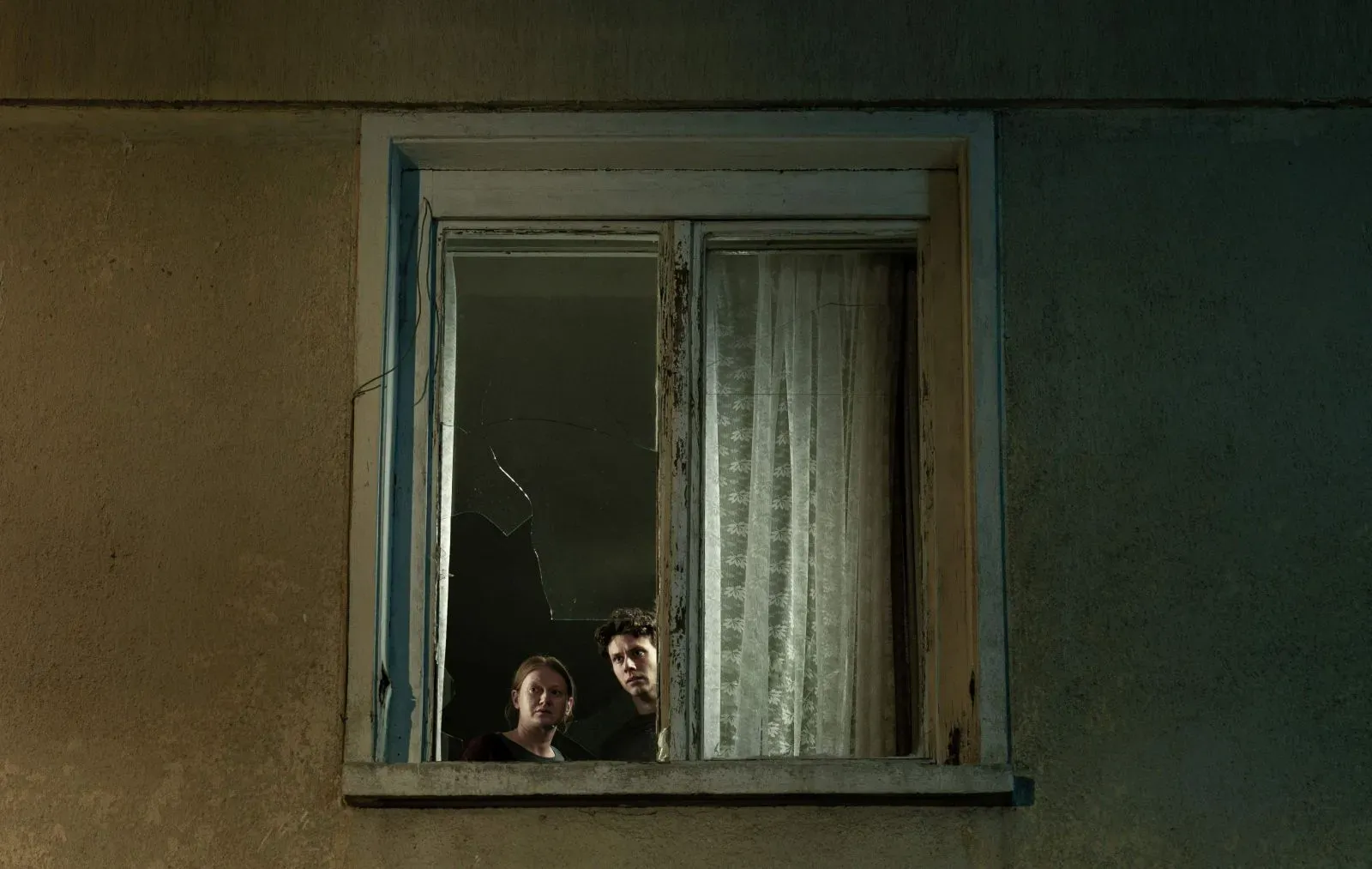
The community’s fear, amplified by social media rumors, curdles into a vicious, targeted anger. The persecution is not abstract; her home’s windows are shattered with stones, and pickaxes are planted on her son’s car as a brutal warning. She is shunned by coworkers, and even her YouTuber son, Micho, initially resents the public shame she has brought upon him.
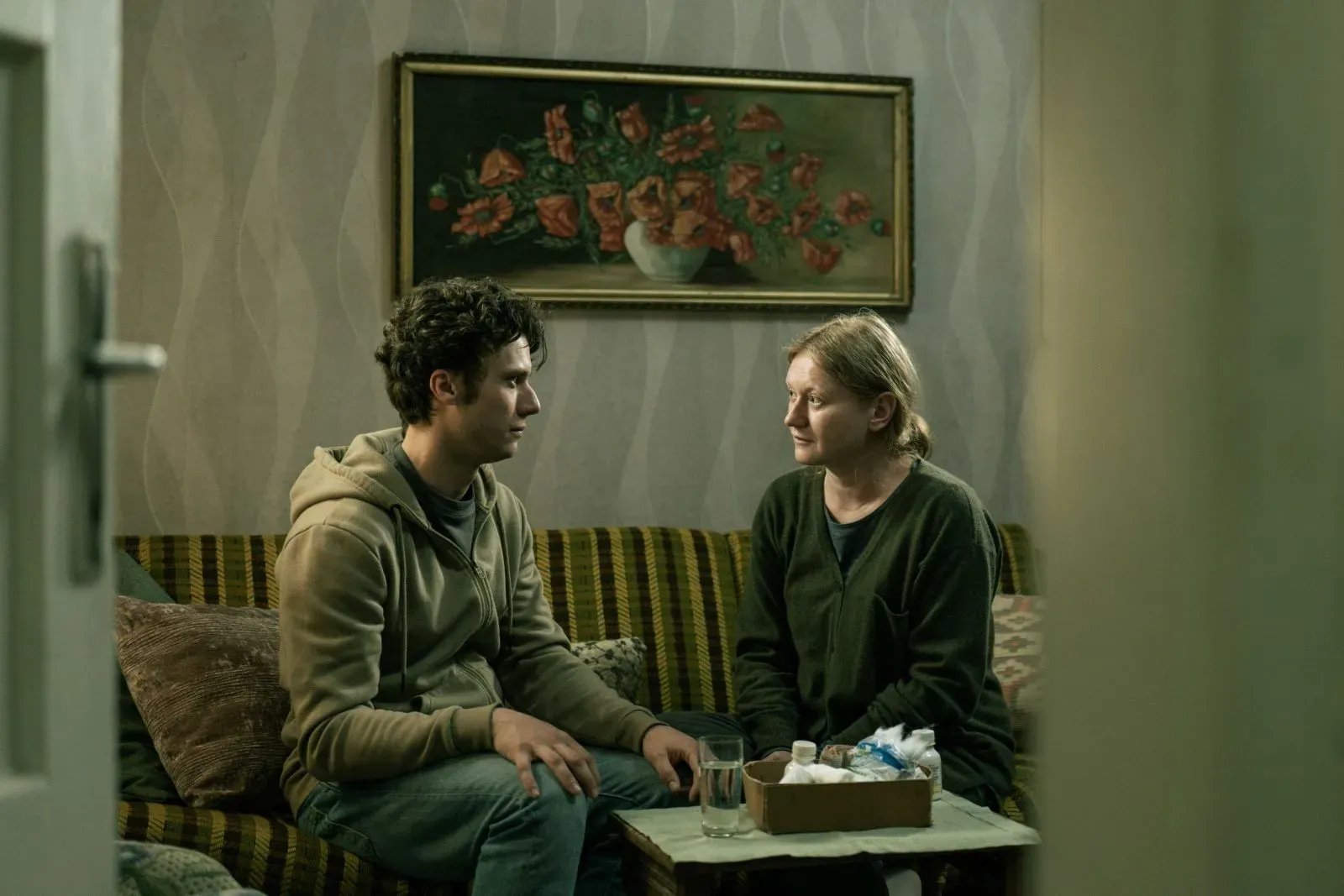
Her only support comes from Dr. Rusev, a retired physician whose calm reason offers a stark contrast to the rising hysteria. This narrative of a woman ostracized by her community echoes themes found in India’s parallel cinema, where films like Ketan Mehta’s Mirch Masala explored how a closed community enforces its brutal will on a woman who defies its patriarchal norms. Iva’s persecution becomes a chillingly specific, yet universal, story of societal breakdown.
The High Price of a Label
The film’s title, Made in EU, is a piece of sharp, cutting irony. The designer labels Iva stitches onto luxury garments represent a promise of European unity and prosperity that feels hollow in her town. Komandarev argues that for nations like Bulgaria, EU membership can formalize a relationship of economic dependency, transforming the country into a pool of inexpensive labor for wealthier Western European capitalists.
The factory owner’s reckless greed is positioned as the true pathogen, a sickness of unchecked capitalism that creates the conditions for both the health crisis and the ensuing social decay. His culpability is made even sharper by the detail that he recently visited Bergamo, a major early viral hotspot in Italy, making him the likely source of the town’s outbreak. The powerful man deflects blame onto the powerless woman. This injustice powerfully explores the age-old human instinct for scapegoating.
The town’s treatment of Iva is a modern witch hunt, connecting the primal fear of disease to historical patterns of punishing the innocent. This indictment of globalized capital’s effect on labor finds parallels in contemporary Indian independent cinema, which often documents the vulnerability of factory workers and farmers. Made in EU presents its argument with a quiet, commanding lucidity, suggesting the real sickness is an economic system that prizes profit over people.
The Aesthetics of Despair
Komandarev’s direction, paired with Vesselin Hristov’s cinematography, crafts a visual language of profound despair. The film opens with a potent visual metaphor: a close-up of the “Made in EU” labels being mechanically stitched, reducing a complex political identity to a simple commodity.
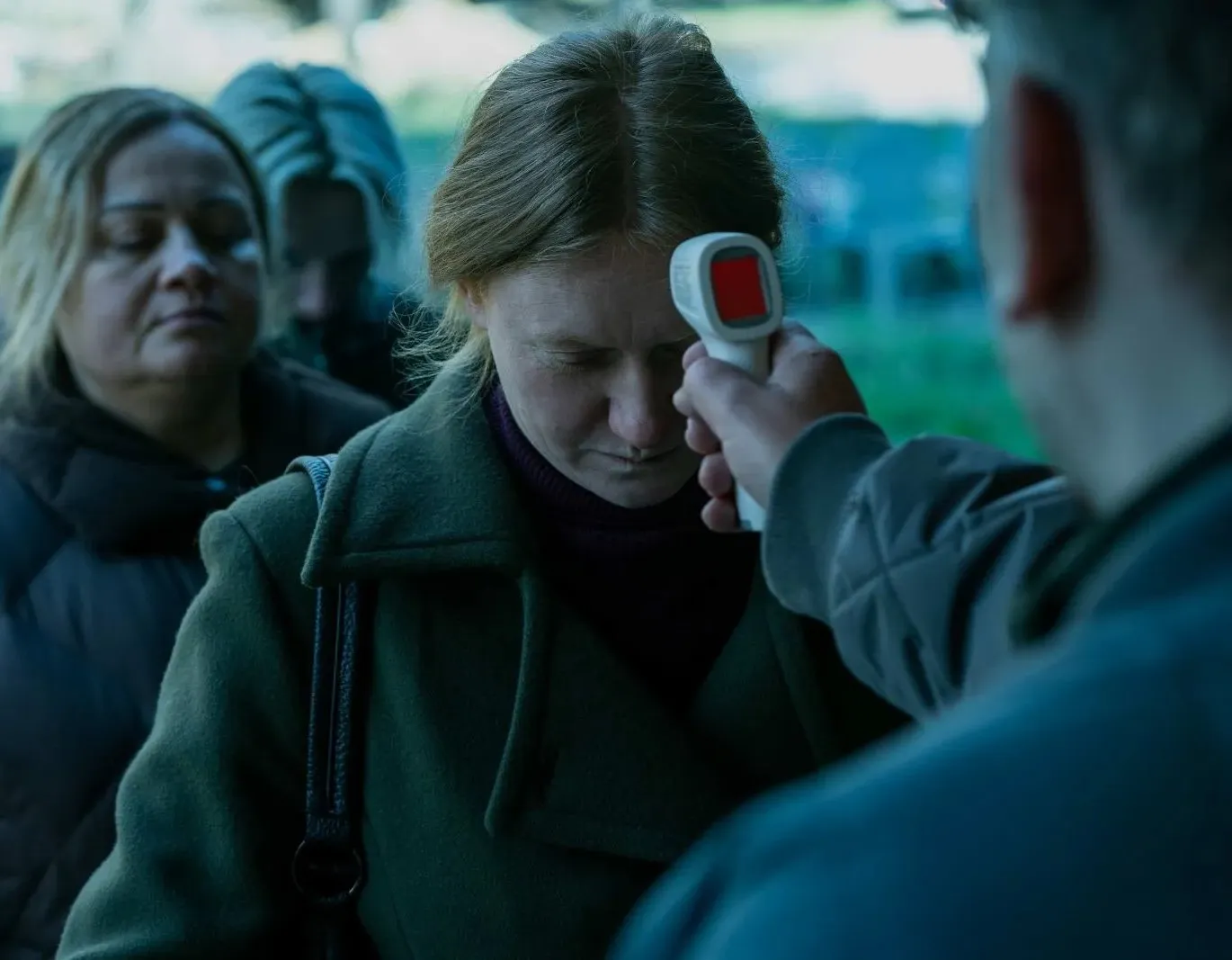
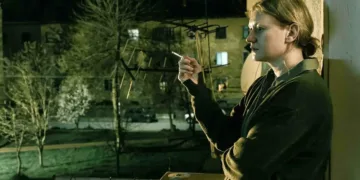
The entire film is rendered in a stark, greyish palette, creating an oppressive atmosphere that feels both realistic and dystopian. The camerawork consistently reinforces the story’s themes of alienation; characters are often framed through doorways or seen in reflections, visually separating them even when they share a space. At the film’s center is Gergana Pletnyova’s magnificent performance as Iva.
Her face is a stern fixture of quiet endurance, and she carries the film with a stoic, understated power that makes her moments of defiance all the more resonant. She is ably supported by Todor Kotsev, who navigates his character’s believable arc from resentment to loyalty, and Ivaylo Hristov, whose friendly demeanor as Dr. Rusev provides a necessary antidote to the film’s acidic tone.
The film’s primary weakness lies in its script, which can feel heavy-handed. It sacrifices narrative subtlety for thematic clarity, presenting a direct morality tale with clearly drawn lines of right and wrong. This straightforwardness, while potent, prevents the story from achieving a deeper moral complexity, a challenge often faced by social realist cinema worldwide.
The movie Made In EU had its premiere at the Venice International Film Festival on August 31, 2025. This film is a co-production between Bulgaria, Germany, and the Czech Republic. It is not currently available on streaming platforms.
Full Credits
Director: Stephan Komandarev
Writers: Stephan Komandarev, Simeon Ventsislavov
Producers and Executive Producers: Stephan Komandarev, Katya Trichkova, Eike Goreczka, Christoph Kukula, Pavel Strnad, Richard Heinecke
Cast: Gergana Pletnyova, Todor Kotsev, Gerasim Georgiev, Anastasia Ingilizova, Ivaylo Hristov, Ivan Barnev, Martina Peneva, Ovanes Torosian
Director of Photography (Cinematographer): Vesselin Hristov
Editors: Nina Altaparmakova
The Review
Made In EU
Made in EU is a visually stark and powerfully acted social drama. Anchored by Gergana Pletnyova's stoic performance, it effectively captures the fear of the early pandemic and mounts a potent critique of economic exploitation. While its heavy-handed and unsubtle script prevents it from achieving greatness, its righteous anger and bleak honesty make it a compelling, if flawed, watch.
PROS
- A powerful, understated lead performance from Gergana Pletnyova.
- Stark and effective cinematography that creates a bleak, oppressive atmosphere.
- A potent and timely critique of capitalist exploitation and social scapegoating.
- Strong supporting performances that ground the human drama.
CONS
- The script is often heavy-handed and lacks narrative subtlety.
- A simplistic morality tale that limits the story's potential for complexity.
- The delivery of the film's message can feel didactic.