





























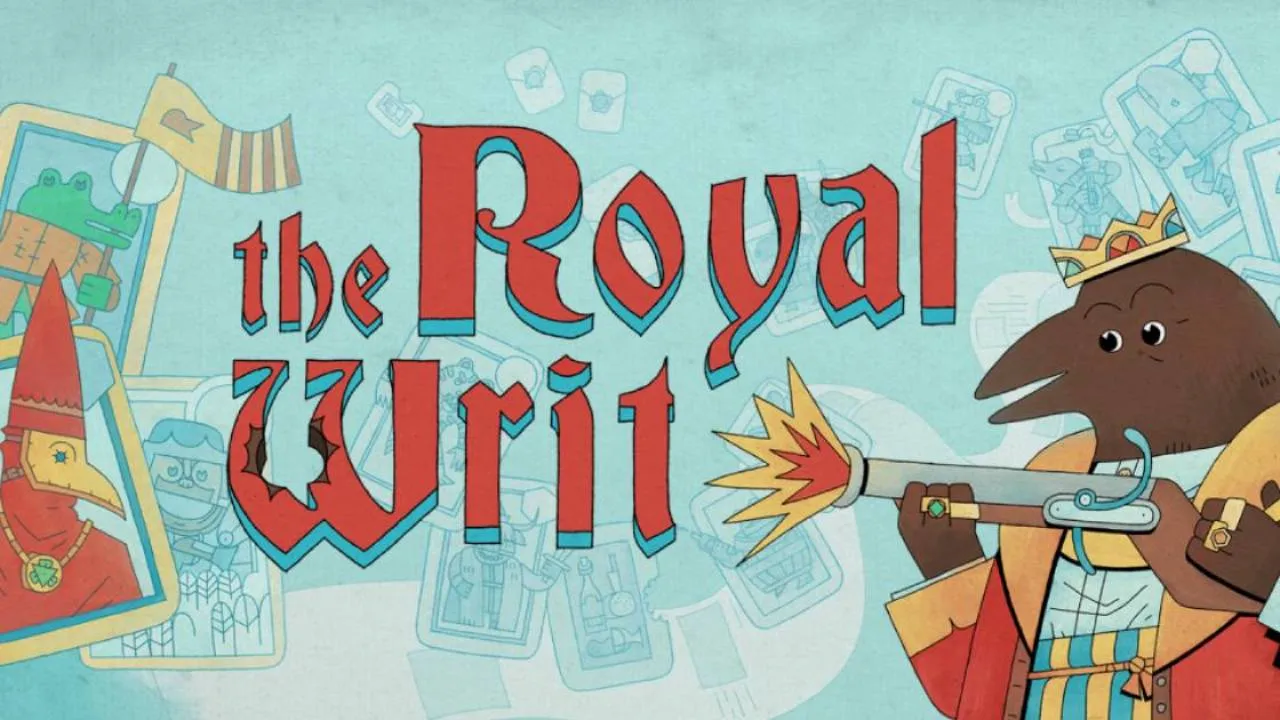

The Royal Writ opens like a page from a forgotten storybook. Its world is brought to life with a charming, animated art style where your loyal soldiers are whimsically drawn animals who shake when they are in peril.
You take on the role of King Mikolt II, a benevolent ruler with a rather direct method for diplomacy. When a bandit leader causes trouble, you do not send a messenger with a scroll; you send a small army to deliver the “letter” and burn the recipient’s camps to the ground.
This sets the stage for a roguelike deckbuilder where your units are your words and the battlefield is your parchment. The game’s lighthearted presentation belies a demanding strategic core. Ruling the kingdom of Aranfold requires careful calculation and a willingness to make sacrifices.
The Mathematics of a March
The core of The Royal Writ is a clever puzzle of battlefield placement and arithmetic. Each battle unfolds on a grid. You place your units in the leftmost column, and with each turn, they march one space to the right, their power contributing to a total that must meet a specific target.
The strategy emerges from the simple distinction between your two main unit types: blue cards provide a flat power value, while red cards multiply the total power of the column. This system, reminiscent of the satisfying math in a game like Balatro, asks you to sequence your units perfectly to create exponential damage growth.
Your final output is modified by column bonuses, which can be upgraded from simple addition to multiplication, and special tiles like bridges that grant extra power. A miscalculation can be disastrous; a negative power value will heal your opponent instead of harming them.
What separates this game from many other deckbuilders like Slay the Spire is the permanence of your losses. When a unit falls in battle, it is removed from your deck for the rest of that run. This mechanic feels closer to a tactical RPG like XCOM, where every soldier lost is a significant blow to your campaign. This high-stakes reality informs every decision.
Between battles, you navigate a branching map to rebuild your army. You might recruit new soldiers, upgrade the battlefield, or make a grim choice like allowing a unit to have its teeth pulled in exchange for a powerful passive relic. Each decision is weighted with the knowledge that a single mistake can unravel your entire army.
The Rebellion’s Rules
Just as you master the offensive puzzle of the initial campaign, The Royal Writ completely upends its own rules. After your first successful run, you unlock Act 2. The story shifts: the king has been overthrown by his council and must now lead a rebellion to reclaim his throne. This narrative turn introduces a radical change to gameplay.
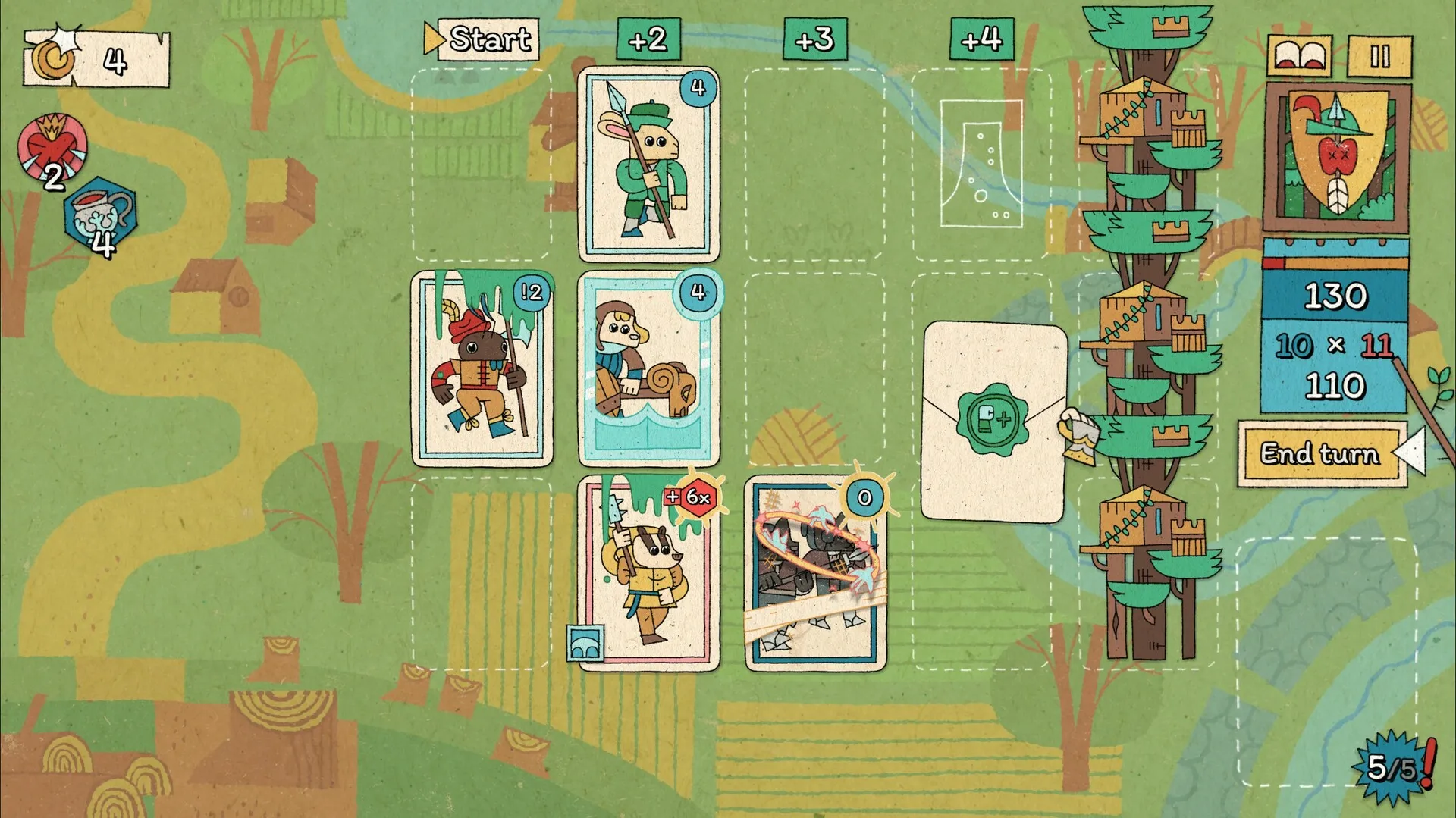
The battlefield transforms from a damage calculator into a perilous gauntlet. Enemies now fire projectiles like bullets and poison knives down the lanes at the end of each turn. If a projectile reaches your side of the board, you lose Morale, which functions as your health in this new mode.
This introduces a defensive layer that feels akin to the threat management of Into the Breach. You must decide whether to let a unit take a hit or spend Morale to have them duck, saving the card for a future turn.
To aid your rebellion, you gain access to Spy cards, powerful abilities that operate on a global timer. This second act demands a complete strategic realignment, forcing you to balance offensive output with battlefield control and self-preservation.
The Long Reign
The Royal Writ is a demanding game, and its difficulty can sometimes feel punishing. A promising run can be cut short by a sudden, seemingly unfair twist, such as a boss who bestows the “Educated” trait on your entire army, multiplying each unit’s power by negative one and instantly crippling your damage.
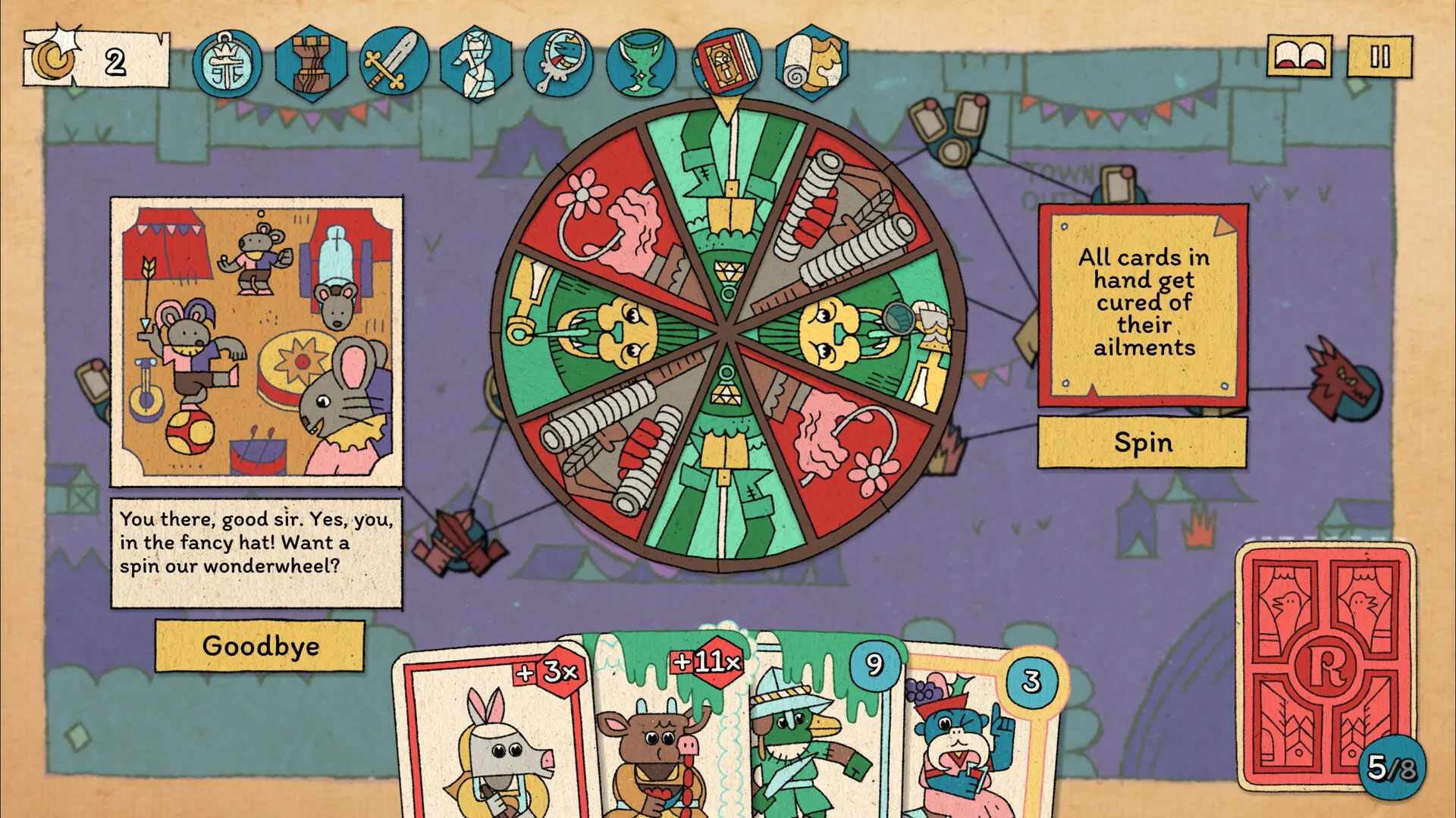
This kind of brutal randomness is a hallmark of classic roguelikes like Spelunky, where disaster is always one step away. The frustration of these moments is countered by the immense satisfaction of orchestrating a perfect turn, creating synergies that produce thousands of points of damage. The game encourages persistence through its meta-progression.
By completing specific encounters or challenges, you unlock new units and relics that are added to the pool for all future runs. This system, similar to the unlocks in Hades, ensures that every attempt contributes to your long-term power.
After you have retaken the throne, the game offers even more ways to test your skill with Challenges that add special rules and stacking Hardship modifiers that provide a clear path for dedicated players to prove their mastery.
The Review
The Royal Writ
The Royal Writ is a brilliantly designed deckbuilder that hides a demanding and complex strategic engine behind a charming storybook facade. Its system of permanent unit loss makes every decision feel weighty, and the radical shift in gameplay between its two acts provides a substantial challenge. While its steep learning curve and punishing difficulty can lead to moments of intense frustration, the satisfaction of mastering its intricate mechanics makes it a deeply rewarding experience for any player prepared to accept its terms.
PROS
- Deep and innovative strategic gameplay.
- High-stakes permadeath mechanic adds weight to decisions.
- Excellent replay value with unlocks and difficulty modifiers.
- Charming and distinctive art style.
CONS
- A very steep initial learning curve.
- Punishing difficulty can feel unfair at times.
- The story is a simple framing device for the mechanics.







