

























What’s it like to be 27 years old and have the world decide your life’s work is already complete? Most artists struggle for a lifetime to create one masterpiece. Paul McCartney was part of a group that produced about a dozen before he could legally rent a car in some countries. Morgan Neville’s documentary Man on the Run is less about the end of The Beatles and more about this terrifying, almost absurdly high-stakes question of a second act.
It sidesteps the well-worn beats of the breakup to focus on the wilderness that followed. The film finds McCartney unmoored, retreating to a windswept Scottish farm with his family, a man in self-imposed exile from his own legend. It frames the 1970s not as a victory lap but as a decade-long search for a new identity, asking how you build something new when your past is the most famous story on Earth.
Finding a Tune in a Quiet Room
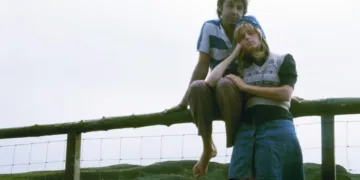
Life on the farm was a deliberate act of disconnection. The film plunges us into this quiet world, a place of muddy boots, overgrown fields, and domestic peace that stood in stark opposition to the psychedelic chaos of the late 60s. The archival footage from this time, much of it feeling like personal home movies, shows a man actively trying to become small again.

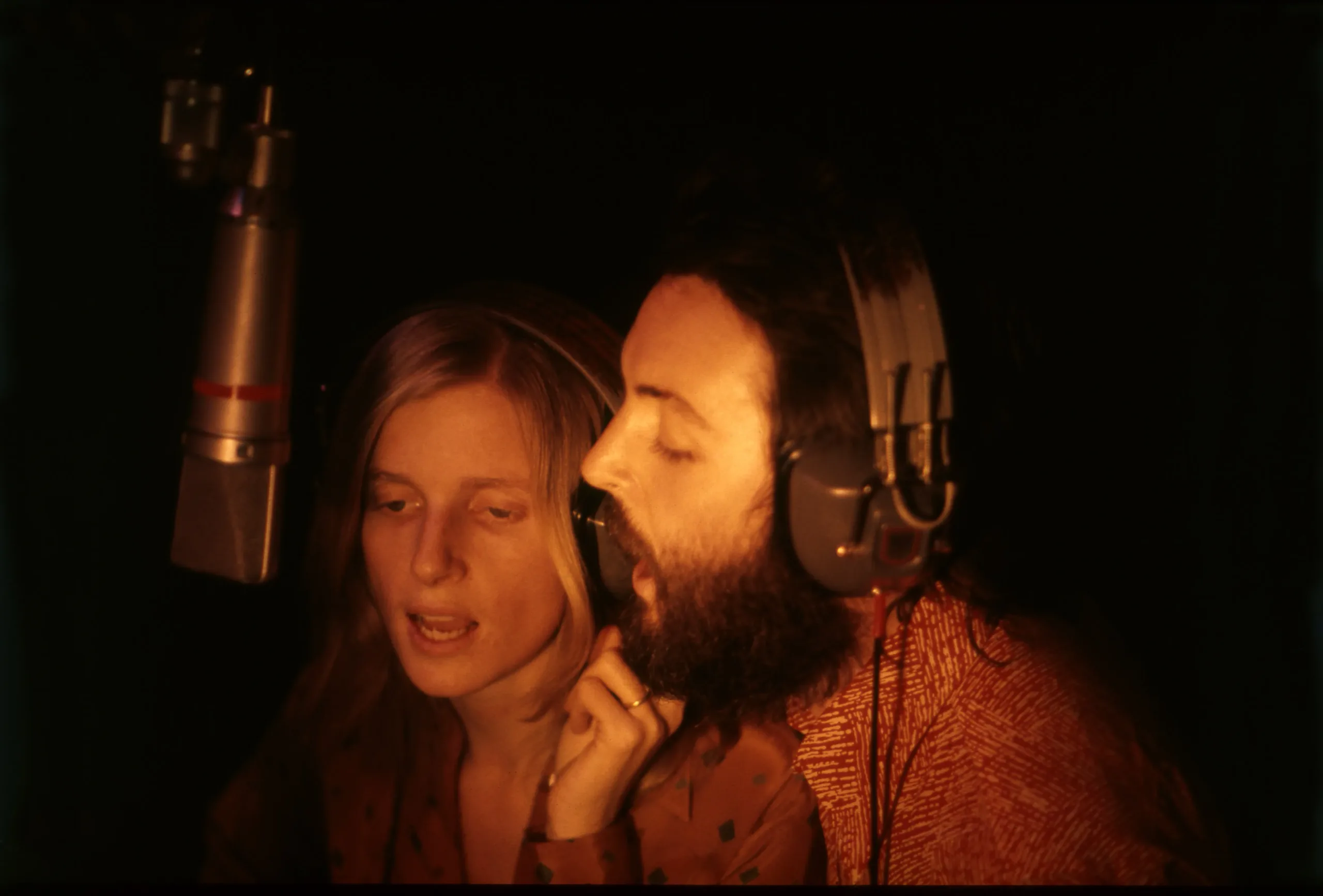
After a brief period lost to scotch and sorrow, he found a path forward with a simple four-track recorder. This tool is key; it was a limitation that fostered immense creativity, forcing him to play every instrument and build songs from the ground up.
The result was ‘Ram’, an album that remains one of the most wonderfully defiant statements by a major artist. It’s a shaggy, deeply eccentric record filled with melodic detours, private jokes, and a love of pure domesticity. At the time, critics found it slight and self-indulgent, a far cry from the grand statements of his former band. Seen today, its influence feels profound.
Its homespun, lo-fi aesthetic and unapologetically personal scope predicted a strain of indie music that was still decades away. This was music made not for the world, but for an audience of three in a Scottish farmhouse. Central to that audience and the music itself was Linda. The film presents her role as essential.
Her lack of musical polish was precisely the point; she brought a raw, human element that grounded Paul’s melodic genius. Her photography does the same for the film’s visual style. The documentary adopts her intimate, candid gaze, finding profundity in unposed moments: a child’s laugh, a shared glance, the quiet work of a family building a life. The film argues this quiet life was the necessary fuel for the noise that was to come.
The Biggest Garage Band in the World
The quiet could only last so long. A performer needs an audience, and McCartney’s solution was Wings, a band conceived from a desire to recapture the simple joy of playing in a room with friends. Man on the Run excels in documenting the group’s wonderfully scrappy origins.
The decision to pile into a van and play surprise gigs at small UK universities feels radical. It was a pre-punk punk move, a deliberate dismantling of rock star mystique from one of the people who invented it. He wasn’t a Beatle anymore; he was just a guy in a band looking for a stage.
Of course, that stage grew quickly. The film traces the band’s evolution from those ramshackle shows to the polished arena rock that made them one of the decade’s biggest acts, powered by hits from the masterful Band on the Run. The documentary intelligently locates the core conflict that defined Wings: the impossible tension between McCartney’s desire for a band of equals and the gravitational pull of his own fame. He could share the microphone, but he could never truly share the spotlight.
This led to a revolving door of musicians, with the film using voiceovers from former members to illustrate the complexities of working in the shadow of a legend. We see McCartney grapple with this, learning to become a “boss” when he really just wanted to be a bandmate.
The whole ten-year project feels like a fascinating, messy, and ultimately successful experiment in navigating an unprecedented creative problem. The end came abruptly after his 1980 arrest in Japan, a bizarre event that forced a moment of reflection and a pivot back to a solo career.
Memory, Edited
What makes Man on the Run so effective is its commitment to its unique storytelling structure. The choice to omit contemporary on-camera interviews and rely wholly on archival footage and present-day voiceovers is a brilliant one. It transforms the film from a standard biography into something more akin to a cinematic memoir.
By refusing to cut away to a modern, 80-year-old McCartney in a studio, the film keeps us completely immersed in the tactile world of the 1970s: the film grain, the fashion, the atmosphere. We are not watching a story about the past; we are in it.
The disembodied voice of modern Paul acts as our guide, a ghost from the future whispering reflections, regrets, and justifications over the images of his younger self. It reminds me of looking through an old family photo album while a relative tells you the stories behind the pictures; the facts are filtered through feeling and the passage of time.
This subjective approach means the film is unabashedly McCartney’s story. It is a work of legacy-building, a controlled narrative that smooths over some of the rougher edges of the decade. The film’s emotional climax, the death of John Lennon, is handled with touching sincerity, emphasizing the comfort McCartney found in their reconciliation just before the tragedy.
Man on the Run successfully repositions the entire decade. It argues that the 70s were not a period of artistic decline, but a vital and artistically rich chapter of personal survival. It was the decade where Paul McCartney, the icon, had to disappear for a while so Paul McCartney, the man, could figure out how to begin again.
The documentary, “Man on the Run,” explores Paul McCartney’s life and career in the 1970s after the Beatles’ breakup. It premiered at the Telluride Film Festival and is scheduled for a theatrical release before becoming available on Prime Video on February 25, 2026.
Full Credits
Director: Morgan Neville
Producers and Executive Producers: Morgan Neville, Chloe Simmons, Meghan Walsh, Scott Rodger, Ben Chappell, Michele Anthony, David Blackman, Caitrin Rogers, Paul McCartney
Cast: Paul McCartney, Linda McCartney, Mick Jagger, Sean Lennon
The Review
Man on the Run
Morgan Neville’s film is less a definitive biography and more a beautifully crafted visual memoir. By using a treasure trove of home movies and photographs, it offers an unusually intimate look at a superstar rebuilding his life from the ground up. While it is McCartney’s carefully told version of the story, the film’s unique narrative style and emotional sincerity make it a captivating and essential reassessment of a misunderstood musical decade. It successfully argues that McCartney’s second act was a quiet triumph of its own.
PROS
- Exceptional use of rare and intimate archival footage.
- Innovative storytelling through its voiceover-led narrative.
- Provides a fresh, compelling perspective on McCartney's post-Beatles career.
- A warm and personal look at the McCartney family dynamic.
CONS
- Presents a controlled, McCartney-approved version of events.
- Tends to gloss over more difficult or controversial subjects.
- The absence of on-camera interviews may feel distancing for some.