




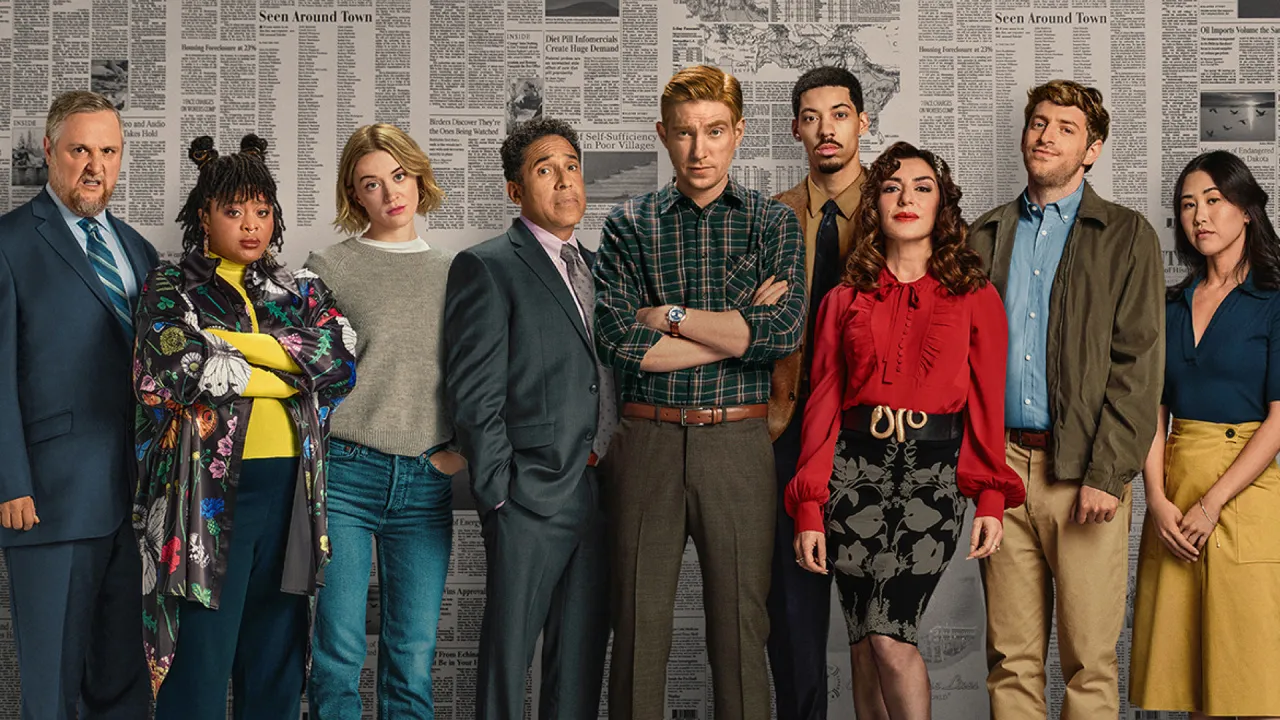

A new workplace comedy set in a local newspaper office in 2025 feels less like satire and more like a historical drama. The Paper, Peacock’s new mockumentary series, leans into this painful reality, finding its comedic pulse in the existential dread of a fading industry.
The show introduces us to the Toledo Truth Teller, a once-venerated institution now relegated to a corner of an office building it shares with a toilet paper company, Softees. This absurd cohabitation, managed by the parent corporation Enervate, perfectly captures the perceived value of local news in the modern age.
Into this environment steps Ned Sampson, the new editor-in-chief, an earnest idealist who believes he can restore the paper’s integrity. His mission to produce quality journalism with zero budget, a skeptical staff, and corporate overlords who see more value in two-ply than in the printed word forms the show’s central conflict. The familiar documentary-style filming captures the daily absurdities and quiet desperation of a team trying to keep democracy’s watchdog from being put down.
The Faces Behind the Byline
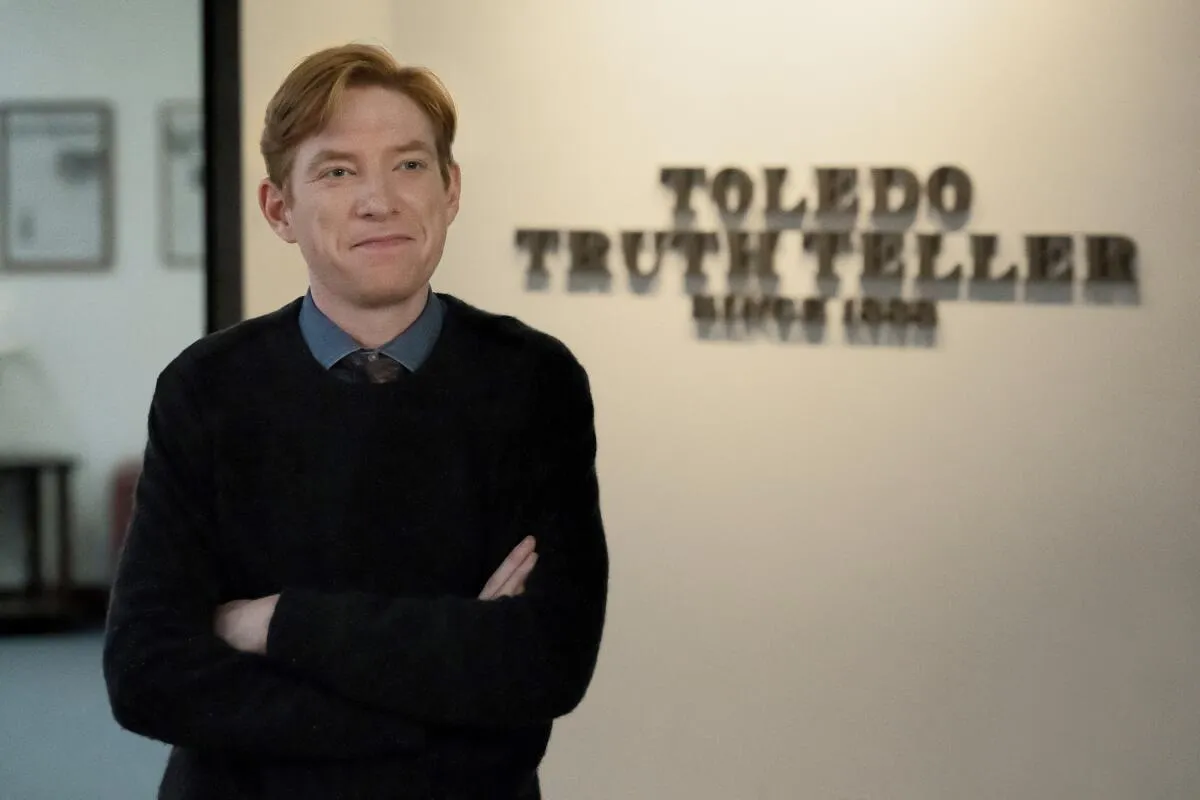
The lasting power of The Paper is secured by its ensemble, a meticulously cast collection of characters who embody the various states of hope, cynicism, and opportunism found in a workplace staring into the abyss. At the show’s moral center is Domhnall Gleeson’s Ned Sampson.
His portrayal of a competent, intelligent leader is a significant subversion of the bumbling boss archetype that has defined the workplace sitcom for decades. He is driven by a deep, almost romantic love for the principles of journalism, a belief system that feels both noble and tragically out of step with the times.
This idealism is not presented as flawless; his occasional descents into unhinged passion, like an intense rivalry with a high school blogger, reveal the immense pressure of trying to uphold standards in a world that rewards mediocrity. He represents a societal yearning for principled leadership, making his small victories feel surprisingly resonant.
Also Read




In stark opposition stands Sabrina Impacciatore’s Esmeralda Grand, the managing editor and a force of pure chaotic energy. Impacciatore’s performance is a masterclass in comedic timing and physicality, creating a character who is a flamboyant, scheming personification of the attention economy.
Esmeralda’s obsession with viral traffic and celebrity clickbait makes her a perfect antagonist for Ned’s traditionalism. She is the human embodiment of a culture where personal brand and engagement metrics have superseded substance.
The show uses her character to critique the rise of influencer logic within established institutions, though it sometimes stumbles near the cliché of a fiery European woman whose English falters for a punchline. Still, her wild ambition makes her one of the most watchable new characters on television.
Caught between these two poles is Mare Pritti, played with sincere exasperation by Chelsea Frei. As one of the few employees with actual reporting experience, a veteran of the Army paper Stars and Stripes, she is the grounded heart of the show.
Her background gives her a unique perspective, having practiced journalism in a highly structured, mission-driven environment, which makes her current disillusionment all the more potent. Frei excels in the quiet, non-verbal reactions to the camera, her expressions often speaking volumes about the absurdity of her situation. Her developing rapport with Ned is built on a foundation of shared professional respect, making their potential personal connection feel earned and refreshingly mature.
The corporate structure is personified by two very different kinds of obstacles. Tim Key’s Ken is an impeccably cringey middle-man from Enervate. He is a British executive whose corporate jargon and tone-deaf attempts at motivational humor are a brilliant satire of a managerial class completely detached from the actual work being done.
He represents the financialization of all things, including truth itself. Then there is Oscar Martinez, with Oscar Nunez reprising his role from The Office. His presence is a complex meta-commentary on television’s current fixation with established IP and nostalgic fan service. His visible annoyance at being filmed again provides a sharp running gag, forcing the audience to consider its own complicity in the franchise-building that defines modern streaming.
The show smartly questions if his inclusion is a clever nod or a creative crutch. The wider staff, including Ramona Young’s deeply resigned circulation manager Nicole and Melvin Gregg’s energetic ad-man Detrick, are recruited into a “volunteer press corps.” This plot point itself is a dark joke about the devaluing of professional labor. Watching accountants like Gbemisola Ikumelo’s Adelola and Alex Edelman’s Adam learn to be reporters questions the very nature of expertise in an age of rampant misinformation.
Democracy Dies in Clickbait
The series locates its sharpest critique in the daily operations of the Truth Teller, turning the mundane struggles of a small newspaper into a microcosm of the global media crisis. The show’s humor is deeply rooted in the grim realities that journalists face every day.

Esmeralda’s relentless push for celebrity listicles and Ken’s corporate mandate to find the paper’s version of “Wordle” are more than just jokes; they represent the industry’s pivot toward gamification and service content as desperate survival tactics.
Ned’s rivalry with a popular high school news blogger is a particularly incisive subplot, exploring the breakdown of journalistic authority and the rise of influencers and citizen journalists as competing sources of information. These plot points create an ongoing, pointed commentary on the difficult balance between ethical standards and the relentless demand for digital engagement to remain solvent.
The narrative frames the staff’s efforts as a classic underdog story. Their bumbling attempts at investigative journalism, whether tackling a potential local cult or an online catfishing scheme, are both hilarious and poignant.
The show taps into the powerful American cultural narrative of plucky individuals saving a failing institution. Yet, it wisely leaves the question open as to whether it is offering a blueprint for realistic hope or merely a comforting fantasy to distract from the bleakness of the real world. This tension gives the comedy a surprising weight.
This approach places The Paper within an emerging and important television trend: the workplace comedy set in a vital, yet systemically underfunded, public-facing profession. Like other recent series focused on public school teachers or hospital staff, the show uses its specific setting to explore widespread societal decay.
This new subgenre functions as a cultural pressure valve, allowing audiences to laugh at the absurdity of systemic failure while simultaneously honoring the dedication of the workers trapped within these broken systems. It is a potent form of social critique cleverly disguised as comfort television. The show suggests that even if an institution is failing, the community and purpose forged inside it can offer a powerful form of resistance.
Old Format, New Headlines
While the mockumentary format is no longer a novelty, The Paper executes it with a precision that reinvigorates its potential. The style creates an intimacy that makes large-scale societal problems feel personal and immediate.
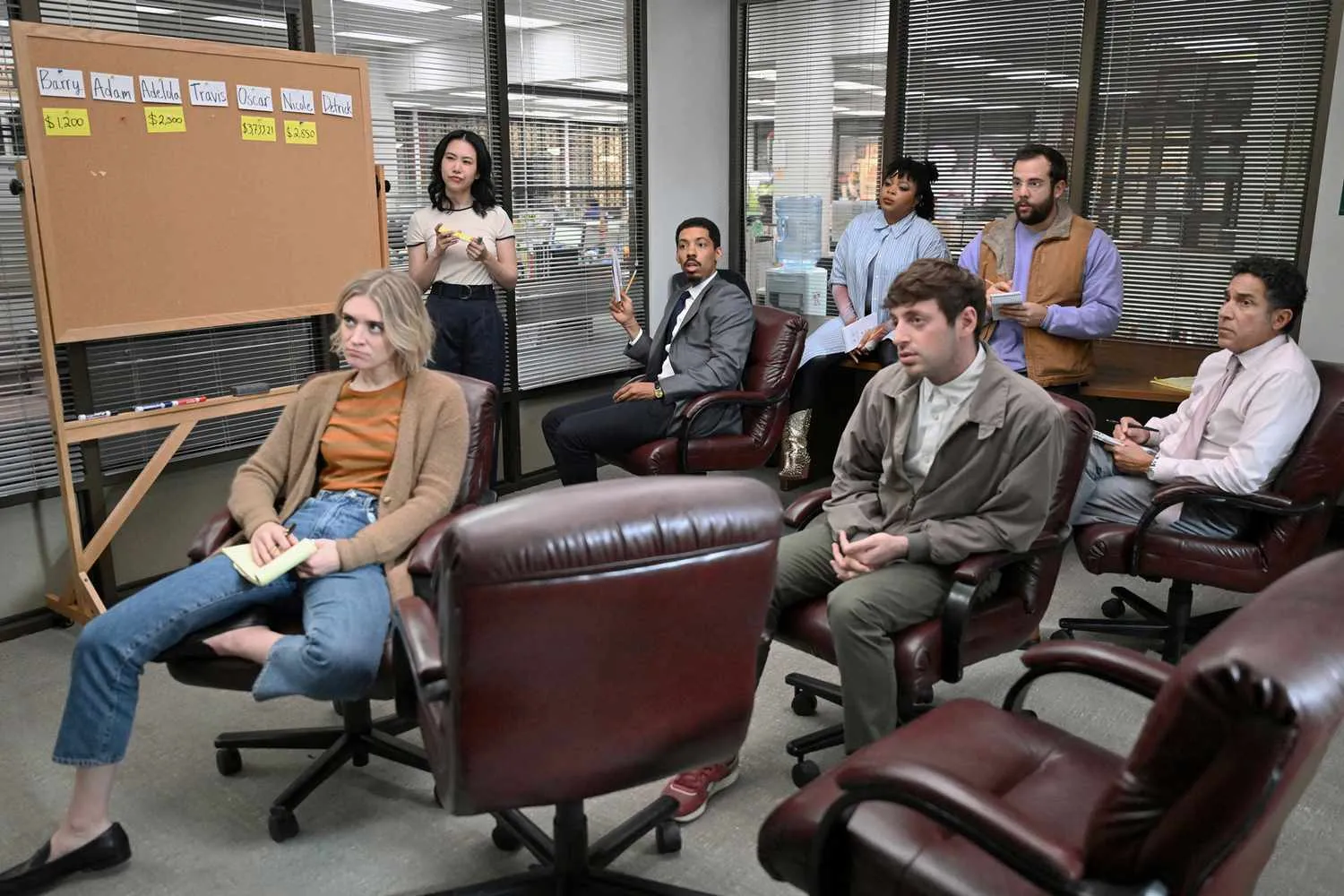
The talking-head interviews function as modern confessionals, a format perfectly suited to a culture where individuals are constantly curating their own narratives for public consumption. The handheld camera style creates a sense of authenticity that effectively grounds the story’s more absurd moments. This aesthetic choice allows for a comedy that is both joke-dense and emotionally resonant, capturing the frantic energy of a newsroom alongside quiet moments of individual contemplation.
The Paper carefully builds upon the legacy of its spiritual predecessor, The Office, employing familiar tropes like burgeoning office romances and a cast of eccentric personalities. The crucial distinction, however, lies in the narrative’s relationship to the work itself. At Dunder Mifflin, the selling of paper was a deliberately mundane backdrop for human comedy.
At the Truth Teller, the fight to produce meaningful journalism is the primary engine of the plot. This gives the series a clear sense of purpose and significantly raises the narrative stakes. A typo on a corporate memo is a low-stakes joke; a factual error in the newspaper could have tangible consequences for the community it serves. This shift elevates the comedic tone from pure absurdity to a sharper, more incisive satire. It reflects a change in audience expectations, showing a demand for comedies that engage more directly with the anxieties of our politically and socially charged era.
Putting the Show to Bed
The first season of The Paper is a resounding success, confidently establishing its world and its singular voice from the very first episode. Its primary strengths are a phenomenal ensemble cast with an immediate and palpable chemistry, and exceptionally sharp writing that consistently balances genuine laughs with emotional depth.
The series distinguishes itself with its courage to tackle a subject that is actively depressing for many people, finding consistent and intelligent humor within the decay. It is a masterful blend of comedy and commentary, offering a funny yet deeply sobering look at the people who have dedicated their lives to a profession on life support.
Looking ahead, the show’s main challenge will be to continue developing its rich bench of supporting characters and to maintain its delicate tonal balance. The central premise, the slow death of a newspaper, risks becoming overwhelmingly bleak if not handled with care. The show’s long-term potential rests on its ability to evolve, finding new ways to explore its themes without losing its comedic edge.
The series feels important. Its critical and likely commercial success could encourage streaming platforms to invest in more comedies that move away from purely escapist fantasies and toward stories grounded in contemporary social and economic anxieties. The Paper has proven that the workplace sitcom can still be a powerful, relevant vehicle for exploring the character of a nation, marking it as a significant and essential new entry in the television landscape.
The Paper is an American mockumentary sitcom that premiered on Peacock on September 4, 2025, with all 10 episodes of the first season released for binge-watching. The series is set in the same universe as The Office, featuring the same fictional documentary crew, but now follows the staff of a struggling local newspaper called The Toledo Truth Teller in Ohio. It is a Peacock Original and has already been renewed for a second season.
Full Credits
Director: Greg Daniels, Michael Koman
Writers: Greg Daniels, Michael Koman, Gbemisola Ikumelo, Alex Edelman, Eric Rahill, Mo Welch
Producers and Executive Producers: Greg Daniels, Michael Koman, Ricky Gervais, Stephen Merchant, Howard Klein, Ben Silverman
Cast: Domhnall Gleeson, Sabrina Impacciatore, Chelsea Frei, Melvin Gregg, Gbemisola Ikumelo, Alex Edelman, Ramona Young, Tim Key, Oscar Nunez, Duane Shepard Sr., Allan Havey, Nate Jackson, Mo Welch, Nancy Lenehan, Molly Ephraim, Tracy Letts
The Review
The Paper
The Paper is a triumph of the modern sitcom, a series that is both painfully funny and culturally necessary. With a brilliant ensemble cast led by Domhnall Gleeson and a scene-stealing Sabrina Impacciatore, the show uses the familiar mockumentary format to tackle the urgent crisis in local journalism. It expertly balances sharp satire with genuine heart, creating a story about the deeply human search for purpose inside a dying industry. This is intelligent, relevant, and essential viewing for our times.
PROS
- An exceptional ensemble cast with outstanding chemistry.
- Sharp, intelligent writing that effectively balances comedy and pathos.
- A timely and socially relevant subject matter that gives the show depth.
- Standout performances, particularly from Sabrina Impacciatore.
- Purposeful and clever use of the mockumentary format.
CONS
- Some supporting characters feel underdeveloped in the first season.
- Occasionally relies on familiar character tropes.
- The inclusion of a legacy character can feel slightly meta-conscious at times.