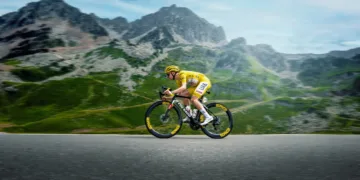















And so, the peloton slows for Tour de France: Unchained, which crosses the finish line for good with its third season. This final outing returns to the familiar churn of the 2024 Tour de France, a three-week agony pageant of screaming legs and shattered ambitions.
The Netflix production machine once again wires the teams for sound, micing up the directeur sportifs in their cramped cars and sitting the riders down for post-race confessionals. The show’s promise remains the same: to slice through the spectacle of whirring helicopters and cheering crowds to find the human machinery underneath.
It documents the tactical chess matches played at 50 kilometers per hour, the private rivalries simmering behind sponsor-friendly smiles, and the sheer physical cost of competing in cycling’s most hallowed event. For one last time, the curtain is pulled back.
Heroes, Villains, and Very Big Bank Accounts
Every sports documentary in the post-Drive to Survive landscape needs a simple, digestible conflict. This season’s engine runs on the oldest one in the book: money. Episode one, unsubtly titled “David and Goliath,” frames the entire 2024 Tour as a “financial arms race.” The opening sequence doesn’t even take place in Europe, instead dropping viewers into a glitzy promotional event atop a skyscraper in Abu Dhabi.
Here, Team UAE Emirates-XRG, backed by a sovereign wealth fund, is presented as an unstoppable force with a budget that dwarfs its rivals. This opulence is sharply contrasted with footage of smaller French teams operating out of comparatively modest compounds. The message is clear before the first pedal stroke: some teams are here to compete, others are just trying to survive.
Team managers like Marc Madiot and Emanuel Hubert are given ample screen time to lament this new reality, with one describing the super-teams as “monsters” changing the sport’s landscape. The narrative spandex is then stretched to fit reality TV archetypes onto the riders, a casting process that feels both deliberate and a little disingenuous.
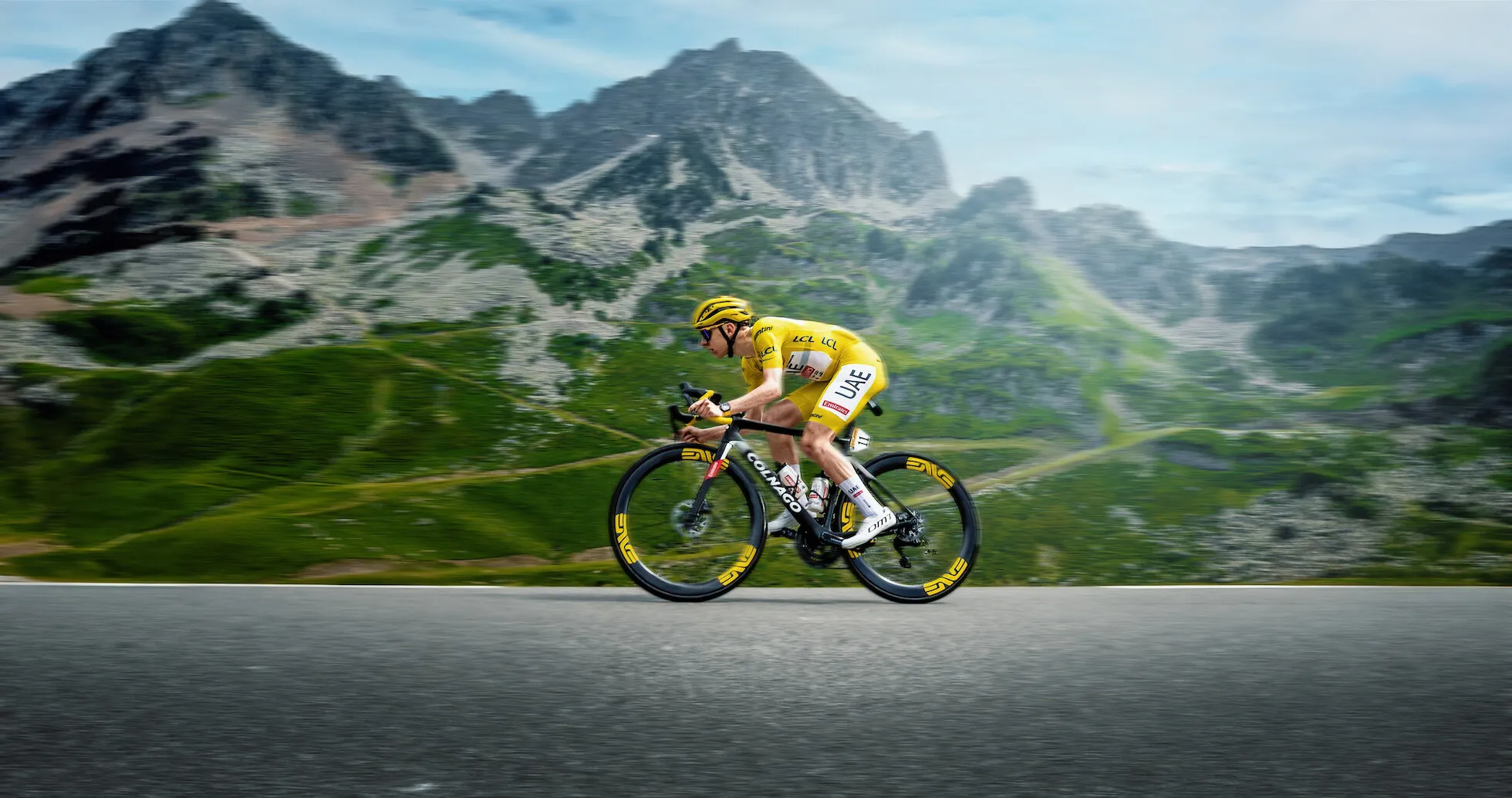
Tadej Pogačar is handed the black hat. The show’s editors surgically craft his villain edit, giving him almost no personal backstory. While other riders get staged conversations over breakfast with their partners, Pogačar’s introduction is a brief, two-minute sequence on his youth career.
His on-camera interviews are consistently short, almost lethargic, and cut to make him seem arrogant and detached. His dominant performance is framed not as athletic brilliance but as the cold execution of a cycling cyborg. This culminates in the now-famous clip where he turns to the camera and says, “Let’s fuck things up,” a line delivered with such chilly confidence it feels scripted for a Bond villain.
In the opposite corner is Jonas Vingegaard, presented as the vulnerable, human champion. His arc is defined by a horrific crash months before the Tour. The cameras capture his raw, tearful recollection of the event and his candid admission that he lacked the strength to challenge Pogačar in the final mountain stages. This warmth is buttressed by sweet moments with his wife Trine and teammates.
The manufactured rivalry reaches a peak on the gravel of Stage 9, where Vingegaard refuses to help pace a breakaway, earning an audible “fuck you” from Pogačar. The rest of the field is cast in supporting roles. Remco Evenepoel is “a perfectly cut missile,” the Belgian wunderkind suffocating under a nation’s expectations.
Primož Roglič, now with a high-powered Red Bull sponsorship, plays the affable, joke-cracking veteran whose humor masks the immense pressure he faces, making his eventual abandonment feel like a tragicomic exit.
Stories from the Middle of the Pack
The show finds its best rhythm when it escapes the gravitational pull of the yellow jersey. Its most effective, memorable moments are the human-interest detours that explore life outside the rarefied air of the general classification contenders. Episode four, titled “Road to Hell,” is a standout, a beautifully constructed piece of storytelling centering on Anthony Turgis of TotalEnergies.
The cameras visit him at his family home in rural France, showing him cooking crêpes with his parents. In this quiet domestic setting, we learn of the family’s history with cardiovascular problems, a condition that ended the promising careers of his brothers.
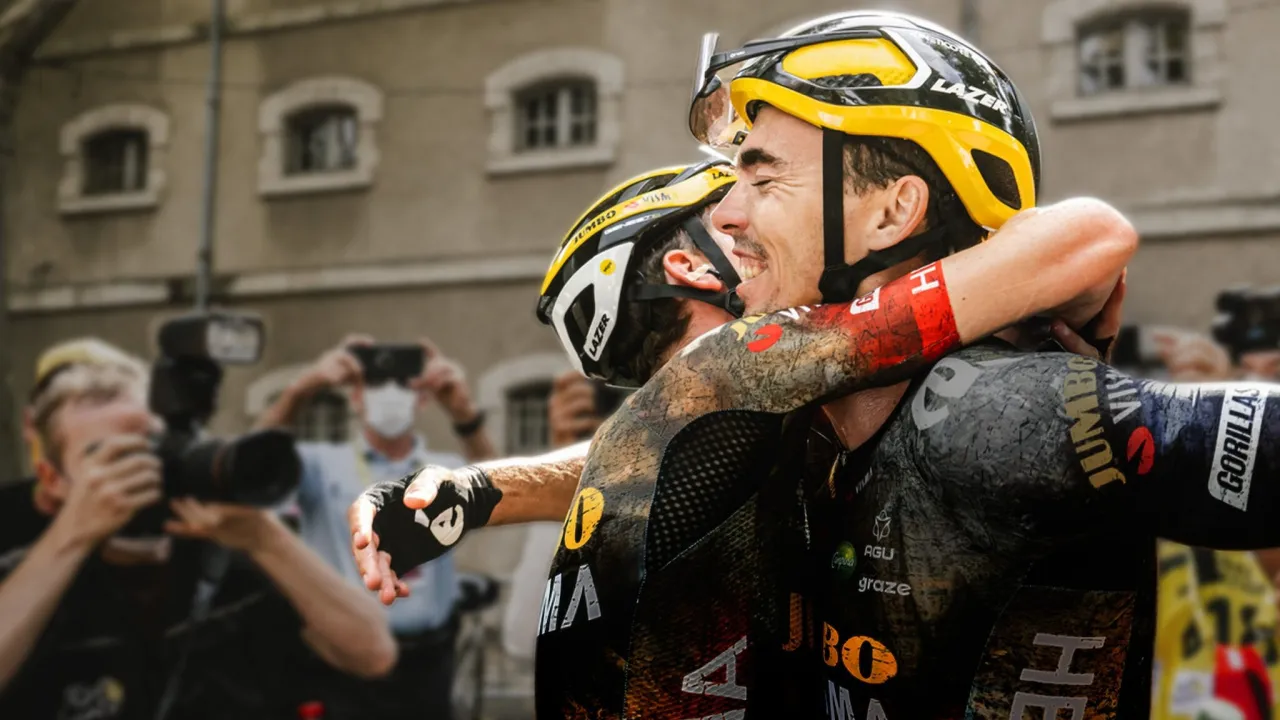
This poignant backstory gives his eventual victory on the treacherous gravel stage an immense emotional weight. The editing captures the “complete wave of euphoria” in the team car and the tearful celebration between the Turgis brothers, a moment of pure sporting joy that feels completely authentic. This is the kind of narrative that justifies the entire series.
The series also succeeds when it examines the precarious business of professional cycling. Episode three, “Adapt or Die,” follows the internal culture clash at the Decathlon-AG2R team. New CEO Dominique Seriyes, an outsider from motorsport and rugby, arrives with a corporate mentality that immediately grates against the team’s established “family spirit.”
The tension is palpable in sharp debates around the dinner table, culminating in the brutal removal of team founder Vincent Lavenu after a 30-year stint. It’s a compelling look at the modernization of the sport.
Another episode gives a rare glimpse of sponsor anxiety, showing EF Education-EasyPost’s manager Jonathan Vaughters in a “crisis meeting” where the need for a stage win is linked directly to job security. “If [Carapaz] doesn’t perform,” Vaughters says gravely, “this could be bad news for a lot of people.
They could lose their jobs.” Similarly affecting is the honest portrayal of Irish sprinter Sam Bennett, who admits that “cycling has an incredible way of humbling you” as he discusses his poor results and the souring team atmosphere. His story, which includes a visceral on-air vomiting scene, powerfully conveys the physical and mental toll of competing at this level.
Running Out of Road
A documentary is always at the mercy of its subject. When the 2024 Tour’s main storyline fizzled, so did the show’s dramatic tension. The narrative architecture, built around a “big four” rivalry, collapses midway through the season with Primož Roglič’s abandonment.
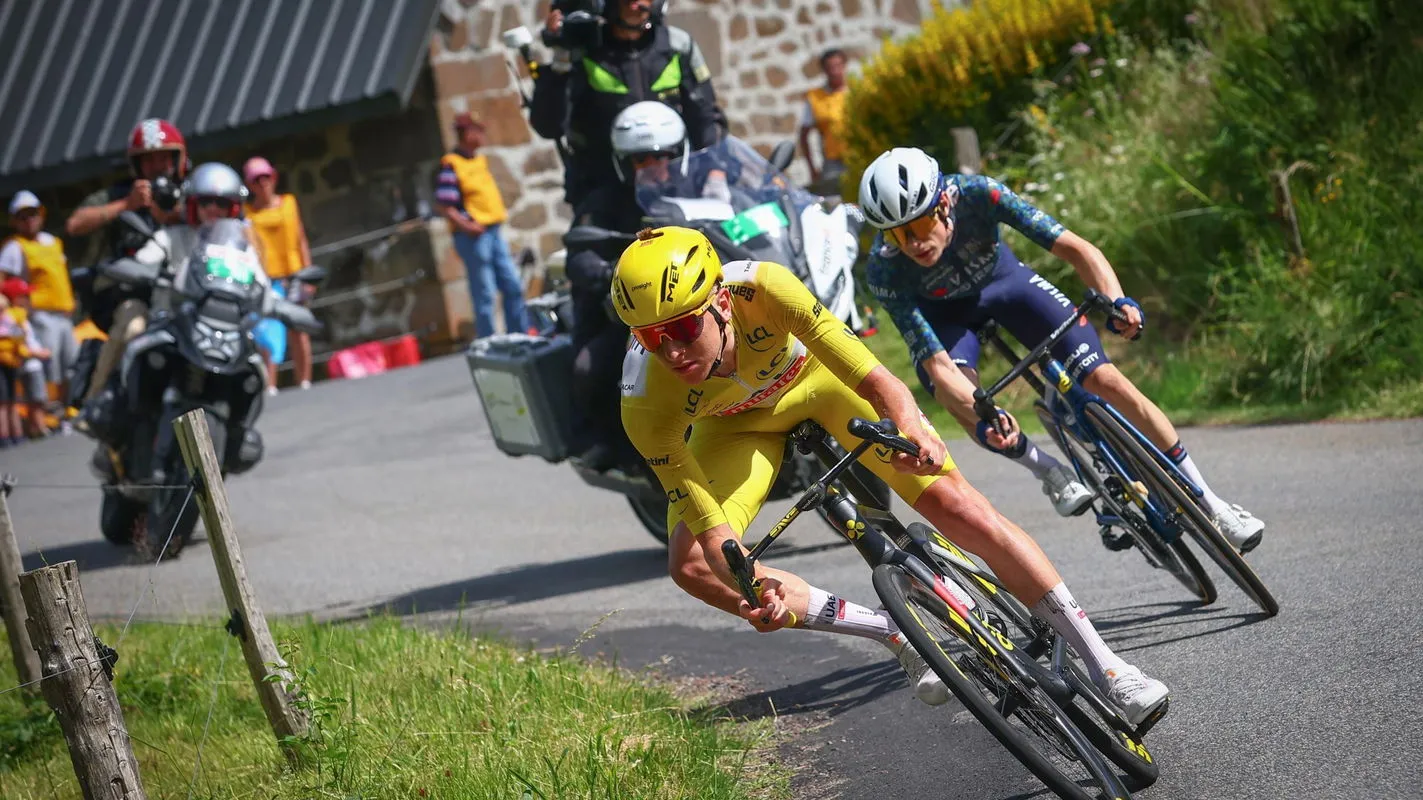
As Tadej Pogačar’s dominance in the mountains became a mathematical certainty, the producers seemed to pivot in desperation, focusing more on Vingegaard’s personal struggle for second place than the actual race leader. The storytelling grows stagnant. Pogačar’s final, career-defining victory in Nice, the entire point of the race, is treated almost as an afterthought.
It receives a cursory montage and a brief 20-second interview with his team boss, a baffling editorial choice that robs the season of any meaningful climax. The final episode is a genuine dampener, a 40-minute shrug where even the editors seem to be just waiting for it to be over.
This narrative failure exposes the creaking framework of the production itself. The show feels tired, relying on the same editing patterns and narrative shortcuts that felt fresh two years ago. The “rider at home in a lush Mediterranean locale” sequence appears so often it becomes a cliché. The attempt to paint elite athletes as simple heroes or pantomime villains feels more forced, a sign that the formula has been exhausted.
By reducing complex personalities into easily digestible caricatures, the show flattens the very sport it claims to celebrate. Pogačar becomes a brat; Roglič a “deluded buffoon.” The third season’s lack of impact suggests it was the right time to end the series.
In a final moment of irony, the last word is given to Mark Cavendish, who offers a beautiful, heartfelt tribute to Pogačar’s talent. It is a moment of genuine sportsmanship that feels completely at odds with the manufactured villain narrative the show spent eight episodes building. The series didn’t crash; it just ran out of road.
Tour de France: Unchained Season 3, an eight-episode sports docudrama following the 2024 Tour de France, premiered globally on Netflix on July 2, 2025. Produced by Box to Box Films and Quad, the series was announced to be the final season and focuses on the rivalry between top riders and the challenges faced by various teams. All episodes of the final season are currently available to watch exclusively on Netflix.
Full Credits
Director: Yann L’Hénoret
Producers and Executive Producers: James Gay-Rees, Paul Martin, Amelia Hann, Yann Le Bourbouach, Matt Aikens, Charles Besnard, Roeland Doust, Debora Setnik
Cast: Tadej Pogačar, Jonas Vingegaard, Remco Evenepoel, Primož Roglič, Mark Cavendish, Biniam Girmay, Jasper Philipsen, Tom Pidcock, Richard Carapaz, Felix Gall
Editors: Franco Bogino, Luca Salvatori, Charlie Webb
Composer: Si Begg
The Review
Tour de France: Unchained Season 3
Tour de France: Unchained coasts to a finish with a season that shines when it spotlights individual human drama and the gritty business of the sport. The show falters when its main GC narrative runs out of competitive tension, relying on a tired production formula and simplistic character edits that flatten the real story. It offers moments of genuine heart, yet the series as a whole feels like a breakaway that has been caught just before the line.
PROS
- Offers a powerful look at lesser-known rider stories and their personal struggles.
- Provides a rare, transparent view of team management politics and sponsor pressures.
- High-quality production gives viewers intimate access to the race.
CONS
- The main narrative collapses when the real-life race becomes one-sided.
- Relies on repetitive story structures and a formulaic editing style.
- Character portrayals of top riders feel manufactured and one-dimensional.
- The final episode and conclusion of the GC battle are anticlimactic.