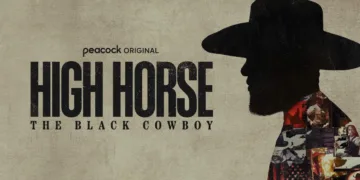

























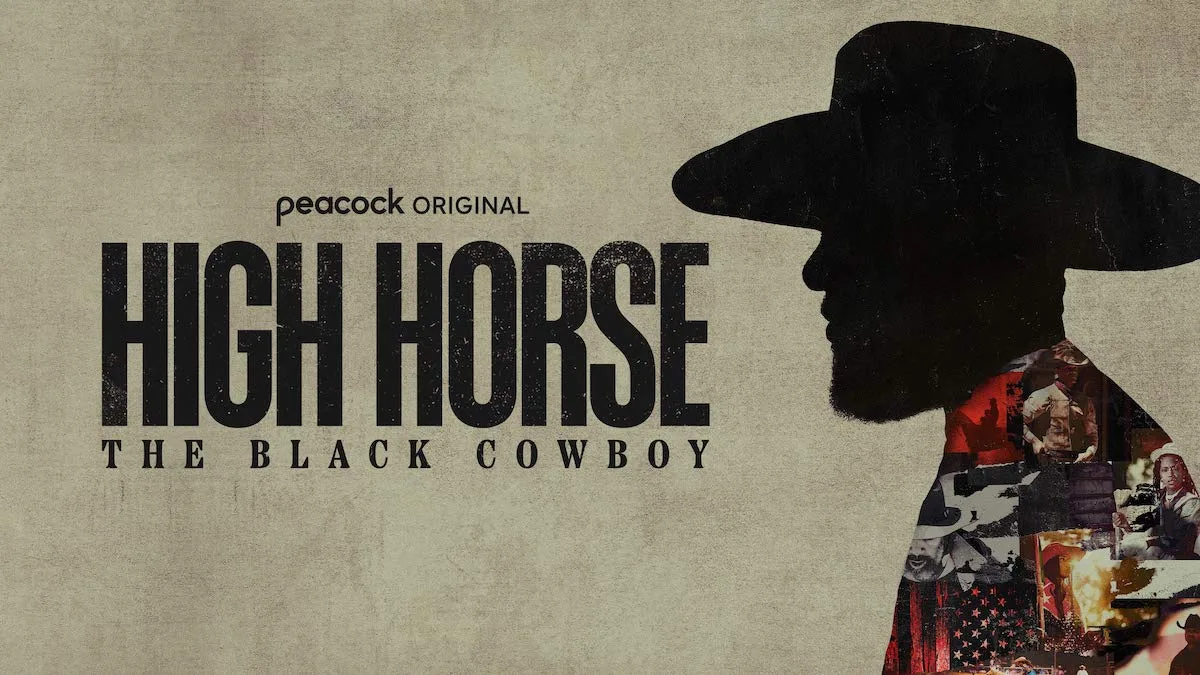

When the American West is discussed in popular culture, the conversation is shaped by myths assembled from early films and sepia photographs. The cowboy has become an emblem of rugged independence and frontier mythmaking. High Horse: The Black Cowboy, a three-part docuseries on Peacock, challenges that received image. Directed by Jason Perez with Jordan Peele credited as an executive producer, the series makes the case for correcting a long-standing omission in cultural memory.
The Black cowboy is presented throughout as a central actor in westward expansion and the cattle economy; the series cites historical evidence that African Americans made up a significant portion of cowhands. That erasure is positioned as a mirror of wider exclusions within the national story.
Iconography and Erasure in Mass Media
The opening episode examines how popular culture displaces historical realities through language and image. The episode traces the symbolic theft that reshaped public understanding of who worked the range. Rapper Bun B contributes an important linguistic observation, noting that “cowhand” was often applied to white workers while the label “cowboy” was frequently used for Black workers with a belittling undertone. The program argues that mass media then reclaimed the “cowboy” label and converted it into a predominantly white icon. Examples discussed include advertising campaigns such as the Marlboro Man and the persistent fame of the Lone Ranger figure.
The series presents the replacement of verifiable Black history by fictional white heroes as a concrete mechanism of cultural omission. It profiles Bass Reeves, identified here as the first Black Deputy U.S. Marshal west of the Mississippi. The docuseries summarizes Reeves’s record: more than 3,000 arrests, a reported 14 men killed in self-defense, and a career without sustaining a gunshot wound. The narrative places Reeves among the figures cited as inspiration for the Lone Ranger, and treats that connection as evidence of deliberate whitewashing in popular narrative.
Jordan Peele appears and relates this pattern of distortion to his own creative concerns, including references to his film Nope. He draws attention to early cinematic history, pointing out that the earliest surviving motion picture footage is a two-second shot of an unnamed Black jockey riding a horse. That anonymous rider is framed in the series as an unsettling example of a pioneering presence rendered invisible by subsequent storytelling.
Visually the first chapter adopts a lively approach. Interviews range across academics, journalists, artists (including Beyoncé’s mother), and contemporary riders. The series intersperses these conversations with historical reenactments shot with cinematic attention. That mixture of evidence and staged depiction keeps the historical argument clear and approachable for a streaming audience. The episode functions as a corrective narrative that invites viewers to reassess familiar images of the West.
Land, Legacy, and the “Take-Back Era”
Subsequent episodes broaden the inquiry from symbolic representation to material consequences. Episode Two, titled “Land,” draws connections between cultural erasure and the dispossession of Black people from Western space and economic opportunity. The episode moves the focus from representation to policy and property.
The series surveys organized efforts to remove Black presence from Western landscapes. It refers to the Tulsa Massacre as a well-documented instance and brings attention to Black towns in Oklahoma, including Boley, which served as expressions of Black self-determination. These historical touchpoints are placed alongside present-day struggles. The documentary highlights Black farmers working to preserve ancestral land, centering the advocacy of John Boyd Jr. and the National Black Farmers Association. It also follows the Mallery family, Colorado ranchers whose legal and personal fight for land and heritage illustrates ongoing economic pressure on Black landholders.
The final chapter introduces what the series terms the “Take-Back Era,” documenting contemporary strategies to reassert Black influence in Western culture. This contemporary movement appears across artistic practice and commercial activity. The program surveys the history of country music, arguing that Black contributions to the genre were appropriated and later sanitized for mass white audiences. A racehorse named Black Lives Matter is shown as a symbolic convergence of lineage, sport, and current social debate.
The docuseries underscores the ongoing, living presence of Black Western practice. It profiles groups such as the Compton Cowboys, who connect inner-city youth to historical horse culture, and the Ebony Horsewoman in Hartford, which provides programs to educate Black youth about Western heritage. These segments present communal efforts to restore historical knowledge and build practical ties to that legacy. The series presents the Western tradition as an active field of cultural contestation and recovery, and it frames contemporary reclamation as an ongoing social conversation that requires continual attention.
Pacing, Presentation, and Future Impact
High Horse is organized into three concise episodes, a structure that makes its central argument readily absorbable. Each episode runs just over forty minutes, which produces a focused, easily digestible presentation for viewers new to the topic. That economy of form also creates a formal constraint.
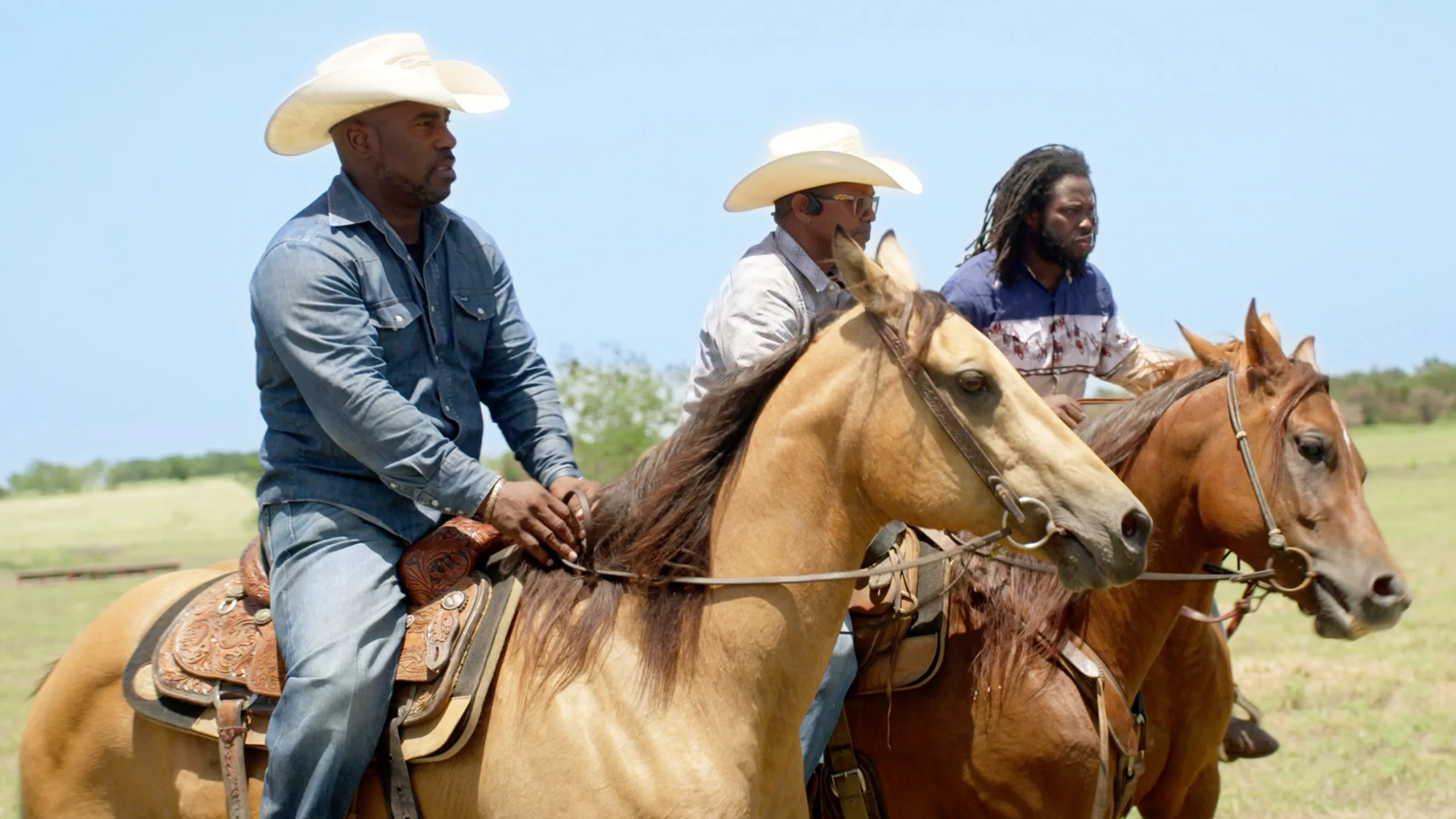
The need to cover a broad range of subjects, including frontier woman Stagecoach Mary, barrel racing champion Paris Wilburd, and the Mallery family, means some segments receive limited development. The series frequently introduces compelling individuals and then moves on, leaving several stories less explored than they deserve.
The series does not claim to be the sole source for this history. Recent titles such as Lawmen: Bass Reeves and The Harder They Fall show that related stories are appearing elsewhere. High Horse’s primary value lies in arranging dispersed historical material into a coherent narrative for a streaming audience. It links archival evidence to contemporary inequality and presents those links through animated visuals and compelling interview subjects. The program resists purely academic presentation by pairing research with strong imagery and charismatic testimony.
High Horse: The Black Cowboy submits a cultural argument about recognition and presence. It encourages viewers to question inherited images that shape national memory and to pursue further study of the subject. The series operates as a public prompt to broaden awareness of historical actors and to examine how representation affects contemporary social patterns.
High Horse: The Black Cowboy premiered on the streaming platform Peacock on Thursday, November 20, 2025. This three-part docuseries, executive produced by Jordan Peele’s Monkeypaw Productions, challenges the long-standing whitewashed mythology of the American West. It reveals the central, often erased history of Black cowboys, cowgirls, farmers, and jockeys who were integral to shaping the American frontier. The series uses a combination of archival footage, historical photography, and new interviews with historians, artists, and contemporary figures to set the record straight. All three episodes are currently available for streaming exclusively on Peacock.
Full Credits
Title: High Horse: The Black Cowboy
Distributor: Peacock
Release date: Thursday, November 20, 2025
Rating: TV-MA
Running time: 3 episodes, approximately 40 minutes each
Director: Jason Perez
Writers: Jason Perez
Producers and Executive Producers: Jordan Peele, Win Rosenfeld, Keisha Senter, Jamal Watson, Mari Keiko Gonzalez, Liz Yale Marsh, Kadine Anckle, Tom Casciato, Sacha Jenkins, Keith McQuirter
Cast: Jordan Peele, Bun B, Blanco Brown, Pam Grier, Lori Harvey, INK, Tina Knowles, Rick Ross, Glynn Turman, Lynae Vanee, The Compton Cowboys
Composer: Raphael Saadiq
The Review
High Horse: The Black Cowboy
High Horse: The Black Cowboy is a vital, accessible docuseries that powerfully synthesizes a history of cultural and economic erasure. While the three-part format necessitates speed, often limiting the depth of individual stories, the series excels in presenting a cohesive argument about the origins of the cowboy myth and its ongoing relevance to social justice. It is an essential watch, serving as a dynamic and necessary catalyst for recalibrating America's self-image.
PROS
- Provides a concise, easily digestible overview of complex history.
- Clearly connects historical cultural erasure to modern land rights and economic struggles.
- Dynamic historical reenactments and engaging use of contemporary interviews.
- Essential for understanding ongoing discussions about representation in media and national identity.
CONS
- The three-part structure leads to superficial coverage of several important figures and stories.
- Covers too much ground too quickly, resulting in an uneven pace.
- Much of the history covered has been addressed in recent media (though its synthesis is new).