
















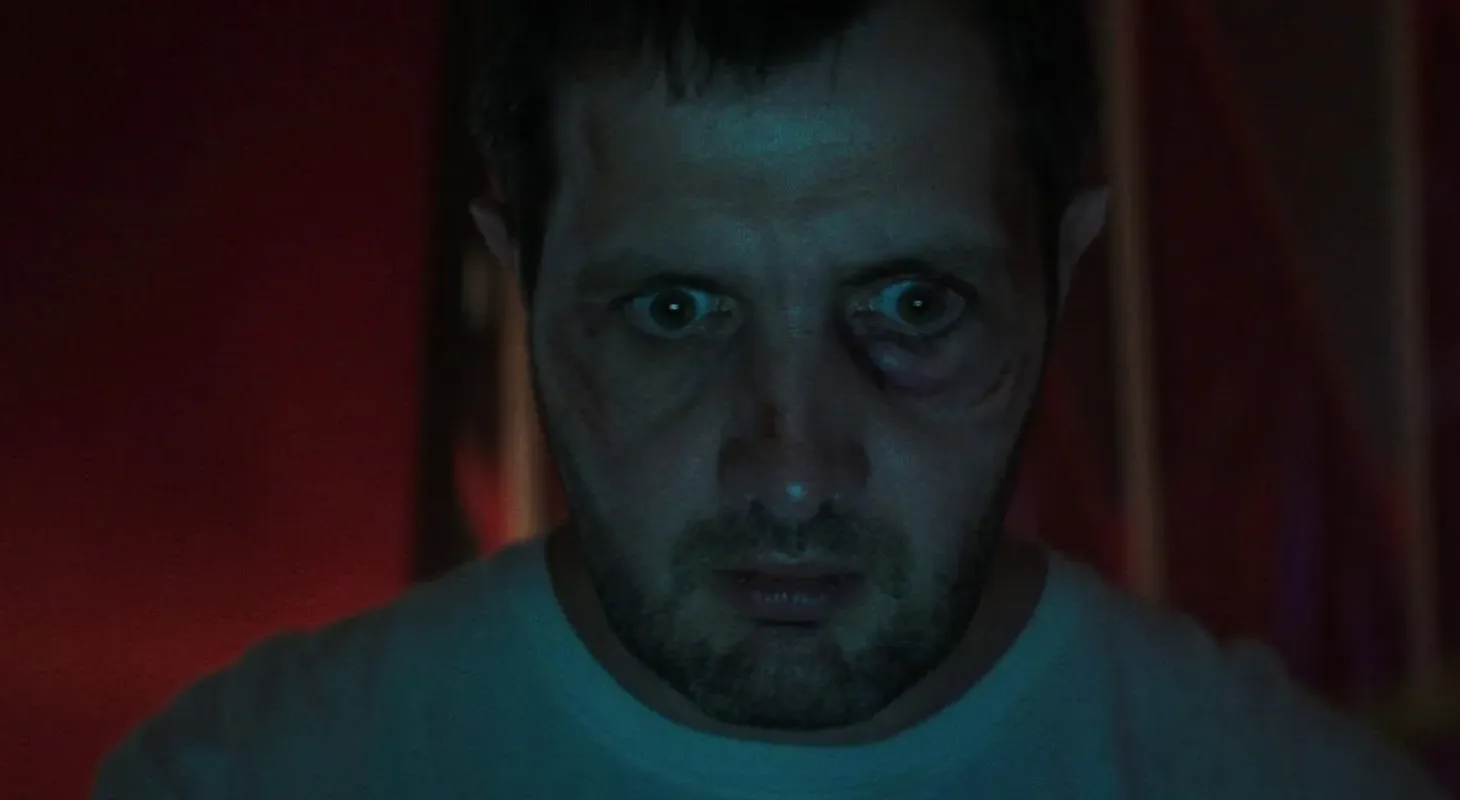

Stéphan Castang’s feature debut, Vincent Must Die, plays like a precise and unnerving thought experiment, pitched where absurdist black comedy meets bodily fear. The film follows Vincent (Karim Leklou), a graphic designer whose life carries the muted tone of an unused office cubicle. The calm snaps when an intern attacks him, then a colleague follows with the same glassy, homicidal stare. The shock comes from their brutality and their utter lack of provocation.
No motive appears, only an event that empties the ordinary of its safety. The world, seen through other people’s eyes, treats the anonymous self as an enemy. A rule asserts itself with terrifying simplicity: eye contact triggers murder. Vincent becomes a designated victim inside a reality that tilts without explanation. Everyday social anxiety takes on fangs, and the film studies how fear multiplies when the gaze of others turns into a weapon.
Allegory of a Fractured Society
The affliction spills past office walls and finds strangers, neighbors, even children. Vincent withdraws into isolation, a practical shield against the gaze. The film’s humor darkens in step with the terror. HR suggests fault belongs to him, and the police try to mediate assaults through procedure. Institutions recite their scripts, which leaves Vincent more alone.
He seeks a rural cabin, yet the contagion proves omnipresent. A meeting with Joachim, another afflicted man, confirms the scale of the crisis and clarifies the eye contact trigger. Word of an online group called The Sentinel shifts the story from a tightly framed character study to a survival tale with a widening perimeter. The film reads like a parable of present-day malaise: hostility spreads with speed, reason thins, and the social contract feels brittle.
The logic of online hatred becomes a physical force, ruthless and contagious. The idea lands with grim clarity. Microaggression turns material, visible, and fatal. Philosophy whispers at the edges: if the gaze can kill, what remains of the self that only exists through others? Vincent learns to pass like a ghost among the living, hiding from an universal stimulus that asks nothing and takes everything.
The Architecture of Trust and Desire
Margaux (Vimala Pons), a waitress, enters as a necessary counterweight. She shares Vincent’s outsider energy and proves immune to his condition. Their bond begins in a supermarket car park, where he stages a desperate, almost comic demonstration of his reality, and she accepts it.
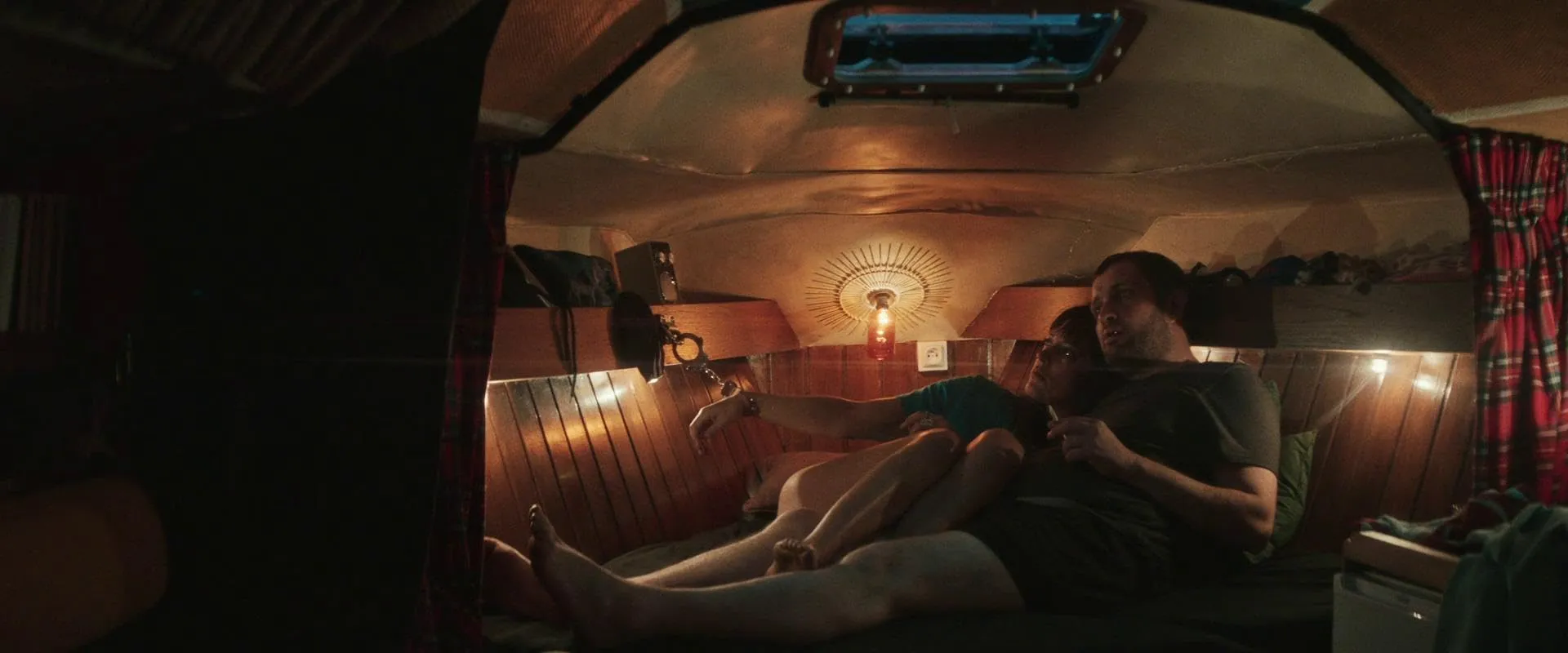
A question echoes through their scenes: why does she remain safe? Intimacy requires odd rituals and careful choreography. They plan every touch. They rehearse every look that cannot happen. Handcuffs or blindfolds turn into household tools, precaution standing in for faith. The romance deepens the film’s pulse. Love becomes an experiment in attention and harm, a study of how two people hold each other while living beside a trigger that can erase them in an instant.
Margaux embodies a possibility Vincent cannot explain, and that gap makes their tenderness tremble. Each quiet exchange carries suspense. Each kiss courts a rule written by the crowd’s eyes. The film shapes a fragile sanctuary within a world organized for panic, and it asks whether trust can outlast a condition that converts recognition into violence.
Performance, Tonality, and Aesthetic
Stéphan Castang conducts a careful tonal design, moving with control among shocking violence, tentative romance, and deadpan absurdity. Karim Leklou grounds the film. He plays Vincent as an empathetic underdog, a man whose plainness turns him into a surface for mass, irrational hatred.
His weary face and searching eyes call up immediate pity. Castang’s staging sharpens the action, with sudden, jarring bursts of violence that punctuate quieter, reflective passages. The pace stays taut, even as the running time stretches a touch beyond typical genre briskness. That extra span earns its keep by giving Vincent and Margaux’s connection room to breathe.
The mood feels crisp and current, and a pacy French electro-cool score keeps the paranoia alive. The result binds performance and direction into a unified strain of anxiety and tenderness. Leklou’s vulnerability meets Castang’s precision, and the film holds attention as it asks hard questions about the gaze, the crowd, and the private wish to be seen without being destroyed.
The movie Vincent Must Die (Original title: Vincent doit mourir) is a 2023 French-Belgian satirical black comedy thriller that explores a bizarre pandemic of violence. When the ordinary graphic designer Vincent suddenly becomes the target of lethal, unprovoked attacks from strangers after they make eye contact, his life is instantly shattered, forcing him to flee society and struggle for survival. The film premiered at the 2023 Cannes Film Festival in the Critics’ Week program on May 19, 2023, and was released theatrically in France on November 15, 2023, distributed by Capricci Films. It is a feature-length debut for director Stéphan Castang.
Credits
Title: Vincent Must Die
Distributor: Capricci Films, XYZ Films
Release date: May 19, 2023 (Cannes Premiere), November 15, 2023 (France)
Running time: 108 minutes, 1 hour 48 minutes
Director: Stéphan Castang
Writers: Mathieu Naert, Stéphan Castang, Dominique Baumard
Producers and Executive Producers: Claire Bonnefoy, Thierry Lounas
Cast: Karim Leklou, Vimala Pons, François Chattot, Michaël Perez, Jean-Rémi Chaize, Ulysse Genevrey, Karoline Rose Sun, Emmanuel Vérité
Director of Photography (Cinematographer): Manuel Dacosse
Editors: Méloé Poillevé
Composer: John Kaced
The Review
Vincent Must Die
Vincent Must Die brilliantly weaponizes social anxiety, transforming the fear of the public gaze into physical catastrophe. Castang's debut is a taut, insightful genre-bender, expertly utilizing Karim Leklou’s understated performance to anchor its existential absurdism. The film excels as both a frenetic survival thriller and a compelling allegory for modern alienation, finding unexpected human connection amidst societal collapse. It is a necessary, darkly funny look at the devastating cost of being visible.
PROS
- Transforms the fear of social judgment into literal, physical violence.
- Expertly grounds the absurdism with pathos and empathy.
- Successfully fuses dark comedy, survival horror, and intimate romance.
- Effective critique of modern societal rage and isolation.
- Maintains high tension and features impactful action sequences.
CONS
- The film feels slightly stretched beyond its core concept at times.
- The story sacrifices some of its initial profound abstraction to become a more conventional survival thriller in its later stages.