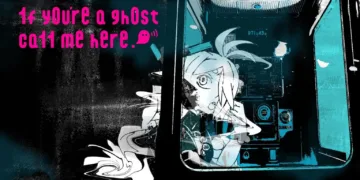



















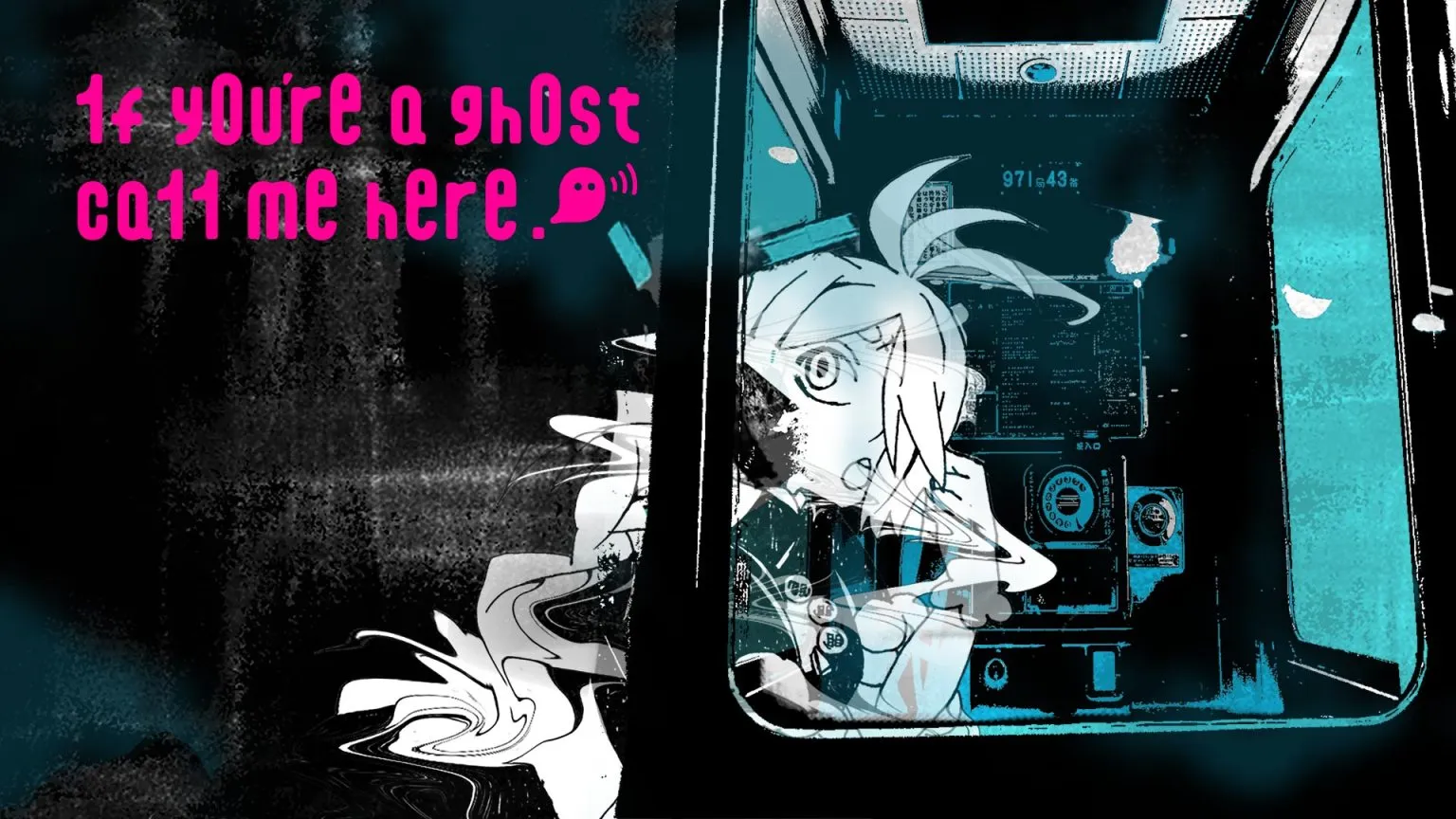

{{1f y0u’re a gh0st ca11 me here!}} from Furoshiki Lab. and publisher KEMCO frames a visual novel around an inventive call center afterlife. The usual scythe-and-robes idea gives way to salaried gr1ms who manage the newly dead through a high-pressure switchboard. The premise builds an off-kilter, Burton-esque parallel world that reads as both comic and macabre.
You play Vanitas Vanitatum, a former maid starting as a trainee call operator. The structure runs on a six-day loop that pairs long reading stretches with short, nerve-spiking interactive shifts, shaping a visual novel anchored by time management. The system functions like an emergency dispatch line for the recently deceased, and that foundation powers the hook from the first shift to the last.
The Anatomy of Panic: Mechanics and Consequence
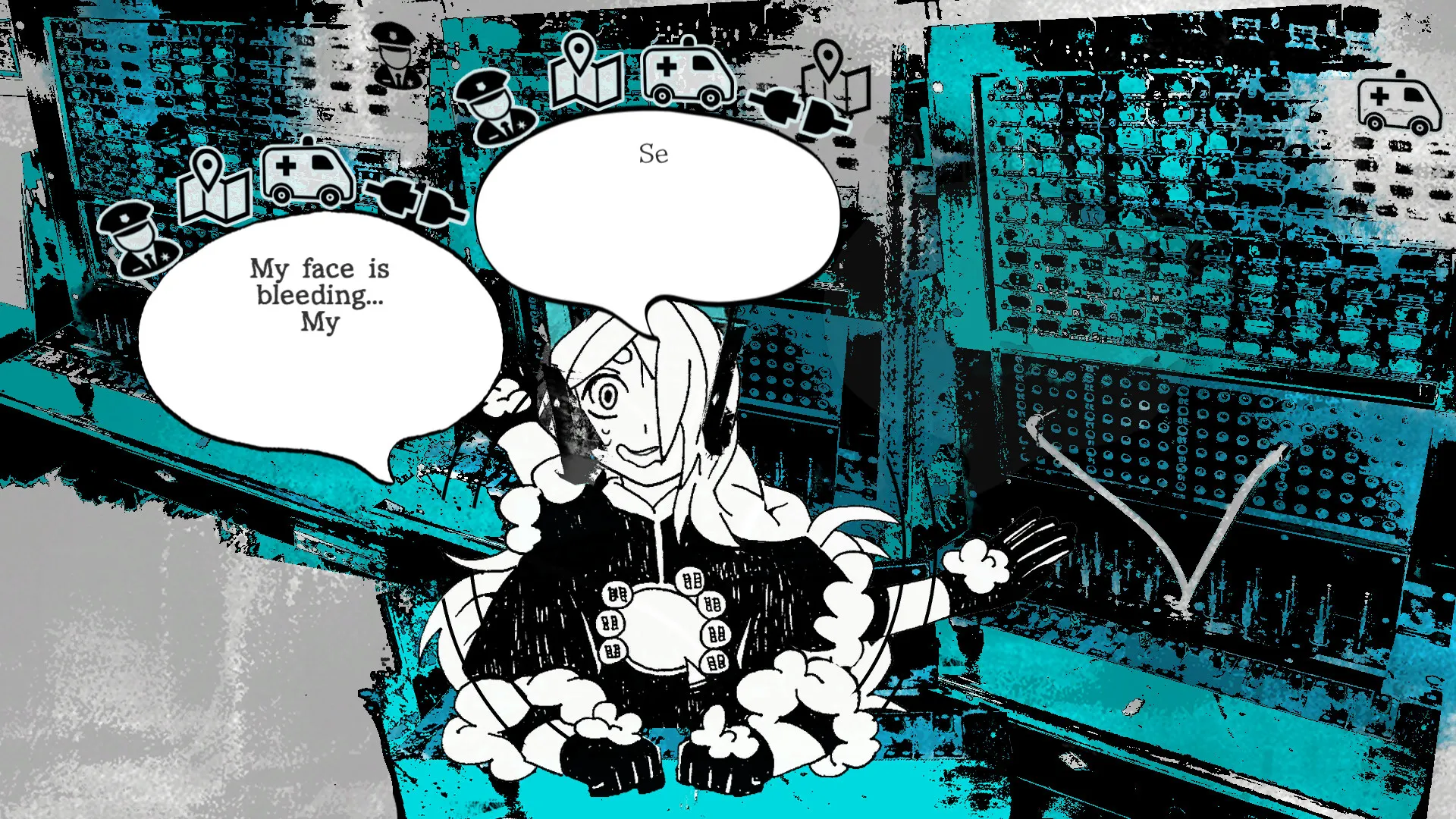
The core interaction links input speed, text parsing, and story access in a tight loop. As Vanitas, you sit at a switchboard while multiple deceased callers ring in at once. Each caller pushes a fast-scrolling text bubble across the screen. You get five seconds to scan, parse, and route the soul to the proper line: SOS (Ambulance) for pain, Lost (Map) for disorientation, Police (Cop) for exorcism threats, or Disconnected for a human caller.
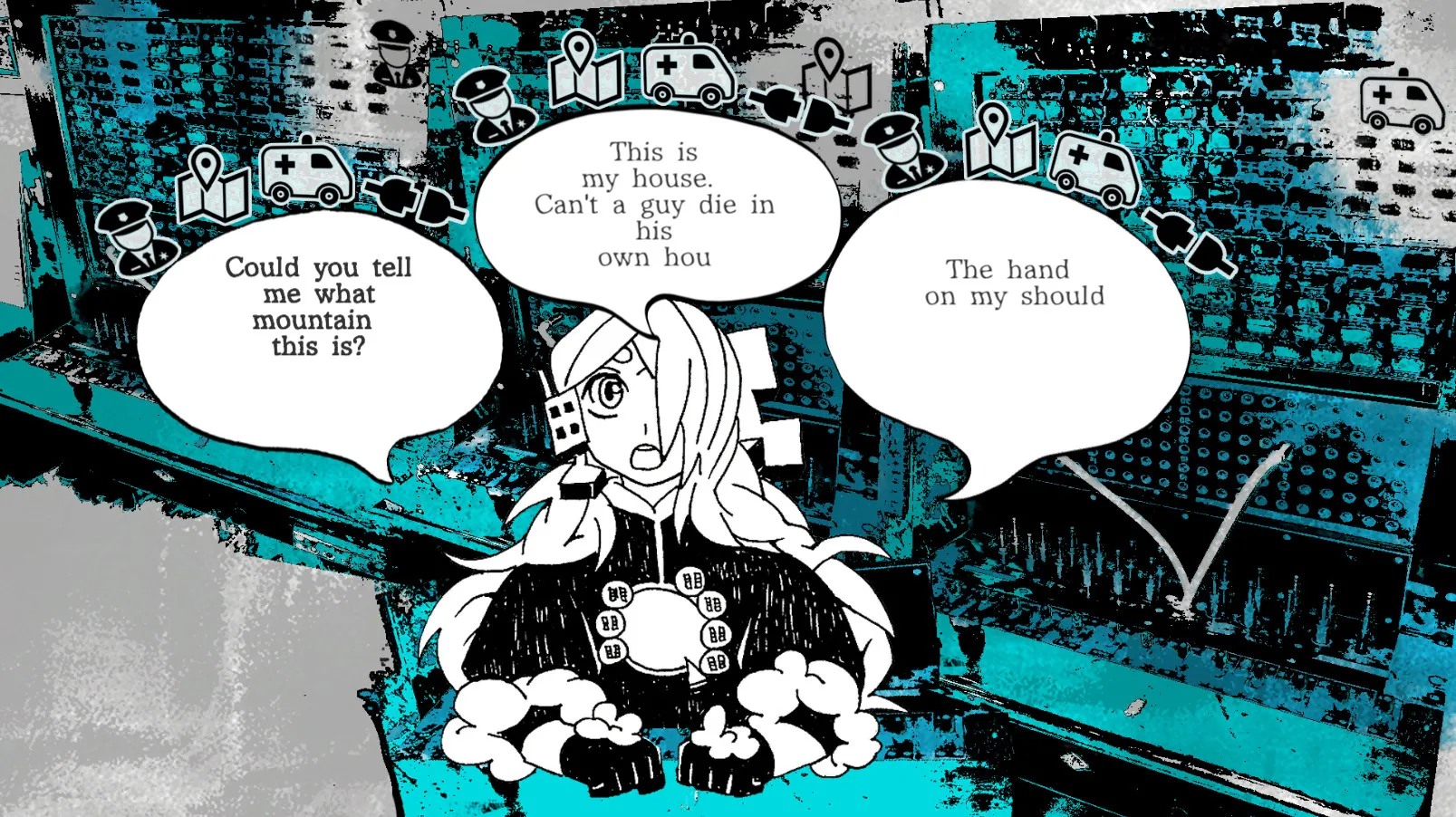
The overlap of simultaneous calls creates pressure, and the cryptic phrasing inside each bubble pushes rapid deduction. Success depends on reading comprehension under a clock, not on canned button prompts. The game grades each shift from S to C, and that grade becomes the single gate that steers branches and endings. The minigame is not filler; it is the filter for the narrative. Player choice lives in precision and tempo, which gives every correct route a direct story impact.
The design encourages a rhythm of scan, infer, commit. Repetition builds pattern recognition, so you learn linguistic tells that map to SOS, Lost, Police, or Disconnected. Misreads sting because they echo later in story routing. The result feels like a puzzle box wired to the script.
On platforms with touch input, the screen tap adds control fidelity and lowers the strain that comes with stick-and-button routing, which shows care for hardware differences. The loop is demanding and rewards quick eyes and clean handoffs. The grading ladder gives clear feedback, and the branching tied to that ladder makes performance feel meaningful.
Character and World: A Glimpse Behind the Veil
Between shifts, the game pivots to lengthy visual novel sections that form the spine of tone and character. Vanitas arrives at the call center Ars Moriendi, managed by the enigmatic Ari. A small cast takes shape, including a runaway spectre and skeptics who question how this office handles the dead.
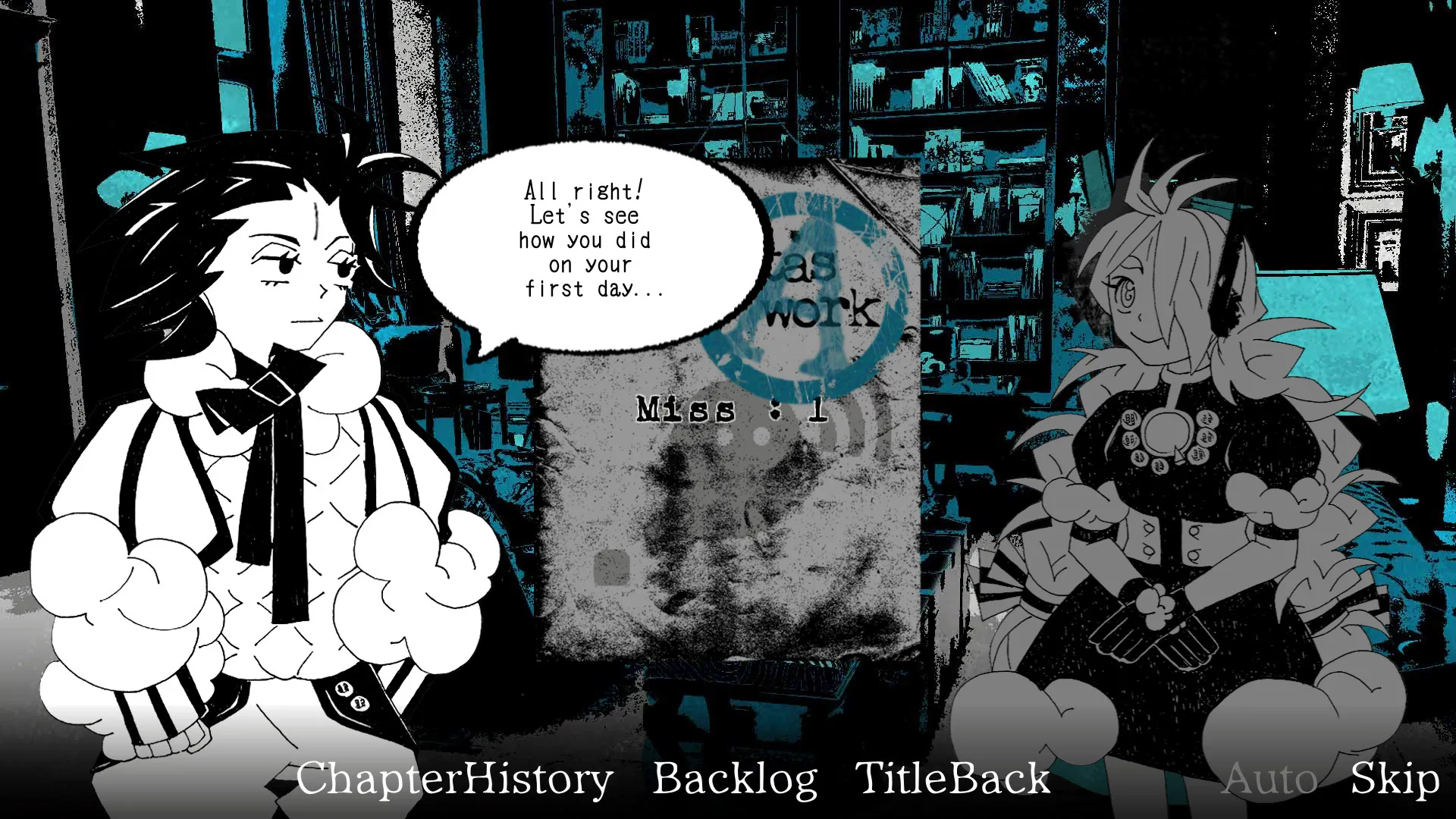
The script aims for emotion without tipping into melodrama, landing on a steady mood that pairs well with the offbeat art. Dialogue choice does not exist in these scenes; progression depends entirely on how you performed at the switchboard. That constraint keeps the plot focused and preserves the link between mechanic and story, since decisions happen inside the calls.
The world holds strong hooks that sit just beyond the office walls. A counsel that oversees the afterlife, the job scope of gr1ms, the politics of this bureaucracy: the script hints at these ideas, then returns to the floor, the phones, and the next batch of souls. Character reveals arrive at a steady clip, which maintains engagement across the six days.
The story stops at a point that invites scale, which leaves the experience feeling incomplete. Multiple endings and a 100-call challenge extend playtime and invite a higher mastery run. The script adopts a stylistic quirk that replaces letters with numbers, such as swapping 1 for l. The idea fits the glitchy, afterlife tech motif, yet the usage shifts across scenes and breaks consistency.
Visuals and Auditory Anxiety
Presentation choices carry weight in this project. Character sprites sit in stark black and white, with sharp, angular silhouettes that exaggerate features and mood. These figures stand in front of background CGs built from heavily filtered photography, limited to hard blues, deep blacks, and white highlights. The clash of drawn sprites and processed photos creates a chill, disembodied feel that suits the premise. Sound leans into stress and pace.
The main soundtrack drives with syncopated techno that accelerates into frantic electronica during call sequences, matching the sprint of five-second reads. Extended play sessions reveal repetition in the music, which dulls impact over time, but the texture fits the loop. Sound effects land hard. Digitally warped screams announce incoming ghost calls and flood the mix, which sells the sense of a switchboard on the edge of failure.
Taken together, the system design and the script share a single axis: your performance under pressure. The switchboard teaches through repetition, then pays off through branching and endings. The story scenes center the workplace and keep attention on Ars Moriendi, Ari, and the immediate team, which maintains focus. The world beyond the office teases scale without full exploration. The letter–number text quirk sets flavor and occasionally trips readability. The result is a visual novel wired to a time-attack dispatcher, with mechanics that carry narrative consequence every time you route a call.
The Review
1f y0u're a gh0st ca11 me here!
{{1f y0u're a gh0st ca11 me here!}} is a powerful example of game design integrating mechanics and narrative. The central call center minigame creates genuine panic, effectively translating player performance into meaningful story progression and branching paths. The game’s unique, monochrome aesthetic and frenetic soundtrack perfectly complement the high-pressure shifts. While the core experience is excellent, the visual novel sections feel too brief, only hinting at the depth of the strange world it establishes. It is a highly replayable and innovative narrative game that rewards skill.
PROS
- Highly innovative call management mechanic
- Story progression directly linked to player skill
- Striking and unique visual art style
- High replayability with multiple endings
CONS
- World-building feels underdeveloped
- Gameplay segments become repetitive quickly
- Overall experience is quite brief
- Inconsistent use of alphanumeric typography