









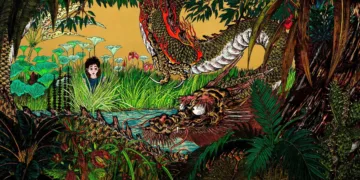






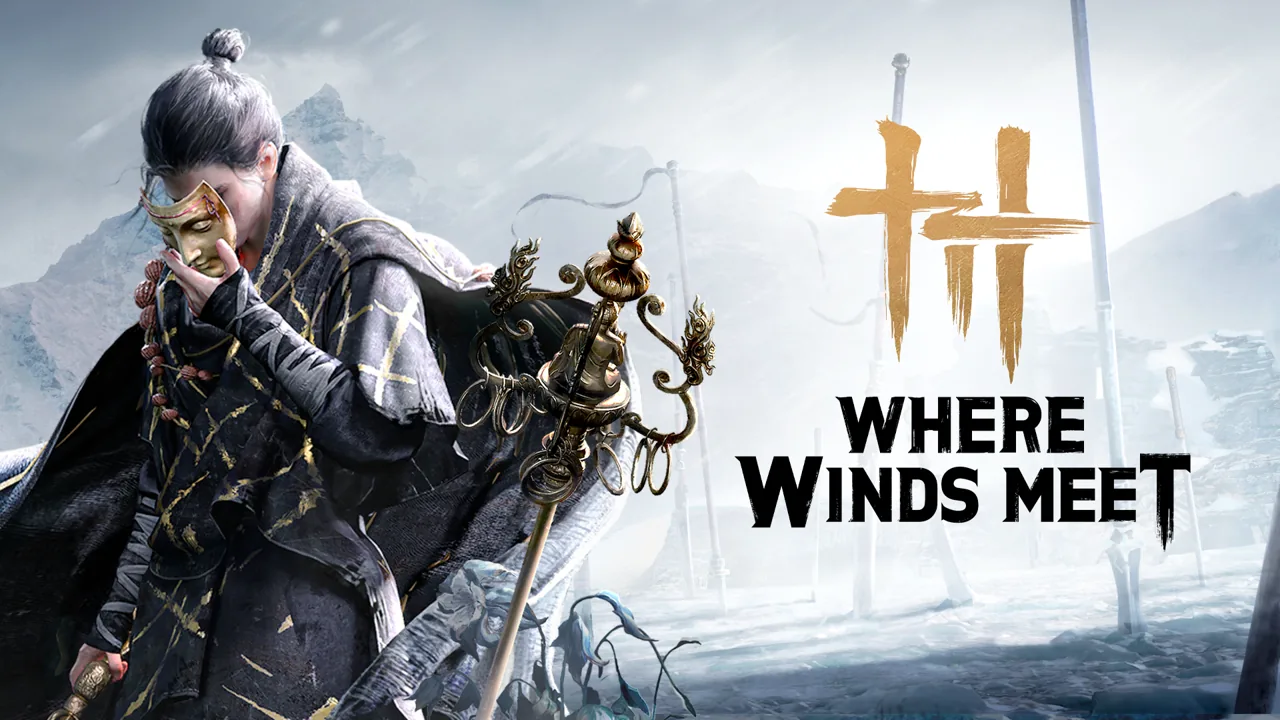

Where Winds Meet presents itself as an intensely ambitious free-to-play, open-world Wuxia action RPG that draws deeply from Chinese artistic and historical traditions while adopting the structure of a modern action RPG. The story returns to 10th-century China, during the turbulent late Five Dynasties and Ten Kingdoms period, and places the player in the role of the Wanderer, an inexperienced sword master. A simple task, recovering a stolen jade pendant, soon expands into a sprawling saga.
The world stretches from the quiet Qinghe province to the crowded central metropolis of Kaifeng, and the narrative frame follows a personal search for identity and answers that gradually connects to political struggles and high-stakes conspiracies that shape the kingdom’s fate. The game sets out to link the grand, sweeping storytelling of Chinese epic cinema with the player-directed freedom of contemporary interactive design.
Cultural Immersion and Narrative Entropy
The game’s most distinctive strength lies in its ancient Chinese setting, which supplies a dense mesh of historical, philosophical, and spiritual detail. The setting operates as an active element. It incorporates elements such as Buddhist rituals for the dead and references to historical figures and concepts that recall cultural textures familiar from comparative literature and period dramas. This rich framework, rooted in regional history and belief, coexists with a main plot that often feels structurally unstable.
The central quest that revolves around the pendant and the Zhenguan Jade eventually feeds into larger conspiracies, yet the early hours feel slow and muddled. New players sit through long stretches of low-stakes dialogue and encounter unfamiliar terminology with little explanation, with phrases like “renegade of the well of heaven” appearing early on. Story momentum and clarity arrive only after these initial hurdles.
The sheer density of the world frequently undermines narrative focus. With a reported 10,000 NPCs in Kaifeng alone and a huge volume of side-quests, the main storyline easily slips from view. Player freedom receives clear priority: combat can be minimized while the Wanderer practices professions such as doctor, merchant, or architect, engaging with everyday life in the period. Side-quests present memorable scenes, from acting as an impromptu matchmaker to helping unrested spirits in a ghost town. This emphasis on slice-of-life interactions reflects a cultural perspective in which heroic feats sit alongside ordinary responsibilities and social obligations.
This same abundance weakens the core plot, which begins to feel like a needle buried in a haystack. Frequent level-related gates further interrupt story progression and steer players toward grinding side content. The structure resembles a modern MMO more closely than a tightly focused action RPG, which makes the central heroic arc feel less cohesive.
Mechanical Flash and System Overload
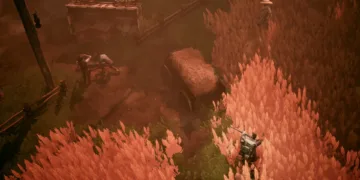
Combat provides the game’s clearest success and channels the kinetic grace associated with Wuxia cinema. Fights feel fast, entertaining, and visually showy, with a strong sense of impact. The flow of battle recalls exacting action titles such as Sekiro: Shadows Die Twice and asks players to master precise parries, blocks, and dodges to punish enemies.
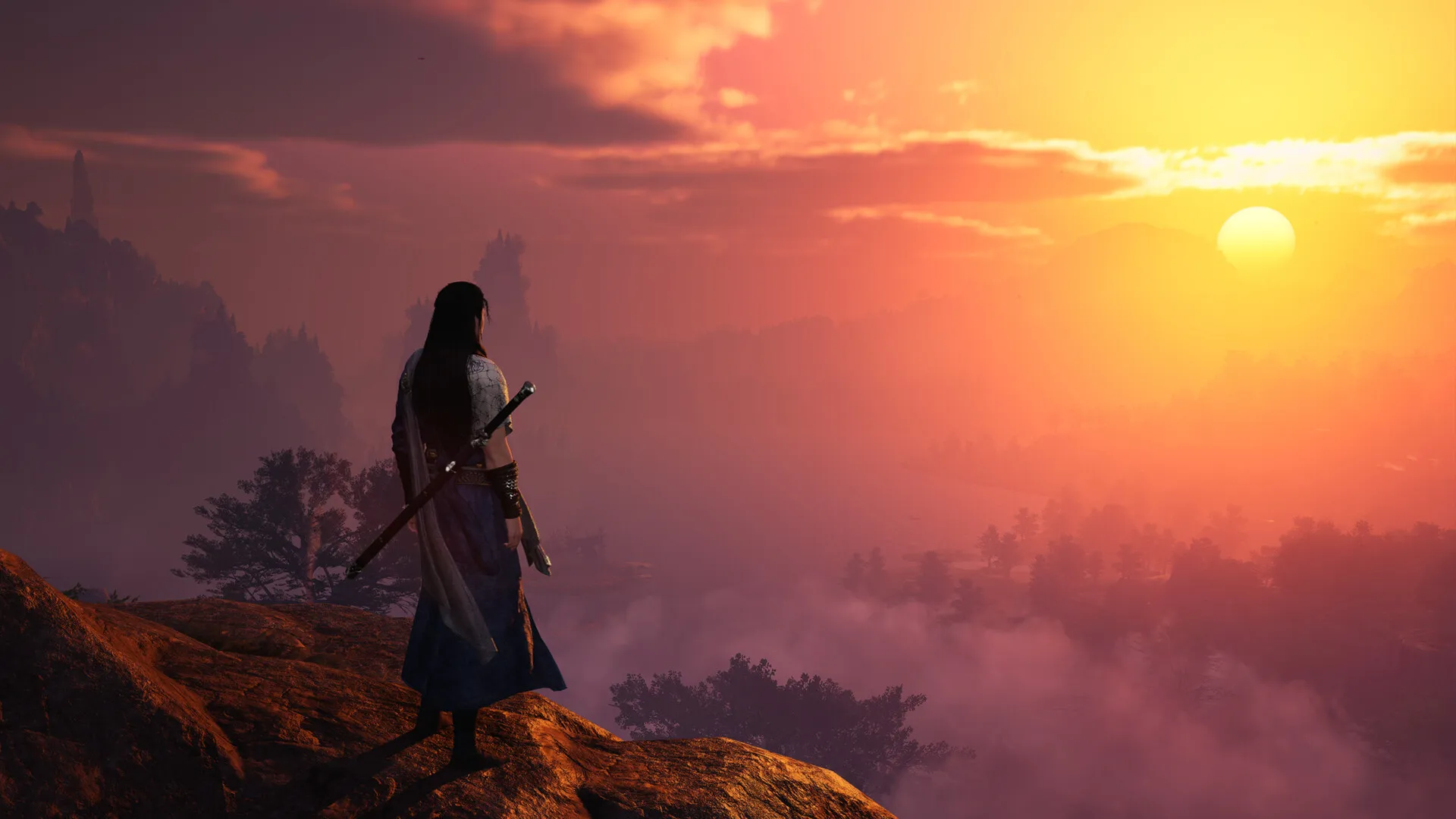
The weapon system supports this style. Players wield traditional arms like swords, spears, and fans, each with distinct movesets and special attacks. Experimentation receives direct support because upgrades apply to the category of weapon rather than individual items. Mystic Arts reinforce the heightened cinematic register, granting dramatic abilities such as fire-breathing or flurries of blades that trigger on cooldown.
Movement design matches this energy: the Wanderer can run across water, perform triple-jumps, and air dash, all of which express the supernatural agility associated with Wuxia heroes. Even skills outside direct combat, such as learning a tai chi throw by watching a bear, underscore the connection between martial practice, the natural world, and traditional philosophy. Players can shape the experience across five difficulty settings, from Story (with assist prompts) up to Hardcore, which includes perm-death.
The larger system design creates more friction. A “more is more” philosophy fills play sessions with multiple currencies, overlapping forms of XP, extensive crafting, and layered profession mechanics. This near-constant stream of rewards and tooltips can feel briefly satisfying while leaving the relationships between systems opaque. Many features arrive with limited explanation, which leads to confusion and pulls attention away from the finely tuned combat that defines the best moments.
MMO-lite features reinforce this tension between focused action and online structure. Players can choose between a shared mode and a Lone Wanderer approach. Group boss encounters and PvP are available, yet the breadth of single-player content gives these multiplayer activities a slightly optional quality, as if they sit beside rather than inside the game’s strongest design priorities.
Visual Splendor and Technical Friction
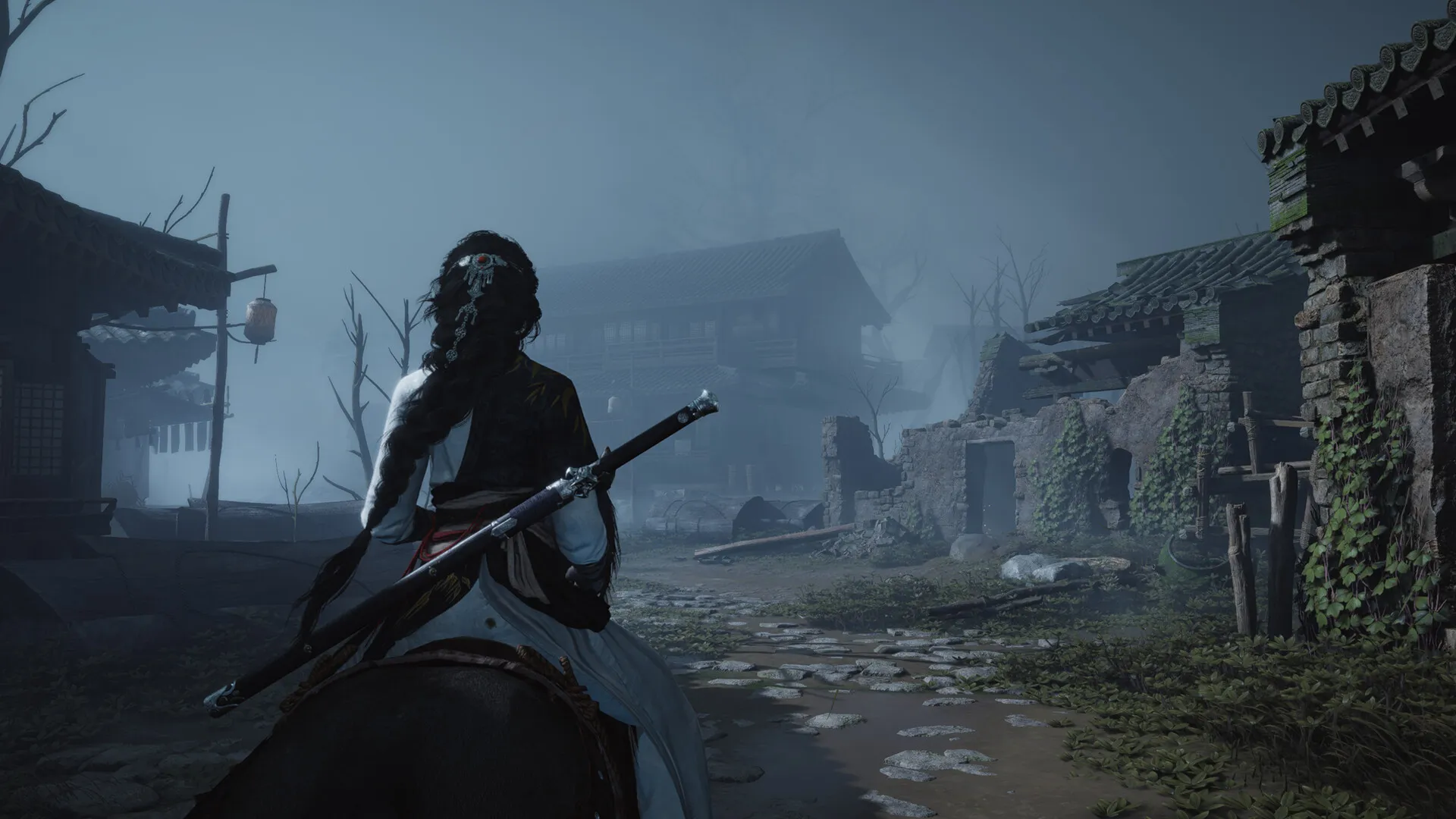
Where Winds Meet often impresses with its visual presentation. Landscapes and architecture display meticulous historical detailing, and natural vistas and city streets alike project a lavish sense of place that deepens immersion in the era. Technical shortcomings interrupt this effect. Noticeable pop-in of textures and objects intrudes on exploration and even disrupts cutscenes, and the appearance of minor NPCs often feels relatively plain next to the carefully crafted environments.
Sound design supports the setting with a rich mix of traditional Chinese instruments and orchestral scoring that shifts with the demands of calm exploration or intense action. Localization undercuts that strength. English voice performances vary widely in quality, and subtitles frequently follow literal translations that conflict with the spoken lines.
Performance and network stability create further obstacles, since players report recurring crashes, server disconnects, and unresponsive controls on console. Some essential information, such as combat commands for abilities like acupuncture, appears only in Chinese, which signals incomplete localization and has a direct effect on basic play.
The free-to-play economy aligns with global models and stays cosmetic. Microtransactions focus entirely on items such as new clothes, dyes, and emotes, and they are relatively hard to locate at first. This structure keeps progression and core mechanics independent from real-money spending and preserves access to the full experience for players who never visit the shop.
The Review
Where Winds Meet
Where Winds Meet achieves striking ambition, delivering an action RPG with excellent, fluid Wuxia combat and an expansively detailed world rich in Chinese lore. This freedom comes at a cost, however. The experience is presently hampered by a crippling number of systems that confuse the player, alongside pervasive technical instability, including crashes and localization gaps. The game holds immense potential, showcasing a confident, fun core that is currently obscured by a structural and mechanical muddle.
PROS
- Fluid, impactful Wuxia combat and traversal.
- Vast, culturally authentic 10th-century Chinese setting.
- Genuine player freedom to pursue non-combat professions.
- Microtransactions are strictly cosmetic.
CONS
- Overwhelming, poorly explained game systems.
- Significant technical instability and frequent bugs.
- Main narrative is fragmented and forced to grind.
- Inconsistent English voice acting and localization.