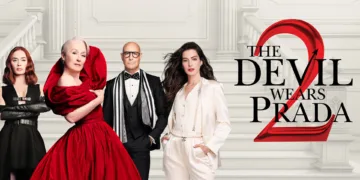









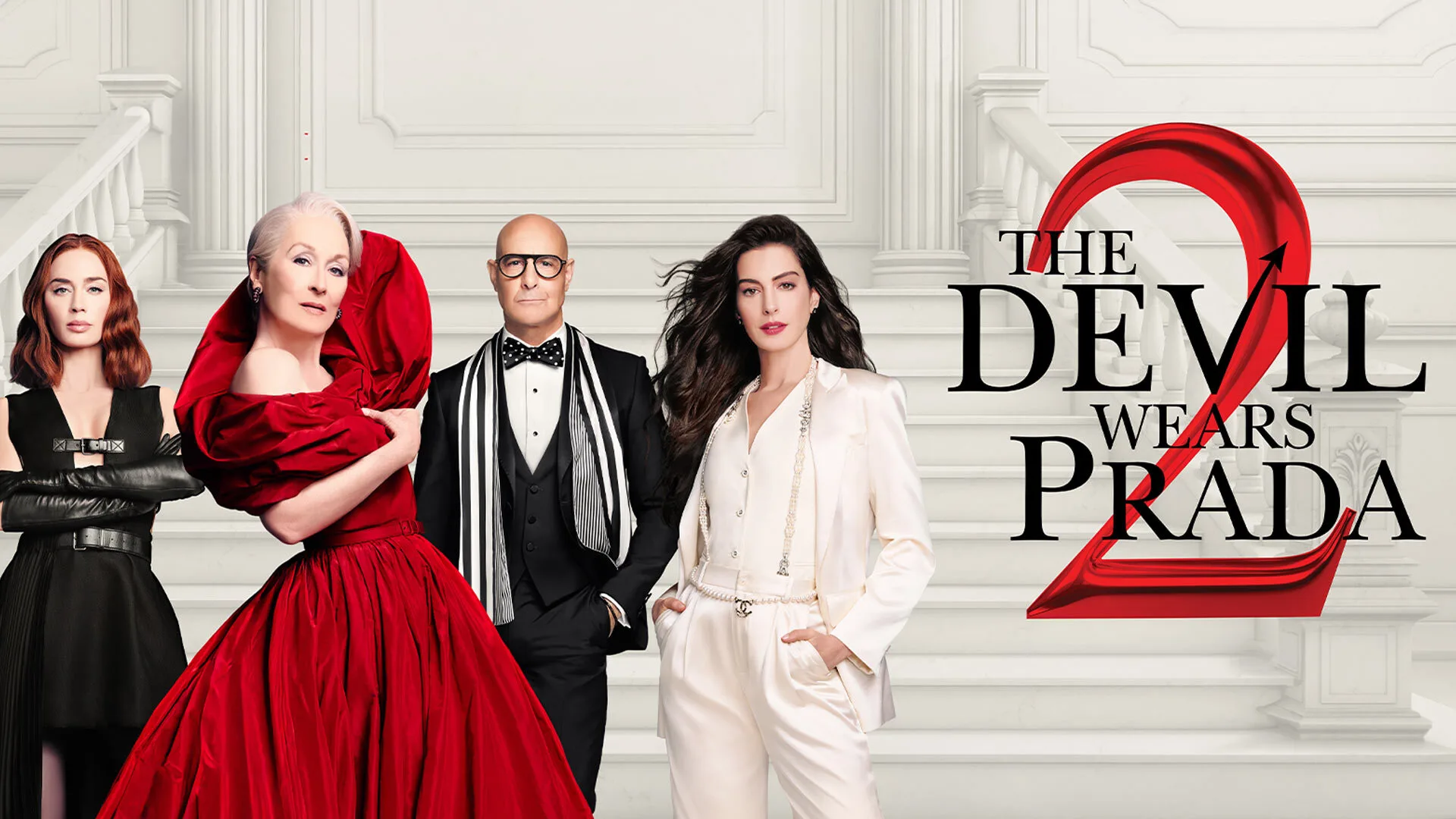

Twenty years is a considerable stretch of cultural time. The original Devil Wears Prada arrived in 2006 as something close to a perfectly calibrated cultural artifact: sharp, stylish, and anchored by a performance from Meryl Streep that audiences have spent two decades quoting, studying, and, apparently, waiting for more of. The world it depicted, one in which a single magazine editor could function as a minor deity of taste, feels both recent and impossibly remote.
The sequel reunites director David Frankel, screenwriter Aline Brosh McKenna, and the full core cast, including Streep, Anne Hathaway, Emily Blunt, and Stanley Tucci, in a fashion media landscape that has since been stripped, monetised, and largely hollowed out. Both Andy Sachs and Miranda Priestly arrive here professionally bruised, which gives the reunion a charge that pure nostalgia alone could never supply. The film swings for familiarity and genuine ambition simultaneously. It does not always land both. The attempt, though, is rarely without interest.
The Magazine Is Dying. Please Hold.
The setup is executed with pleasing economy. Andy Sachs, now a respected journalist at a publication called The Vanguard, is fired by text message at the precise moment she is being handed a journalism award at a lavish industry dinner. The timing is satirical and the wound is real. Simultaneously, Miranda Priestly finds Runway embroiled in a sweatshop scandal, her expected promotion to Global Chief Content Officer at parent company Elias-Clarke stalled before it can begin. Publisher Irv Ravitz, sensing an opportunity of the two-birds-one-stone variety, hires Andy as Runway’s new features editor.
The contrivance is apparent, but the film earns it by grounding the desperation in something recognisable. Layoffs by text message. Awards ceremonies interrupted by institutional collapse. These are not satirical inventions so much as recent memory dressed in better clothes.
Miranda’s feigned amnesia about Andy on her first day back is quietly devastating. A small cruelty, efficiently deployed, that re-establishes the power dynamic without requiring a single raised voice.
The film’s real antagonists are neither fashion rivals nor petty office tyrants. Irv’s son Jay (B.J. Novak), a tech-vest-wearing media philistine who inherited his position rather than earning it, and Benji Barnes (Justin Theroux), a billionaire with no genuine relationship to what Runway represents, arrive as figures of a specific contemporary catastrophe: the takeover of cultural institutions by people who regard culture as a liability. The film uses them to ask, with reasonable seriousness, whether editorial ambition has any commercial future at all. Andy and Miranda, who spent the first film on opposite sides of a professional power structure, find themselves here as reluctant co-defenders of the same crumbling thing.
The thematic ambition does produce wobble. A subplot involving Andy’s love interest, an architect who develops high-end properties, sets up a critique of luxury real estate that the film then quietly abandons when Andy moves into one of his buildings. The film also ignores influencers entirely, which in a 2026 fashion media story is a strange silence. AI receives a brief, shoe-horned mention that develops into nothing. The Milan Fashion Week finale mirrors Paris from the first film closely enough to signal intentional callback rather than laziness, but the plot mechanics around it grow genuinely convoluted.
The Performances, Ranked by Altitude
Meryl Streep’s Miranda Priestly was, in 2006, a creation of such calculated quiet menace that she functioned as something approaching a weather system. Cold fronts. Pressure changes. The occasional devastating calm. The sequel presents a different proposition: a Miranda diminished by HR complaints, institutional embarrassment, and, perhaps most destabilizingly, a functional marriage. She hangs up her own coat. She flies coach. She is, on at least one occasion, genuinely happy.
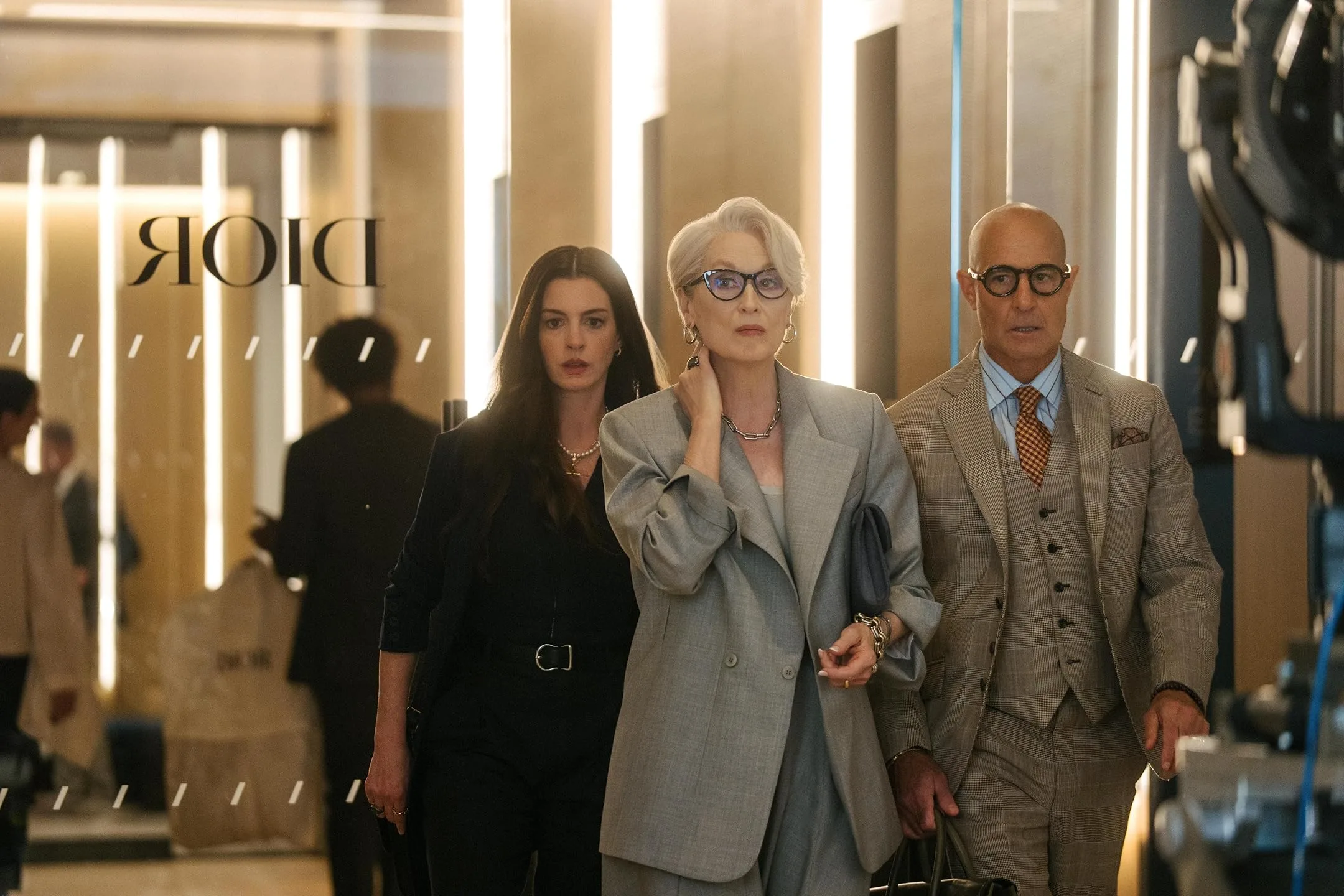
Streep handles all of this with technical precision. The physical comedy, particularly her barely audible whimper as she is marched past the business class seats on a flight to Milan, is as carefully calibrated as any of her more overtly theatrical moments. The question the film never quite resolves: is Miranda’s apparent softening authentic change or strategic repositioning? Streep keeps this ambiguous. The screenplay, less so.
A recurring gag in which assistant Amari (a sharp Simone Ashley) quietly intervenes before Miranda can say something HR-actionable is consistently funny, and carries a secondary meaning: the world has developed antibodies to Miranda, and she has had to evolve accordingly.
Anne Hathaway slides back into Andy with the ease of someone returning to a familiar neighbourhood after a long absence. The character is older, more assured, and refreshingly less defined by the men or bosses around her. When Andy dismisses her love interest’s objections to her work with something approaching indifference, the contrast with the first film’s heartbreak-and-cupcake dynamic registers immediately. Hathaway carries the film’s moral centre without making it feel like a burden.
Emily Blunt’s Emily Charlton, now an executive at Dior, remains the production’s most reliably entertaining presence. Sharp, insecure, and capable of a disarming moment of sincerity when the script permits it. Her lunch scene with Donatella Versace belongs in a highlight reel.
Stanley Tucci’s Nigel is the emotional architecture of the film. Warm, wry, and quietly aware of the cost of decades spent in Miranda’s shadow, he gets one late scene of personal reckoning that Tucci plays with characteristic restraint. It lands harder for being underplayed. Both he and Blunt do more with subtext than the screenplay gives them room for.
Lucy Liu’s Sasha Barnes vanishes from the film for stretches long enough to register as a genuine absence. Kenneth Branagh and Patrick Brammall do what they can with roles that exist primarily to confirm that both leads have personal lives.
Gorgeous Surfaces, Deliberately Chosen
Frankel’s direction restores the tonal balance that made the original work: high-couture spectacle and intimate character observation sitting comfortably in the same frame. The film never loses its sense of scale, and the quieter moments are protected from being swallowed by the pageantry. This is a director who trusts his actors enough to let a look carry weight.
The callbacks are managed with craft. A Madonna-scored wardrobe montage, bathroom mirror steam being wiped clear, a glimpse of a cerulean belt now available at an open-air market (fulfilling Miranda’s famous prophecy). These feel like earned returns rather than desperate nudges to the audience.
Pacing is the film’s most consistent technical problem. Several subplots, Lucy Liu’s arc being the most conspicuous, disappear for extended stretches before re-emerging in the finale as if no time has passed. The structural looseness leaves the film feeling overfull rather than satisfyingly layered.
Molly Rogers, stepping in as costume designer, delivers work that is aspirational, character-specific, and occasionally funny in its choices. Milan’s Galleria Vittorio Emanuele II provides a backdrop for the finale that earns its postcard quality. A digitally scrubbed Manhattan skyline, from which certain controversial newer towers have been quietly removed, is a revealing detail. The film is selling a version of New York that is aspirational and slightly fictional. This is a conscious choice, and one that speaks to what the film fundamentally is: a knowing fantasy that periodically pauses to acknowledge the ugliness outside the frame.
The celebrity cameos are numerous. Too numerous. The Donatella scene with Emily is the exception, a precisely judged comic set piece that earns its place. The Hamptons gathering, populated by an oddly mismatched guest list (Tina Brown and Jon Batiste, sure; Jenna Bush Hager and Ronnie Chieng?), strains credibility in ways the film does not seem to register.
The Shape Is Familiar. So Are the Gaps.
What the sequel gets demonstrably right is its honesty about time. These characters have aged, and the film allows that ageing to mean something. The media landscape’s collapse is the engine of the plot and the source of its most genuine feeling. The expanded dynamic between Andy and Miranda, two equally driven and equally self-deceiving people arriving at the reluctant recognition that they need each other, is the film’s most rewarding development.
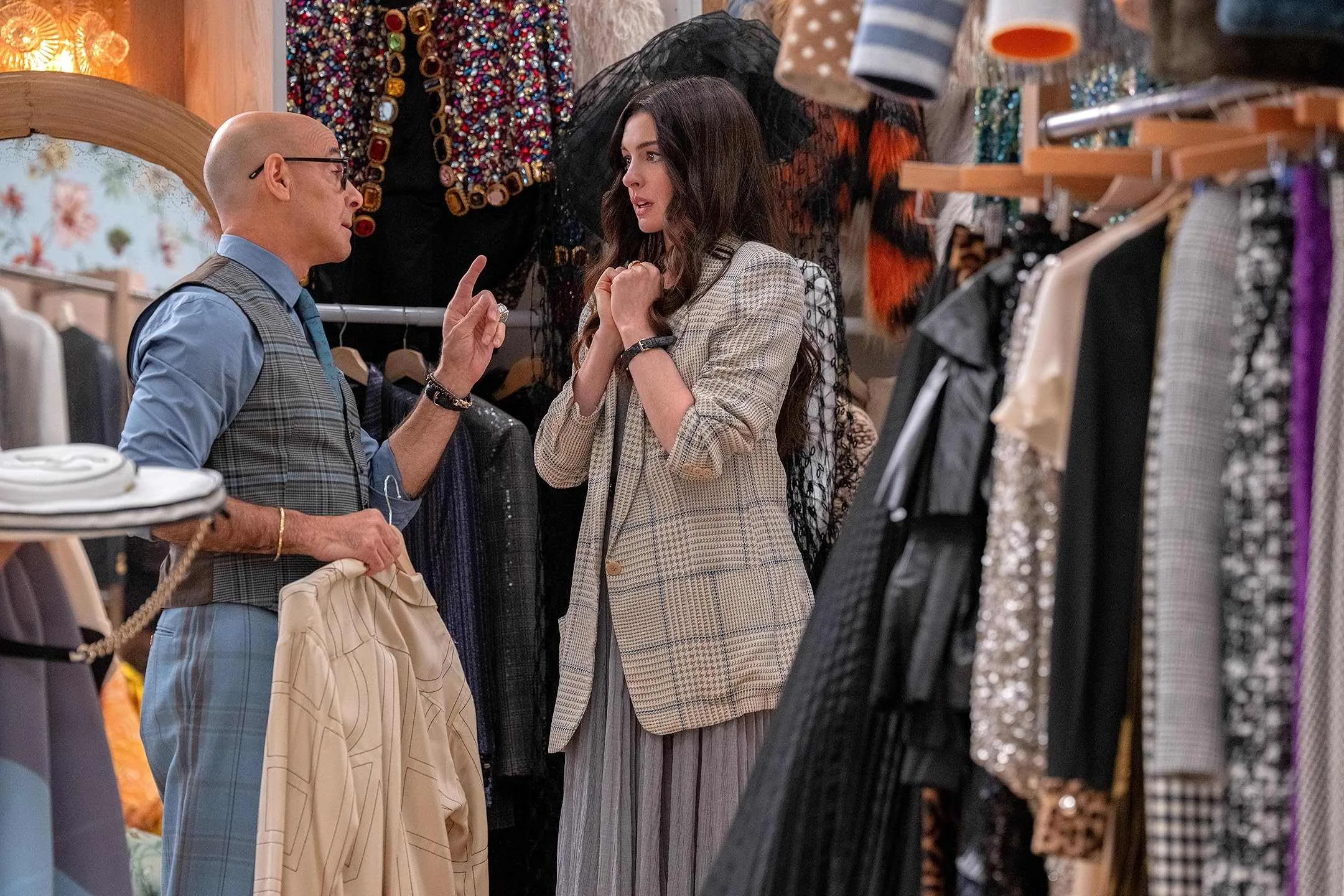
The screenplay tries to contain too much. Side characters are rushed through their arcs. Romantic subplots are serviceable at best. The film follows the original’s beat structure with enough fidelity that experienced viewers will anticipate most pivots, and the negotiation between breezy workplace comedy and genuine media elegy is not always clean.
The original had the structural economy of a great studio comedy: a clear moral arc, a focused emotional conflict, and a villain whose complexity sharpened everything around her. This film has the sprawl of a production that trusts its audience’s goodwill to cover the gaps. That trust is not entirely misplaced. It is also not entirely earned.
The most quietly affecting idea the film leaves behind is its acknowledgment that any rescue of an institution like Runway will be temporary. Beauty and craft can persist, but only on borrowed time. That melancholy sits underneath the glossy surfaces like a cold draft under a very expensive door.
Set twenty years after the events of the original 2006 hit, The Devil Wears Prada 2 follows Andy Sachs as she returns to the world of Runway magazine, now as its Features Editor. As Miranda Priestly faces the challenges of a declining print media landscape and the rise of digital “optimization,” she must team up with her former assistants to save the publication. The film officially premiered at Lincoln Center on April 20, 2026, and is scheduled for a wide theatrical release on May 1, 2026. Audiences can watch the film in theaters across the United States starting this Friday.
Where to Watch The Devil Wears Prada 2 Online







Full Credits
Title: The Devil Wears Prada 2
Distributor: 20th Century Studios
Release date: May 1, 2026
Rating: PG-13
Running time: 119 minutes
Director: David Frankel
Writers: Aline Brosh McKenna
Producers and Executive Producers: Wendy Finerman, Karen Rosenfelt
Cast: Meryl Streep, Anne Hathaway, Emily Blunt, Stanley Tucci, Justin Theroux, Kenneth Branagh, Tracie Thoms, Tibor Feldman, Simone Ashley, Lucy Liu, B.J. Novak, Pauline Chalamet, Rachel Bloom, Patrick Brammall
Director of Photography (Cinematographer): Florian Ballhaus
Editors: Andrew Marcus
Composer: Theodore Shapiro
The Review
The Devil Wears Prada 2
The Devil Wears Prada 2 is a glossy, overcrowded, and often genuinely pleasurable return to a world worth revisiting. The performances hold, the themes carry real weight, and the central dynamic between Andy and Miranda has grown into something richer than the original allowed. The screenplay stretches itself too thin, the romantic subplots add little, and Miranda's defanging will frustrate as many viewers as it satisfies. A worthy sequel, if a slightly breathless one.
PROS
- Streep and Hathaway remain magnetic
- Tucci and Blunt elevate every scene they share
- Thematic commentary on media collapse feels timely and earned
- Strong visual craft and costume design throughout
- The Andy/Miranda dynamic has genuinely evolved
CONS
- Too many storylines competing for screen time
- Miranda's softening is inconsistently written
- Romantic subplots are underdeveloped
- Cameo overload dilutes impact
- Follows the original's beat structure too closely