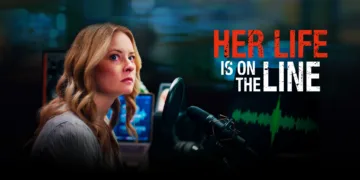


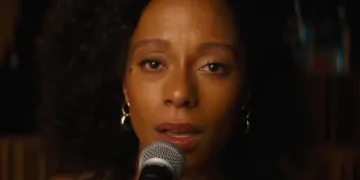












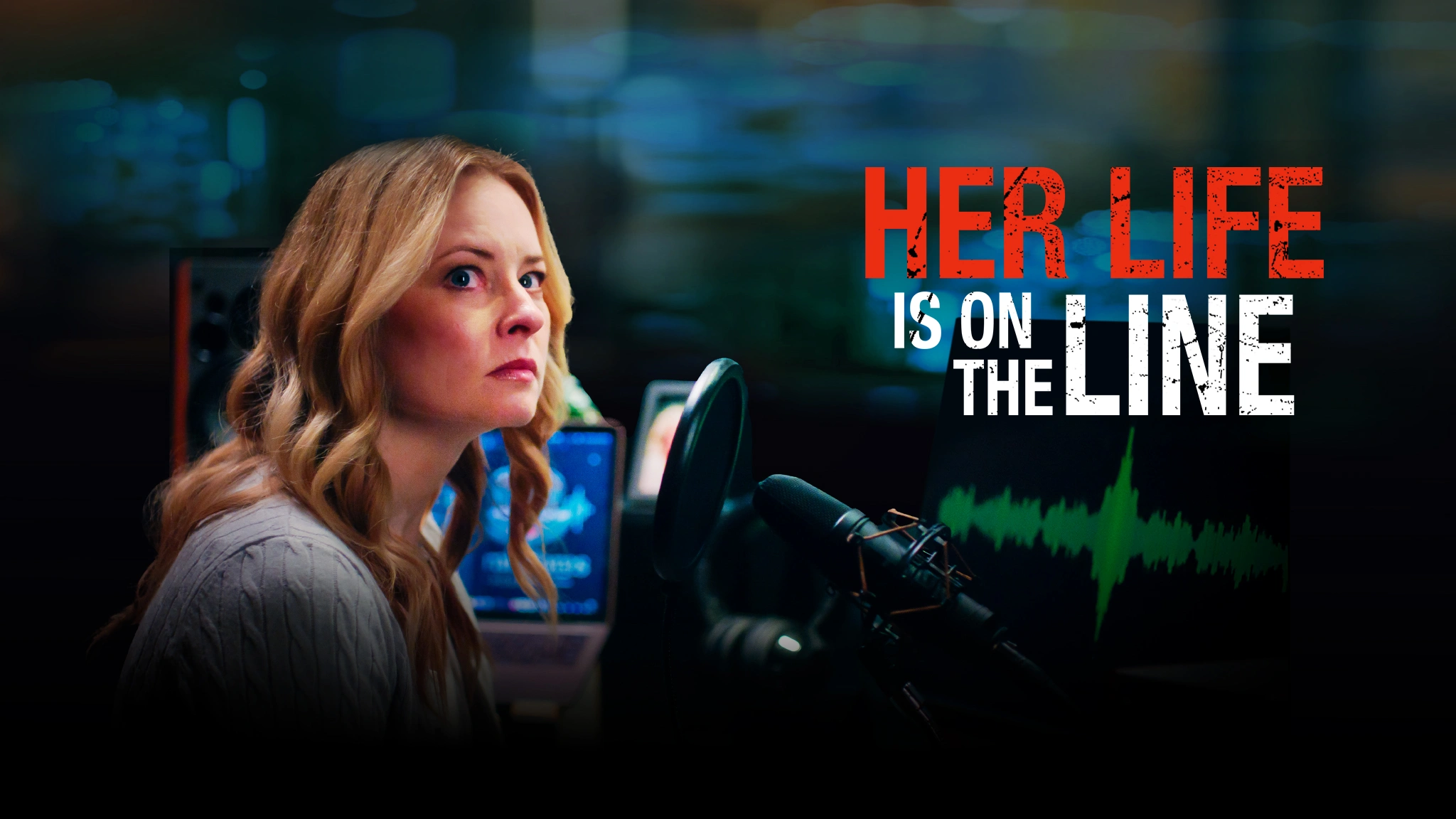

The microphone operates as a modern confessional, a small instrument of confession with studio-grade insulation. Sarah Williams sits inside a soundproof chamber where voice turns into product, proof, and weapon. Her program sells disciplined empathy, the kind that favors cold logic over soft comfort and wears authority like a tailored jacket. She has built a public identity as the architect of other people’s stability.
The late-night broadcast functions as ritual exposure, and a lucrative New York syndication deal waits nearby, promising her passage from local guide to national icon. Then Edward hijacks the frequency. He brings death into the sealed geometry of the booth, claiming to hold a captive woman and demanding truth as payment for a life.
The radio booth becomes a trap. Noir has always liked confined rooms and moral invoices; this thriller updates that lineage through live media, synthetic anonymity, and the red recording light. The host’s customary control collapses. Sarah becomes the observed subject. The broadcast turns into a clinical vivisection of a woman whose career depends on answers.
The Fractured Logic of Domestic Preservation
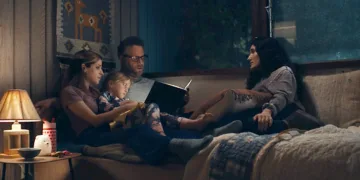
Sarah’s advice persona shields the disorder of her private life with careful polish. Her home life is built on calculated deception. She has a secret separation from her husband, David, and still performs stability for their daughter, Maya. That performance protects the market value of her brand, a chillingly practical arrangement, as family values often come with sponsorship potential.
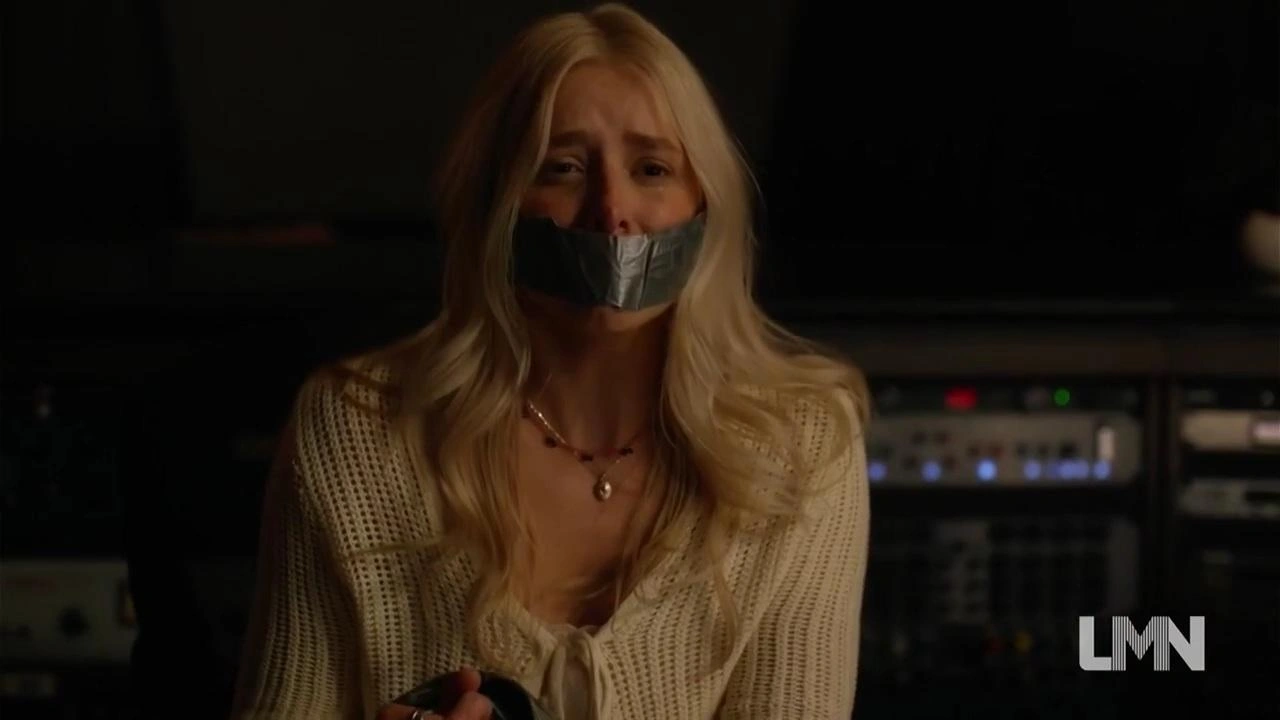
Edward holds the information that can pierce the facade. He forces her public image into contact with its hypocrisy. The hostage, Alice, is David’s current partner, and that revelation turns the professional crisis into personal wreckage with cruel precision. Edward’s rules create a protocol of absolute candor.
Police interference is forbidden. Sarah must humiliate herself before her listeners. The ultimatum exposes the vacancy inside her expertise: the healer faces the sickness inside her own house. Tension crests when she must explain the end of her marriage to Maya while the audience hears every syllable.
Privacy becomes a public execution. The ethical gray zone widens as she bargains for Alice’s survival. Free will, here, is narrowed to coerced confession. Sarah’s authority bleeds away through the secrets that sustained it. She becomes captive to the narrative she engineered. Domestic rupture enters the broadcast signal and returns as failure.
Chiaroscuro and the Digital Ghost
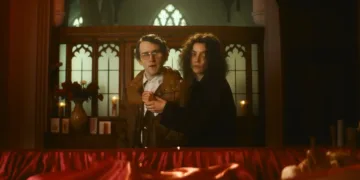
Director Haylie Duff treats the radio studio as a psychological pressure cooker, staging dread through tight framing, restless camera movement, and a lighting scheme that gives electronics the menace of candles in a crypt. The camera circles Sarah with predatory interest. Shot composition keeps walls and monitors pressing inward, turning a static room into a shifting map of entrapment.
Editing stresses the booth’s isolation. Technology becomes Edward’s weapon. AI voice modulation hides his identity and gives the calls an uncanny texture, a digital mask with the warmth of a tax audit. The green waveform on the monitor becomes a minimalist icon of malice, a flickering pulse from a ghost made of data.
The narrative moves between the claustrophobic studio and the exterior search led by Detective Sumner, allowing the indoor dread to breathe before tightening again. Neon equipment throws long shadows in a modern chiaroscuro, linking Sarah’s moral obscurity to visible darkness.
Pacing accelerates as the threat turns toward Maya. A forty-five-second lag in the video feed becomes a critical plot device, making time itself feel rigged. Image delay creates helplessness, and the sound design sharpens perception through voices, static, and mediated distance. The caller’s digital fingerprint remains the lead in a hunt defined by interference.
The Unhealed Healer and the Industrial Climax
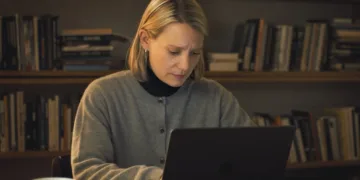
Jessica Morris anchors the production through escalating vulnerability. She charts Sarah’s movement from polished authority to raw survivor with controlled tremors, clipped panic, and visible exhaustion. The script reveals deep parental trauma: Sarah witnessed her father kill her mother after a dispute over a letter. That memory shapes her self-help career as an attempt to repair a past beyond her influence.
Identity in the film is a performance under stress, and Sarah’s constructed identity cracks under forced truth. Adam Huss and Andrew Fultz ground the supporting roles. Huss gives David the weary frustration of a marriage already dying in the room. Fultz resists the familiar incompetent-officer pattern. Detective Sumner carries quiet competence, which in this sort of thriller counts as a minor miracle.
The film studies the performance economy of digital media and questions the worth of advice given by people carrying unresolved private lives. The unhealed healer remains its central irony. The conflict reaches physical intensity in the parking garage, a stark industrial stage for the final struggle.
The assailant’s identity jolts the narrative logic and connects professional stakes to personal vengeance. Through fire, Sarah gains a measure of clarity. The plot’s resolution brings hard-earned transparency to her life. The woman who ends the broadcast has been remade by the truth she spent years hiding.
The film Her Life Is on the Line is a gripping mystery thriller that premiered on the Lifetime Movie Network on October 17, 2025. It follows the story of Sarah Williams, a hard-nosed talk radio personality whose late-night shift turns into a nightmare when she receives a call from a man threatening a murder before her show ends. This high-stakes thriller is currently available for streaming on Lifetime’s official website and through various digital platforms such as Philo and Prime Video.
Where to Watch Her Life Is on the Line (2025) Online
Full Credits
Title: Her Life Is on the Line
Distributor: Lifetime Movie Network (LMN)
Release date: October 17, 2025
Rating: TV-14
Running time: 90 minutes
Director: Haylie Duff
Writers: Jeremy M. Inman, Aaron Strongoni, Damián Romay
Producers and Executive Producers: Ryan Brown, Terrence Kiriokos, Damián Romay, Sebastian Battro
Cast: Jessica Morris, Adam Huss, Andrew Fultz, Quinton Aaron, Carly Diamond Stone, Aliza Kate Barlow, Kylen Chen-Troester, Lauren Cole, Tess Cline
Director of Photography (Cinematographer): Ryan Brown
Editors: Ryan Brown
Composer: David Bateman
The Review
Her Life Is on the Line
The film functions as a sharp interrogation of the digital confessional. It succeeds by stripping the protagonist of her curated authority and forcing a confrontation with an unvarnished past. While the final act leans into familiar genre beats, the psychological weight of the dialogue remains effective. The minimalist setting amplifies the dread of a voice without a face. It is a capable thriller that probes the ethics of public empathy and the fragility of a persona built on air.
PROS
- Taut directional control within the limited space of the studio.
- A masterful lead performance by Jessica Morris.
- Effective use of technology to create psychological tension.
CONS
- Formulaic secondary plotlines involving the police investigation.
- The shift from psychological dread to a standard physical climax.
- Predictable narrative reveals in the second half.