































The first image of a fully dressed body hanging beneath the water cuts through any feeling of safety with surgical force, setting the emotional terms for Jasmin Tarasin’s debut feature, Life Could Be a Dream. Sarah Smilie, a forty-year-old real estate agent, lives inside a home where comfort has curdled into quiet terror. Her marriage to Jake has become a system of constant psychological monitoring, the kind that turns daily movement into strategy.
Sensing that escape must happen now, she leaves suddenly and takes her thirteen-year-old son, Otis, with her. Their hiding place is an empty, multi-million-dollar harbourside mansion Sarah has been assigned to stage for wealthy buyers.
That setting gives the film one of its sharpest tensions. The mansion looks like a dream space, all polish and coastal privilege, yet Sarah and Otis move through it like players trapped in a survival game with no clear map. Tarasin sets their flight against a vivid Australian summer, filling the frame with sun-bleached beauty while anxiety hums underneath every image.
The film gains power by staying close to the immediate experience of mother and son. It avoids familiar thriller machinery and builds something more intimate: a study of how domestic manipulation changes movement, speech, perception, and trust. A gorgeous coastal refuge becomes a closed psychological arena.
Submerged Audio and the Imagery of Suffocation
Tarasin’s strongest choices come from how precisely the film connects cinematic form to Sarah’s mental state. Water becomes the central visual and sensory device. The opening image of a bride sinking beneath the surface of a pool, her white dress expanding around her like a snare, establishes the film’s language of beauty under pressure.
Cinematographer Meg White places those dreamy, slow-motion underwater images beside the hard textures of summer. Grease shines on fish and chips, sunlight presses against pavement, and the world feels physically present, while Sarah and Otis remain emotionally locked in place.
Stuart Morton’s sound design deepens that isolation. During moments of severe stress, the audio becomes muffled, creating the sensation of being sealed beneath water. It is a simple effect, used with discipline, and it helps the viewer inhabit Sarah’s panic without turning her trauma into spectacle. The film also plants literary clues with care, including a visible copy of Jane Austen’s writing on a nightstand.
Sarah has used the romantic idea of the misunderstood, brooding partner to excuse Jake’s volatility. She has treated his cruelty as a curable flaw, something her devotion might soften. That self-protective fiction begins to collapse as the film’s visual language changes. The suffocating water imagery from the opening later gives way to a shared dive into an ocean pool, where water becomes clarity, breath, and brief release.
The technical design keeps returning to the body’s experience of fear. When Sarah and Otis eat by the coast, the camera holds on glowing batter and glinting oil until the moment feels almost painfully tactile. That heightened attention to surfaces mirrors the hyper-vigilance of someone trained to read every small signal before danger arrives.
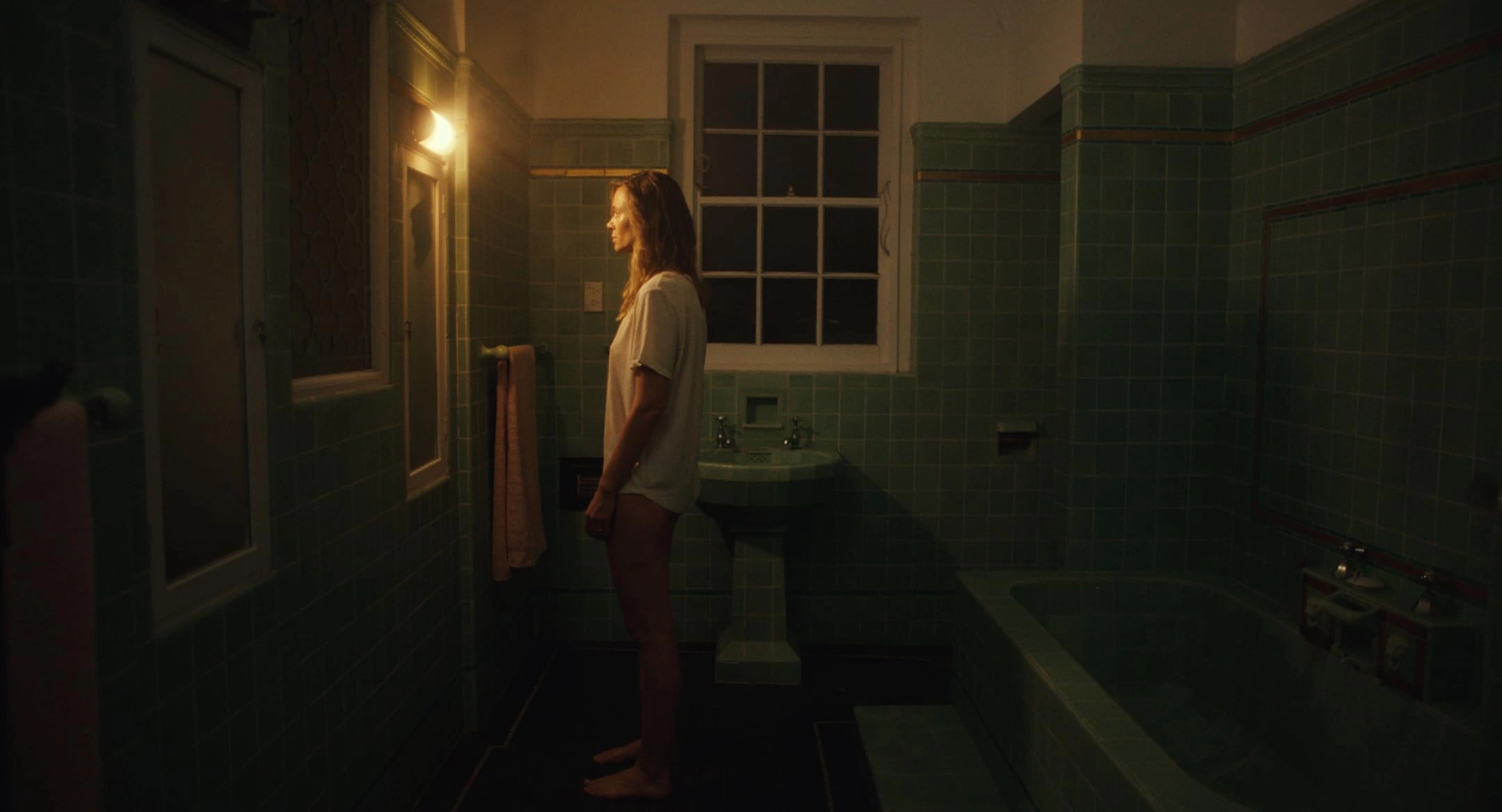
Sarah is often framed behind steamy bathroom mirrors, fog, and rain-streaked windows, creating the feeling of a barrier she cannot fully cross. The effect gives the film a distinct dramatic texture. The luxury real estate backdrop becomes a sensory maze where every attractive view carries an emotional cost.
The Quiet Trajectory of Domestic Control
The film’s emotional force depends on performances built from restraint. Maeve Dermody plays Sarah with a heavy inward stillness, letting exhaustion sit in her posture and voice. She carries old fear while trying to protect Otis, choosing words with painful care so he understands the danger without being crushed by it. Alexander England’s Jake feels ominous through absence as much as presence. He enters through sudden phone calls and flashbacks, using politeness and charm as the outer casing for surveillance and control.
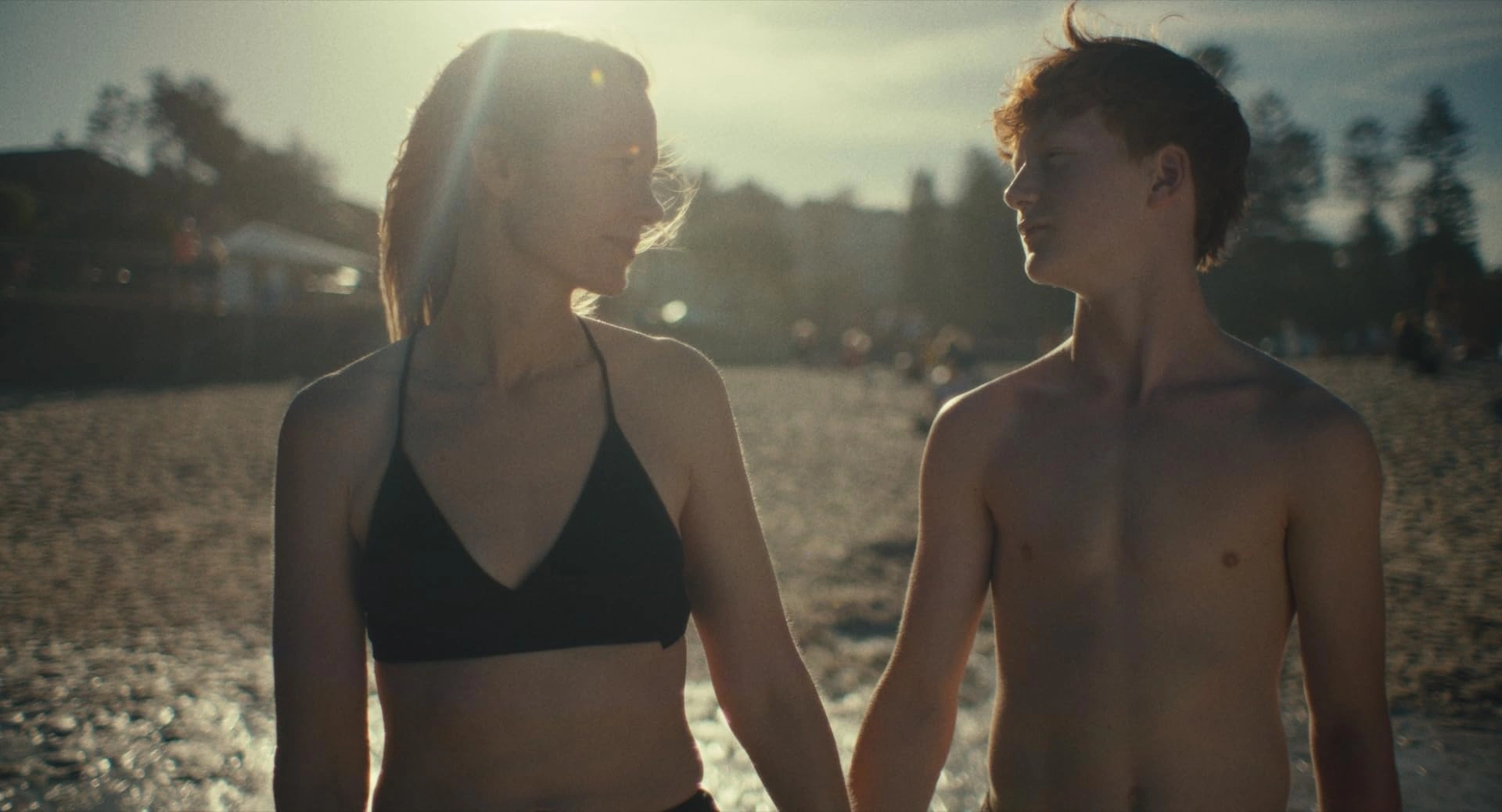
Sonny McGee gives the film its most delicate emotional thread as Otis. He stands at the edge of adolescence, caught between his own empathy and the casual misogyny passed down by his father. When he repeats a phrase about women exaggerating, the scene lands with a quiet chill.
The line shows how easily harmful patterns move from parent to child, sometimes before the child fully understands what he has absorbed. Small encounters with supporting figures, including a local grocery shop worker named Sati, offer flashes of ordinary teenage life. Those moments matter because they show what Otis could lose if the logic of his home follows him into adulthood.
Dermody keeps Sarah from becoming a passive figure in her own story. Her performance is built from rapid, agonizing decisions made under pressure. She conveys deep loneliness in scenes where she tries to reach a best friend who cannot be reached, and in exchanges with her mother, who cannot see Jake’s manipulation. England gives Jake’s brief appearances the force of physical intrusion.
He crowds the film like bad weather. His threat comes from his normality, from the way he can appear reasonable to people outside the marriage. McGee carries the film’s generational anxiety with impressive control, especially as Otis begins to test his father’s authority. His small acts of rebellion become meaningful narrative victories because they mark the first signs of a different emotional inheritance.
The Architecture of Financial Abuse
Screenwriter Courtney Collins keeps the structure tight, focusing on the isolated bond between Sarah and Otis. The opulent setting may distract some viewers. Sarah wears designer labels and hides inside a palatial estate, which can make the film appear close to a high-end fashion shoot.
That polished surface sits far from the rougher social realism often associated with domestic abuse dramas. Still, the setting has a clear analytical function. It shows that financial abuse reaches across class lines. Sarah can stand inside luxury and remain trapped, especially once her bank accounts are closed and she is left stranded with cash in her pocket.
The story’s progression reflects that instability. Its third act arrives with a sharp, abrupt feeling. The film refuses the comfort of a tidy legal victory or a neatly sealed emotional release. That choice may frustrate viewers who want a cleaner dramatic arc, yet it fits the lived uncertainty of trying to rebuild after a controlling relationship. Escape in this story is a beginning with no guaranteed route forward.
The massive, hollow mansion sharpens the emptiness of the life Sarah has left. It shifts attention toward the systematic erosion of independence, showing how quickly geographic and financial security can disappear under marital surveillance. Collins keeps the runtime lean and avoids melodrama, which lets the film operate as a focused study of one crisis.
The ending’s abruptness becomes part of that design. Leaving a relationship like this marks the first step in a process that continues beyond the frame. The final image of Sarah and Otis swimming together in a calm ocean pool offers no promise of a perfect future. It gives them a moment of real autonomy, grounded in shared truth and free from the illusions that once surrounded them.
The Australian feature drama Life Could Be a Dream officially premiered in national cinemas on May 14, 2026, following select preview and charity gala screenings across major cities in April and early May. Audiences can currently experience this psychological narrative on the big screen across Australia at major independent venues, including Palace Cinemas and HOTA Home of the Arts.
Full Credits
Title: Life Could Be a Dream
Distributor: Maslow Entertainment
Release date: May 14, 2026
Rating: M
Running time: 82 minutes
Director: Jasmin Tarasin
Writers: Courtney Collins
Producers and Executive Producers: Jasmin Tarasin, Catherine Church, Clare Lewis
Cast: Maeve Dermody, Alexander England, Sonny McGee, Noam Sen-Gupta, Septimus Caton
Director of Photography (Cinematographer): Meg White
Editors: Gabriella Muir
Composer: Dan Luscombe
The Review
Life Could Be a Dream
Life Could Be a Dream provides a meticulous, visually striking exploration of coercive control that favors psychological accuracy over typical cinematic sensationalism. Jasmin Tarasin strips away conventional thriller elements to deliver a grounded study of domestic isolation, anchored by exceptional central performances and a deeply resonant auditory atmosphere. While the stylized, luxurious setting occasionally threatens to soften the immediate stakes, the underlying depiction of financial and emotional manipulation remains precise and urgent.
PROS
- The clever use of muffled audio layers effectively places the viewer inside the suffocating, submerged psychological state of the protagonist.
- The portrait of the adolescent son avoids simple coming-of-age clichés, showing the subtle friction of a young man processing a father’s toxic influence.
- The narrative successfully demonstrates that coercive control and systemic financial isolation cut across affluent communities.
CONS
- The glossy, designer-heavy visuals occasionally border on high-end commercial styling, which can disrupt the dramatic realism.
- The final act shifts into an open-ended resolution so quickly that the conclusion can feel slightly rushed rather than organic.