






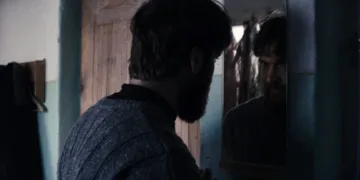

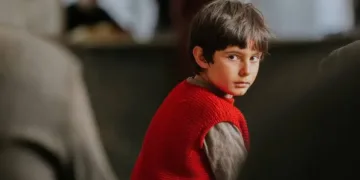







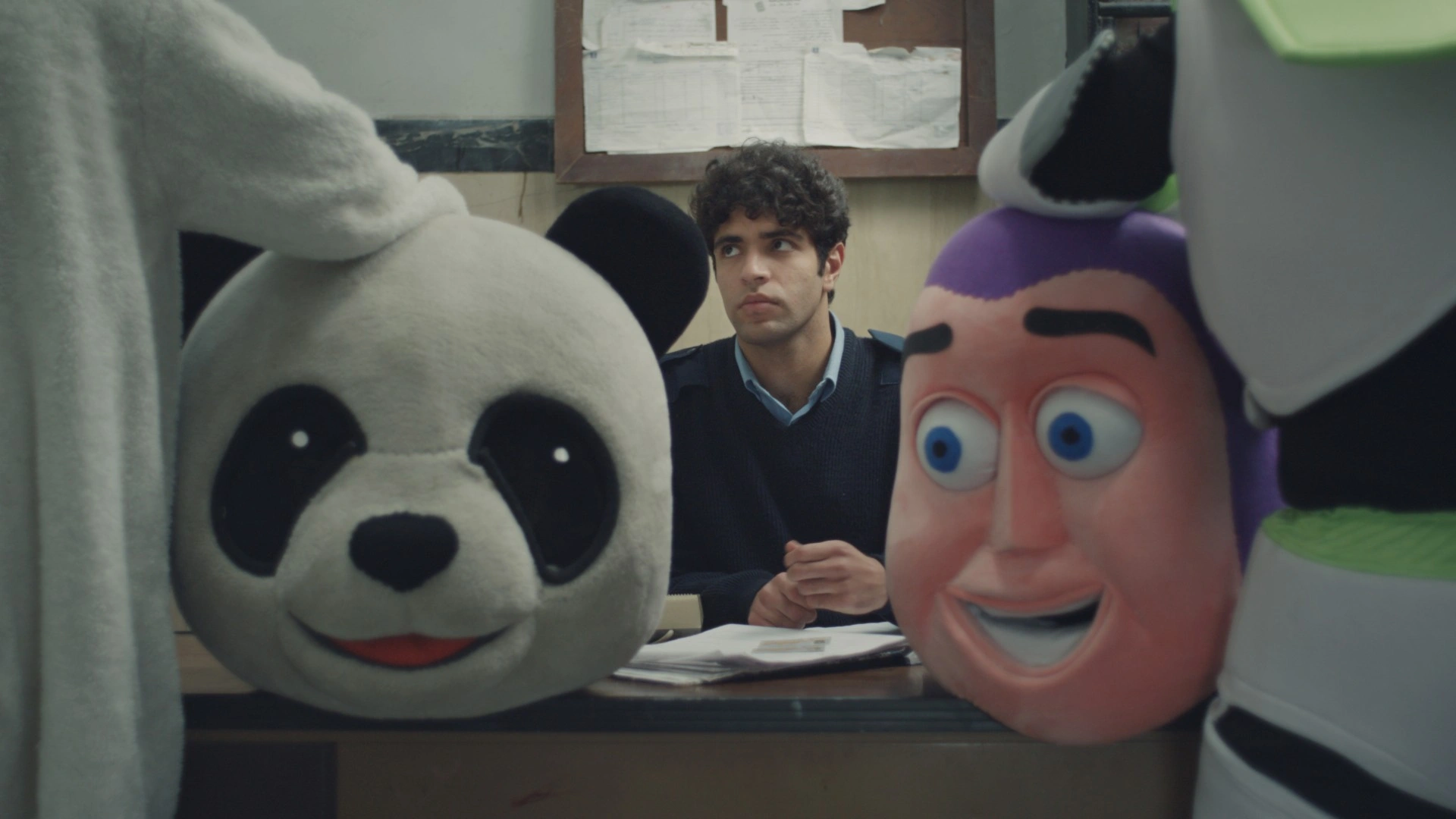

The screen stays dark for an extended stretch before Simon’s face appears. It is a face trained to disappear inside the shadows of a Cairo security desk. Ten years earlier, Simon saw his father executed in Libya, a tragedy that locked his life into a state of suspended grief. He now lives on the rooftop of the building he guards, moving through his days with quiet surrender.
The title Safe Exit carries a cruel irony, since every path away from Simon’s social and emotional confinement has collapsed. He spends his nights staring into darkness, sometimes setting down his thoughts in a notebook. He wants to become an author, while his daily life remains trapped in low wages and steady fear.
The film builds a world where religious identity and economic hardship are bound tightly together. It observes a generation formed by violence, poverty, and shrinking hope. Simon’s struggle becomes a private fight for survival after a public massacre. The narrative steps away from sweeping political rhetoric and studies the human cost of geopolitical horror.
The Stillness of a Broken Watch
Simon sits behind a desk because invisibility has become his safest form of existence. His body speaks through restraint. Marwan Waleed, a mechanical engineer with little acting experience before this role, gives the performance a precise, tightly held quality rooted in deep trauma. His physicality is guarded. Every movement carries stiffness, suggesting a man permanently braced for danger.
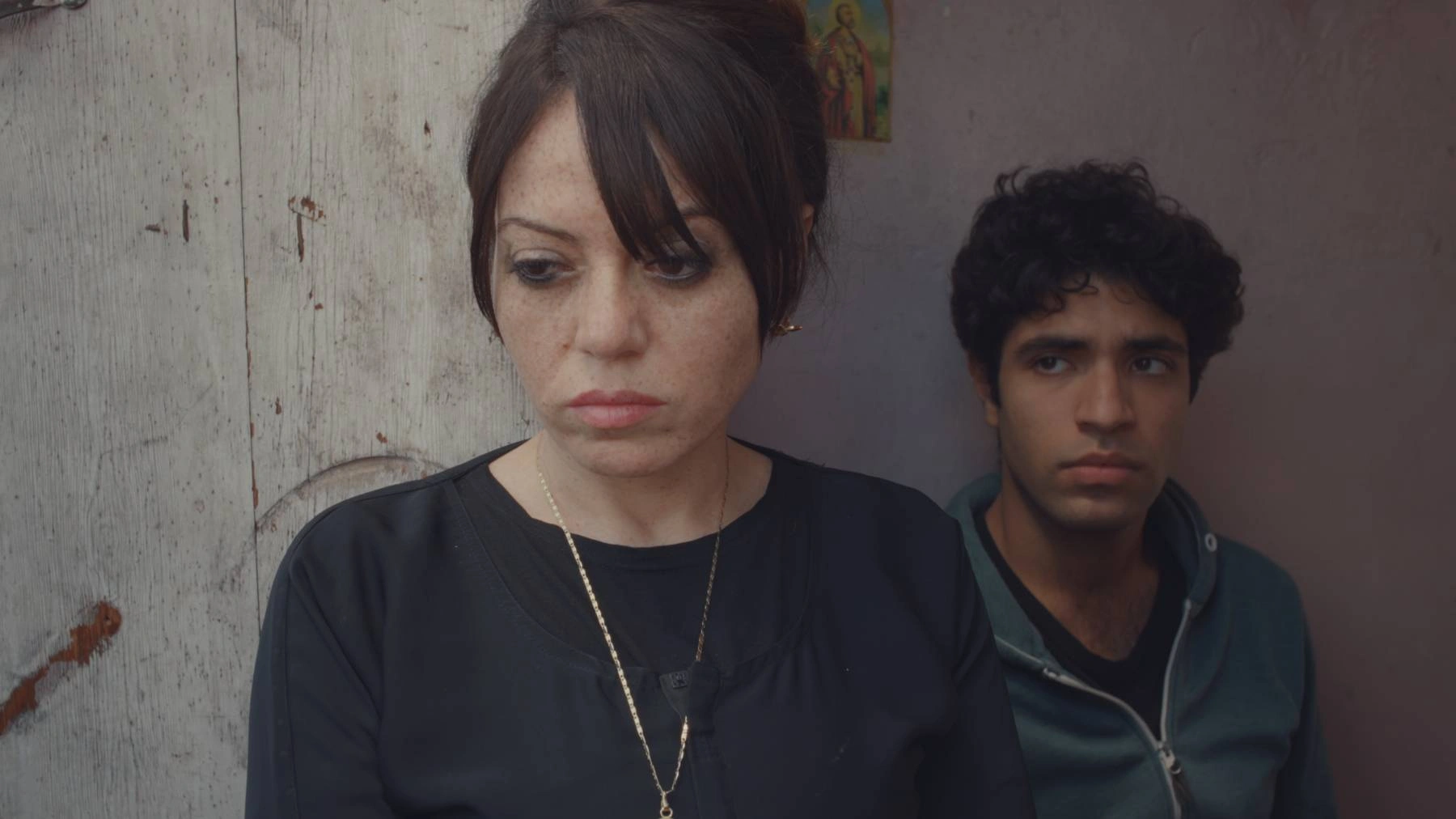
The performance recalls the protagonists of Indian parallel cinema, where social position can press characters into near paralysis. Simon is a Coptic Christian working inside a mixed-use building, yet belonging remains out of reach in every space he occupies. He is a security guard stripped of personal safety.
His exchanges with authority are submissive because submission has become his method of survival. His memoir writing offers a small claim of control over a life shaped by other people’s power. Religious conviction does not define his daily behavior, yet a religious massacre defined his fate.
He carries the burden of surviving while his father died for his faith. This stagnation becomes physical. Simon’s face holds the fatigue of a man who has waited ten years for the next blow. He seeks endurance through obscurity in a city that demands constant attention.
Alliances on the Vertical Map
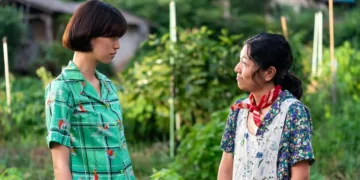
The apartment building becomes a vertical map of social desperation. Simon’s rooftop existence separates him from the streets below, a spatial design that echoes the class divisions found in modern Indian thrillers. His meeting with Fatimah, a young Muslim woman lacking identification, gives the story its clearest expression of shared vulnerability.
Fatimah suffers from seizures and lacks legal status, turning her into a shadow inside her own country. Their bond grows from necessity. Both are trapped by systems that value documents above human life. Simon faces a hard moral test when he hides Abdullah, a religious extremist, on the roof. He accepts bribes from the man’s mother and warns him about police raids.
His choice comes from financial desperation and fear of Abdullah’s power. The hypocrisy of the other guards is plain. They behave with weaker principles than Simon while posing as agents of order. The building works as a social microcosm, filled with people too poor for freedom and too visible to vanish. These characters trade fragments of dignity for brief moments of relief. Their alliance becomes a fragile shield against a system built without space for their survival.
The Geometry of Cairo’s Dust
Hammad presents Cairo as a city where the air seems thick with the residue of history. The cinematography catches a world coated in fine dust, giving rooms, walls, and faces a brittle age. That visual decay mirrors the characters’ inner condition. Peeling paint and worn interiors create a mood of steady decline.
The film’s slow pacing asks the viewer to sit inside silence. Its style reflects global minimalist cinema and the long-take discipline associated with directors like Bela Tarr. The camera often stays fixed, making Simon’s stagnation feel spatial and psychological at once.
It charts an environment shaped by systemic control, where social mobility has become fantasy. The finale offers hard-earned justice. It arrives without sentimentality, denying the viewer easy comfort. The ending releases tension with sudden force after a story built on waiting, fear, and containment.
Simon belongs to a lost generation living under the shadow of parental tragedy. A better life remains beyond sight. The film closes with a sober recognition of their condition. It observes how resignation becomes a way to survive a world that refuses to provide a safe exit.
Safe Exit is a psychological thriller that held its world premiere at the 76th Berlin International Film Festival on February 12, 2026, as part of the Panorama section. The film follows Samaan, a young security guard in Cairo struggling with inherited trauma after witnessing the murder of his father by religious extremists years earlier. As of May 2026, the film is primarily circulating through the international festival circuit and is handled by MAD World for worldwide sales and MAD Distribution for the Arab world.
Full Credits
Title: Safe Exit
Distributor: MAD Distribution, MAD World
Release date: February 12, 2026
Running time: 113 minutes
Director: Mohammed Hammad
Writers: Mohammed Hammad
Producers and Executive Producers: Kholoud Saad, Mohammed Hammad, Dora Bouchoucha, May Odeh, Zorana Musikic, Dina Farouk, Ibrahim El Batout
Cast: Marwan Waleed, Noha Foad, Hazem Essam, Magda Mounir
Director of Photography (Cinematographer): Mohammed El Sharqawy
Editors: Dina Farouk
Composer: Ahmad Nazmy
The Review
Safe Exit
Safe Exit captures the hollowed-out existence of a generation defined by ghosts. Mohammed Hammad avoids melodrama to present a quiet observation of spiritual and social paralysis. Marwan Waleed gives a performance of heavy stillness that anchors the film in a physical reality of grief. The pace reflects the stagnation of the characters, yet the final moments offer a sharp, unsentimental release. It remains a necessary look at the private scars left by public violence.
PROS
- Authentic and withheld performance by Marwan Waleed.
- Strong sense of place through dusty, minimalist visuals.
- Direct social commentary on Coptic identity and class.
CONS
- The slow pacing might feel stagnant for some viewers.
- Certain plot points feel stacked for misery.