

















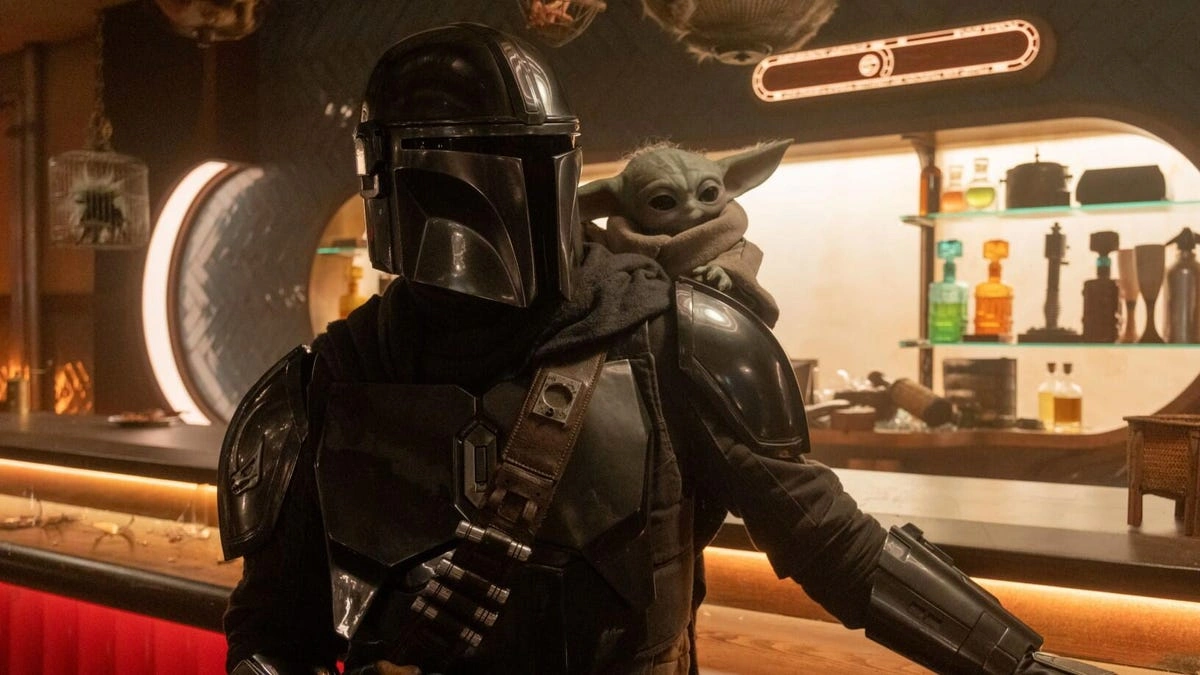

The Mandalorian and Grogu, directed by Jon Favreau, returns the beloved bounty-hunting duo to theatrical screens in a significant franchise transition. This release moves Din Djarin and his young, Force-sensitive apprentice from their episodic streaming origins to the large screen.
The story unfolds after the fall of the Galactic Empire, with the pair accepting assignments for the emerging New Republic. Under the supervision of Colonel Ward, they take on a mission to rescue Rotta the Hutt, the muscular son of Jabba, from a fighting pit on the neon-lit planet of Shakari. The New Republic seeks valuable intelligence on lingering Imperial sympathizers in exchange.
The narrative holds its focus tightly on the central bond between the armored warrior and his diminutive ward, even as the stakes frame themselves around galactic stability. This theatrical venture aims to capture the classic space-western charm that first won audiences, translating familiar dynamics into a grander visual scale.
Narrative Structure and Small Screen Proportions
Moving from living room streaming services to commercial theaters demands structural expansion, and this script actively sidesteps that demand. The narrative operates with a surprisingly slender economy of scale, functioning as a self-contained, mid-season television assignment stretched to fill a two-hour-and-twelve-minute runtime.
By keeping stakes hyper-localized around retrieving a minor syndicate figure, the storytelling avoids direct engagement with the massive political shifts of the New Republic era. The gap between theatrical expectations and structural reality becomes stark. Audiences receive a story that purposefully isolates its villains, replacing sprawling galactic significance with the immediate concerns of Jabba the Hutt’s family.
This safe, conflict-averse architecture directly shapes the trajectory of the main characters. Three television seasons allowed the central relationship to evolve through gradual shifts. Here, the narrative engine relies entirely on an established status quo, locking Din Djarin and his newly minted apprentice into a familiar loop of predictable behaviors. They begin the film as an extraordinarily capable team and finish in much the same position, neutralizing any threat of genuine, permanent change.
The structural pacing further exposes these small-screen origins through an episodic, “monster of the week” flow. The opening sequence on a snowy planet serves as an isolated playground for action choreography, generating excellent momentum with no bearing on the subsequent plot chapters.
Each new location, from the neon streets of Shakari to the subterranean swamps of Nal Hutta, operates as an independent television segment, disconnected from any singular, driving cinematic arc. This approach values a steady, digestible rhythm over the sweeping structural momentum traditionally demanded by a marquee theatrical event.
Character Dynamics and the Novelty of a Ripped Hutt
The physical reality of the titular warrior remains one of the more interesting structural experiments in modern franchise filmmaking. The character spends almost the entire runtime encased in armor, requiring precise synchronization between physical movement and post-production vocal delivery.

Brendan Wayne and Lateef Crowder deserve considerable credit for providing the fluid, ruthless combat language of Din Djarin. Pedro Pascal supplies a calm vocal performance, though the script gives him very little opportunity to vary his emotional range. The stoic father figure remains perfectly steady, creating a reliable anchor while leaving the character feeling somewhat static.
The introduction of Rotta the Hutt provides the narrative with its most jarring and unexpectedly endearing addition. Presenting Jabba’s adult son as a muscular, gladiator-style entity requires immediate adjustment, discarding decades of established biological lore for a specialized aesthetic choice.
Jeremy Allen White delivers a surprisingly grounded, conversational performance that initially clashes with the character design. His repetitive monologues about stepping out from his father’s shadow suffer from clumsy scripting, yet the character achieves an odd tenderness in his interactions with Grogu, eventually justifying his prominent screen time.
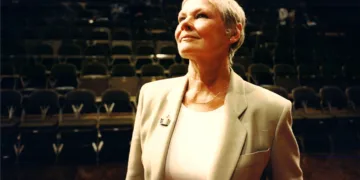
The supporting cast meets varying degrees of success. Sigourney Weaver brings an effortless, authoritative cool to Colonel Ward, executing a familiar military archetype with absolute professionalism. Characters pulled from the animated history, such as the pilot Zeb Orrelios or the bounty hunter Embo, function as static fan service nods with little space for full realization as participants.
The true scene-stealers arrive in the form of an Anzellan modification crew. These diminutive puppet mechanics inject genuine humor and a vital shift in perspective into the middle of the film, temporarily grounding the massive production in tangible, miniature charm.
Action Mechanics and Visual Clarity in the Pits
Jon Favreau establishes a clear visual distinction between the grand scale of the film’s open-air sequences and the cluttered chaos of its interior battles. The opening sequence sets an impressive technical standard, pitting the central duo against a squad of towering AT-ATs. The sequence is designed specifically to exploit the scale of modern premium screens, utilizing explosive practical geography to reintroduce the characters at their maximum operational capacity.
The visual discipline begins to erode once the narrative moves into tighter, darker settings. The highly anticipated brawl within the Shakari fighting pits suffers from murky cinematography and a frantic editing style that obscures the physical performances of the stunt crew.
Favreau struggles to maintain geographical clarity during group skirmishes, relying on rapid cuts that flatten the individuality of different opponents. A specialized rolling maneuver for the muscular Hutt stands out as a creative highlight. The surrounding combat devolves into an illegible flurry of droids and digital creatures.
The technical execution recovers during the quieter stretches of the third act, particularly when the camera isolates Grogu in a swamp environment. This slower pace allows the practical artistry of Legacy Effects to take center stage, capturing meticulous facial movements and subtle shifts in weight that tend to get buried under the kinetic energy of larger action sequences.
Ludwig Göransson supports these tonal transitions with an excellent, synth-heavy musical score. His electronic variations on the classic character themes provide a much-needed energy boost, helping the film carry its momentum through a third act that relies too heavily on noncommittal narrative fakeouts.
Nostalgia as a Security Blanket
The film operates with a clear understanding of its commercial responsibilities, leaning on familiar iconography to maintain audience engagement. From aerial dogfights featuring classic X-wing fighters to the return of a reconditioned Razor Crest, the production treats franchise history as primary narrative fuel. These cinematic nods are integrated into the story with slightly more subtlety than in recent television seasons, though they point to an industry trend that prioritizes comforting nostalgia over original narrative exploration.
This reliance on the familiar creates a noticeable tension between lighthearted entertainment and emotional depth. The script successfully delivers the adorable, marketable moments expected by casual viewers, using the young apprentice’s appetite and expressions to generate immediate charm. These elements occasionally feel like shameless merchandising opportunities, but they are executed with enough genuine warmth to keep the movie from feeling cynical.
The storytelling reaches its most affecting register when it briefly touches on the long-term realities of the central relationship: the fact that the long-lived child will eventually survive his mortal protector. The film explores this existential anxiety during a beautifully quiet, contemplative sequence in the final act, offering a glimpse of a much richer, more daring piece of art. The narrative quickly retreats into the safety of a conventional, explosive climax, demonstrating full awareness of the story’s true emotional core while choosing to protect a highly profitable formula.
Star Wars: The Mandalorian and Grogu premiered at the TCL Chinese Theatre in Los Angeles on May 14, 2026, and is scheduled for its nationwide theatrical release on Friday, May 22, 2026. Acting as a cinematic continuation of the highly successful Disney+ streaming series The Mandalorian, this long-awaited project brings the iconic space-western adventures of Din Djarin and his tiny Force-sensitive apprentice to the large screen for the first time. For its initial release window, audiences can experience this galactic journey exclusively in movie theaters, with premium large-format and IMAX screenings available to capture its grand visual scale.
Where to Watch The Mandalorian And Grogu (2026) Online






Full Credits
Title: Star Wars: The Mandalorian and Grogu
Distributor: Walt Disney Studios Motion Pictures
Release date: May 22, 2026
Rating: PG-13
Running time: 132 minutes
Director: Jon Favreau
Writers: Jon Favreau, Dave Filoni, Noah Kloor
Producers and Executive Producers: Ian Bryce, Jon Favreau, Kathleen Kennedy, Dave Filoni
Cast: Pedro Pascal, Jeremy Allen White, Sigourney Weaver, Steve Blum, Jonny Coyne, Lateef Crowder, Brendan Wayne
Director of Photography (Cinematographer): Matthew Jensen
Editors: Andrew S. Eisen
Composer: Ludwig Göransson
The Review
The Mandalorian And Grogu
Jon Favreau delivers a highly polished cinematic experience that functions efficiently as lighthearted entertainment, yet it ultimately feels limited by its small-screen structural origins. The action sequences look spectacular on premium screens, and the core bond remains charming. However, the safe narrative framework and lack of genuine progression make this transition to the theater feel somewhat inconsequential.
PROS
- The opening AT-AT battle utilizes premium screens perfectly.
- Exceptional puppetry craftsmanship highlights the quieter, contemplative scenes.
- The Anzellan mechanics provide genuine humor and miniature charm.
- Ludwig Göransson supplies an energetic, synth-heavy accompaniment.
CONS
- The "monster of the week" structure lacks sweeping theatrical momentum.
- The script maintains an established loop, offering zero permanent growth.
- Chaotic editing and dark lighting choices obscure the close-quarters choreography.
- Flat scripting results in repetitive monologues and wooden vocal performances.







