

























![Kingdom Hearts Collection [I-III] Review](https://gazettely.com/wp-content/uploads/2026/10/Kingdom-Hearts-Collection-I-III-1-360x180.webp "Kingdom Hearts Collection [I-III] Review: KHII Holds Steady as Newer Entries Fluctuate 37")



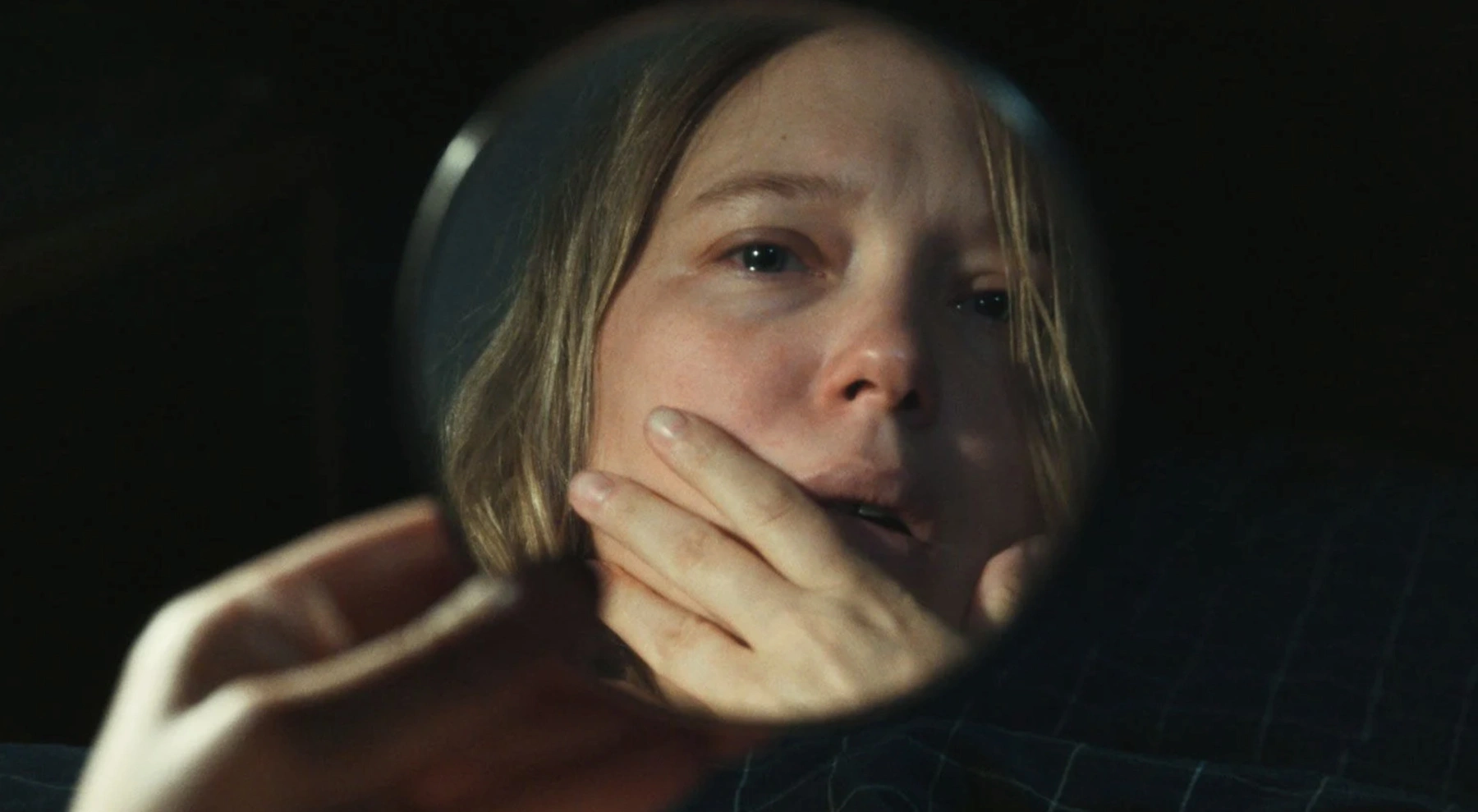

Arthur Harari stages a metaphysical theft of the body with the severity of a police report filed in a dream. After the grand historical isolation of Onoda: 10,000 Nights in the Jungle and the sharp legal scaffolding of his co-written screenplay Anatomy of a Fall, he moves into contemporary Paris, cold, transactional, nearly toxic. The air seems chemically weighted. David Zimmerman, a reticent and melancholy photographer, drifts through a life moored to a strange inherited archival project. His days have the inertia of an unedited contact sheet.
A chaotic, hedonistic New Year’s Eve party breaks that stasis. Across a crowded room thick with political nihilism, David sees Eva, an enigmatic presence whose entrance seems to arrest the frame. Their later sexual encounter occurs in a squalid, pitch-black subterranean room, a chamber of absolute emotional vacancy.
Morning arrives with the quiet violence of a cosmic clerical error. David wakes inside Eva’s physical form. The displacement is visceral, obscene, and intimate. Presenting to the world as Eva, he must learn the unfamiliar architecture of a new body and search for his male body.
The Metempsychotic Chain and Narrative Drift
Harari treats the body-swap premise with surgical severity. The familiar comic machinery has been removed, leaving a psychological breach that feels invasive. The first act moves with the kinetic tension of stylized neo-noir: gray streets, suspicious interiors, faces caught in hard scrutiny, a private detective story in which the detective has misplaced his own flesh. David, housed in Eva, uses cool analytical resourcefulness to move through Paris. He invades her personal life, tracing her apartment, her work as a waitress, and her hidden ambition to act.
The film then turns into existential horror with barely a warning. David finds his original male body under a concrete underpass, occupied by Malia, a deeply traumatized young woman. The phenomenon reveals its viral design. A supernatural entity passes exclusively through sexual contact, ejecting consciousness from one host into the next along an infinite, random line of victims.
The mechanics carry the cruelty of a cosmic chain letter, an admirably petty structure for metaphysical doom. Domestic wreckage follows: broken identities, borrowed faces, and a male consciousness permanently trapped inside a pregnant female body.
The early discoveries carry the propulsion of a classic investigative mystery. The final act drains that motion into bodily fatigue and psychological stasis. Active sleuthing gives way to wandering, rural spaces, and a shared recognition that the displacement has become permanent. The road ends because the characters do. Their search for a cure dissolves into silence, grief, and the bleak knowledge that free will has little leverage against an assigned body.
Somatic Dissociation and Captured Gazes
The sparse dialogue places extraordinary pressure on bodies, faces, and silent close-ups. Seydoux bears the film’s central aesthetic burden by rendering David’s consciousness through Eva’s flesh. Her performance maps stilted disbelief and frantic confusion through minute physical choices: a tightened stance, a hunched carriage, an awkward masculine angle that turns the body into a disputed site. The camera holds close enough to make identity feel like a fault line under skin.
One sharp moment arrives when a stranger makes an aggressive street intrusion. Seydoux’s reaction carries the cold defensive hostility of a heterosexual man who has briefly forgotten the terms of his new shell. It is funny for about half a second, then frightening. Schneider faces a harder calibration as the original David. His early scenes read as saturnine, flat, and dour, leaving the viewer with too few distinct traits to follow after the transfer.
His work gains force once Malia’s terrified consciousness inhabits David’s body. Schneider finds a fragile vulnerability, adopting a frightened, borderline-feminine posture that communicates the horror of a young woman trapped inside an aging male frame. Harari undercuts some of this force by extending his actors into repetitive staring contests. The gaze matters in this film, certainly. After the fifth fixed stare, one begins to suspect the abyss has unionized.
Radu Jude supplies a brief, vital charge of human energy as Malia’s father. The emotional peak comes when Malia uses precise childhood memories to convince him of her true identity. Harari then withdraws the comfort of recognition, revealing the encounter as a cruel internal hallucination. The scene becomes a small chamber of grief, lit by trust, then sealed shut.
Architectural Decay and Opaque Allegories
The technical design keeps returning to alienation as a built environment. Tom Harari’s early apartment sequences use shaky handheld camera movement to create a clinical, documentary-like record of a person studying a new physique from the inside. The shot composition favors cramped interiors, unstable proximity, and bodies caught against sterile surfaces. Paris ceases to function as romance and becomes an apparatus of erasure.
David’s photography project strengthens that idea. He documents modern, sterile apartment complexes replacing historic Parisian street corners, tying the city’s physical demolition to the loss of individual human history. The urban imagery mirrors the bodily premise with blunt elegance: old forms vanish, new structures take possession, memory lingers with nowhere dignified to live. The suburban landscapes appear unprepossessing, sterile, hostile to human identity. Quite a tourist brochure.
Andrea Poggio’s minimalist score sustains the dread through ominous low piano motifs reminiscent of classic John Carpenter thrillers. Sound design manipulates perception through restraint, keeping the audience alert to absence, delay, and the small acoustic pressure of waiting.
The film’s noir lineage appears in its chiaroscuro instincts, murky rooms, and expressionistic framing of bodies under moral and physical duress. Its modern deviation lies in the source of guilt. The crime is metaphysical, the victim list keeps shifting, and the self becomes the least reliable witness in the room.
The screenplay hesitates at the point where its allegory might sharpen. The transition remains an opaque supernatural riddle, with limited engagement with the biological, social, and gendered realities it raises. Harari creates an intellectualized, emotionally distant exercise, fascinating from shot to shot, severe in texture, rich in dread. The film often settles into empty ambiguity, leaving a fuller emotional reckoning out of reach, with identity flickering like a bad bulb in a locked corridor.
The psychological fantasy thriller had its world premiere in official competition at the Cannes Film Festival on May 18, 2026. Audiences can look forward to its theatrical release in France by Pathé on August 26, 2026, while Neon handles the North American distribution for a scheduled release later in the year.
Full Credits
Title: The Unknown (French: L’Inconnue)
Distributor: Pathé, Neon
Release date: May 18, 2026
Running time: 139 minutes
Director: Arthur Harari
Writers: Arthur Harari, Lucas Harari, Vincent Poymiro
Producers and Executive Producers: Nicolas Anthomé, Lionel Guedj
Cast: Léa Seydoux, Niels Schneider, Victoire Du Bois, Lilith Grasmug, Radu Jude, Valérie Dréville, Shanti Masud, Jonathan Turnbull
Director of Photography (Cinematographer): Tom Harari
Editors: Laurent Sénéchal
Composer: Andrea Poggio
The Review
The Unknown
The Unknown functions as a striking, chilly subversion of body-swap conventions, trading comedic tropes for the moody, paranoid textures of a neo-noir thriller. Arthur Harari excels at generating a creeping atmosphere of bodily alienation, heavily supported by Léa Seydoux’s remarkable physical performance. However, the film ultimately stalls out in its final act, prioritizing empty, high-minded ambiguity over a truly resonant thematic commitment. It remains an intellectually fascinating but emotionally distant exercise.
PROS
- A gripping, genuinely disquieting subversion of traditional body-swap tropes that leans into psychological horror.
- Léa Seydoux delivers an exceptional physical performance, capturing masculine body language and internal gender confusion with remarkable nuance.
- Tom Harari's clinical, handheld cinematography and the sterile suburban locations perfectly mirror the theme of personal erasure.
CONS
- Niels Schneider’s early, overly dour performance leaves the character of David feeling flat and difficult to invest in before the transformation.
- The narrative suffers from severe pacing issues in the final act, abandoning its thriller momentum for repetitive staring contests and narrative stagnation.
- The script ultimately refuses to commit to its most compelling thematic allegories, opting for a detached, opaque riddle instead of depth.







