



























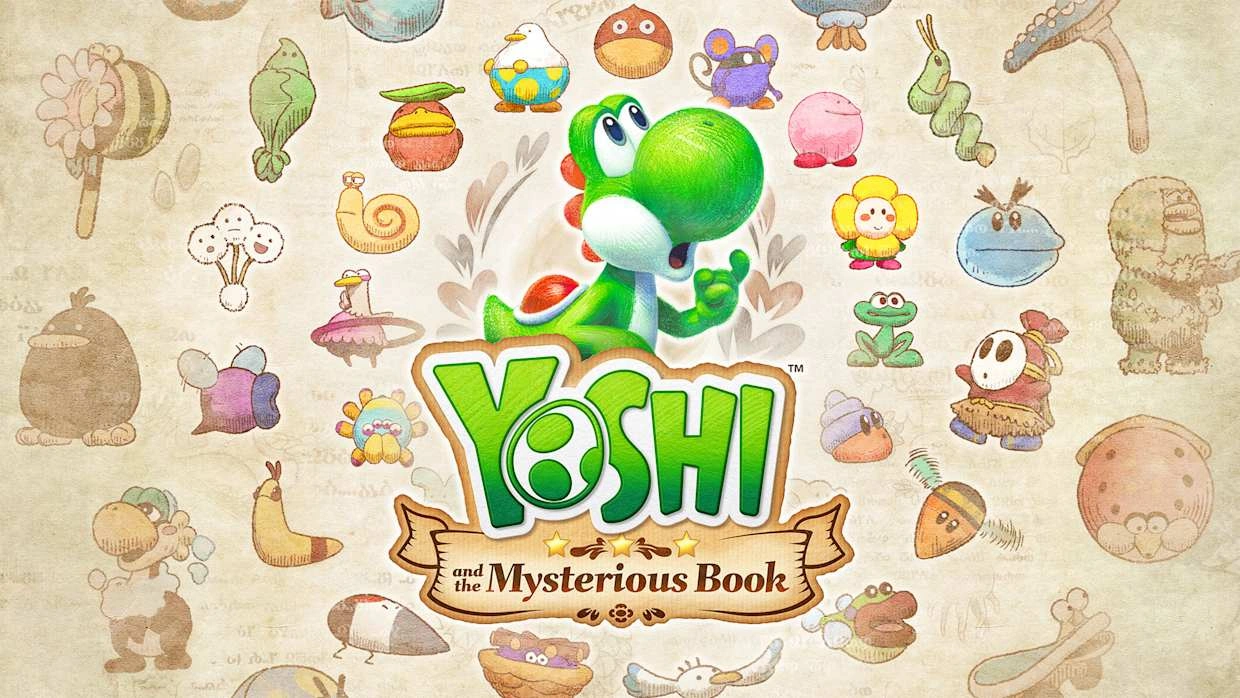

Mister Encyclopedia, or Mr. E, is a living manuscript with consciousness, a book whose pages generate life across a remote, unnamed island. Yoshi enters this paper world as a field researcher, cataloging each specimen of flora and fauna through direct observation.
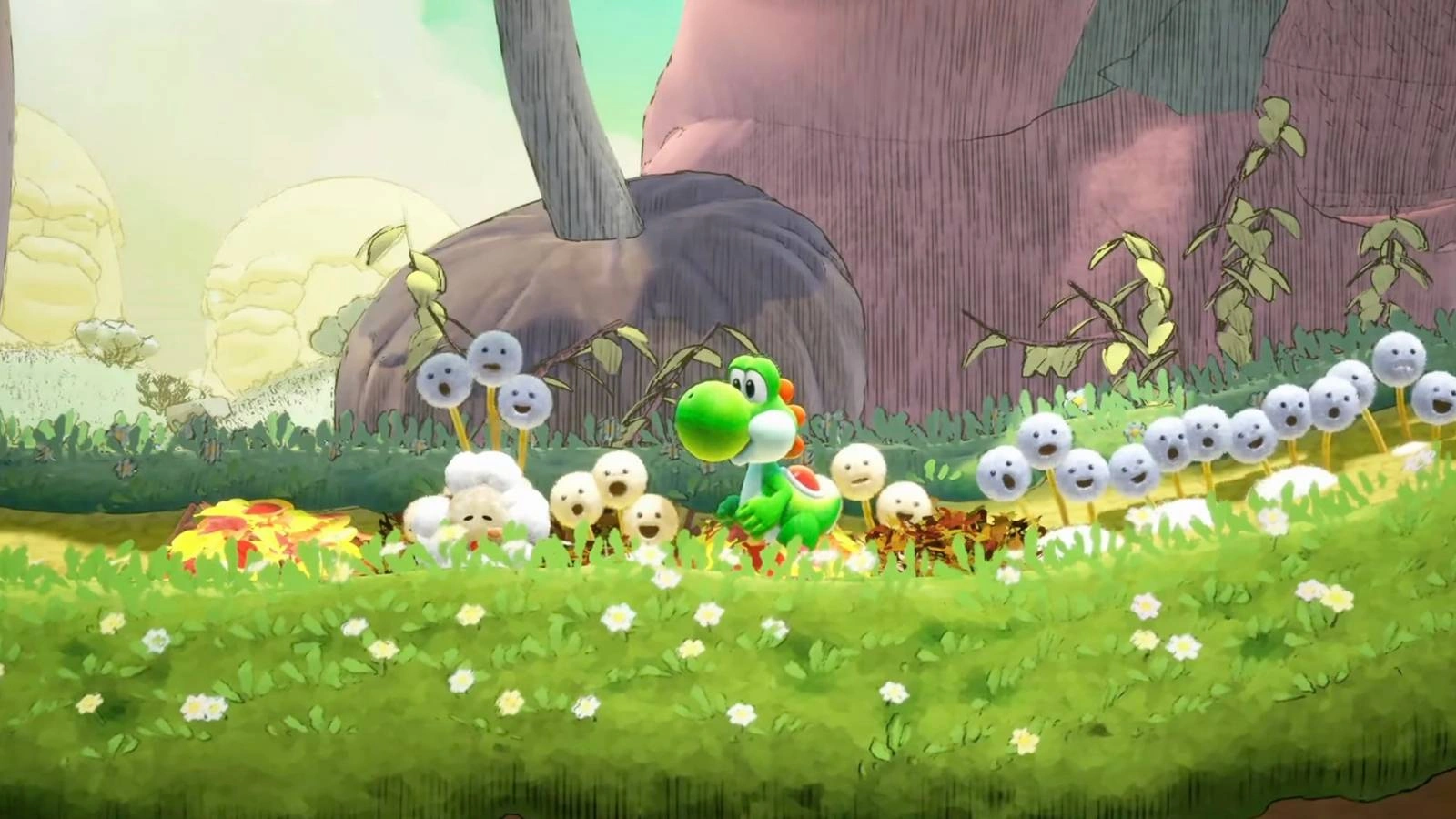
The plot begins with Bowser Jr. and Kamek pursuing a rare species buried deep in the text, a setup that appears light and playful before the finale swerves into a darker plot twist that overturns the soft opening tone. The visual design trades standard digital polish for a rich colored-pencil style.
Chunky 3D objects sit in the main play space, while the edges of each environment fade into rough pencil sketching. That handmade look pairs with a frame-dropped flickbook animation style, giving Yoshi frantic cartoon reactions to each discovery, especially during his taste tests of local wildlife.
Redefining the Platforming Loop
This title moves away from familiar side-scrolling momentum and the usual push toward the right side of the screen. Stages play like open biospheres, with progress tied to exploration, experimentation, and environmental cause and effect. The camera does not hurry you along, and no timer pressures your decisions. Turning the next page requires finding a major interaction that changes the state of the level.
Yoshi’s toolset remains familiar for long-time players. He can swallow objects with his tongue, turn enemies into throwable eggs, perform a heavy ground pound, and use his flutter jump to stay airborne. He can also carry an item on his back until a later moment gives it purpose. These classic actions work like parts in a small physics-driven chemistry kit. The design asks players to test ideas, combine items, and study the consequences of each interaction.
Progress comes through logging those interactions as Discoveries. The game tracks research with care, asking you to watch what happens when a creature hits a hazard, reacts to food, or hides somewhere in the stage. You might record a creature changing color after eating an apple, locate missing families, or reveal secret spots.
A stage ends after a major preset milestone is triggered, such as using a fishing-pole creature to pull a huge fish from the water below or using specific plants to grow giant flower buds across a wide chasm. The appeal comes from observation and systems thinking, with mechanical precision playing a smaller role.
The Ecosystem and Its Limits
The creature roster gives the game much of its mechanical personality. Players meet lozenge-shaped seabirds that help with aerial travel, a green creature with a bubble-wand head, a jellyfish that functions as a fast water jetpack, and bubblegum-like beings that multiply into springy trampolines.
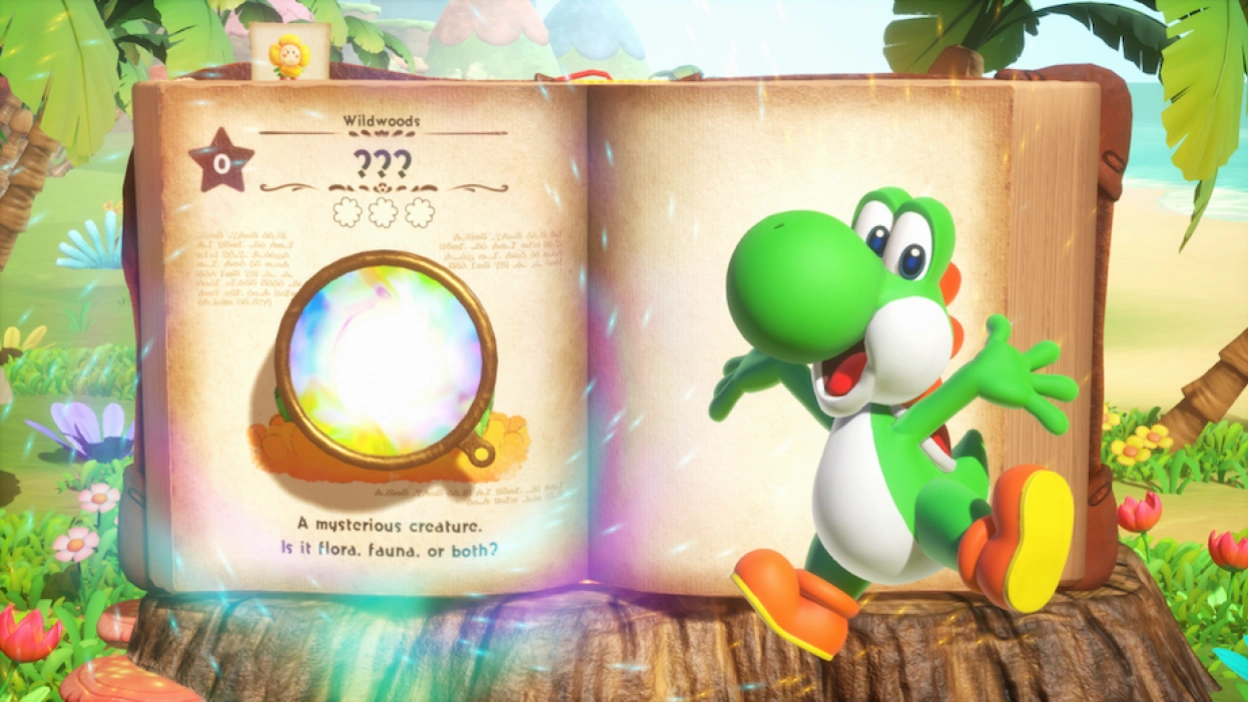
You can ride a huge drill-nosed warthog through obstacles, bounce with a hula-hooping bird, or throw a boomerang-shaped bug to cut thick foliage. The option to custom-name species gives the research journal a personal touch, making each entry feel connected to the player’s own fieldwork.
These species live across varied spaces, from hollow-tree forests to beach caverns packed with collapsing pirate ships. Finding their interactions creates a chain reaction where the ecosystem begins to lock together, giving the game a mechanical depth that recalls open-ended indie sandboxes. Once the main Discoveries are recorded, those same levels lose much of their pull. Returning to old stages for missed stamps turns into checklist cleanup, since the first spark of environmental surprise has already faded.
Physics problems create sharper frustration. Moving pirate ships, bouncing spinning tops, and wall jumps using springy bugs feel uneven, leading to cheap mistakes that Nintendo platformers tend to avoid. Chapter 6 offers the strongest answer to this issue by letting Yoshi call on earlier creatures to climb waterfalls or drill through mountains. The sequence reframes previous research as training and asks players to apply what they have learned in a creative way. The mechanic disappears right after that section, sending the structure back to its familiar rhythm.
Data Overload in a Gentle World
The lack of traditional danger or failure creates a very soft difficulty curve, making the game easy for newcomers to approach. Yoshi cannot die, and damage has no meaningful penalty, so players can move through the pages without stress. That gentle design clashes with the game’s heavy reading load.
Players must read hints, companion dialogue, and Discovery logs to understand what to do. With no voice acting or spoken dialogue, the text becomes a major obstacle for very young players who would otherwise enjoy the forgiving play style. Parents may need to act as interpreters so children can move through the menus.
After the eight-hour campaign, a strange post-game modular UI grid opens a new form of engagement. Collected Smiley Flowers can be spent on experimental screen tools that modify the heads-up display. These interface options include a creature-tracking Bioscanner, environmental thermometers, wind speed meters, and water quality graphs.
The game even includes a health bar with no mechanical function. Yoshi cannot be defeated, yet the health bar makes him react with tired animations when his points drop low. This lets completionists fill the screen with a messy layer of absurd, useless data.
The system gives the post-game biomes a strange analytical texture and offers older players a reason to keep exploring. The rewards remain cosmetic and do not change the core physics, yet the commitment to this odd scientific joke gives the post-game its own peculiar charm.
The Review
Yoshi and the Mysterious Book
Yoshi and the Mysterious Book is a gorgeously animated, stress-free sandbox that trades traditional platforming challenge for pure, physics-based curiosity. The gorgeous hand-drawn presentation and imaginative creature mechanics deliver a wonderful initial wave of discovery. However, the experience ultimately lacks mechanical depth, dropping its best gameplay concepts too quickly while bogging down its young target audience in excessive text barriers. It stands as a charming, creative experiment that stops just short of reaching its full potential.
PROS
- Beautiful, expressive hand-drawn illustration visual style.
- Imaginative creature variety with fun, physics-focused experimentation.
- Inventive, non-linear approach to 2D platforming goals.
- Bizarrely entertaining customizable post-game interface tools.
CONS
- Levels quickly lose their charm and feel like a shallow checklist upon replay.
- High volume of required reading with zero spoken voice acting for young players.
- Occasional wonky physics interactions cause unexpected frustration.
- The best mechanics from Chapter 6 are abandoned too quickly.