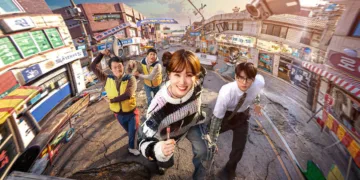





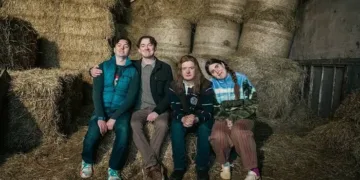

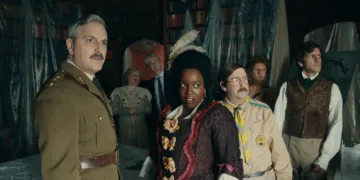
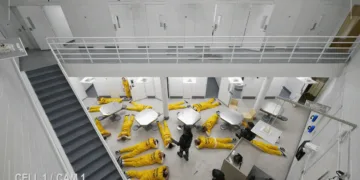






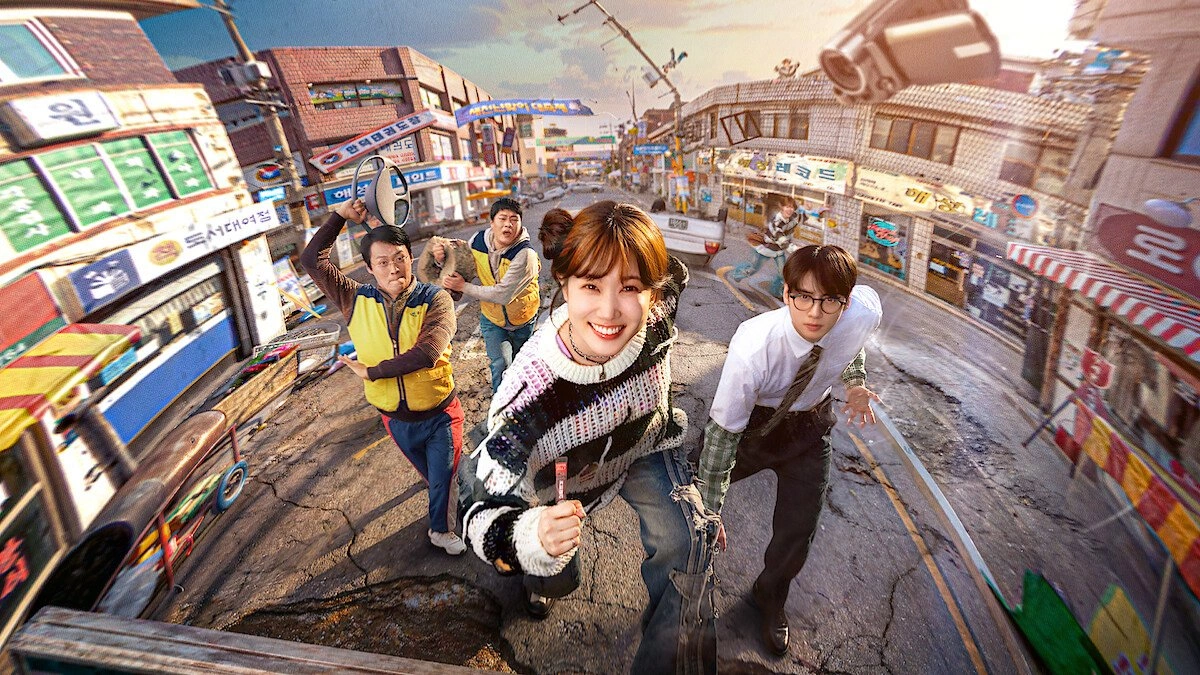

Director Yoo In-sik joins forces with the screenwriter of the hit film Extreme Job on a television premise that announces its oddness early. The series is set in the fictional west coast city of Haeseong-si in 1999, where millennium panic and apocalyptic dread hang over the story like bad weather.
Its first dramatic engine is Eun Chae-ni, a twenty-seven-year-old woman living with a terminal congenital heart condition. Her behavior has already earned her the community nickname Lady Trainwreck, a label that says plenty about the town’s patience. Chae-ni wants to see the world before death closes in. Her wealthy grandmother, Kim Jeon-bok, keeps her under suffocating watch and refuses to fund her travel plans.
With few choices left, Chae-ni draws two poor local men, Kang Ro-bin and Son Gyeong-hun, into a fake kidnapping plot meant to extort her grandmother. The scheme breaks almost at once when Chae-ni dies during the ordeal.
Her terrified co-conspirators dump her body at a local waste site tainted by illegal toxic pollutants. The chemical sludge turns the attempted disposal into a resurrection, creating the origin story nobody involved had the composure to request. The same incident gives all three misfits unexpected supernatural powers.
Narrative Architecture, Mythology, and Tonal Transitions
The story grows sharply after Lee Un-jeong enters the frame. A meek City Hall employee known as Mr. Oddball, he also lives a secret life as a nighttime vigilante. His past gives the series its deeper mythology: Un-jeong was Patient Number 3972 at Hawondo Lab, an abandoned research facility that subjected orphan children to brutal chemical experimentation in pursuit of superhuman traits.
That old crime feeds the present threat. A fanatical cult called the Church of Eternal Salvation now operates from the ruins of the laboratory. The main antagonists, Pal-ho, Ju-ran, and Ho-ran, are psychologically broken survivors of those experiments, and they scour the city for the mythical Child of Eternity.
The script keeps making violent tonal pivots. One stretch plays as broad physical comedy, then the next pushes into childhood abuse, trauma, and institutional cruelty. That jumpiness creates strain, since cartoon scenarios often crash into grim psychological material before the show has fully prepared the transition. The production steadies itself through smaller, grounded subplots.
Gyeong-hun, in particular, brings real emotional weight through his painful efforts to reconnect with the estranged wife and teenage daughter who have lost faith in him. These human beats give the sci-fi sprawl a firm narrative floor and keep the mythology from becoming dead weight.
Character Analysis and Performance Assessments
The series depends on a cast willing to commit to its eccentric design, and the performers meet that demand. Park Eun-bin plays Eun Chae-ni with jagged, abrasive force. With dramatic goth makeup and colored hair, she throws herself into physical comedy, most vividly in a wild battle sequence involving a chainsaw. Under the manic surface, Park gives Chae-ni a visible fragility, keeping her fear of terminal illness present inside the character’s chaos.
Cha Eun-woo supplies acooler register as Lee Un-jeong. His performance is disciplined and spare, built from stillness, controlled breathing, and precise eye movements that suggest deep childhood trauma. The restraint gives him emotional authority during the intense middle chapters, offering a useful corrective for viewers who value him chiefly for his appearance.
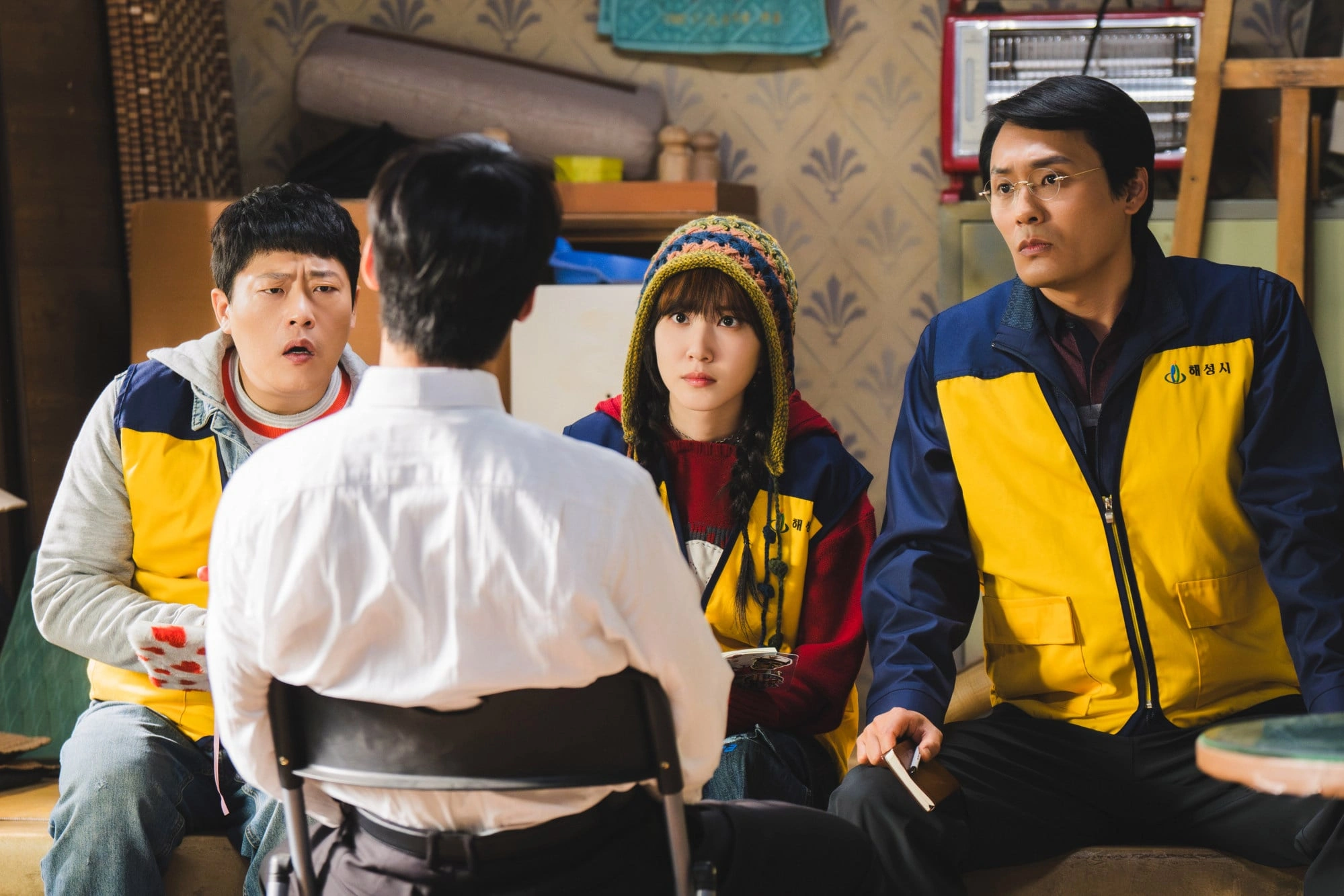
Choi Dae-hoon and Im Seong-jae give the accidental superhero team its comic lift. Their timing is sharp enough to make the chaotic subplots work through personality and rhythm. The highlights include a memorable parody of The Shining and a ridiculous sequence built around a giant rolling mascot.
Kim Hae-sook brings seasoned authority as the wealthy grandmother, grounding her scenes with a firm, practiced presence. The ensemble feels cohesive across the cast, with each major performance carrying its part of the strange design.
Directorial Execution, Visual Style, and Audio Design
Yoo In-sik uses the 1999 period setting as a stabilizing frame for the absurd supernatural premise. The millennium countdown aesthetic creates atmospheric pressure, and that pressure shapes the choices characters make. Technically, the production keeps a high standard. The action choreography is clean, and the physical gags are staged with crisp comic precision.
The sound choices reinforce the visual storytelling. Radiohead’s “Creep” appears in the premiere episode and immediately defines Chae-ni’s social isolation. Yoo later brings the same anthem back for a major late-stage confrontation, giving the battle a stronger emotional charge through repetition and placement.
The structure asks patience from the audience. The opening chapters are loud, chaotic, and intentionally unruly as the strange team comes together. That frantic early worldbuilding builds the relationships needed for the final episodes to land with higher emotional stakes. The series needs that early instability to earn its later payoffs.
The television series premiered globally on May 15, 2026, and is available for streaming exclusively on Netflix. Set against the turn-of-the-millennium anxieties of 1999, the story chronicles an eccentric group of ordinary citizens who acquire erratic supernatural powers following an accident at a toxic waste dump site. Viewers around the world can stream all eight episodes of this comic action-adventure series on the platform.
Where to Watch The Wonderfools Online


Full Credits
Title: The WONDERfools
Distributor: Netflix
Release date: May 15, 2026
Rating: TV-MA
Running time: 60–92 minutes per episode
Director: Yoo In-sik
Writers: Heo Da-joong, Kang Eun-kyung
Producers and Executive Producers: Bae Sun-hye, Kim Deok-jin, Lee Sang-min, Jang Se-jung, Namkoong Jung, Go Eun-ho, Lee Jae-hwan, Kim Min-ji
Cast: Park Eun-bin, Cha Eun-woo, Choi Dae-hoon, Im Seong-jae, Kim Hae-sook, Son Hyun-joo, Bae Na-ra, Jung Yi-seo, Choi Yoon-ji
Director of Photography (Cinematographer): Hwang Min-sik, Park Min-hyun
Editors: Cho In-hyung
Composer: Kim Tae-seung
The Review
The Wonderfools
This television series delivers an engaging experience by combining everyday absurdity with deep emotional anchors. The uneven script shifts abruptly between slapstick gags and heavy trauma, making the narrative path unstable. The production finds its footing through exceptional performances. Park Eun-bin injects remarkable vulnerability into her eccentric character, while Cha Eun-woo anchors the emotional weight with disciplined restraint. Audiences who tolerate the chaotic early worldbuilding will find a warm, character-driven story that treats its broken individuals with genuine sincerity.
PROS
- Excellent, restrained acting choices by Cha Eun-woo that ground the heavy emotional trauma.
- Park Eun-bin delivers a highly energetic performance balancing comedic chaos with deep vulnerability.
- The 1999 setting creates a rich atmospheric backdrop that directly influences character choices.
- Clean action choreography and precise staging of physical comedy sequences.
CONS
- The script features severe tonal instability, moving abruptly between cartoonish humor and grim institutional abuse.
- The initial episodes suffer from disjointed pacing and chaotic worldbuilding that can feel exhausting.
- The villain arc finishes with a neat resolution that fails to match the original narrative tension.