
























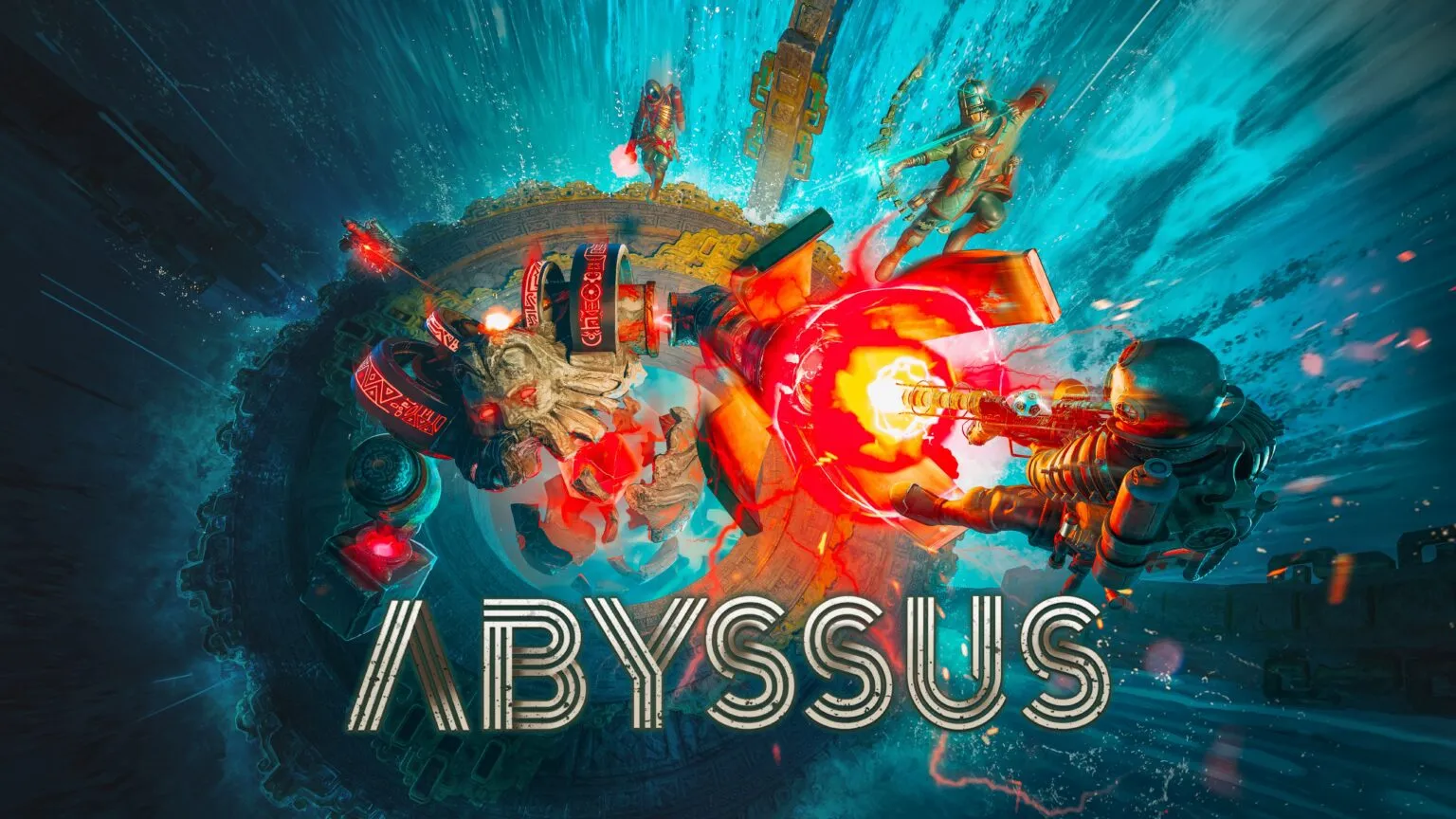

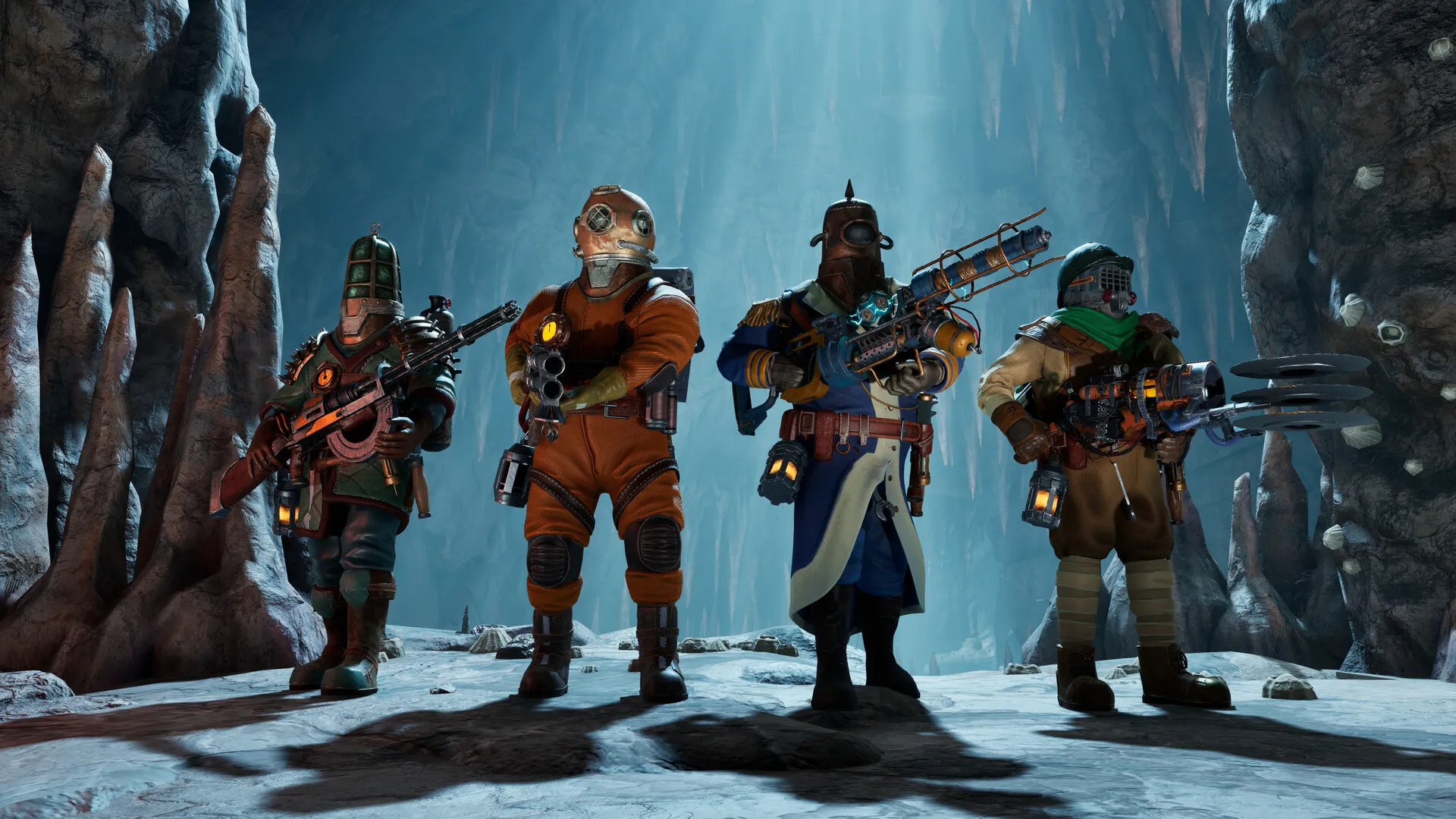
The gaming world has seen cyberpunk and steampunk, but Abyssus submerges players in a different aesthetic: brinepunk. This is a subaquatic world of corroded metals, bulky deep-sea diving suits, and a pervasive dampness, all tinged with cosmic horror.
You are thrust into the depths of a mysterious and hostile abyss, a place filled with ancient machinery and things that should not be. The setup is simple, casting you as a brinehunter, an explorer tasked with venturing into sunken ruins. Your core activity is fighting through room after room of strange enemies that are part mechanical, part organic.
Abyssus establishes itself as a cooperative roguelite first-person shooter. It supports expeditions of up to four people, though a solo experience is also an option. The main objective is to survive for as long as you can, gathering resources from the deep to grow stronger with each attempt. Every dive is a chance to push a little farther into the secrets of the forgotten underwater civilization, learning its layouts and overcoming its guardians. The loop is one ofrepetition and gradual improvement, a familiar structure for fans of the genre.
Aesthetics of the Abyss
The game’s identity is anchored in its brinepunk setting, a concept that swaps the familiar gears of steampunk for rust, salt corrosion, and deep-sea pressure suits. It presents a retro-futuristic vision pulled from 1960s science fiction pulp, where advanced technology feels heavy, analog, and weathered by a hostile, watery environment.
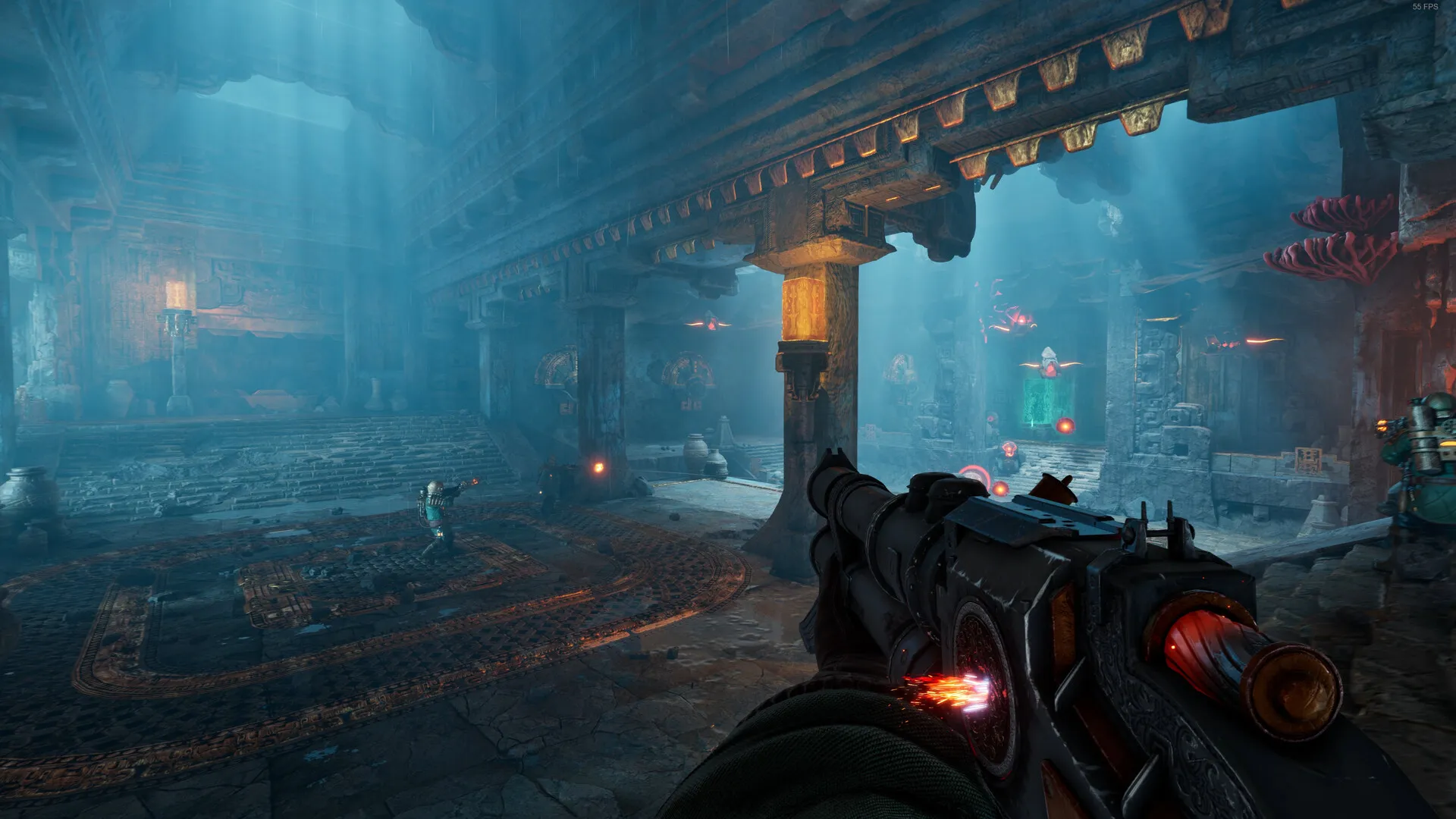
The atmosphere is thick with a sense of decay and mystery. You descend through dark, dank caves where the only light comes from bioluminescent flora or the glow of strange artifacts. The environments transition between distinct biomes, moving from initial sunken ruins to a dense, jungle-like region populated by hostile lizard creatures, and later to areas swarming with explosive-spitting frogs. Each zone introduces new threats and visual themes, effectively communicating a sense of deepening peril as you venture further down.
Enemy design is a strong point, presenting a menagerie of threats that are both detailed and unsettling. The first biome pits you against red-eyed automatons that feel like forgotten security systems for this ancient place. As you proceed, the enemies become more organic and aggressive.
Also Read






The game introduces interesting tactical challenges through its creature design, such as the golden frogs in later levels that project an invulnerability shield over their nearby allies, forcing you to prioritize targets under heavy fire. This level of detail in the opposition provides a stark contrast to the player characters, whose bulky and somewhat goofy diving suits feel out of place against the eerie backdrop.
The developers also inject a dose of personality through the brinehunters’ voice lines, which echo the nonchalant, blue-collar humor found in a game like Deep Rock Galactic, making the characters feel like seasoned professionals unfazed by the cosmic horrors they face. This levity is a welcome touch in an otherwise oppressive world.
The game’s level structure, however, is less inspired. It uses a collection of hand-crafted combat arenas and connects them in a random order for each run. While the individual rooms are competently designed for combat encounters, their recombination quickly becomes repetitive.
You will begin to recognize specific layouts after just a few hours, diminishing the sense of true exploration. This feeling is amplified by the unchanging lore notes you find, which fail to expand the world in a meaningful way across multiple attempts.
Frenetic Underwater Gunnery
The combat in Abyssus is a direct homage to the fast-paced “boomer shooters” of the 1990s. There is no cover system, no regenerating health, and no tactical patience. Survival depends entirely on your ability to stay in motion.
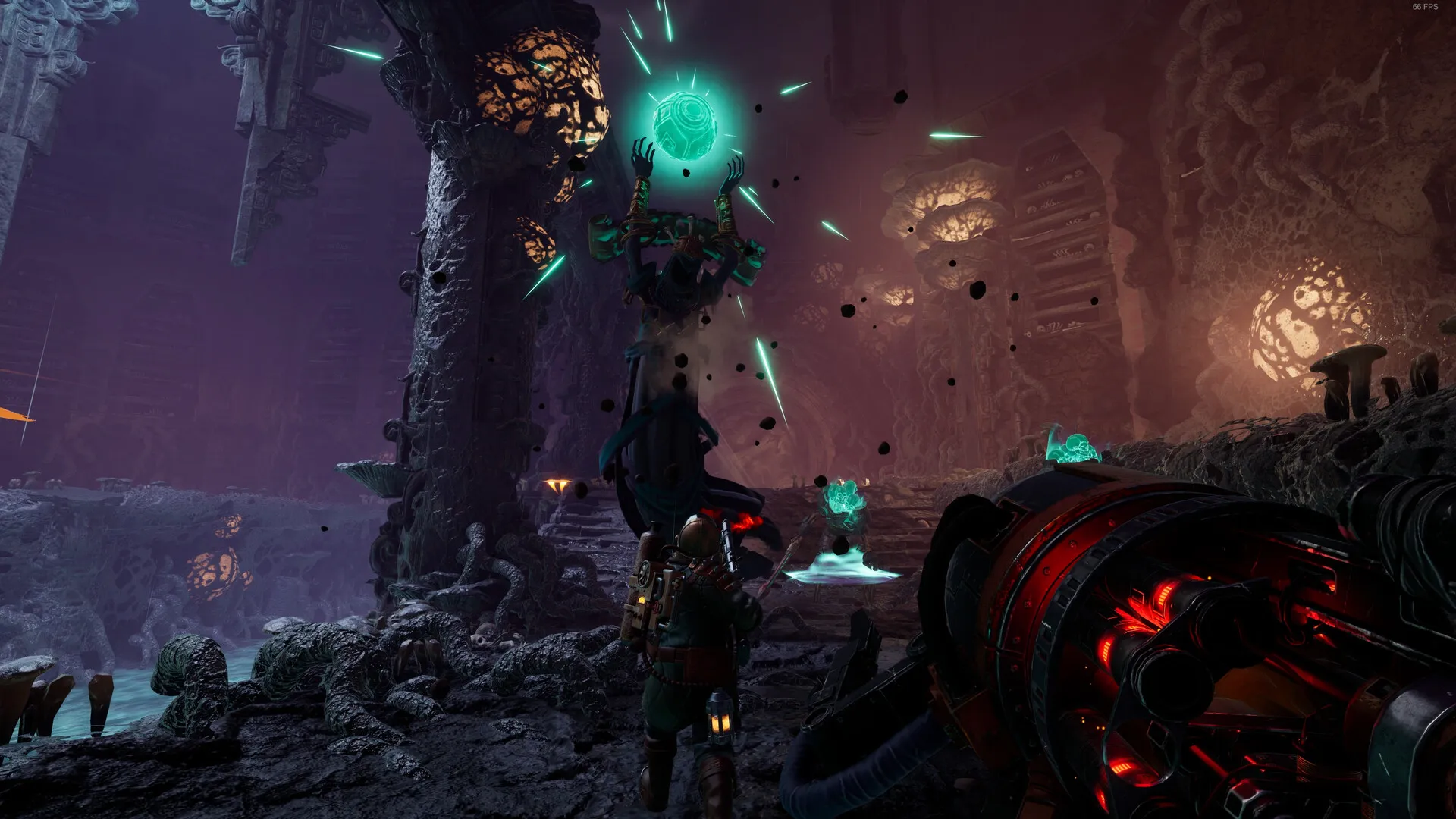
The core gameplay loop is a frantic dance of circle-strafing to evade projectiles, using a quick dash to escape the large area-of-effect attacks favored by bosses, and employing a double-jump to gain vertical advantages or cross hazardous gaps. This emphasis on high mobility makes every encounter feel kinetic and demanding, where standing still for even a second means certain death. The gunplay itself is satisfying, providing solid audio-visual feedback that makes blasting through hordes of enemies feel impactful and rewarding.
You begin each expedition with a basic Engine Rifle and a standard grenade ability, but your arsenal expands through completing in-game challenges. The unlockable weapons offer varied playstyles. The Shotgun provides immense close-range stopping power but is less effective against the flying enemies of the first zone.
The Combat Bow acts like a high-speed semi-automatic rifle, capable of shredding single targets. The Tesla gun projects a continuous beam of energy that can melt groups of foes, reminiscent of a Ghostbusters proton pack. Your ability slot can also be customized with powerful alternatives to the grenade, such as a deployable turret that provides autonomous fire support or an arcane object that deals massive damage.
The most significant customization happens during a run through the “Blessings” system. This mechanic, functionally similar to the boons in Hades, allows you to find and apply powerful modifiers to your weapon attacks and ability. Blessings are themed around different elements: Fire adds a damage-over-time effect, Ice can freeze enemies solid, and Lightning can arc between multiple targets.
Other, more exotic Blessings allow you to spawn allied tentacles to fight for you or apply a weakening debuff to enemies. The true excitement of a run comes from finding powerful synergies between these Blessings.
One memorable combination allowed a player to deploy up to six turrets at once, with a charm that gave a fifty percent chance for the ability to have no cooldown. This created an overwhelming field of automated fire that decimated everything on screen, a perfect example of the kind of power fantasy that makes roguelites so replayable.
The Slow Path to Power
The long-term structure of Abyssus is built upon a progression system that rewards persistence through two distinct forms of currency. During each dive into the depths, you accumulate Gold by defeating enemies and destroying marked containers.
This currency is temporary and must be spent within the current run at vendors that appear at the end of a floor. These shops offer immediate, tactical benefits that can salvage a failing run or push a successful one over the top.
You might purchase an extra health syringe, a permanent increase to your health pool for that run, or a new Blessing to complement your existing build. These choices add a layer of resource management, forcing you to weigh the value of immediate survival against saving for a more powerful item later.
The second, more crucial currency is Soul Fragments. These are earned by defeating bosses and opening special chests, and they persist between runs. Back in the safety of your hub area, you spend these fragments on a large tree of permanent upgrades.
These are not minor statistical increases; they are game-changing improvements that fundamentally alter your starting capabilities. You can unlock the ability to begin a run with an extra health syringe, gain additional charges for your special ability, improve your reload speed, or even unlock the capacity to hold two passive charms at once.
The issue lies in the pacing of this meta-progression. The game can feel excessively punishing at the start, with progress feeling gated not by a player’s skill but by the simple fact they “haven’t died enough yet.” Many of the most essential upgrades, such as those that allow healing shrines and upgrade altars to appear in the dungeon, are locked behind a significant Soul Fragment cost.
This design choice forces players into a repetitive loop of farming the early biomes to accumulate enough currency to make deeper runs feel remotely possible. This initial grind risks burning players out before they can access the game’s more dynamic and exciting late-game content.
For those who do persevere, the game offers an endgame challenge system through “Brine Canisters.” Earned by completing a full run, these items can be used to activate difficulty modifiers, such as making healing shrines no longer restore syringes, providing a customizable challenge for veteran players.
A Tale of Two Difficulties
Playing Abyssus reveals a game with a split personality, offering two wildly different experiences depending on the number of players in a session. The cooperative mode, which supports up to four players, appears to be the primary design focus, but it is brutally difficult.
The game’s scaling for multiple players is extreme; it drastically increases the health, damage, and sheer number of enemies on screen. A run with a duo can feel like a punishing ordeal, where even the first few rooms require intense coordination and effort. Boss encounters become particularly overwhelming, deploying mechanics seemingly pulled from MMORPGs.
These fights are filled with massive area-of-effect attacks, temporary invulnerability phases, and environmental hazards that demand perfect execution from the entire team. A group of three or four well-equipped players can overcome these challenges, but for a pair, the difficulty can feel insurmountable.
In sharp contrast, the solo experience is surprisingly manageable. When playing alone, the game scales down the opposition so dramatically that it can almost feel easy. Enemy counts are lower, and their durability is significantly reduced. A player can often progress just as far on their first solo attempt as a struggling trio might after several hours of play.
This vast gulf between the solo and co-op difficulties suggests a fundamental issue with the game’s balancing. The problem is compounded by certain challenge room designs that feel unfair regardless of player count. One such objective requires all players to stand motionless on small pressure plates to charge a meter while being assaulted from all sides.
This design directly conflicts with the game’s core identity as a fast-paced, movement-based shooter. Ultimately, Abyssus offers a satisfying core of frenetic shooting and the thrilling potential of creating a “broken” build. Its weaknesses lie in its repetitive environments, its slow and grindy initial progression, and its poorly balanced difficulty scaling. This is a game built for a dedicated, full team of friends who are fans of the roguelite genre and are prepared to endure a punishing climb to power.
The Review
Abyssus
Abyssus delivers a satisfying and fast-paced shooter experience with its enjoyable gunplay and creative build variety. The unique brinepunk aesthetic provides a memorable backdrop for the action. The game is significantly held back by a slow, grindy progression system, repetitive level design, and a severe difficulty spike in co-op that makes playing with smaller groups a punishing affair. It’s a solid foundation for a roguelite shooter, but its considerable flaws keep it from reaching its full potential.
PROS
- Fast-paced, movement-heavy combat is engaging.
- Deep in-run customization with "Blessings" allows for fun and powerful builds.
- The "brinepunk" art style is distinct and atmospheric.
CONS
- Co-op difficulty scaling is extremely punishing for smaller groups.
- Permanent progression feels slow and requires significant grinding.
- Level layouts become repetitive quickly.