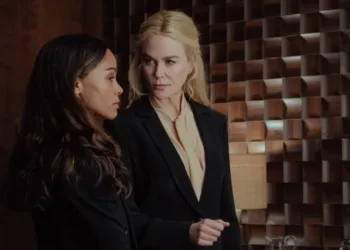



























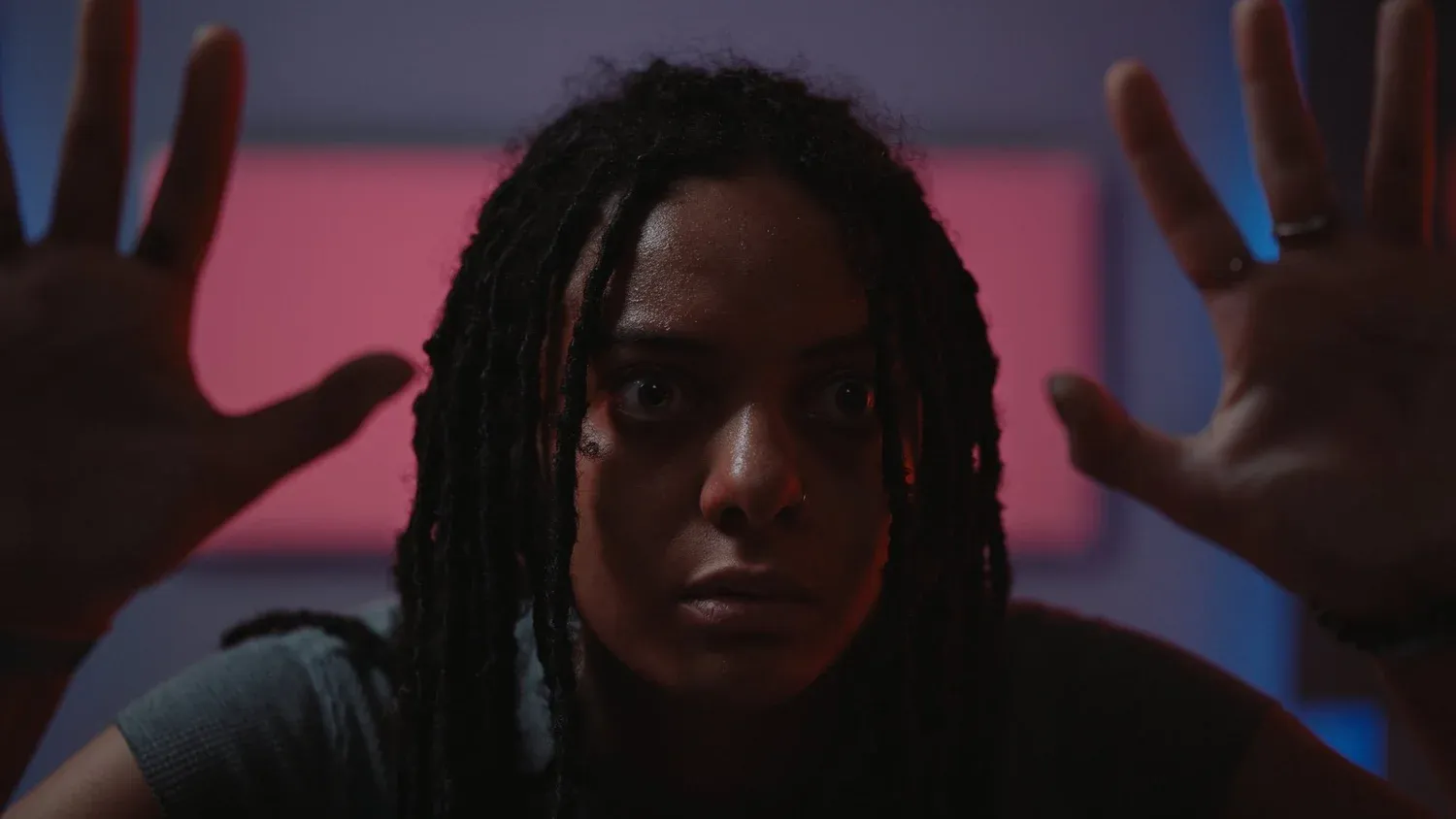

Zac Locke’s Decibel enters the global conversation on technology and art with an uneasy, tightening grip. The story follows Scout (Aleyse Shannon), a struggling singer-songwriter who receives a career-changing offer from Donna (Stefanie Estes), a wealthy and withdrawn music mogul. Scout accepts an invitation to record at Donna’s high-tech desert studio, also named Decibel.
The space looks lavish and sealed off, more polished enclave than creative refuge. The project aims for a flawless AI that can generate music tailored to any listener. The collaboration shifts from wish fulfilled to psychological ordeal shaped by control and technological exploitation. The chase for engineered perfection threatens the artist’s agency and sense of self. Decibel holds a steady slow-burn mood, threading paranoia and creeping horror through each scene.
Thematic Resonance: Data, Desire, and Dominio
Decibel studies corrosive ambition that crosses borders, echoing anxieties often explored in South Asian parallel cinema about the human toll of industrialization. The film positions the cutting-edge tool, the AI, as the instrument of Donna’s fixation, a device of authority rather than a villain with its own will.
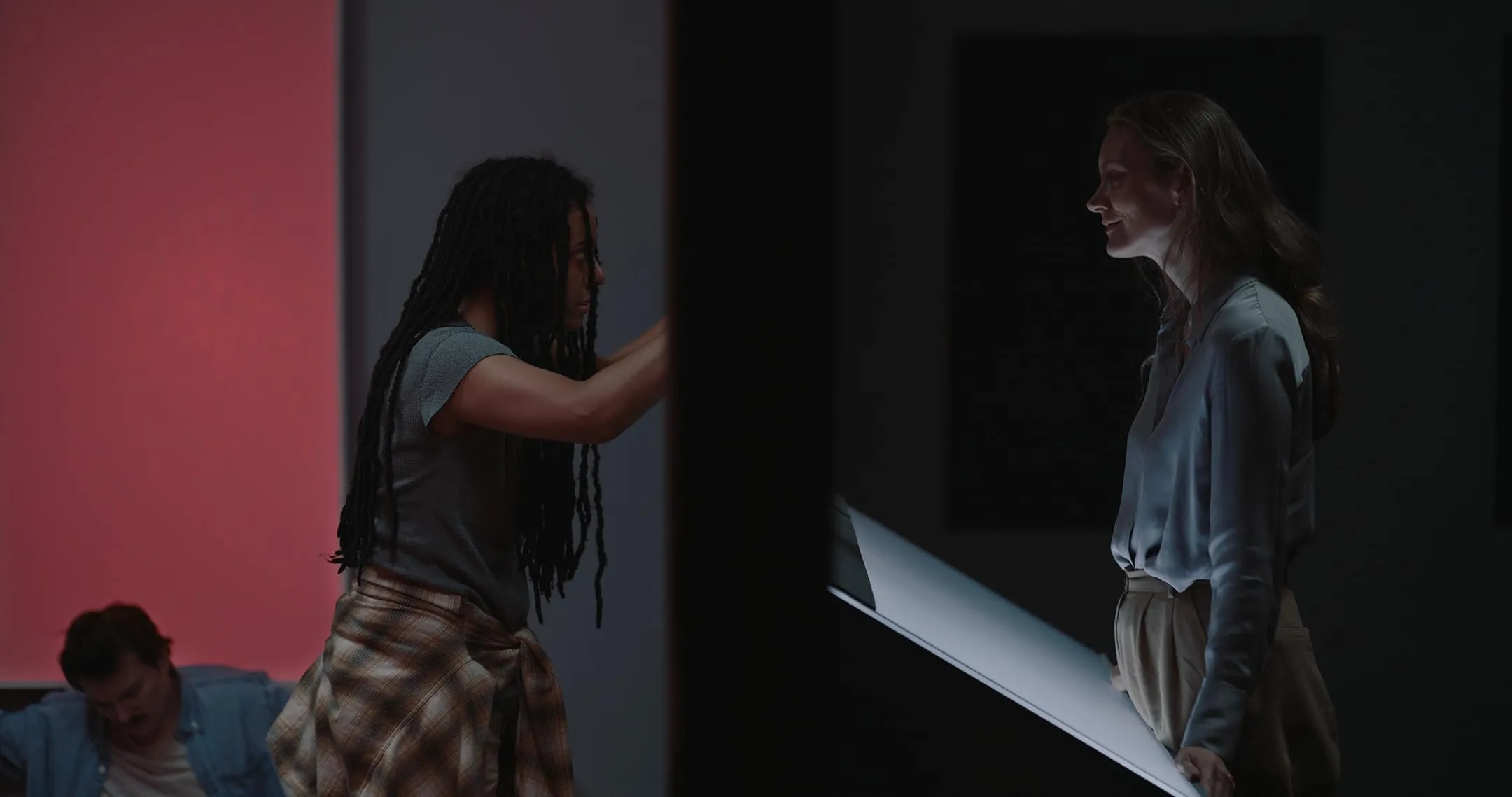
The fear lands on human appetite for dominion and profit. Scout’s money pressures and fragile hope for a break map the high cost of compromise. Her role slips from valued collaborator to input stream, treated as material to refine.
The narrative inspects power imbalances that shape the music business. Creator or property becomes the central question. Inspiration and expression turn into extraction once cataloged as inventory. The remote desert compound magnifies obsession as a constant pressure. Donna’s choices, including unsolicited medical scanning, offer clear examples of invasive control and a disregard for personal limits, a test of how far she believes her authority reaches.
Also Read






A Duet of Tension: Performances and Control
The film’s psychological motor depends on the two leads, and the current between them never settles. Aleyse Shannon gives Scout a layered trajectory, from early hope to creative fatigue to a final, frayed resolve.
She captures the specific dread of an artist losing mastery over the work and over the self that made it. Across from her, Stefanie Estes shapes Donna as tightly composed and absolutely commanding, a figure who pairs the promise of success with a quiet, persistent threat. She plays mentor, mogul, and controlling presence in the same breath.
Authority and consent form the core conflict, staged almost entirely through their exchanges. The result becomes a focused portrait of Donna pressing her will onto Scout. Colby Groves, as Griff, the studio engineer, adds a needed counterpoint. He signals a possible, less-corrupted thread within a space ruled by high technology, and his presence underscores the human costs attached to Donna’s vision.
Cinematic Symbolism: Sound and Disorientation
Sound design functions as both texture and weapon. In a film about music, sound operates like a tangible presence. The soundtrack shifts from Scout’s organic, found-sound approach to a digitally forced and heavily processed palette that pulls the viewer into a sensory carnival.
Each sonic choice reinforces the film’s critical stance. Locke’s staging leans into patient psychological pressure. Tight cinematography and claustrophobic framing inside the studio heighten Scout’s disorientation and the sense of confinement.
The slow-burn method builds mystery and dread across the runtime. Early sections favor quiet tension and careful escalation. The closing stretch moves to a bigger register and a louder display. That swell delivers payoff, and the earlier hush shows its strength by comparison. The film’s soft, persistent unease proves highly effective at setting stakes before the final surge.
Bridging Indian and Global Conversations
Decibel’s themes align with concerns that recur across Indian parallel cinema, especially the question of what industrial systems take from individual lives. The film locates the harm in people who wield tools for control, not in the tools by themselves. That stance links to global discussions about authorship and ownership that cut across industries. Scout’s shift from creator to data point echoes wider debates about art reduced to commodity. The desert studio functions like a sealed marketplace where creativity becomes inventory and where a gatekeeper decides value.
Form supports these ideas. Sound moves from personal texture to engineered product. Framing turns expansive surroundings into a pressure chamber. Performances trace how promise curdles into surveillance and how mentorship can hide extraction. Decibel connects with international viewers by speaking in familiar cinematic languages of paranoia, power, and profit while drawing on concerns long present in South Asian art-house traditions. The film asks what happens to artistry once perfection is defined by code and once the person making the song becomes another asset on a server.
Decibel is a sci-fi thriller about a struggling singer-songwriter, Scout, who accepts a life-changing opportunity to work with a tech-obsessed music producer, Donna, at a secluded studio. The collaboration turns perilous when Scout is pressured to create a perfect AI music algorithm, putting her art and life in danger. Following its acquisition by Chroma, the film is scheduled for release on November 7, 2025, on platforms like Apple TV and Fandango, with a subsequent SVOD release on Amazon Prime Video.
Credits
Title: Decibel
Distributor: Chroma
Release date: November 7, 2025 (Apple TV and Fandango, followed by an SVOD release on Amazon Prime Video beginning December 1, 2025)
Running time: 76 minutes
Director: Zac Locke
Writers: Stephen Christensen, Matt Wise
Cast: Aleyse Shannon, Stefanie Estes, Colby Groves, Eden Perry, Matt Wise
Composer: Caitlin Scholl (Original Songs), Colby Groves (Music Production)
The Review
Decibel
Decibel succeeds as a chilling psychological thriller, using high-tech aesthetics to explore the age-old dilemma of artistic ownership and control. The film's strength lies in its intense character dynamic, where the technology becomes a mirror for human exploitation. While the climax sacrifices some subtlety for spectacle, the film masterfully builds a deeply unsettling atmosphere and offers salient commentary on the commodification of creativity.
PROS
- Aleyse Shannon and Stefanie Estes create an electric, unsettling dynamic that drives the psychological tension.
- The film offers a pointed critique of artistic exploitation and the power dynamics within the music industry, using AI as a compelling device for control.
- Sound is utilized as a character, effectively building atmosphere and symbolizing the creative manipulation taking place.
- The initial mystery and dread are built effectively through isolation and paranoia. Cons:
CONS
- The film's ending leans toward spectacle, abandoning the subtle psychological horror that defined its earlier, more effective moments.
- At times, the narrative over-explains its ethical message, which can dilute the mystery and tension.