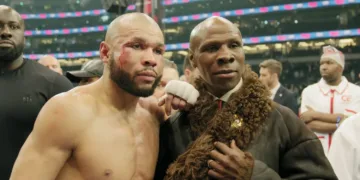





















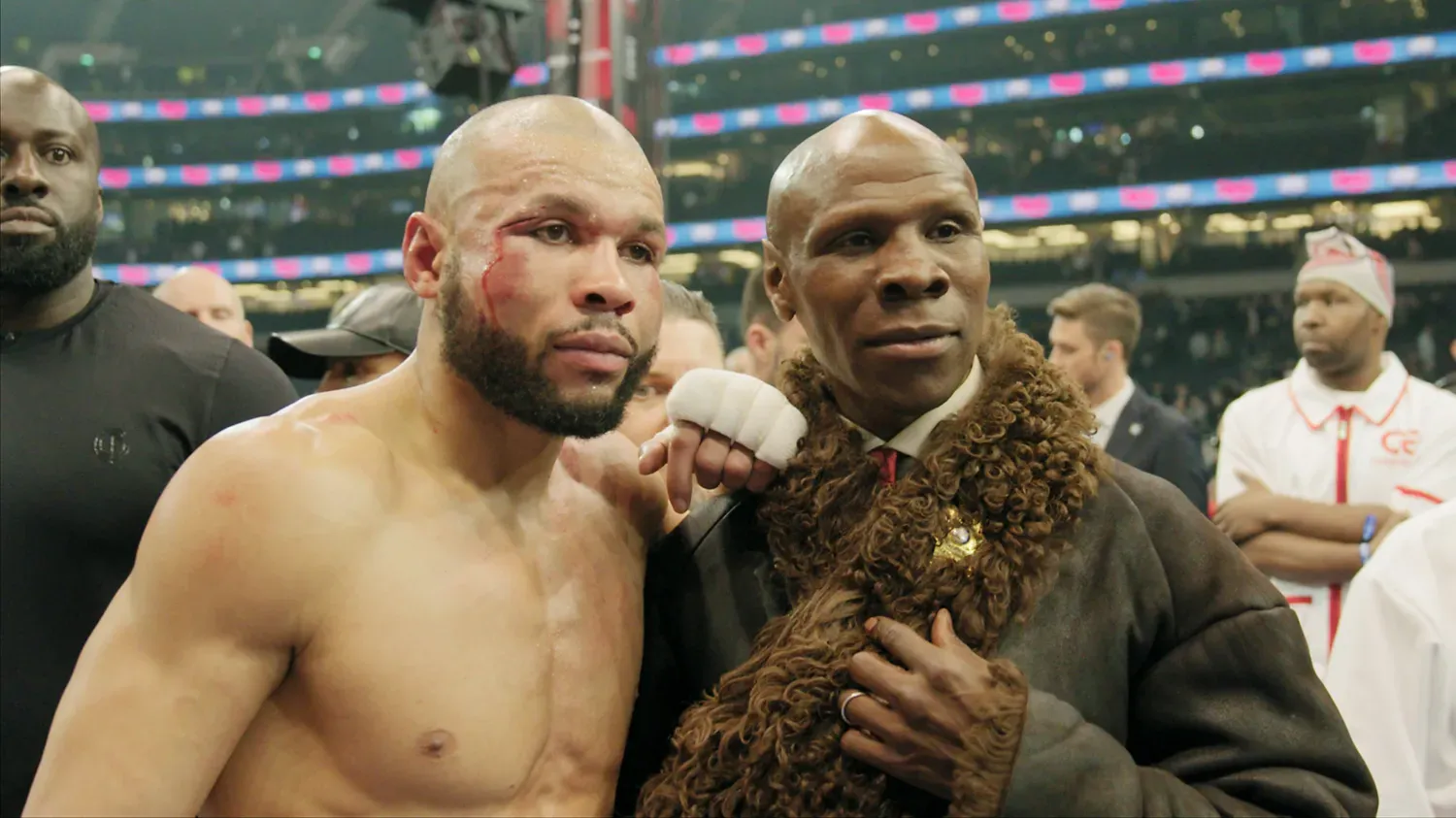

The Eubanks: Like Father, Like Son begins as if it plans to stay within the lines of a standard sports documentary, then turns into a study of inherited identity and public performance. The film follows Chris Eubank Sr. and his son, Chris Eubank Jr., using boxing as both setting and pressure chamber. Narrative tension arrives early with Junior’s first major fight against Conor Benn, son of Nigel Benn, the rival who shaped Eubank Sr.’s legend.
That bout supplies the structural device for the film, yet the true drama lies elsewhere. The real focus is the damaged relationship between father and son. The documentary charts four years of estrangement and a difficult, high-stakes attempt at uneasy reconciliation. This very public rift gives the film an unexpected emotional heft, shifting it away from routine biography and toward a portrait of identity carved out under harsh, unforgiving light.
Shadowboxing the Father’s Persona
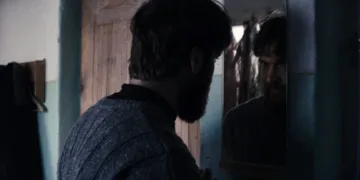
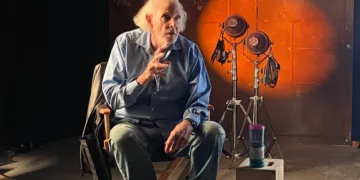
The film’s visual logic rests on contrast. Chris Eubank Jr. appears as a figure of stoic, almost frozen composure, his stillness and measured speech creating a calm surface. He reads as an updated model, a contemporary athlete who calculates each move, emotional and professional. Opposite him stands his father, amplified and theatrical. Eubank Sr. remains flamboyant, eccentric, and unfiltered, a man who treats the room like a stage even in quiet interview setups.
This pairing gives the camera a clear axis. Junior’s self-control and understated resilience hint at a powerful inner core, necessary for a life spent under the shadow of a mythic parent. The professional split that ignited the four-year rift appears decisive rather than impulsive. Junior seeks new strategies and a change of corner, a deliberate act of self-definition against an overwhelming parental presence.
Eubank Sr. refuses to abandon performance. He appears stubborn, perfectly suited, and entirely unpolished in his reflections on the breakup. He admits to feeling “deeply, deeply, deeply hurt” by being fired, a line that lands with the force of a body shot lingered on in close-up.
His insistence on control, which he describes as an expression of love, functions as a paternal shield he cannot quite lower. Archival material reinforces the pattern. He describes himself as a “fierce” disciplinarian who used a cane or belt, and he characterizes his influence as a “sweet and loving” spell. The label is charming; the images are less so.
The discomfort in those old images is hard to miss. Archival scenes of a young Junior pleading for permission to box reveal a dynamic in which desire, fear, and power swirl around the ring before a single punch is thrown. The film shapes this conflict over professional independence into something closer to an existential contest for selfhood, a long bout staged inside the family as much as in the arena.
The Weight of Mortality and Chiaroscuro
The emotional register of the documentary shifts when it turns toward the deeper motives behind Eubank Sr.’s resistance. His early refusal to let his son enter boxing springs from genuine terror at the thought of his child being hurt, anxiety marked by his own experience of severe ring injury (Michael Watson is cited explicitly). The ring carries physical danger, and the film lets that history sit in the frame like a permanent shadow.
That fear acquires a darker, more expressionistic contour with the revelation of the death of Junior’s brother, Sebastian, four years earlier. Junior’s quiet remark that this loss “consumed” his father serves as a philosophical hinge. The film lets that word hang, an idea that explains Sr.’s quixotic behavior far more clearly than any direct statement. Existential dread becomes the real antagonist.
Through this lens, Eubank Sr.’s odd pre-fight conduct takes on a different shape. His public denunciations of Junior before the Benn fight, calling him “a disgrace” and warning, “The money will get you killed,” resemble less a cool tactical assessment and more an uncontained eruption of panic from a man who cannot face the idea of a second unbearable loss. The rhetoric sounds punitive; the camera reads it as fear.
The later fight-night material quietly overturns the genre’s expectation of explosions and operatic catharsis. Eubank Sr. appears on the night with a subdued, almost ghostlike presence. The reconciliation arrives through simple physical proximity and support. No grand speech, no choreographed outpouring. His relief and pride after the bout register clearly on his face. When he tells Junior, “YOU’RE the superstar!”, the line plays as praise and, possibly, as a gentle nudge toward retirement. The sequence becomes a study of male communication, with love expressed through anxiety and warning, affection wrapped in admonition.
Minimalist Form, Maximum Impact
Hassan Ghazi’s direction favors a lean, tightly controlled form that avoids narrative excess and leaves emotional material exposed. The camera moves with restraint, which makes each shift in framing count. Shots that place father and son side by side or on opposite sides of the space highlight both proximity and distance. The awkward meeting after four years of separation offers a clear example. Close-ups of their faces carry the weight of unsaid history, and the silence between lines speaks as forcefully as any dialogue.
The film interlaces archival press footage with raw, present-day encounters. Public clips of press events and older interviews sit beside private, contemporary conversations, producing a layered chronicle with a mildly expressionistic texture. Past and present flicker against each other like alternating light sources, and the viewer is invited to read tiny changes in posture, tone, and gaze.
This documentary functions as a concentrated study of masculine relationships, filtered through the particular theatre of boxing. It presents men who repeatedly attempt to connect, to understand and be understood, yet often miss the mark by a narrow margin. Personalities clash, fears harden into habits, affection arrives wrapped in control. Underneath these difficult surfaces runs an undeniable current of love.
The closing exchange distills that point with disarming clarity. “You will always be my baby,” the father says. “I will always be your son,” comes the answer. No orchestral swell, no rhetorical flourish. Just two sentences that seal the bond at the center of this long, bruising family saga. The documentary becomes a precise study of human complexity drawn from a rivalry the public thought it already knew.
The Eubanks: Like Father, Like Son is a 59-minute documentary that premiered on November 11, 2025, airing on BBC Three and BBC One, and made available for streaming on BBC iPlayer. The film was commissioned by BBC Factual Entertainment and Events and produced by Workerbee. It focuses on the legendary, but estranged, father-son boxing duo Chris Eubank Sr. and Chris Eubank Jr., offering a raw portrait of their relationship as Junior prepares for his highly anticipated bout against Conor Benn.
Full Credits
Title: The Eubanks: Like Father, Like Son
Distributor: BBC Three, BBC One, BBC iPlayer
Release date: November 11, 2025
Rating: TV-PG
Running time: 59 minutes
Director: Hassan Ghazi
Producers and Executive Producers: Workerbee
Cast: Chris Eubank Sr., Chris Eubank Jr., Conor Benn, Nigel Benn
The Review
The Eubanks: Like Father, Like Son
This documentary is a potent psychological portrait disguised as a sports feature. It uses the backdrop of boxing and a generational rivalry to explore profound themes of identity, control, and grief. The raw candor of Eubank Sr. and the quiet resilience of Eubank Jr. produce genuinely moving cinema. The film’s strength lies in its refusal to offer easy answers, presenting instead an unflinching look at complex, painful familial love. It is a striking, emotionally resonant piece of non-fiction filmmaking.
PROS
- Exceptional access and raw intimacy between subjects.
- Delves into profound psychological themes (grief, identity, control).
- Effective use of archival footage and contrasting personal styles.
- The unexpected emotional impact and understated reconciliation.
CONS
- Limited female voices or perspectives on the family dynamic.
- May not appeal to non-boxing fans without the emotional context.
- Eubank Sr.'s extreme personality could occasionally overshadow the nuance.
- Primarily a "male story" focusing narrowly on the father-son bond.