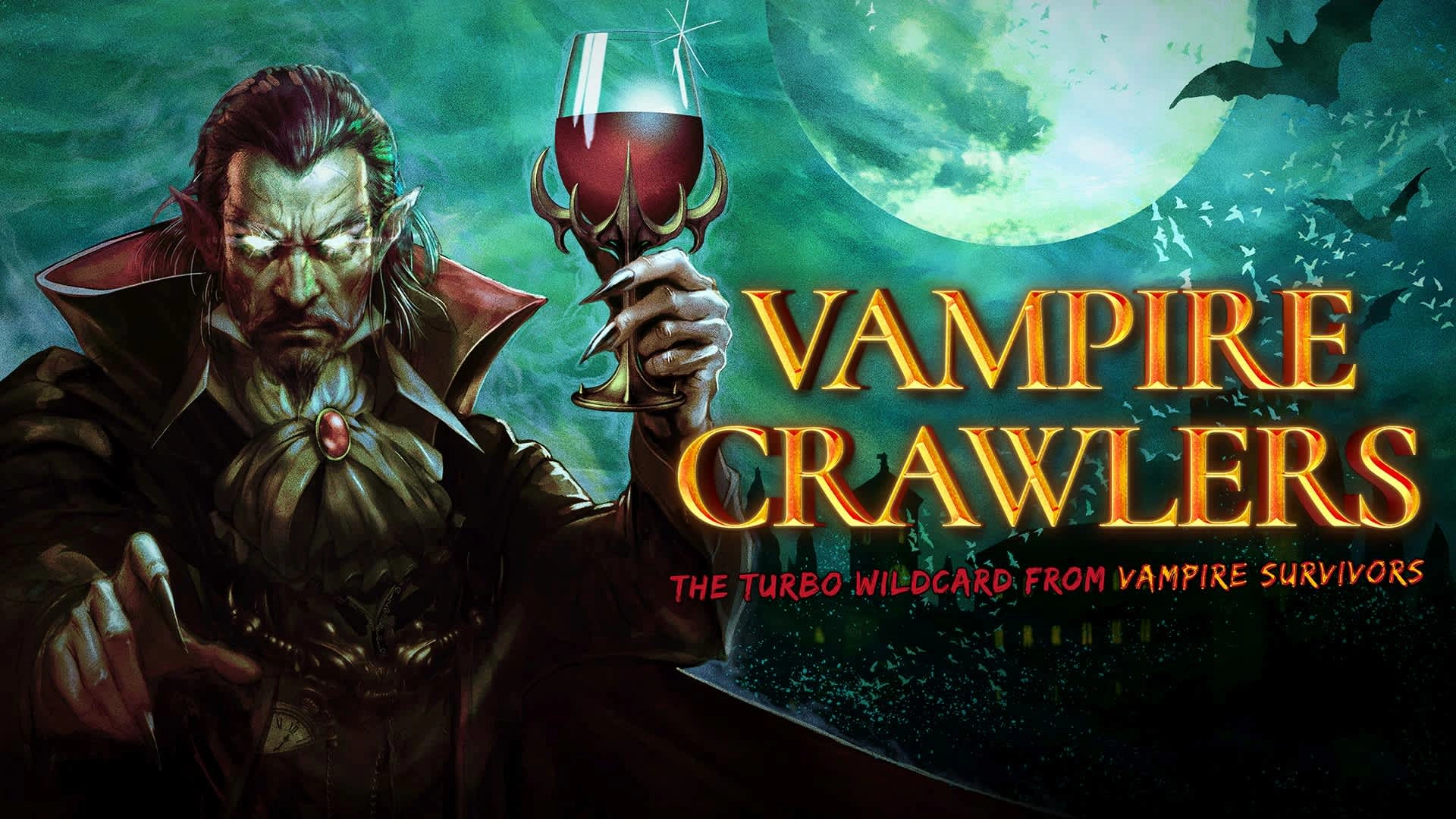
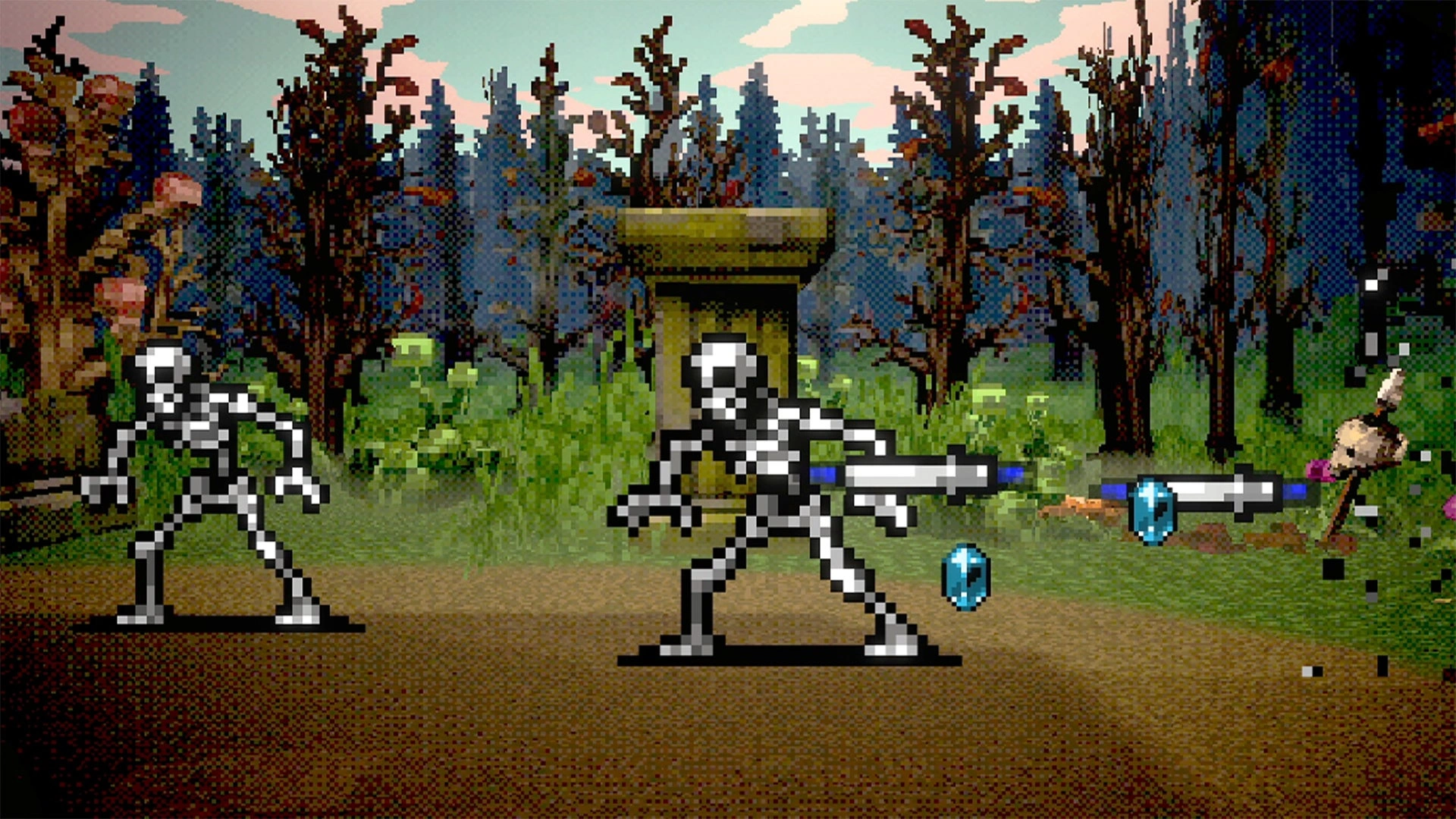
Dropping into the pixelated gloom of a dungeon floor carries a strange sense of return for anyone who spent 2022 dodging bats in the Mad Forest. Vampire Crawlers: The Turbo Wildcard from Vampire Survivors keeps the familiar visual identity of its predecessor and reshapes it through the rigid geometry of a classic dungeon crawler.
The wide open field is gone. In its place sits a single first-person presence moving through grid-based hallways, room by room, as enemy groups close in. That structural shift turns the auto-firing rush into deliberate turn-based card combat. You manage a deck filled with familiar weapons such as the Whip, Knife, and Cross as growing hordes press forward.
Between tense expeditions, you return to a village hub and spend collected gold on permanent power-ups. The game preserves the rapid progression and sensory reward loop of the original series, then asks you to think through each hand with care. Its key skill set is tactical deck building and exact mana use, with physical reaction speed pushed into the background.
Survival depends on assembling a deck that can hold under the mounting pressure of turn-based encounters. The result is a confident mechanical experiment inside a beloved visual frame, one that turns frantic movement into careful sequencing and keeps the familiar pleasure of escalating power.
The Tactical Hand: Mana and Combo Mechanics
The move to turn-based play places heavy weight on the economy of your hand. Every card in your deck carries a mana cost, usually from zero to three points. You begin each turn with a limited pool of blue mana. That limit dictates how many actions you can take before monsters get their chance to strike. The simple number beside each card becomes the main tactical question on every turn.
Cards such as the Book give short-term boosts to your mana total. These boosts stretch your turn and let you play a count of cards beyond your base stats. Combat rhythm comes from reading those limits correctly. You decide if a single high-damage attack deserves all your resources or if several smaller utility cards will keep the run safer. That decision gives each hand a steady push and pull, since damage, defense, and setup all compete for the same blue resource.
The combo system gives the strongest mechanical reason to plan around specific card sequences. Playing cards in ascending numerical order creates a powerful multiplier for every following action. A zero-cost card followed by a one-cost card and then a two-cost card can turn that final play into a major burst of efficiency. A standard attack can become a room-clearing blast under the right sequence.
This makes each hand feel like a puzzle with a live enemy clock attached. You often hold powerful cards across several turns as you wait for the right low-cost starter to begin the chain. That patience matters because the most rewarding plays rarely come from throwing every strong card down as soon as it appears. They come from seeing how a hand can be shaped across turns, then cashing in at the exact moment the board is ready. A strong run gets its best charge from those moments when sequencing, timing, and damage line up cleanly.
Grey item cards become vital in these calculations. Items like Sacks of Gold carry no mana cost and act as wildcards inside the combo system. They preserve your ascending chain. You can use them to bridge gaps or add extra effects to a long sequence without losing the multiplier. A card that first reads as junk becomes a main tool for reaching huge damage numbers.
These items let you push the math in your favor. Each piece of loot begins to look like a possible combo extender. That small shift in perception is where the system shows its cleverest side. Loot stops being background reward material and starts acting as a tactical hinge. A plain object can become the link that turns a decent attack sequence into the turn that clears the room.
Combat flow also asks you to read enemy positioning. Monsters move in rows and formations toward your position. Some cards target the front row, while others hit the full group. You must manage the distance between yourself and the attackers. Enemies that reach your front row deal direct damage to your health. Armor cards grant temporary hit points that serve as a buffer.
These cards keep you alive as you wait for mana to recover. The strategy comes from balancing defense with the urge to build long, aggressive combos. Many turns become exact calculations of the damage needed to thin the herd before the next hit lands. The best decisions come from knowing when to spend a turn on survival and when to push for a decisive sequence. That gives the combat a readable tactical shape, even when the screen is crowded with monsters and card effects.
Building the Unstoppable Horde: Deck Customization and Relics
The characters you bring into the dungeon are called Crawlers. These figures function as playable cards inside your deck. Each Crawler brings unique passive traits and active bonuses that can change the direction of a run. Mortaccio starts with cheap Bone cards that work well as combo starters. Krochi gives a free revive that can save you from sudden death. As you progress, you can bring up to three Crawlers into a single dungeon.
This lets you create character groups that cover gaps in each kit. You might pair a high-damage Crawler with one built around healing or armor. The system gives character choice practical weight because each Crawler changes the texture of the deck. A run can lean toward early combo setup, extra survivability, or a stronger safety net depending on the team you bring.
Weapon evolutions return as a key part of the experience. You combine specific cards to create stronger versions of your equipment. The process feels familiar to fans of the original game, yet the card-based format asks for tighter planning. You must control deck size so you can reliably draw the pieces needed for an evolution. Leveling up during a run offers a choice between new cards and upgrades for your current cards.
That choice creates steady pressure between adding variety and preserving a lean, efficient deck. Too many additions can dilute the draw pool, and too few options can leave you without the tools needed for a particular enemy formation. Gems add another layer of customization. These stones slot into cards and provide extra effects such as life-stealing or poison damage. The result is a progression system where every pick matters because it changes both your current turn options and the long-term shape of the deck.
Major game features are locked behind Relics found in deeper dungeon sections. These items introduce new systems that permanently expand your options. A specific Relic might unlock a Jeweler in the village who can control the spawn rates of different gems. This lets you tailor the game to your preferred playstyle. A player chasing high-damage builds can restrict the available gem pool to stones that increase offensive stats.
These Relics drive long-term progression. They keep the game feeling fresh across many hours by adding new rules to consider between runs. The deeper you push, the larger the strategic toolbox becomes. That structure gives each successful expedition a purpose beyond the next pile of gold, since a single Relic can reshape how you build future decks.
Late-game builds focus on cracking the internal rules. You can create decks with over twenty-five cards and infinite mana loops. There is an immense sense of power in turning a struggling character into an unstoppable force. One route might lean into absolute defense and make you impossible to kill. Another might use a glass cannon build that clears every enemy in a single turn.
The game encourages this experimentation. It rewards your ability to find efficient ways through its challenges. The customization options give you strong agency over how you approach the difficulty of later floors. This is where the card system connects most clearly with the Vampire Survivors appeal: the pleasure of taking a fragile setup and watching it grow into something absurdly strong. The difference is that the power fantasy now comes from deck math, character synergy, and resource loops.
The Village and the Void: Progression and Exploration
The Village acts as the hub for long-term growth. You spend the gold collected during runs on permanent stat upgrades. These boosts include increases to base health, starting mana, and the rate at which you gain experience. Upgrade prices rise sharply as higher tiers open. This creates a loop where several completed runs fund the next significant power-up.
Permanent improvements become necessary for surviving harder areas. The sense of progression ties directly to time spent farming gold in the dungeons. That structure gives each failed run some value, since gold still feeds the next attempt. It also makes the village feel like a practical extension of the deck-building system, because higher stats change how ambitious your turn plans can be from the very start.
Movement within the dungeons follows a strict four-direction grid. You pass through rooms and corridors, interacting with breakable objects and treasure chests along the way. This style of traversal recalls the “blobber” genre, where the environment is built from interconnected squares. Each dungeon contains five floors that lead to a significant boss.
You explore these spaces for the loot and experience needed to face the final challenge. Environmental variety keeps the exploration from feeling too stale. You move from dark forests to crumbling libraries, each filled with its own set of thematic monsters. The first-person view gives the dungeons a cleaner, tighter rhythm than the open-field setup of the earlier game. Every step places you closer to a fight, chest, object, or boss room.
A mini-map displays the full layout of each floor as soon as you arrive. You can see the boss location, all treasure chests, and every enemy group. This design choice removes mystery from exploration. The main activity becomes route optimization: collect the richest rewards before facing the boss. The dungeon-crawling side feels task-driven, with little sense of discovery. You plan your path around efficiency.
You decide which enemy groups are worth fighting for experience and which ones should be avoided to preserve health. This approach gives the player clear information and reduces wasted wandering. It also flattens the thrill of finding something unexpected. The map turns each floor into a visible checklist, and the pleasure comes from solving that checklist in the smartest order.
The mid-game features a noticeable slowdown in progression. The gap between your current power level and the price of the next upgrade can feel significant. You often replay earlier levels to earn the gold required for a breakthrough. Standard enemies pose very little threat after you have purchased the initial round of upgrades. This can create a stretch where the gameplay feels less engaging.
You move through combat motions without the tension of a real threat. The game leans on your desire to watch the numbers rise during this phase. Momentum returns once the deeper dungeon floors and complex Relics open up. That mid-game lull matters because the combat system is strongest when danger and reward meet at the same point. During the slower stretch, the math still works, yet the pressure behind each decision weakens.
Friction in the Machine: Difficulty and Interface Hurdles
Boss encounters introduce a mechanic known as the Eye. Several eye icons appear above the boss and fill up every time you play a card from your hand. When all icons are full, the boss interrupts your turn to perform an action. This action might be a heavy attack or a debuff that ruins your hand. The system punishes the long, complex combos encouraged elsewhere in the game.
It creates a strange conflict in the design. You want to play many cards to maximize damage, yet each extra play gives the boss another path to hurt you. You often have to cut a combo short to keep the boss from taking a turn. The idea creates tension, and that tension can be exciting. It also works against the core joy of building a huge chain, since the safest boss strategy may ask you to stop before the deck reaches its flashiest rhythm.
Difficulty spikes are common and can feel unfair. Standard floors are often quite easy, while bosses carry massive health pools and high damage output. A poor starting hand in a boss fight can end a successful run in a few seconds. The limited supply of reliable healing items makes these encounters even more stressful. You need to enter a boss fight with a precise deck and full health for a consistent chance at victory.
The Bridge level becomes the first major hurdle for many players. It demands a specific set of power-ups and a well-built deck. These sharp difficulty jumps can be frustrating if you are unprepared for sudden failure. The sharper problem is the gap between routine floor combat and punishing boss checks. A run can feel stable for several floors, then collapse before the player has much room to recover.
The user interface struggles to handle the complexity of a large deck. As your hand grows, cards begin to stack on the right side of the screen. This pile can cover your health bar or current curse percentage. Status tracking becomes difficult when the cards block key information. The animation speed of drawing cards can also cause mistakes. If you click too quickly, the shifting hand can make you play a card you never meant to use.
These technical issues can ruin a carefully planned turn. That matters in a game built around precision. A single accidental card play can break a sequence, waste mana, or trigger a boss action through the Eye system. The interface occasionally turns a tactical error into a physical input problem, which is a rough fit for a game that otherwise rewards careful planning.
Deck management is limited during a run. You cannot view your full deck while moving through dungeon corridors. The screen shows the cards in your hand, leaving the rest of the deck out of view. This makes it hard to remember every card added across a long run. Gem slotting is also restricted. You can apply gems to cards that have an available slot at that exact moment. This prevents you from planning synergies ahead.
The lack of a single deck viewer makes a large card collection harder to manage than it should be. These interface hurdles are the main source of friction in an otherwise smooth experience. The systems themselves have enough depth to carry long runs, and the problems come from access to information. A deck-builder needs clean visibility because every choice feeds the next draw, the next combo, and the next boss fight.
The Review
Vampire Crawlers: The Turbo Wildcard from Vampire Survivors
8Score
Vampire Crawlers is a daring pivot that successfully translates the series’ addictive dopamine loop into a thoughtful deckbuilder. The turn-based combos and deep customization offer immense mechanical satisfaction. However, the experience is hampered by a sterile approach to dungeon exploration and a boss mechanic that punishes the game's core strengths. It remains a brilliant, if occasionally clunky, evolution that rewards patient strategists. It is a mechanically rich experience that nearly reaches greatness while being held back by its own internal friction.
PROS
Deeply satisfying numerical combo system that rewards tactical sequencing.
Excellent translation of the franchise’s visual and audio identity to a first-person view.
Granular character and deck customization through the Crawler and Relic systems.
Highly addictive gameplay loop that encourages constant experimentation.
CONS
Dungeon exploration feels like an administrative chore due to the full-map reveal.
The "Eye" boss mechanic penalizes the player for using the core combo systems.
When you login first time using a Social Login button, we collect your account public profile information shared by Social Login provider, based on your privacy settings. We also get your email address to automatically create an account for you in our website. Once your account is created, you'll be logged-in to this account.
DisagreeAgree
Connect with
I allow to create an account
When you login first time using a Social Login button, we collect your account public profile information shared by Social Login provider, based on your privacy settings. We also get your email address to automatically create an account for you in our website. Once your account is created, you'll be logged-in to this account.