

























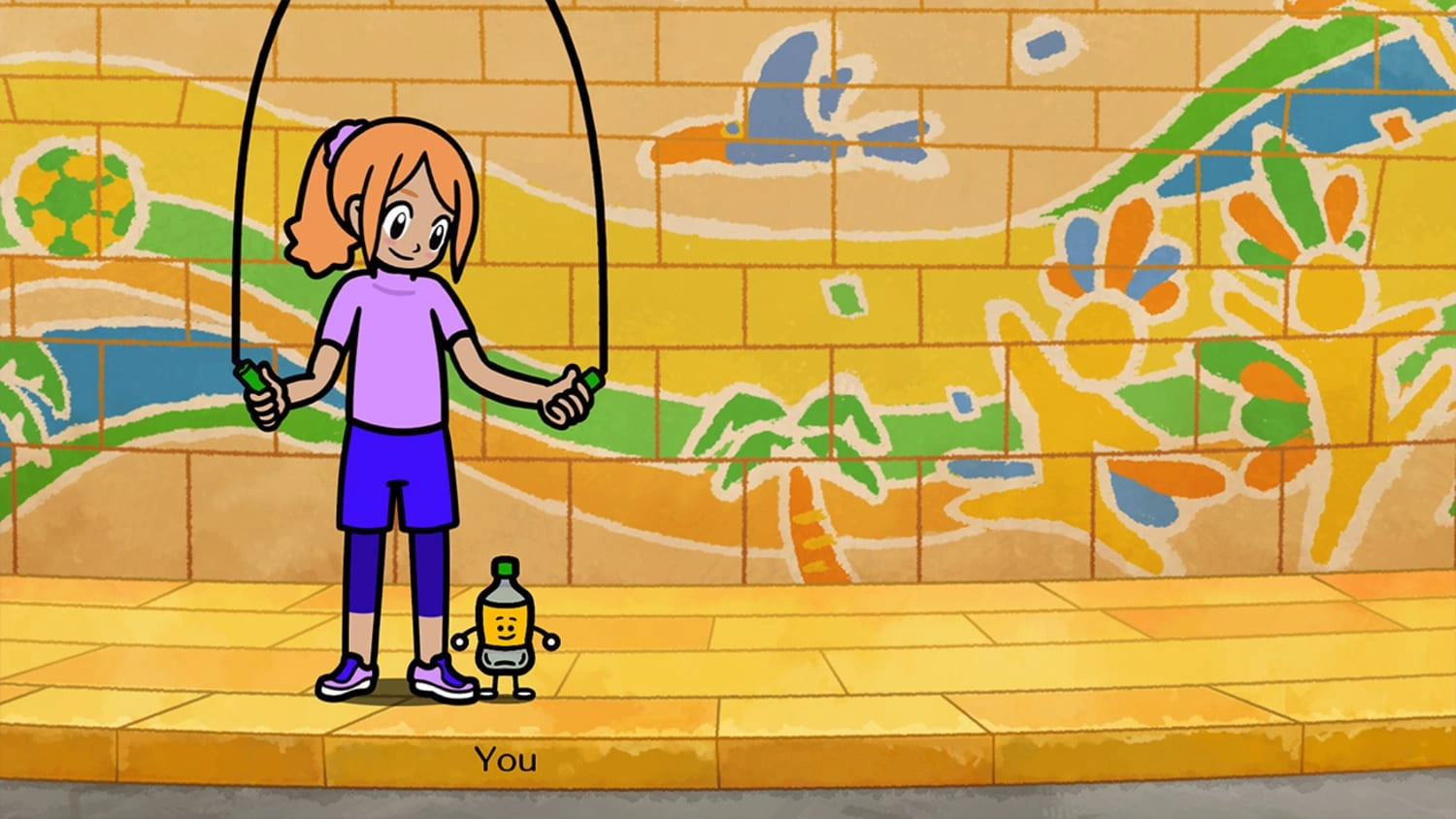

Pressing A in Rhythm Heaven Groove rarely feels like pressing one button. It feels like accepting a contract. Nintendo gives you a clean input, teaches the timing in a few seconds, then starts changing the terms through pauses, half-beats, visual tricks, and tempo shifts. That has always been the central bargain of Rhythm Heaven, and Groove keeps the bargain intact on Switch.
The campaign is built from compact rhythm games grouped into sets, each one built around a small action with a ridiculous skin. You might fling frogs, push bubbles off a conveyor, open and close an umbrella, roll cat statues, or steer a sports car through a commercial shoot. The surface changes every few minutes, yet the design language stays consistent: learn the cue, hit the beat, recover fast when the pattern bends.
Stop N Go N Stop shows the formula at its cleanest. The car brakes with the D-pad and accelerates with A. Nothing about that sounds demanding until the stage asks for sudden bursts, quick stops, and staggered timing that turns two inputs into a miniature driving exam scored by a metronome. The system is readable, but it is not soft.
Groove is accessible in the way good rhythm games should be accessible. The controls are simple enough for someone to understand before they finish laughing at the premise. The mastery curve lives elsewhere, in the exact moment between hearing a cue and trusting your thumb.
Remix Stages as Design Exams
The Remix stages are where Groove stops teaching individual tricks and starts testing memory under pressure. After a set of separate rhythm games, the Remix pulls their mechanics into one song and asks the player to switch between them without a safety net. The result can be funny, stressful, and mechanically elegant within the same measure.
A weaker rhythm game would treat these finales like medleys. Groove treats them like exams with jokes written in the margins. Moving from a T-Rex munching flowers to a dog catching a frisbee works because the player has already internalized each action before the remix starts scrambling the order. The music changes, the art shifts, the cue language tightens, and the game watches to see if the rhythm has moved from instruction to instinct.
Also Read





That is why the stricter stages work better than they might sound on paper. When Groove asks for offbeat timing, silent pauses, or a delayed response after a voice cue, failure usually comes from anticipation rather than confusion. The player knows the rule and moves too early. That kind of mistake is valuable because it points back to the system. You can feel what went wrong.
The Y-button timing example is a smart accessibility tool because it gives players a visual reference without flattening the challenge. It does not solve the stage for you. It clarifies the beat, then sends you back into the loop with cleaner information.
Beatspell and the Limits of the Side Game
Beatspell is the strongest extra because it turns rhythm inputs into tactical decisions. The player controls a magician in dungeon battles, casting spells through timed button patterns. Fire might ask for a clean B, A sequence on the beat, while stronger spells demand tighter timing, longer patterns, or higher risk during a fight.

The mode works because it attaches consequence to timing. Missing a spell does not just lower a score. It changes the combat state. Health management, enemy pressure, and spell selection give each input a purpose beyond accuracy. The system is light, but it understands why rhythm combat can feel satisfying: the body performs the strategy.
The problem is progression. Gating Beatspell stages behind high-performance rings from the main campaign makes sense as a skill check, yet it also punishes players who want to engage with this RPG loop on its own terms. Beating a dungeon and then being blocked because the main campaign wants cleaner ranks creates friction outside the battle system. The gate is logical from a rhythm-purity perspective. From a mode-design perspective, it narrows the audience for one of Groove’s better experiments.
The other extras are smaller, but still useful. Drum Lessons give the package a practice-space function, while Who’s Got Rhythm turns rabbit ear-clapping into a quick perception test. The Rhythm Toy Box is closer to a musical playground, a place to poke at soundboards and odd little toys between serious attempts.
Local Multiplayer Finds the Party Beat
Groove’s multiplayer understands that couch play needs failure to be funny rather than fatal. The local modes split between cooperative and competitive rhythm games, with up to four players sharing the same absurd pressure. There is no online multiplayer or gameshare, which limits the reach, but the local design has real care behind it.
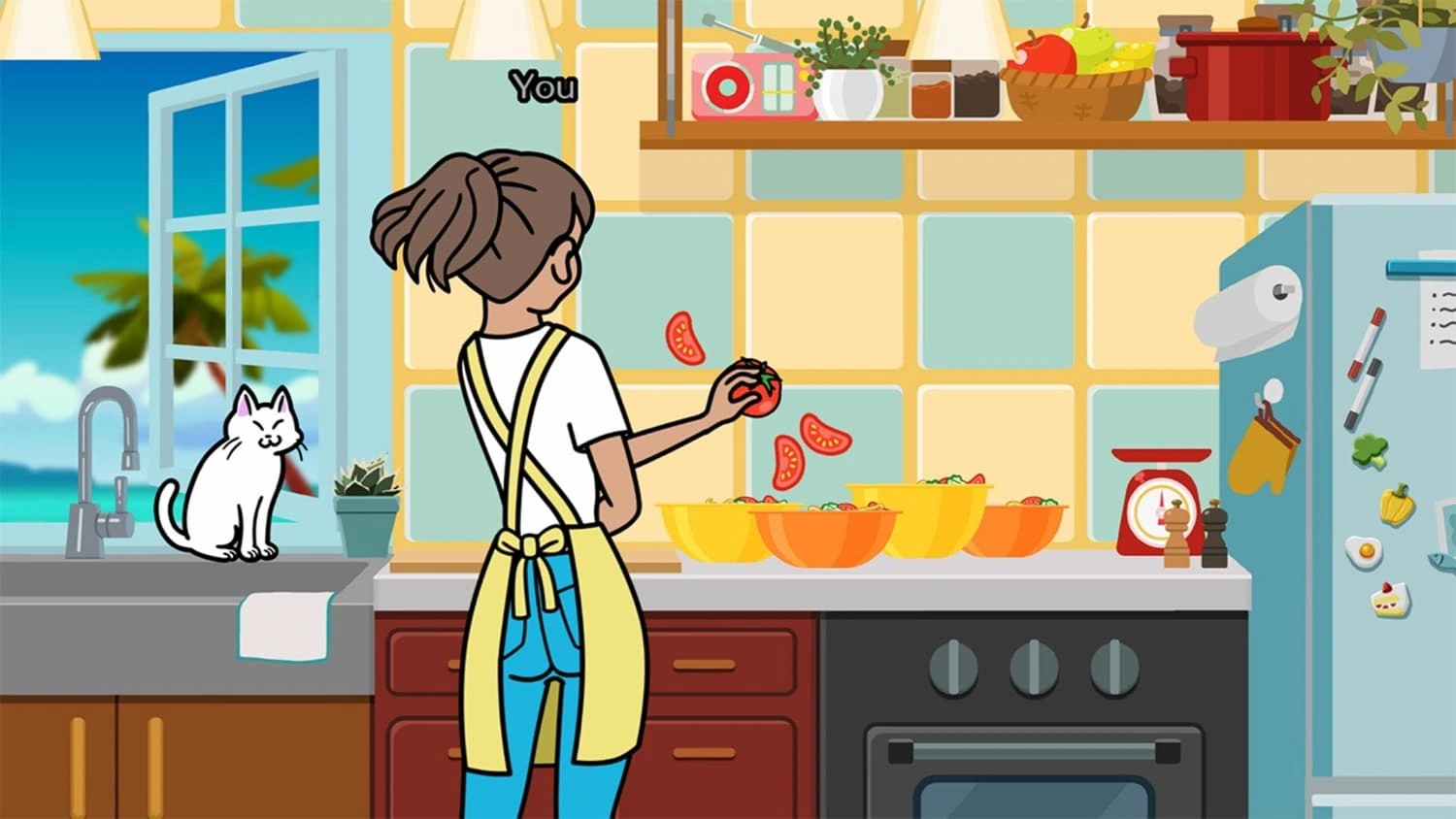
Cake Wait is the easy standout. Players wait for exactly three o’clock to grab a slice of cake, and the whole game becomes a tiny war between eyes, ears, and nerves. The rule is instantly understood. The comedy comes from tiny differences in timing, especially when someone wins by a sliver or two players somehow land on the same moment.
Cooperative games benefit from rescue mechanics that keep weaker players involved instead of turning them into anchors. That matters in a rhythm game because skill gaps can show up within seconds. Groove keeps the room engaged by letting the group wobble together.
Charm, Latency, and Flat Edges
The soundtrack carries Groove through its rougher presentation choices. Voice cues, car revs, fruit calls, claps, beeps, and animated movements all work as timing information. The strongest stages fuse audio and action so cleanly that the screen starts to feel secondary. At higher levels, you are playing the song, not the animation.

The visuals are less consistent. Hoop Trundling has the right round-bodied nonsense, Alien Alphabet has dorky personality, and several stages lean into thick-lined cartoon oddity with confidence. Some menus and stages look flatter, closer to placeholder art than the series at its sharpest. Rhythm Heaven has often made minimalism feel handcrafted. Groove sometimes makes it feel underdressed.
Latency is the practical shadow over the Switch version. The TV calibration tool helps, but handheld play feels safer for strict timing, especially in Beatspell and stages with narrow windows. That is not a small concern in a game where a late input can collapse a whole pattern.
Rhythm Heaven Groove still has the pulse that matters: clean inputs, strange premises, sharp feedback, excellent music, and remixes that turn silliness into skill. The art misses a few beats. The systems usually do not.
The Review
Rhythm Heaven Groove
Rhythm Heaven Groove succeeds because its systems stay clean: one or two inputs, immediate feedback, and timing patterns that keep finding new pressure points. The campaign’s Remix stages turn memory into performance, while Beatspell proves the formula can stretch into RPG combat without losing its pulse. The flatter menus and uneven stage art keep it from feeling like the series’ sharpest presentation, and the Beatspell gating is a strange bit of friction. Still, the mechanical core lands.
PROS
- Precise rhythm-game design
- Strong Remix stages
- Beatspell’s clever combat loop
- Excellent local multiplayer
- Catchy, readable music cues
CONS
- Uneven visual presentation
- Some harsh timing spikes
- Beatspell progression gating
- No online multiplayer