






















DragonSword: Awakening asks a strange design question: what happens when a gacha game loses the gacha after most of its systems are already built? Hound13’s answer is a $30 action RPG where all nineteen heroes can be earned through play, yet level caps, repeatable resource dungeons, daily world bosses, and layered currencies still dictate the pace.
The game takes place in Orbis, sixty years after six heroes defeated the Origin Dragon. Lute, a young healer traveling toward the kingdom, is pulled into Johnny’s mercenary crew alongside Castella and Aria. Their search for the surviving heroes gradually exposes a gap in the official legend. Five statues commemorate a group of six, and the missing figure becomes the story’s cleanest mystery.
That setup gives the campaign direction, but the quest structure often works against it. A strategy meeting in Orbis is split into four cutscenes, each requiring Lute to speak to someone before the conversation resumes. A looming dragon crisis can then give way to carrying a box across town. The story is strongest when Johnny drops his careless captain routine and recognizes Lute’s identity before the rest of the crew. Those scenes give his comedy a second function: it hides competence until the plot needs it.
Status Becomes Strategy
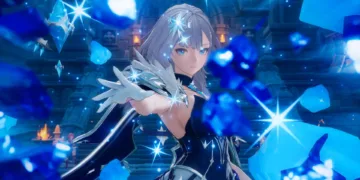
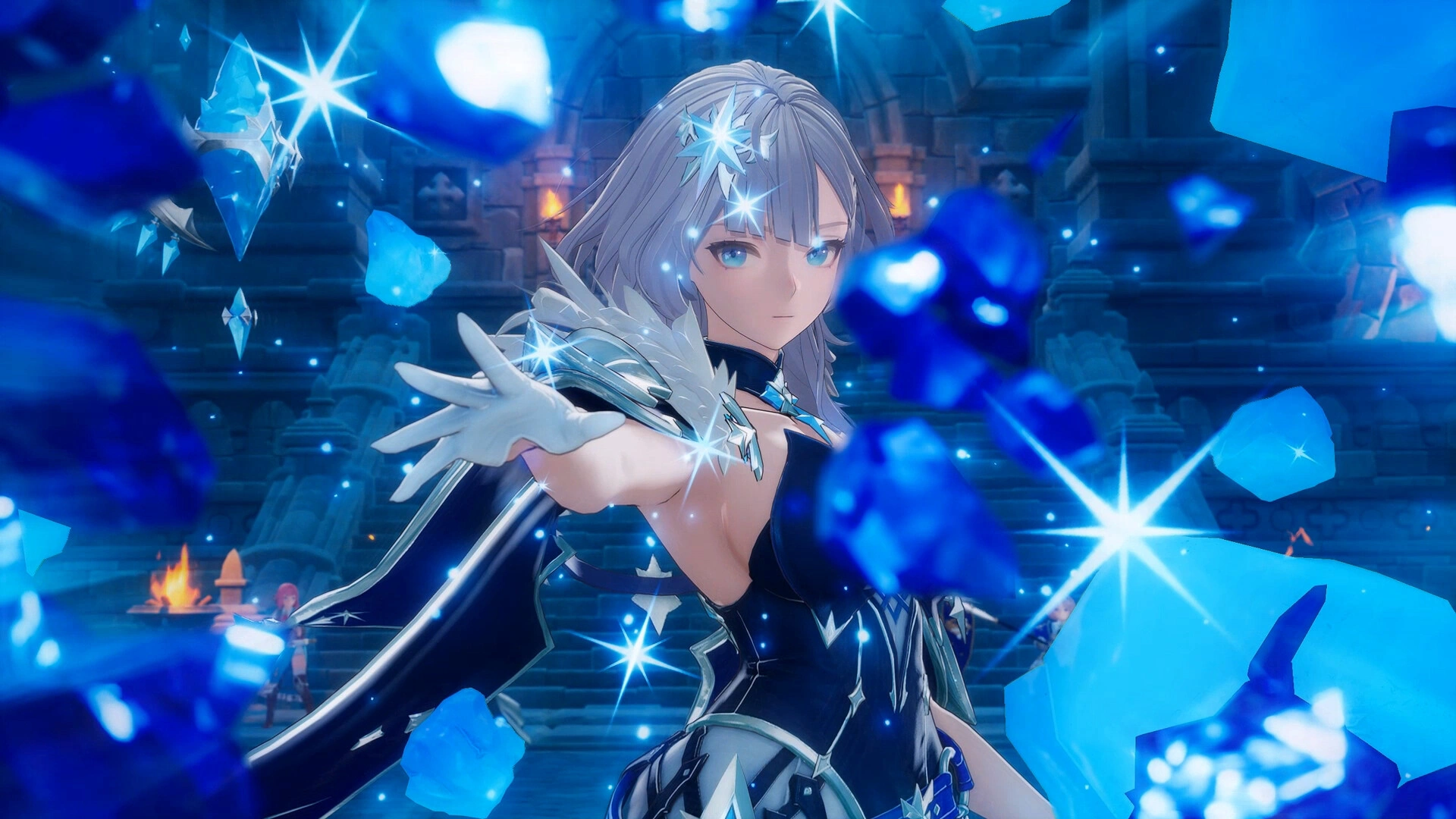
Combat is built around persistent status effects and instant character switching. One hero applies Stun, Burn, or another condition, then a teammate enters through a Signal Skill to exploit it. Lute’s Swordgrab, for example, activates against a stunned enemy, so his value depends on pairing him with characters who can build Stun efficiently.
The system works because the game treats the three-character party as one shared moveset. Long attack animations can continue after a swap, benched characters can trigger Signal Skills, and certain boss encounters convert those triggers into mounting attacks. A stunned creature becomes a temporary platform while the active hero climbs onto its back and strikes.
Team construction carries much of the mechanical depth. A Burn lineup built around Kalien, Aria, and Kalsion can maintain the status, trigger frequent tags, and shred the Break gauge with little downtime. Once that gauge empties, enemies lose Super Armor and can be attacked without interruption.
Also Read






The problem is that a solved team often removes the need for careful execution. Many encounters settle into the same rotation: use every available skill, tag as soon as the prompt appears, force Break, repeat. Dodge invincibility is narrow, but there is no parry and no major perfect-evade reward to create a second defensive rhythm. Dragon Nest players may recognize the speed and animation energy, but the challenge here sits in roster planning rather than demanding inputs.
Orbis by Checklist
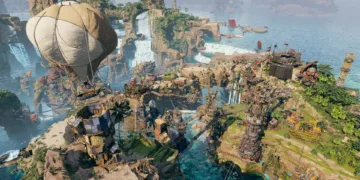
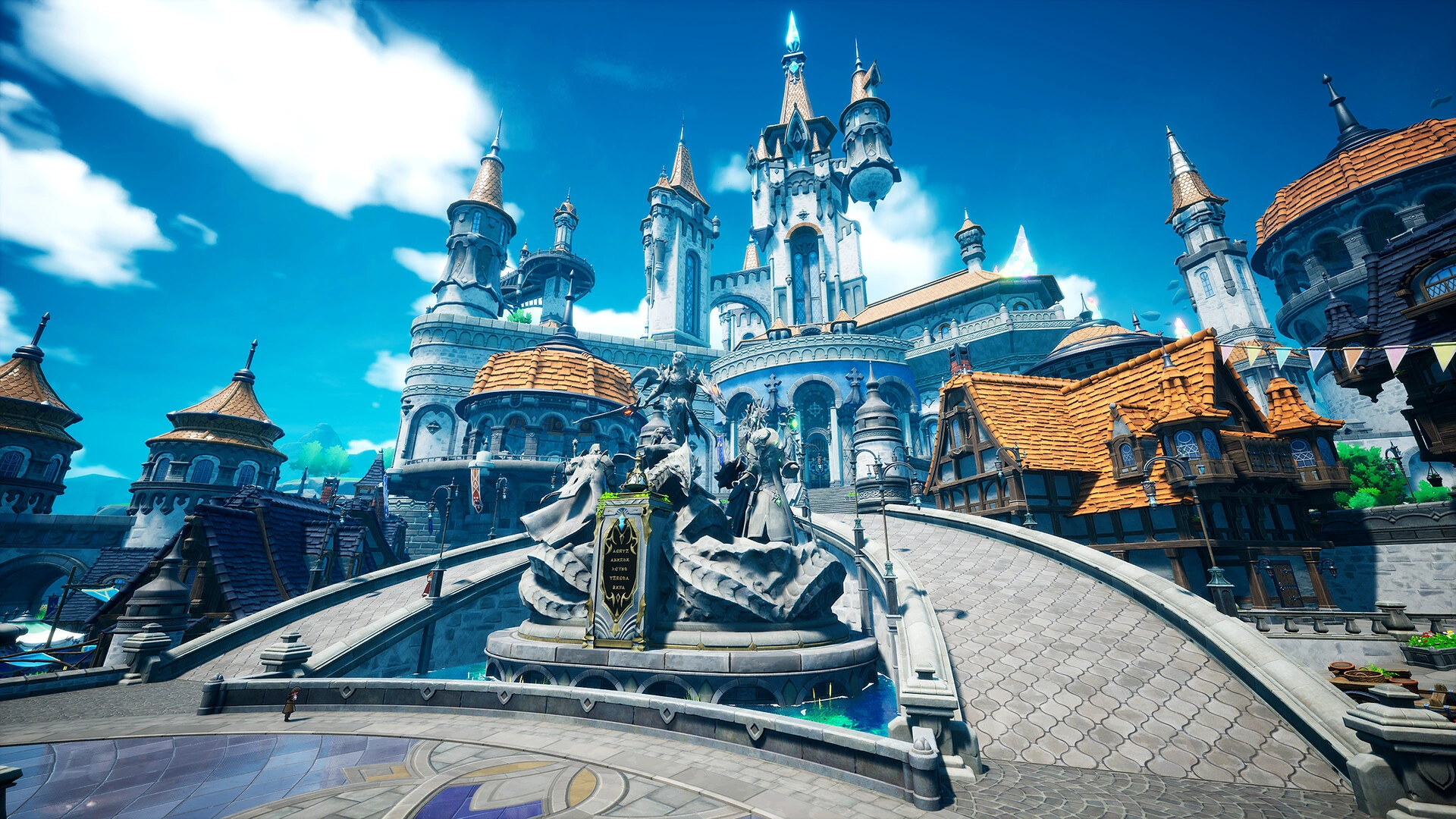
Orbis is attractive in motion. Unreal Engine 5 lighting gives its fields and cliffs a soft storybook glow, while the familiars make movement pleasant before the map turns travel into routine. These creatures act as mounts, glide from cliff edges, and dive toward underwater treasure maps or hidden dungeons. Calling one with a whistle keeps traversal from becoming a long sprint between icons.
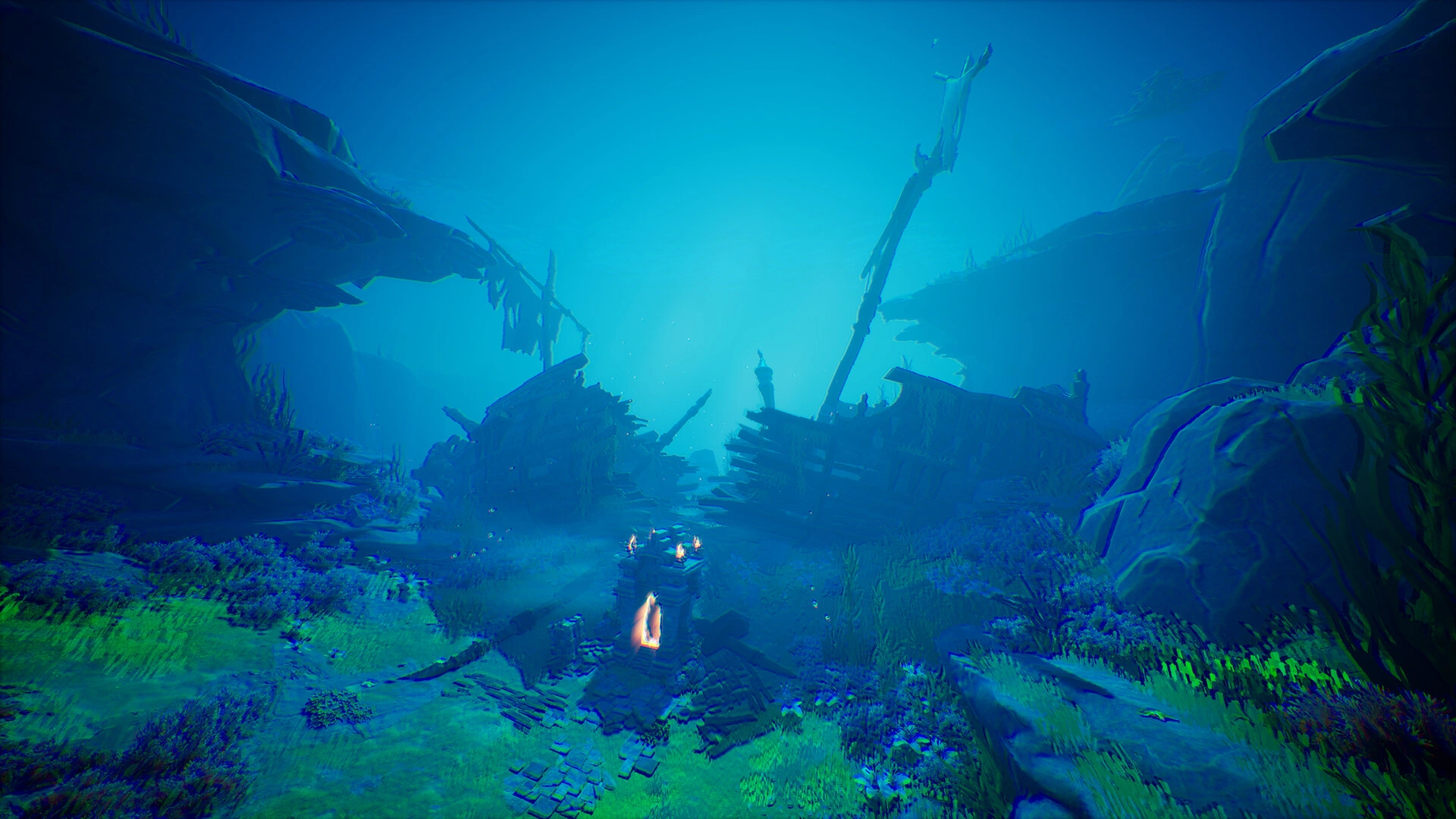
The world activities are less inventive. Windmill puzzles unlock warp points. Goddess statues require scattered fragments before they can heal the party and reveal a region. Other puzzles rely on pushing blocks, throwing objects, or matching letters. Side quests occasionally use rewards well, teaching a recipe or leading Lute toward a chest that would be easy to miss.
The Mercenary Guide weakens that curiosity by listing bosses, dungeons, and progression targets on demand. It is efficient, but it turns exploration into destination management. The player is often deciding which marker pays best, rather than reading the landscape for clues.
Presentation has its own friction. Trait Dungeons describe elemental weaknesses with written names, while character and inventory screens tend to show icons. The mismatch asks players to memorize a vocabulary the interface rarely teaches. Frame-rate drops, crashes during longer sessions, and save-corruption warnings create further noise around a game whose combat depends on clean timing.
Progression Without a Storefront
Characters arrive through story chapters or invitations earned from quests, removing the gambling pressure that normally controls a roster like this. That single change makes experimentation feel fair. Trying a new party costs time and materials, not money.
The remaining economy still behaves like a service game. Character levels stop at mercenary rank caps until specific promotion quests are completed. Skills, equipment, and heroes each consume their own resources. Hunts recycle story bosses across five difficulty levels, raids stretch encounters into multi-phase fights for three players, and the Tower of Trials repeats the same progression equation alone.
These activities can be cleared without a group, which helps players who prefer solo play. Open-world cooperative exploration is missing, so multiplayer exists mainly inside reward-focused instances. After a raid drops a useful weapon, upgrading it usually requires materials from another repeatable activity, sending the party back through a combat loop it has already solved.
The Review
DragonSword: Awakening
DragonSword: Awakening converts a predatory framework into a fairer action RPG, yet its systems still remember the business model they were built to serve. Signal Skills, persistent status buildup, and rapid tagging make party construction rewarding, especially when Stun or Burn chains turn three characters into one continuous combo. The trouble begins after the team is solved. Break windows flatten resistance, rank caps interrupt momentum, and hunts recycle fights to feed upgrade currencies. Orbis remains inviting, and familiars make travel pleasant, but the strongest design work sits beside progression machinery that no longer has a purpose.
PROS
- Rewarding status-based team building
- Fast, seamless character switching
- Charming familiar traversal
- Consumer-friendly character unlocking
- Colorful world and expressive animation
CONS
- Repetitive upgrade grind
- Mercenary rank level gates
- Combat difficulty collapses
- Formulaic exploration puzzles
- Performance and interface issues